You know that smell before you see it. You open the washing machine to grab a clean load, and instead of “fresh linen”, you get a faint whiff of something sour and swampy. You pull the drawer out a little further than usual and there it is: grey slime, black spots, streaks you don’t really want to think about near the bit that’s meant to hold fabric softener.
You scrub it. You spray it. You run a hot empty cycle because the manual said something vague about hygiene. Two weeks later, the mould is back, clinging to the corners and the roof of the drawer like it pays rent there.
Someone mentions, casually, that your drawer is going mouldy for one really simple reason: water is sitting where it can’t drain or dry. Then they show you a cotton bud and say, “This is the thing that actually fixes it.”
It sounds too basic. But once you see where that cotton bud goes, it stops feeling silly and starts feeling like the one bit of the washing machine no one ever showed you how to look after.
Why your washing machine drawer keeps going black
The drawer feels like the cleanest part of the machine. You pour detergent in. You pour softener in. It’s all “fresh breeze” and “spring meadow” on the bottle. Yet the plastic slides back and you’re greeted by mould, slime and a smell that doesn’t belong anywhere near clean clothes.
The reason is brutally simple: the drawer stays wet for hours, every single wash, especially around the softener compartment. Water splashes in from above, rushes through the channels and is supposed to disappear into the drum. Much of it does. Some of it doesn’t.
Instead, it pools in tiny ledges and channels under and behind the drawer – the places you never see. Detergent and softener leave a sticky film. Lint and dust stick to that film. Bacteria and mould arrive to the all‑you‑can‑eat buffet and settle in.
Your drawer isn’t mouldy because your home is dirty. It’s mouldy because the water has nowhere to go and no time to dry.
Add in two everyday habits that make things worse:
- Closing the drawer straight after a wash, trapping the damp air.
- Using too much detergent and softener, which leaves thicker residue.
Warm, dark, wet and coated in product – it’s the perfect little greenhouse for mould spores. Until you deal with the standing water and the sludge sitting just out of sight, no amount of scrubbing the visible bits will keep it clean for long.
The tiny part everyone forgets to clean
Pull your drawer out as far as it will comfortably go. Look down into the base of each compartment. You’ll usually see small holes or a thin slot where the water drains away, and a raised channel at the back where water flows into the machine.
Now run a cycle and watch (or use a torch with the drawer slightly open on a rinse). You’ll notice:
- Water hits the top of the drawer and the roof of the compartment.
- It runs along little ridges and plastic “rails”.
- A thin trickle disappears into those drainage holes and the back channel.
Those are the places that silently clog. A ring of congealed softener often hides around each drainage hole. The channel at the back builds up a ridge of slime. The underside of the drawer roof grows a faint grey skin that drips into the next wash.
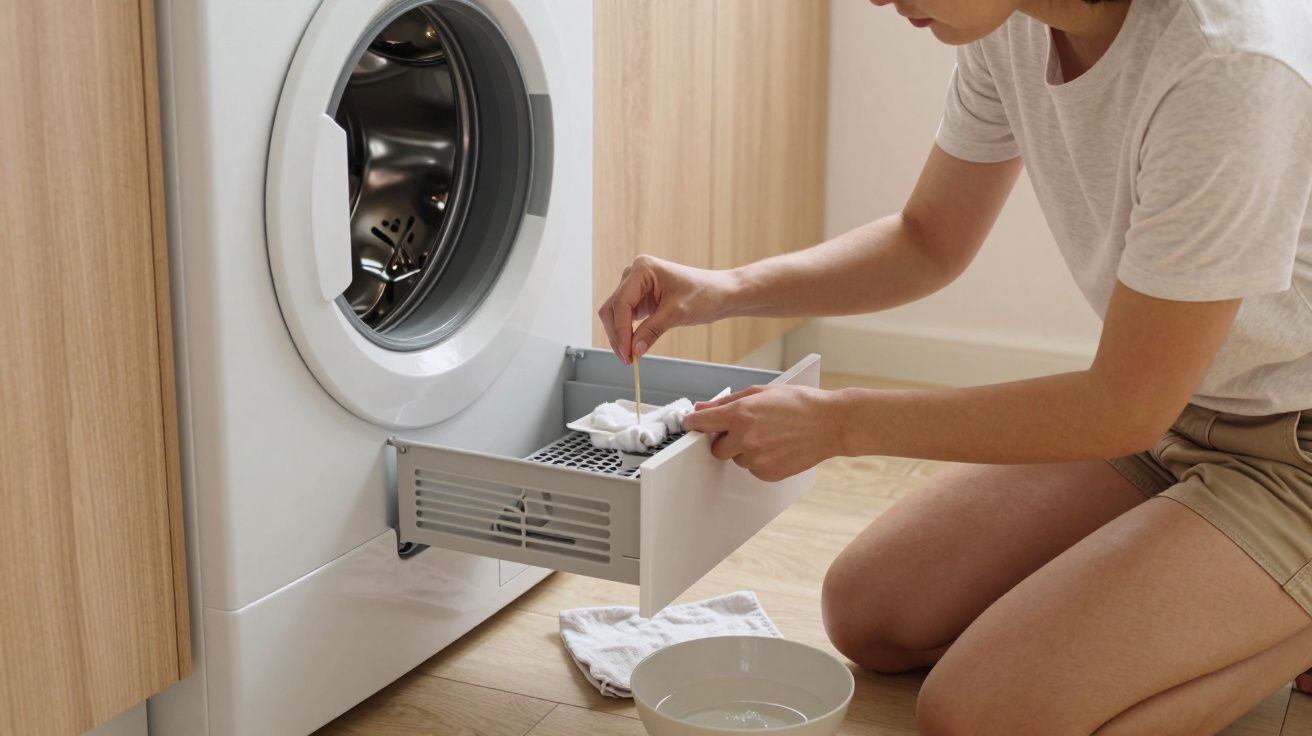
You can’t reach any of that with a sponge. A cloth just skates over the top. This is exactly where a cotton bud fits: thin, precise, absorbent enough to soak up the little puddles the mould is living in.
Once you start clearing those choked holes and corners, the drawer drains properly and, crucially, dries between washes.
The cotton bud trick: how to keep the drawer dry
You don’t need specialist products or a full machine strip‑down every month. You need a 30‑second habit and a handful of cheap cotton buds.
What you’ll need
- A few cotton buds (standard size is fine)
- A microfibre cloth or old tea towel
- A small bowl of warm water with a splash of white vinegar or mild cleaner (optional)
- A torch or phone light (helpful the first time)
Step‑by‑step: the quick routine after your last wash of the day
Pull the drawer out.
After your final wash, turn the machine off and slide the drawer out as far as it safely goes.Blot obvious puddles.
Use the cloth to dab up any standing water in the compartments, especially the softener section.Use the cotton bud on the drainage holes.
- Find the small holes or slot at the bottom of each compartment.
- Push the cotton bud gently into each one, twist, and pull out.
- If it comes back grey or slimy, you’ve just met the problem.
- Find the small holes or slot at the bottom of each compartment.
Swipe the back channel and corners.
Run a dampened cotton bud along:- The narrow channel at the back of the drawer.
- The corners where the base meets the walls.
- Any little ridges or seams where gunk collects.
Wipe the roof of the drawer space.
Shine a torch up into the cavity where the drawer normally sits. Wipe the “ceiling” with a cloth wrapped around your fingers. Use a cotton bud for stubborn black spots on joints and seams.Leave the drawer slightly open.
Slide it back in, but not all the way. Leaving it open by a couple of centimetres lets air circulate and the last traces of moisture evaporate.
The whole thing, done properly the first time, takes a few minutes. After that, a quick cotton‑bud poke of the holes and a wipe down becomes a 30‑second add‑on to your usual “last load of the day” routine.
Think of it as brushing your machine’s teeth: tiny, regular, boring – and the only thing that actually stops decay.
When your drawer needs a proper deep clean
If the mould has already taken hold, the cotton bud trick will keep it from getting worse, but you’ll want to reset the whole area once.
Simple deep‑clean method
Remove the drawer fully.
Most drawers lift and pull out once you press a small clip or tab at the back. Check your manual if it doesn’t budge easily.Soak it.
Pop the drawer in warm water with a cup of white vinegar or a squirt of washing‑up liquid. Leave for 20–30 minutes to soften the gunk.Scrub, then detail with cotton buds.
Use an old toothbrush for the main surfaces. Then use cotton buds to get into:- Inside corners
- Around the siphon cap in the softener compartment
- Under lips and plastic joins
Clean the cavity.
While the drawer soaks, wipe inside the drawer slot with a cloth, then run cotton buds along any rails, seams and the water inlet at the top.Rinse, dry and reassemble.
Rinse thoroughly, let everything dry, then pop the drawer back. Finish with a short hot cycle with no laundry to flush any loosened residue.
Once you’ve done this “reset”, the cotton bud trick becomes maintenance rather than crisis management.
Small daily habits that stop mould coming back
The cotton bud routine matters most, but a few small shifts support it.
Measure detergent and softener properly.
Overdosing leaves more residue. Follow the scoop lines and use less in soft water areas.Skip softener occasionally.
Every few washes, run a load without softener to reduce build‑up in that compartment.Leave both drawer and door ajar.
Airflow is your friend. A machine that can breathe between cycles dries out faster and mould struggles to get a foothold.Run a monthly hot maintenance wash.
60°C with a bit of detergent or a cup of white vinegar in the drum helps keep internal pipes less hospitable to slime.
Here’s how the change usually feels in practice:
| Before the cotton bud habit | After the cotton bud habit |
|---|---|
| Drawer smells musty, black spots return quickly | Drawer smells neutral, mould patches slow to reappear or stop |
| Softener compartment always slimy | Compartments drain and stay mostly dry between washes |
| “Hygiene” cycles feel like a waste of money | Quick daily wipe makes deep cleans rare and easier |
| Embarrassed if guests see the drawer | Quiet satisfaction every time you slide it open |
What this tiny trick really changes
On the surface, you’re poking a cotton bud into a plastic slot. It’s not glamorous. No one is filming it for social media. But there’s a quiet satisfaction in opening the drawer a week later and seeing… nothing. Just clean plastic. No black streaks creeping back.
It shifts the story in your head from “my machine is disgusting again” to “this is under control”. The smell fades. The towels come out genuinely fresh. That low‑level annoyance every time you do a wash loses one of its sharpest edges.
One day you’ll text someone a photo of a suspiciously clean drawer and write, “Use cotton buds on the little holes after your wash. Leave the drawer open.” No big speech. Just the same tiny hack that quietly made your washing machine – and your laundry routine – feel a bit less like a battle.
FAQ:
- Do I really need to use cotton buds, or will a cloth do?
A cloth is great for large, flat areas, but it can’t reach into the small drainage holes and tight channels where mould and residue start. Cotton buds act like mini brushes and sponges in those precise spots.- How often should I do the cotton bud routine?
A quick wipe and poke after your last wash of the day is ideal, but even doing it once or twice a week makes a noticeable difference, especially if you also leave the drawer slightly open.- Will vinegar damage my washing machine?
Used in small amounts, diluted in water, white vinegar is generally safe for most modern machines and good at dissolving soap scum. Avoid pouring large quantities into the drawer every wash, and check your manual if your machine has specific restrictions.- Is mould in the drawer dangerous for my health?
For most people it’s more unpleasant than dangerous, but mould spores and bacteria can irritate those with allergies or asthma. Keeping the drawer dry and clean reduces both smell and potential irritation.- My drawer is spotless but my clothes still smell damp – why?
The drawer is only one part of the system. Persistent smells can also come from a dirty door seal, a clogged filter, or washing at low temperatures all the time. The cotton bud trick fixes the drawer; a maintenance wash and seal clean help with the rest.





Comments
No comments yet. Be the first to comment!
Leave a Comment