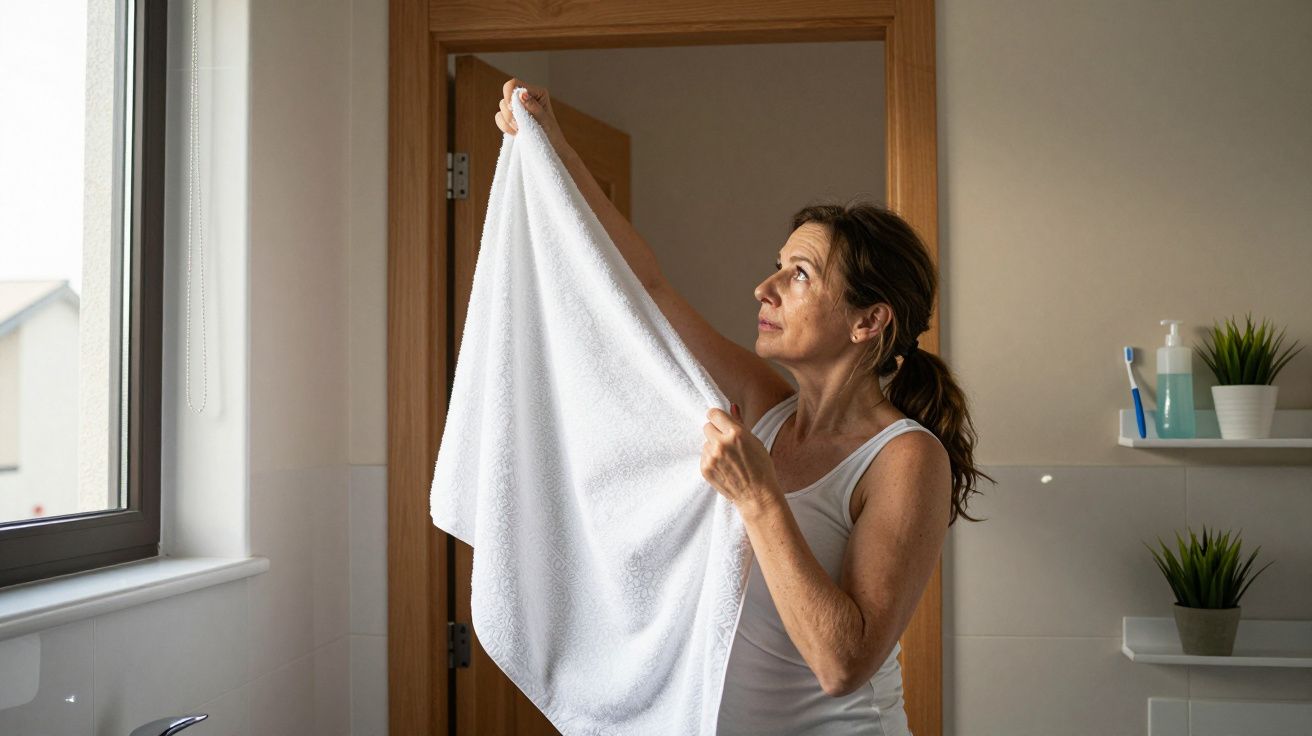
You pull a towel from the airing cupboard, bury your face in it – and there it is. Not full‑on mould, not exactly dirty, just that faint, chilly “wet dog” smell you can’t seem to wash away. You’ve tried hotter cycles, fancier detergent, even the odd disinfectant. It keeps coming back.
You can smell it before you see it. The towel looks perfectly clean, fluffy even, but the second it hits steam, the stink wakes up. At that point, it feels like you have two choices: live with it, or keep buying new towels.
Hidden in the middle of this is one very ordinary laundry habit that quietly ruins good cotton. And in the opposite corner, there’s a simple airing trick hotel housekeepers use every day to stop those smells forming in the first place – without any magic products at all.
The sneaky habit making “clean” towels smell damp
Most musty towels have the same backstory: they were folded or stacked while still the tiniest bit wet.
Not dripping, not obviously damp – just that last 5–10 per cent of moisture still sitting in the fibres. When you fold that in on itself and press it into a pile or an airing cupboard, you’ve created a cosy, low‑oxygen cave for bacteria and mildew to get on with their lives. The heavier and thicker the towel, the easier it is for that moisture to hide.
Three things make the problem worse:
- Stopping the tumble dryer too early. Towels feel warm, so you assume they’re dry. Warmth hides residual moisture.
- Leaving towels in the machine. An hour (or overnight) in a cold, closed drum gives bacteria a head start.
- Overusing fabric softener. It coats the fibres, trapping moisture and body oils so they don’t rinse away fully.
You’ll often notice the smell not when the towel is freshly washed, but when you next shower. Heat and steam lift the odour molecules out of the fabric and into the air. That’s why your towels smell fine in the cupboard and awful in the bathroom.
The fix isn’t more detergent or harsher chemicals. It’s changing what you do in the 30 minutes after towels leave the washing machine or dryer.
What hotels do differently: the “airing window”
Watch a good hotel housekeeper for five minutes and you’ll spot a quiet ritual. Towels don’t go straight from machine to shelf. There’s always a gap – an airing window.
In many hotels it looks like this:
- Towels are washed hot (60°C) with minimal softener or none at all.
- They’re dried in large commercial dryers until properly dry, not just warm.
- Then, crucially, they’re shaken out and left open – draped over a rail, trolley, or even the bathroom door – for 10–30 minutes before folding.
That last stage is what most of us skip at home. Spreading the towel out lets the last traces of moisture and heat escape evenly. Air moves across the whole surface instead of being trapped in folds, so the fibres cool and dry at the same time.
You can copy the same idea without a laundry room the size of a coach park:
- As soon as the cycle ends, get towels out. Don’t leave them in the machine “for a bit”.
- Dry them thoroughly. Either:
- Tumble until fully dry (they should feel dry and cooler to the touch when you pause the cycle), or
- Line‑dry until they’re crisp and no corners feel chill or heavy.
- Tumble until fully dry (they should feel dry and cooler to the touch when you pause the cycle), or
- Give each towel a sharp shake. This loosens the pile and releases pockets of warm, moist air.
- Drape, don’t fold, for 15–30 minutes. Over a banister, door, clothes horse or heated towel rail on low. One layer thick, not doubled over.
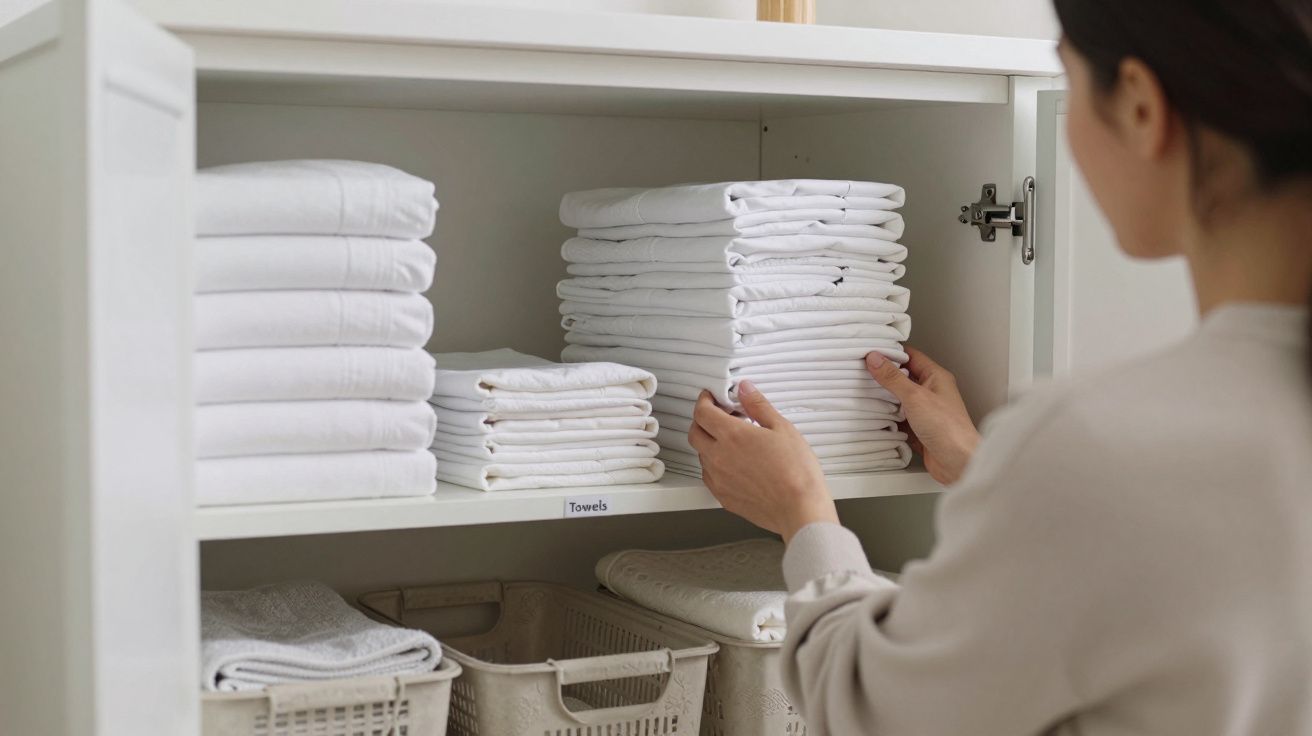
- Only then fold and store in a cool, dry cupboard with some breathing space.
That simple airing window does two things at once: it finishes the drying job properly, and it stops any lingering bacteria from enjoying a warm, airless fold.
Reset a musty towel in one (or two) washes
If your towels already smell off even when freshly washed, you’ll need to reset them once before the new habits really show.
Here’s a quick, low‑fuss reset method most cotton towels can handle:
- Check the care label. Make sure they can withstand 60°C. Most decent bath towels can.
- Run a hot wash with white vinegar.
- No fabric softener.
- Use your normal detergent, but no extra scoop “for luck”.
- Add 250 ml of clear white vinegar to the drum or softener drawer. It helps dissolve residue and neutralise odours.
- No fabric softener.
- Skip the low‑temperature eco mode for this one. You want a full 60°C cycle so heat can do some of the disinfecting work.
- Dry completely, then use the airing window trick. This is where the new routine starts.
If the smell is still clinging on after that, try one extra wash with a tablespoon or two of bicarbonate of soda sprinkled directly into the drum (again, with normal detergent, no softener). If two hot, well‑rinsed washes and a true full dry don’t shift it, the fibres may simply be too saturated with old residue and it might be time to retire the worst offenders to pet‑towel duty.
Everyday habits that keep towels fresh
Once you’ve broken the cycle, small, consistent tweaks keep it from returning. These are the ones hotel laundry teams quietly swear by.
- Use less detergent than you think. Modern machines and liquids are concentrated. Too much leaves a sticky film that traps smells.
- Ditch fabric softener for towels. It makes them feel plush at first, but it wrecks absorbency and holds onto odours. If you miss the softness, a tennis ball in the dryer or a short fluff‑up on low heat helps.
- Always hang towels fully open between uses. One towel per hook or rail if you can manage it. Folded over itself, it will never really dry.
- Ventilate the bathroom after showers. Door open, fan on, window cracked. A towel cannot dry in a room that never properly loses its steam.
- Don’t overload the drum. Towels need space to move so water and detergent can reach every bit of the fabric. As a rule, fill the drum to about three‑quarters, not packed solid.
- Wash towels every 3–4 uses. Sweat, skin oils and product build up faster than you think, especially in households with teenagers or gym goers.
You don’t need to be perfect about all of this. But picking three and sticking to them will make more difference than cycling through new detergents every month.
A quick home vs hotel checklist
You don’t have an industrial laundry, but you can steal its logic. Use this to spot where your routine is going wrong.
| Step | Common home habit | Hotel‑style tweak |
|---|---|---|
| After wash | Towels sit in drum for “a while” | Remove within 15–20 minutes of cycle ending |
| Drying | Stop dryer when towels feel warm | Dry until fully dry, then cool for a few minutes |
| Before storage | Fold straight from dryer | Shake out, drape flat for 15–30 minutes, then fold |
Tiny differences in those three steps are usually why one household’s towels smell like a spa and another’s smell like a forgotten gym bag.
FAQ:
- Do I really have to wash towels at 60°C? For everyday loads, 40°C with a good detergent is usually fine if you dry thoroughly. Use 60°C when someone’s ill, for heavily used towels, or when you’re doing a “reset” wash on smelly ones.
- Is white vinegar safe for coloured towels? In normal amounts (around 250 ml in a full load), clear white vinegar is generally safe on colour‑fast towels and rinses away. If in doubt, test on an old towel first.
- My flat is damp and small – how can I air towels properly? Prioritise good extraction in the bathroom, use a heated airer or towel rail on low, and keep towels on a single layer until fully dry before folding. Even 15 minutes over a chair by an open window helps.
- What about quick‑dry microfibre towels? They’re less prone to mustiness because they hold less water, but the same rules apply: don’t leave them bunched up, avoid softener, and give them a brief airing before you stash them away.



Comments
No comments yet. Be the first to comment!
Leave a Comment