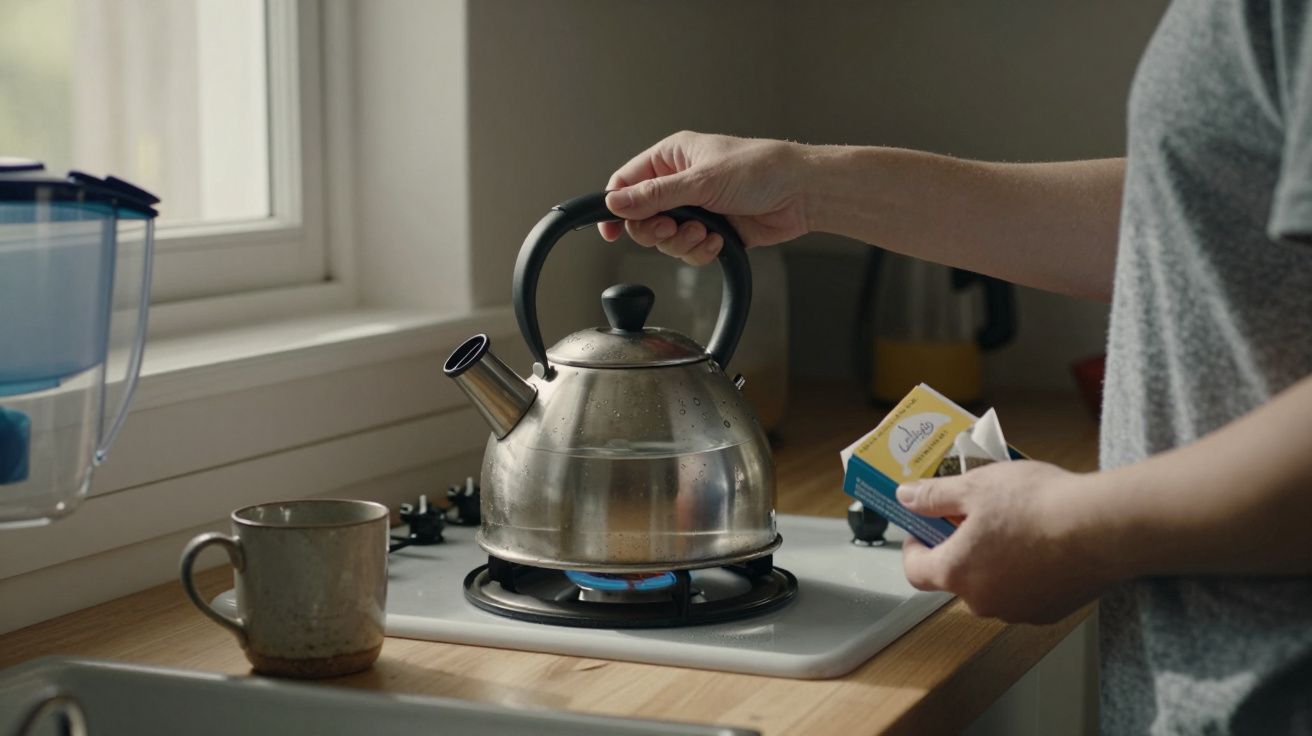
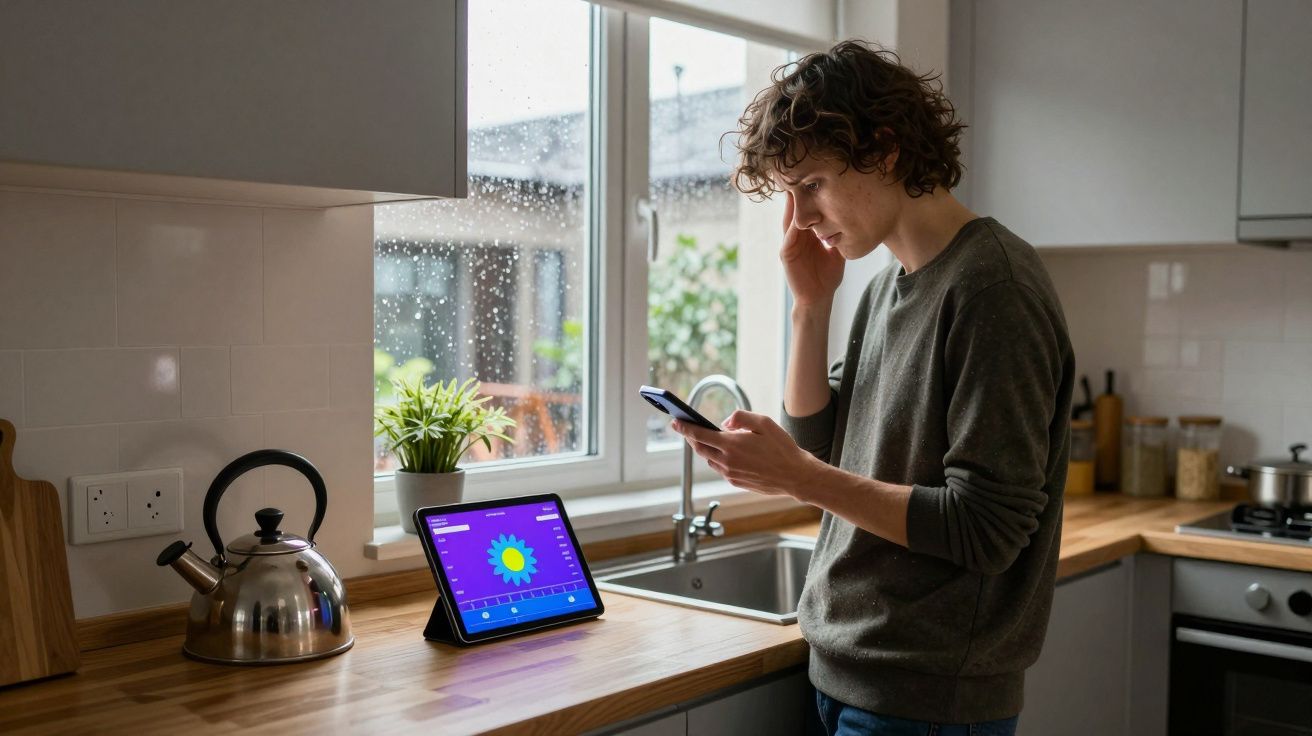
The kettle clicked in the half‑light, that soft metallic sigh that means “nearly there”. You dropped a bag in a favourite mug, lurid logo half‑rubbed off, poured, waited just long enough to pretend you were patient. The first sip should have been a small reset: steam, tannin, comfort. Instead, it tasted like warm, beige water.
You looked down and saw it-the chalky ring around the kettle element, flakes on the lid, a faint film on the surface of the brew. Easy culprit, easy vow: I really must descale this thing. But baristas and tea specialists will tell you something awkward about that morning disappointment.
The limescale is not the villain you think it is.
It’s not pretty, and it will kill your kettle eventually, but most of the “flat tea” problem starts somewhere else entirely: in the water you choose, the way you heat it, and the habit everyone has and nobody admits to-reboiling yesterday’s leftovers.
Why your first cup sometimes tastes of nothing
The water sitting in most British kettles is on at least its second life. It was boiled at 10pm for a herbal tea, then left to cool in the steel cave overnight. In the morning rush, you top it up, hit the switch again, and assume boiling is a kind of reset button. Heat kills germs, so it must fix flavour too, right?
Not quite. Each long, rolling boil drives off more dissolved gases, especially oxygen. That oxygen is part of what makes tea taste bright and “lively”; without it, infusions can taste oddly muffled, even when they’re strong. Stale, over‑boiled water gives you a brew that feels tired before you’ve started the day.
The second quiet culprit is chlorine. Tap water in the UK is safe and heavily regulated, but the modest dose of chlorine used to keep it that way can leave a faint swimming‑pool edge when water goes straight from tap to kettle to cup. Let it stand for a minute, or run the tap until it’s cold, and a surprising amount of that sharpness drifts off into the room.
Then there’s the tea itself. Old bags from the back of the cupboard, boxes left open next to the spice rack, “posh” loose leaves stored in a jar in full sunlight-all of them lose volatile aromatics long before the colour fades. That’s how you end up with a mug that looks perfect and tastes like cardboard.
The limescale myth, according to people who make drinks for a living
Baristas live in the space where water, heat and flavour meet. They spend more time thinking about kettles than most of us spend thinking about lunch. Ask them about limescale and they’ll usually start with a gentle correction: what you’re seeing is the side‑effect of hardness, and hardness is part of why tea tastes good at all.
Hard water is rich in minerals-mainly calcium and magnesium carbonates-that help extract flavour from tea leaves. Very soft water often makes tea taste thin and one‑note; moderately hard water can make it taste round, brisk and sweet. That dusty line on your kettle walls is simply those minerals falling out of solution when you heat the water. Unattractive, but not poisonous.
“People come in blaming their ‘disgusting’ hard water,” a London barista told me, rinsing a pot between orders. “Then they go on holiday somewhere with super‑soft water and wonder why every brew tastes like hot air.”
Here’s the awkward bit: a spotless kettle filled with the wrong kind of water will still brew flat tea. A scaly kettle filled with fresh, well‑balanced water will usually taste far better. So why does limescale get so much blame?
Because it’s visible. You can photograph it, scrape it, wince at flakes floating where they shouldn’t. The real issues-water chemistry, dissolved gases, brew time and temperature-are invisible. It is easier to say “my kettle is gross” than “my extraction is poor”.
That said, there is a line. Heavy, crumbly limescale can trap old water in crevices and shed fine particles into the pour. Clean it to protect the kettle and keep the surface fresh, not because it’s a magical flavour switch.
Small changes that actually change the taste
Think less in grand kitchen overhauls, more in tiny rituals you repeat without thinking. Baristas do not own secret equipment; they own good habits.
- Start with fresh, cold water. Empty the kettle if it’s been sitting for hours. Refill from the cold tap, or a jug filter if you like the taste better, and only boil what you need. Fresh water = more dissolved oxygen = livelier flavour.
- Avoid the marathon boil. Bring water just to a rolling boil for black tea, then use it. Do not leave it raging away while you wander off. For green and white teas, let it cool for a minute or two before pouring; scorched leaves give bitter, flat cups.
- Give chlorine time to leave the party. If your tap water smells or tastes strongly chlorinated, fill a jug and let it sit uncovered for 10–15 minutes before using. Many cafés loading kettles for the morning do exactly this behind the bar.
- Use enough tea. A common home habit is to stretch one bag or spoonful across a giant mug. Most black tea needs about 2–3g per 250ml. Weak liquor tastes flat, no matter how pristine your kettle.
- Respect the brew time. Under‑brewing gives you coloured water; over‑brewing gives bitterness that bulldozes nuance. Follow the packet as a starting point, then adjust by 30 seconds at a time until it tastes right to you.
- Store tea like a spice, not a souvenir. Keep it in an airtight, opaque container, away from heat and strong smells. If the box has been open on top of the fridge since last Christmas, it is not the kettle’s fault.
None of this is glamorous, and you will not see it on an Instagram reel. But done consistently, it moves your tea from “fine, I suppose” to “oh, that’s actually nice” faster than any descaler advert.
What cleaning your kettle really does (and how often to bother)
Descaling has two real jobs: keep the kettle efficient, and stop loose flakes wandering into your mug. It does not turn hard water soft. The moment you refill, the minerals are back.
Most baristas who work with domestic‑style kettles fall into a simple rhythm:
- Lightly scaled area: descale every 2–3 months.
- Chalky‑water region (hello, much of the South East): monthly, or whenever you see crust building on the element.
- Cafés and tea bars: more often, because kettles there are boiled dozens of times a day.
A mild citric‑acid solution or a branded descaler used according to instructions is usually enough. The key step people skip is the rinse. Boil and discard at least one full kettle of fresh water afterwards, two if you’re cautious, to flush out any lingering tang from the cleaner.
What you do not need to do is scrub until the inside shines like a showroom piece every week. A thin, even limescale film is mostly cosmetic. Focus on flakes, odd smells, or slow boil times as your signal to act.
Matching your water to your tea (the quiet upgrade)
If you really want to chase better flavour, look not just at the kettle but at which water goes in it. Tea professionals talk about three broad water “moods”:
| Point clé | Détail | Intérêt pour le lecteur |
|---|---|---|
| Very soft water | Low minerals, often from some filters or bottled “spring” waters | Can give pale, slightly sour or empty‑tasting tea |
| Moderately hard water | Contains calcium and magnesium, but not rock‑solid | Often the sweet spot for balanced, rounded flavour |
| Very hard water | High limescale, scum on strong brews | Can mute delicate teas; benefits most from filtration |
If your tap water is extremely hard and you notice scum on every cup, a jug filter can help-not because limescale tastes “dirty” on its own, but because knocking hardness down a notch can open up more aroma and sweetness. Some baristas quietly blend: half filtered, half straight from the tap, chasing that middle ground.
You do not need lab gear or a pH meter. Just try three mornings in a row:
- Tap water as usual.
- Filtered or bottled water with moderate mineral content (avoid “distilled” or “pure” waters).
- A 50:50 mix.
Brew the same tea, in the same mug, for the same time, and notice which cup you finish without thinking about it. Your tastebuds are a better guide than any marketing copy.
Quick reference: what to tweak when your brew tastes off
| Point clé | Détail | Intérêt pour le lecteur |
|---|---|---|
| Tastes flat or dull | Use fresh water, avoid reboiling, increase tea quantity slightly | Restores brightness and body without bitterness |
| Bitter or harsh | Shorten brew time, cool water slightly (esp. green tea) | Softens edges while keeping depth |
| Chemical or pool‑like | Let water stand before boiling, consider a jug filter | Reduces chlorine notes without overcomplicating things |
FAQ:
- Does limescale make tea unsafe to drink? In most UK homes, no. Limescale is primarily calcium and magnesium carbonate-similar to what’s in many mineral waters. It can be unpleasant in lumps, but it is not a toxin.
- Will descaling make my tea taste better overnight? It may help if flakes or residues were affecting the flavour, but on its own it will not transform a brew. Fresh water, correct temperature and proper strength make a bigger difference day to day.
- Is bottled water better for tea than tap water? Not automatically. Very soft or “purified” waters can make tea taste flat. If you use bottled, pick one with moderate mineral content, and compare it in a simple side‑by‑side test with your tap.
- Should I stop reboiling water completely? Try to. Reboiling once in quick succession is not a disaster, but repeatedly heating the same water for hours does flatten flavour. Boil what you need, when you need it, wherever possible.
- How do cafés get tea to taste good when they’re so busy? Mostly by building small habits into the rush: fresh water in kettles every few hours, calibrated doses of tea, timers for brew time and regular maintenance of equipment. You can borrow the same tricks at home, no commercial machine required.

Comments
No comments yet. Be the first to comment!
Leave a Comment