You open the dishwasher, steam sighs out, and there it is: a chalky, half-melted tablet still wedged in the little plastic hatch like a sulky lodger. Plates are streaked, glasses cloudy, and you’re left wondering if the machine’s dying or if it’s something you’ve done.
Most people jump straight to new tablets or a repair call. Yet engineers who see this all week start somewhere much simpler: with the tiny plastic door, the way it moves, and a quick clean that takes about 30 seconds and quietly fixes most “jammed tablet” complaints.
You don’t need tools. You need your hands, a cloth, and a small change in how you load and start the machine. Once you understand what’s actually going on inside that door, the fix feels almost embarrassingly simple.
The little door that runs the whole show
The tablet slot-officially the detergent dispenser-is a spring‑loaded door with a rubber seal and a catch. At the right time in the wash programme, a small motor or wax valve releases the catch, the door pops open, and hot spray from the arms hits the tablet, dissolving it into the tub.
When that chain is interrupted, one of three things has happened:
- the door didn’t open fully
- the tablet couldn’t fall out or dissolve quickly enough
- water never reached it properly
Almost every “jammed” tablet is just one of those three in disguise.
Greasy buildup thickens around the latch and seal, slowing the door. Over‑packed racks or a big pan in front of the dispenser physically block it. Oversized, swollen or damp tablets wedge themselves into the cup and can’t drop. The machine keeps running, the water cools, and the tablet is still sitting there at the end.
The 30‑second engineer fix
Ask a field engineer what they try first and you’ll hear the same basic routine. It looks like nothing. It works more often than you’d think.
Step‑by‑step (about 30 seconds)
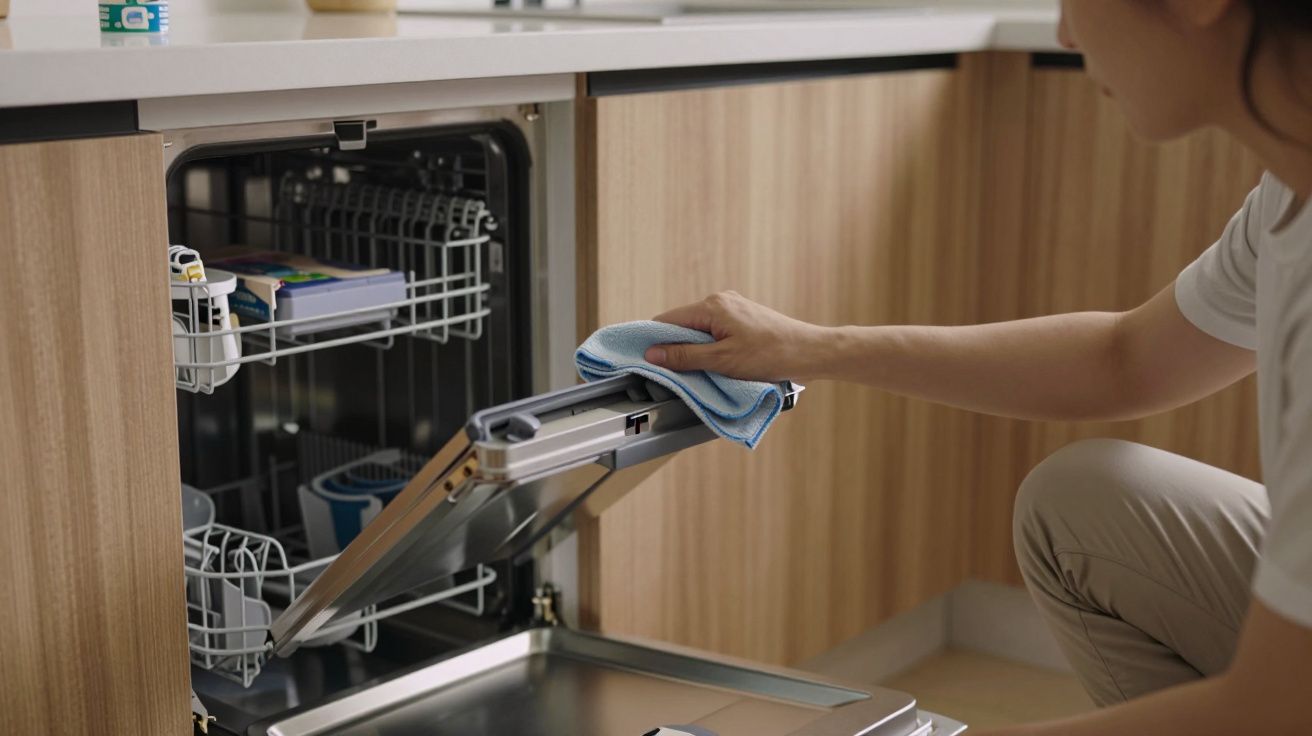
Dampen a hot cloth
Run a microfibre cloth under hot tap water, wring it out so it’s just damp.Wipe the dispenser rim and seal
Open the tablet door. Wipe firmly around:- the cup edges
- the rubber seal
- the underside of the little flap
You’re removing hardened detergent and grease that makes the door stick.
Massage the latch and hinge
Press the open/close button or catch five or six times while wiping.
This frees any gritty residue sitting in the moving parts.Dry the cup and door
Give the cup and flap a quick dry with the cloth so the next tablet doesn’t start dissolving before the programme begins.Do a “flick test”
Close and latch the door, then press the catch while watching it. The door should spring fully open with a clean snap, not creep or hang halfway.
If that flick feels crisp and you avoid blocking the door with dishes (more on that below), the next cycle usually runs clean and the tablet disappears on schedule.
Engineers often start with nothing more than a hot cloth and a flick test. If the door moves freely when clean and unloaded, the mechanism is usually fine.
Why your tablet keeps getting stuck
Once the dispenser is moving freely, recurrent jams usually boil down to a handful of habits and conditions.
1. The door is blocked by dishes
Deep bowls, chopping boards, trays and tall mugs love to sit right in front of the dispenser. When the door tries to open, it hits the crockery and stops.
- Keep the space in front of the dispenser clear for at least a hand’s width.
- Angle tall plates and boards away from the door, not flush against it.
- Avoid hanging long utensils or pan handles across that zone.
2. The tablet is too big or too damp
Some tablets are a tight fit in smaller cups. Add a bit of humidity from a warm kitchen and they swell or start to crumble before you even press start.
- If a tablet sits proud of the cup rim, snap it in half before loading.
- Store tablets in a dry container, not loose in a steamy cupboard.
- Always place them flat in the cup, not wedged on an edge.
3. The spray never reaches the cup properly
If a spray arm is blocked or hits a pan handle, the water fan pattern changes. The tablet sits in a “dry shadow” and dissolves late or not at all.
- Spin both spray arms by hand before each cycle; they should rotate freely.
- Re‑position anything that stops them turning 360 degrees.
- Poke food from spray arm holes with a cocktail stick if they look clogged.
4. Wrong programme for tablets
Short, cool eco or quick‑rinse cycles sometimes don’t stay hot long enough to fully dissolve chunky all‑in‑one tablets, especially in hard‑water areas.
- Use manufacturer‑recommended temperatures for tablets, often 50–60°C.
- For very short cycles, switch to powder or a smaller tablet if possible.
5. Detergent and grease build‑up
Undissolved powder from over‑filled cups and old spills can bake around the hinge and seal, slowing or partly jamming the door until you clean it.
That’s what the 30‑second cloth routine is quietly fixing.
Load like an engineer, not like a game of Tetris
Dishwashers are designed around water flow, not how much you can squeeze in. A few small shifts in loading protect that tablet door and the spray pattern.
- Think “tunnel” in front of the dispenser: nothing tall, nothing leaning.
- Forks and spoons handle‑down in the cutlery basket so they don’t bridge across the door.
- Pans and trays to the sides or back, never flat in front of the dispenser.
- Light plastics up top, clipped or wedged so they don’t flip and block the door or arms mid‑cycle.
If you’re not sure whether something will block, close the door gently and peek along the gap. If you can’t see the dispenser flap clearly, something is in the way.
Quick reference: symptoms, causes, checks
| What you see | Likely cause | 30‑second check |
|---|---|---|
| Intact tablet in closed cup | Sticking latch, weak spring, heavy build‑up | Clean and flick‑test the door; listen for a crisp snap |
| Crumbly tablet half out of cup | Door hit a dish or handle | Reload around dispenser, spin spray arms for clearance |
| Sludgy tablet in base of tub | Door opened late or tablet too big | Halve the tablet, use hotter cycle, avoid over‑packing |
| White film on glasses, tablet gone | Low temperature, hard water, wrong programme | Try hotter programme and check rinse aid/salt levels |
When it’s time to call for a repair
A clean, unblocked dispenser that still won’t open on a proper cycle may have a failing wax motor, bent hinge, or electrical fault. That’s the point to stop guessing.
You may need an engineer if:
- the tablet door never opens in a normal wash, even when empty and clean
- the door feels loose, warped, or won’t latch at all
- you see cracks in the dispenser body or rubber seal
- error lights appear alongside tablet issues in the manual
Keep notes: which programme, how often it happens, any noises. That makes a service visit faster and cheaper.
Simple habits that keep the slot trouble‑free
- Run the hot‑cloth clean on the dispenser once a month.
- Leave space in front of the door every time you load.
- Spin spray arms by hand before you shut the door.
- Store tablets dry and snap large ones if the cup is tight.
- Choose a wash programme that matches the tablet’s instructions.
Tiny, dull steps-but they’re what keep that little plastic hatch opening on cue instead of sulking shut.
FAQ:
- Can I just throw the tablet in the bottom of the dishwasher? You can in a pinch, but it’s less efficient. The tablet may start dissolving during pre‑rinse and be mostly spent before the main wash. The dispenser times the release to when the water is hottest and most effective.
- Would switching to powder or gel solve jamming for good? Often, yes. Loose detergents don’t rely on the tablet cup size and are less affected by slight door stickiness. Still keep the dispenser clean, as the mechanism and seal can cause leaks if they gum up.
- Is it safe to break tablets in half? It is, as long as you keep roughly the right dose for your machine and water hardness. Many engineers quietly do this in small dispensers. Avoid crumbling them into dust; large crumbs dissolve more predictably.
- My dishwasher is old-does that make jams more likely? Age itself isn’t the issue; build‑up and worn springs are. Older machines with well‑cleaned dispensers often outperform newer, gummed‑up ones. If the door passes the flick test and opens during a cycle, it’s probably fine.
- Should I lubricate the latch or hinge? No oils or sprays-these collect dust and detergent, making things worse and risking seal damage. Stick to hot water, a cloth, and, if needed, a soft brush or old toothbrush for stubborn residue.

Comments
No comments yet. Be the first to comment!
Leave a Comment