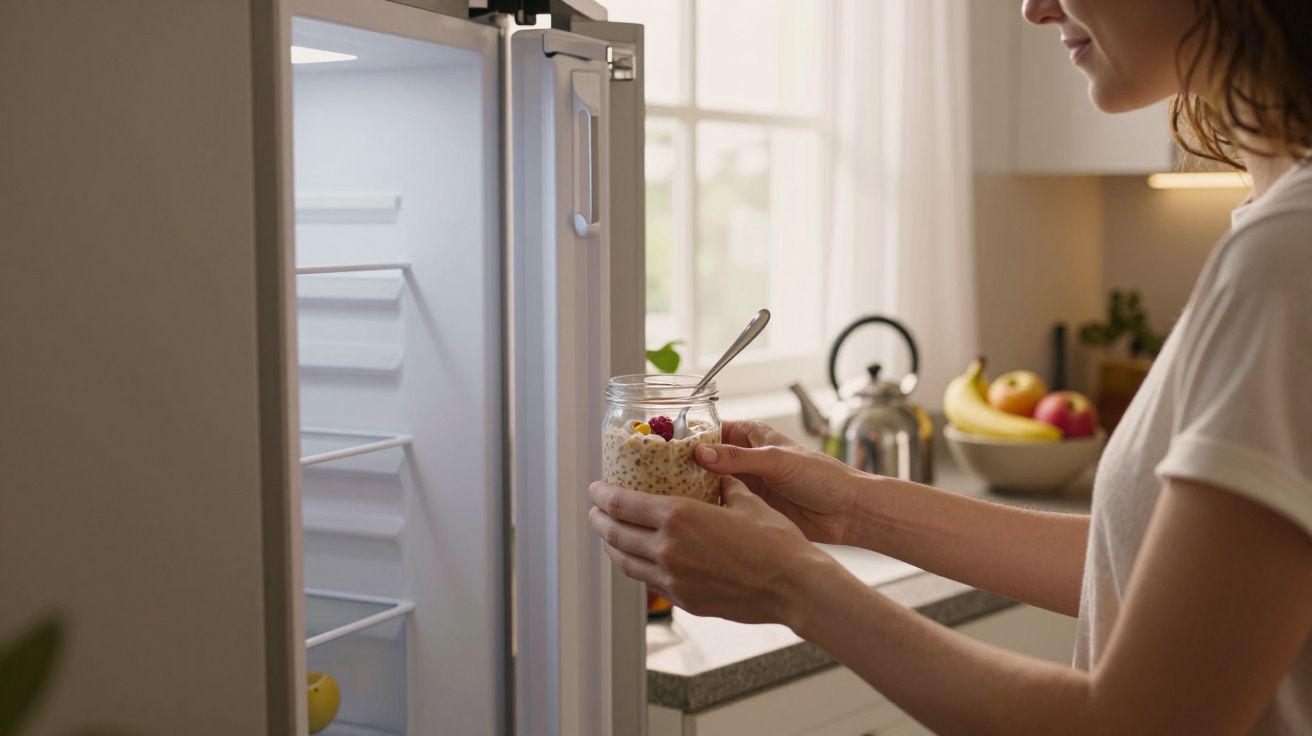
You pad into the kitchen half-awake, open the fridge, and there it is: a lone spoon, icy-cold and waiting next to your overnight oats or tub of yoghurt. It looks a bit theatrical, like you’re about to plate a restaurant dessert at 7am. But that chilled spoon is doing something quietly powerful for your hunger, your blood sugar – and the rest of your day.
We’re used to breakfast “hacks” that are really just new ways of saying “eat less”. This one is different. It doesn’t shrink your portion by stealth or ban certain foods. It changes how you eat, not what you’re allowed to have. That small shift is exactly why many nutritionists give this bedtime ritual their full approval.
The simple trick nutritionists actually rate
The idea is almost comically basic: put the spoon you’ll use for breakfast in the fridge overnight (or tucked into the jar/bowl of whatever you’re having). In the morning, you eat with that chilled spoon instead of a room‑temperature one.
On its own, a cold spoon won’t transform your diet. But paired with a decent breakfast – think yoghurt and fruit, overnight oats, chia pudding, even cooled porridge – it nudges three behaviours that dietitians repeatedly try to encourage:
- Slower eating
- More mindful attention to the meal
- Better tuning into fullness signals
It’s that behaviour pattern, not the bit of metal, that helps regulate appetite and smooth out the mid‑morning crash.
“Anything that slows breakfast down without making it a chore is gold dust,” says one London‑based dietitian. “A chilled spoon sounds quirky, but if it helps you actually notice your food and your fullness, I’m all for it.”
How a cold spoon changes your breakfast
The temperature difference between the spoon and your food is small, but your mouth pays attention. That sensory nudge has knock‑on effects throughout the meal.
1. It naturally slows your pace
A cold spoon against warm lips or tongue makes each mouthful slightly more noticeable. You’re less likely to shovel mechanically. Instead, you pause for a split second: feel, taste, swallow.
Over a 10–15 minute breakfast, those tiny pauses add up. Eating even a little slower has been linked to:
- Lower total intake at the meal
- Better satisfaction from the same portion
- Smoother rises in blood sugar
Your appetite hormones – ghrelin (which signals hunger) and various satiety hormones – need time to adjust to what you’ve eaten. When breakfast disappears in five rushed minutes, your brain only gets the “we’ve eaten enough” memo after you’ve already cleared the bowl and walked out the door.
2. It makes each bite feel more “present”
Cold metal amplifies contrast: creamy yoghurt feels creamier; berries taste sharper; oats feel more comforting. You’re less likely to scroll through your phone without registering what you’re tasting.
That extra presence matters. People who report higher “meal satisfaction” at breakfast often:
- Snack less impulsively before lunch
- Find it easier to stick to planned portions later
- Feel less deprived, even when eating modestly
In other words, a breakfast you actually enjoy buys you willpower you don’t have to grit your teeth for.
3. It helps with portion awareness
A chilled utensil subtly encourages smaller, more deliberate spoonfuls. You feel each contact with your lips and teeth, instead of losing track halfway down the bowl.
Portion awareness isn’t about counting oats one by one. It’s about noticing halfway through that you’re already comfortable – and realising you don’t have to “tidy the bowl” every single time. Some days you’ll finish it; other days you’ll leave a spoonful or two. Both are fine. The point is that the decision becomes conscious.
How to try the overnight spoon trick
You don’t need special kit or a new shopping list. Just fold the spoon into whatever breakfast you already half‑enjoy (and can be bothered to assemble).
The basic method
- Choose a breakfast that waits well. Overnight oats, bircher muesli, chia pudding, Greek yoghurt with fruit and nuts, or cooled porridge all work. Even a simple bowl of plain yoghurt is fine.
- Assemble it the night before. Use a jar, lidded bowl, or even the yoghurt pot itself if you’re not worried about presentation.
- Slide the spoon in. Put the clean spoon handle‑up into the bowl or jar so the bowl of the spoon rests in the food, then close the lid or cover.
- Chill overnight. Pop the whole thing in the fridge. The food sets; the spoon cools.
- Eat straight from the fridge. In the morning, you grab the jar, sit down (ideally) and eat with the cold spoon – no extra faff, no hunting for cutlery.
The power of the habit is partly psychological: the ready‑to‑go breakfast and visible spoon act as a promise you made to yourself the night before. It’s harder to skip breakfast or grab a biscuit instead when it’s literally waiting, chilled, at eye level.
Variations worth trying
- For hot porridge lovers: Make porridge in advance, portion it into a bowl, chill, and reheat gently in the morning. Use the cold spoon with the warmed oats; you still get the temperature contrast.
- For smoothie people: Serve your smoothie in a bowl, not a cup, and eat it with the chilled spoon rather than gulping it down.
- For portion control with spreads: Keep a dedicated teaspoon in the fridge and use only that for peanut butter, chocolate spread or jam. The cold metal against the jar makes you more conscious of how many scoops you’re taking.
The goal isn’t a perfectly “clean” breakfast. It’s a breakfast you actually notice while you’re eating it.
Who this helps most
Nearly anyone can use a chilled spoon as a harmless experiment, but a few groups may feel the benefits more strongly.
| If you… | The chilled spoon can help you… |
|---|---|
| Skip breakfast then overdo it mid‑morning | Make breakfast feel “worth it” and easier to remember |
| Bolt food down before work or school | Build in a small speed bump without complicated rules |
| Struggle with blood sugar dips | Support steadier glucose by pairing a balanced meal with a slower pace |
| Feel “always hungry” on diets | Boost satisfaction and fullness from the same portion |
| Work from home and graze all morning | Anchor the day with one clear, conscious meal |
People with type 2 diabetes or insulin resistance, for example, are often advised to opt for protein‑ and fibre‑rich breakfasts and to avoid huge sugar spikes. A cold spoon won’t change the nutritional profile, but it can make it more likely that you:
- Actually eat the breakfast you planned
- Give your body time to register it
- Feel genuinely full enough to skip the random biscuits by 10:30
Small adjustments and caveats
A spoon in the fridge is low‑risk, but a few tweaks will make it more comfortable and sustainable.
- Sensitive teeth? Keep the spoon in the fridge, not the freezer, and let it sit on the counter for a minute while you make tea.
- Very cold mornings? You can chill just the handle and upper stem (rest that part on the dish edge) so the bit in your mouth is cool rather than icy.
- Busy households? Prep a container and spoon per person with labels – especially handy for teenagers rushing out of the door.
- Not a breakfast person? Try the same trick with an afternoon yoghurt or pudding. The principle is the same: slower, more mindful, more satisfying.
If you have an eating disorder or are in recovery, check in with your clinician before adding any food‑related rituals. For some people, extra “rules” around eating can do more harm than good, even if the idea looks healthy on paper.
Turning a tiny habit into a bigger win
Most of us don’t have the bandwidth for a total lifestyle overhaul at 7am. But we can manage one object in the fridge.
The overnight spoon trick works because it piggybacks on other good ideas:
- Prepping breakfast before you’re tired and rushed
- Building a small, repeatable routine
- Giving your appetite the time and attention it quietly needs
It’s not magic, and it won’t cancel out every late‑night takeaway. What it can do is make one everyday meal calmer, more satisfying and more in line with what nutrition science has been saying for years: eat something in the morning, eat it slowly, and give your body a chance to tell you when it’s had enough.
In a world of loud wellness trends, leaving a spoon in the fridge is almost suspiciously quiet. That might be exactly why it works.
Comments
No comments yet. Be the first to comment!
Leave a Comment