Bread goes into the fridge with the best of intentions: you want it to last a bit longer and avoid mould. Yet what usually comes out is dry, chewy in all the wrong places, and somehow both tough and crumbly. Bakers wince for a reason: the fridge is almost the perfect machine for making bread stale fast.
The trouble is not your toaster, or even the loaf itself. It’s what cold does to the starches inside the crumb. Once you know that, the best spot for your bread at home becomes obvious – and it’s almost never the refrigerator.
What actually happens to bread in the fridge
Fresh bread is soft because its starch molecules are swollen with water and loosely arranged after baking. As the loaf cools and sits, those starches slowly recrystallise and squeeze water out into the surrounding crumb, a process called retrogradation. That’s what we experience as staling: the crumb turns dry and firm, the aroma fades, and the crust loses its snap.
Fridge temperatures speed this up dramatically. Between about 0°C and 5°C, starch retrogradation happens faster than at room temperature or in the freezer. So while the fridge may delay mould, it actively drives the very changes that make bread taste “old”.
The fridge protects against mould but turbocharges staling. It keeps bread safe for longer – but ruins its texture on the way.
It’s worth separating two ideas. Mould is about food safety and storage time. Staling is about texture and flavour. The fridge helps one and harms the other, which is why bakers generally keep finished loaves out of it.
Why bread goes stale faster in the fridge
Bread is a cooked starch gel wrapped in a crust. When that gel sits in the cold, its starch chains line up neatly and harden, pushing out moisture. That water then migrates into drier parts of the loaf or even the packaging, leaving the crumb dense and the crust leathery.
In a fridge, this reorganisation happens quickly. A loaf that might still feel decent after two or three days on the counter can taste tired after just one night in the cold. You can toast some life back into it, but the easy, springy softness of a good fresh loaf rarely returns.
Packaging plays a role too. Plastic bags lock in moisture, which softens crusts and can give a slightly clammy feel, but they slow drying. Paper lets the crust stay crisp but allows the loaf to lose water to the air. In the fridge, you often end up with the worst of both worlds: fast starch hardening and moisture going all the wrong places.
Where bakers say bread belongs instead
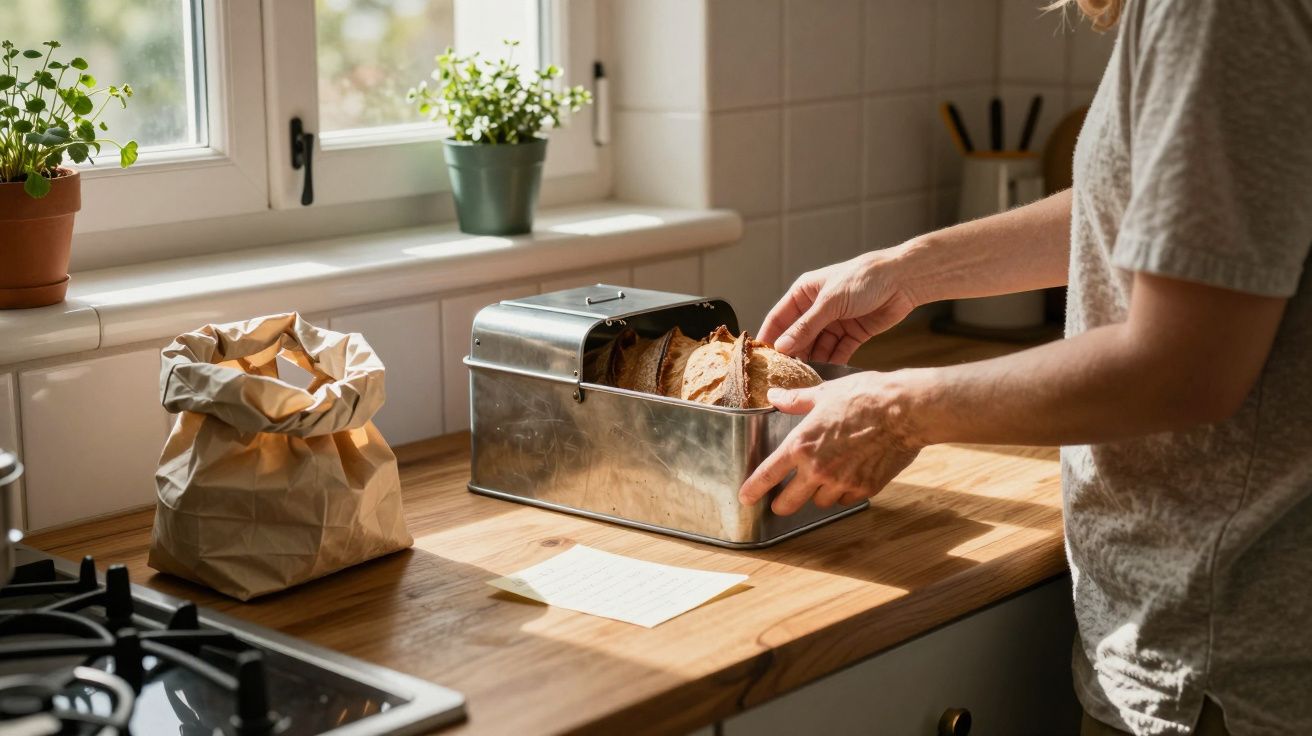
Ask professional bakers where to keep your loaf and you’ll hear the same message: cool, dry, and at room temperature – not chilled. Most everyday bread is happiest in a bread bin, a cupboard, or even just wrapped on the counter away from sun and radiators.
Air circulation matters. A closed bread bin or cloth bag lets the loaf breathe without drying out too fast. A dark cupboard keeps light and heat away, helping flavour last. The goal is simple: slow down drying and staling, without turning the crust rubbery or inviting condensation.
Treat bread like fresh produce with a short, delicious window – not a long-life packet to be stretched at any cost.
Different breads benefit from slightly different handling, but the no-fridge rule holds for almost all of them.
For crusty loaves (sourdoughs, baguettes, boules)
Crusty breads rely on a dry, brittle shell and a moist, open crumb. The fridge wrecks that balance quickly. Instead:
- Keep whole loaves at room temperature in a paper bag, cloth bag, or bread bin.
- Once cut, place the loaf cut side down on a board, then cover loosely with a tea towel or pop into a bread bin.
- Eat at peak between day one and three; then refresh in a hot oven (see below) rather than chilling.
- For baguettes, plan for same-day eating or freeze what you won’t use by the evening.
Leaving the cut face exposed to a board helps seal moisture in the crumb while allowing the crust to stay reasonably crisp.
For sliced and supermarket bread
Packaged sliced bread is often enriched and contains emulsifiers or preservatives designed to extend softness. It still stales faster in the fridge, but it copes slightly better than an artisan loaf.
- Store in its original plastic bag at room temperature, well closed.
- Squeeze out excess air before closing the bag to slow oxidation.
- If you buy in bulk, keep one loaf out and freeze the rest on day one.
- Only use the fridge if your kitchen runs very hot and humid and mould is a real daily risk.
For many households, a small bread bin or a dedicated cupboard shelf does more good than any fridge shelf for keeping sliced loaves pleasant.
When the freezer is your friend
If you need to keep bread longer than two or three days, bakers are surprisingly enthusiastic about one cold place: the freezer. Freezing halts the starch changes that cause staling and largely locks texture in place.
To get the best from freezing:
- Freeze bread on the day you buy or bake it, while it still feels fresh.
- Slice the loaf first, then freeze individual slices or portions in bags with as little air as possible.
- Toast slices straight from frozen, or reheat whole or half loaves in a moderate oven.
- Avoid repeated thawing and refreezing, which encourages drying and off flavours.
A well-wrapped loaf can taste remarkably close to fresh after a gentle thaw and reheat, especially if it went into the freezer early.
Storage options at a glance
| Storage place | Best for | Key points |
|---|---|---|
| Room temp (bread bin / cupboard) | Daily bread for 1–3 days | Protects flavour and texture; keep away from heat and sun |
| Fridge | Emergency only | Slows mould but speeds staling; use if kitchen is very hot and humid |
| Freezer | Keeping bread beyond 3 days | Freeze fresh, slice first, reheat or toast from frozen |
How to revive bread that’s lost its sparkle
Once bread has fully staled, you cannot permanently reverse the internal changes. You can, however, temporarily “reset” some of the starch and restore an appealing texture, especially with gentle heat.
Try these approaches:
Rapid oven refresh for crusty loaves
Lightly splash or mist the crust with water, then bake at about 180°C for 5–10 minutes. The crust will recrisp as moisture turns to steam and the crumb warms and softens.Toaster rescue for slices
Stale – even refrigerated – slices improve dramatically after toasting. Heat disrupts some of the starch crystallisation and adds new flavour through browning.Steaming gently
For very dry rolls, wrap in lightly dampened baking paper or foil and warm in a low oven. This reintroduces moisture and warmth without scorching.
Use these tricks as a same-day rescue. Once the bread cools again, staling will continue, so plan to eat it soon after refreshing.
Common pitfalls that ruin bread faster
A few storage habits reliably shorten the enjoyable life of your loaf:
- Putting fresh, warm bread into sealed plastic
Traps steam, soaks the crust, and encourages mould and off smells. - Leaving bread in direct sun or near a radiator
Speeds oxidation, dries the crumb, and makes flavours fade. - Keeping bread exposed on the counter for days
Looks rustic but allows the crumb to dry out rapidly. - Chilling “just overnight” as a routine
Even brief spells in the fridge move starch further along the staling path.
A small tweak – shifting the loaf to a bin or cloth bag instead of the fridge – makes more difference than most elaborate hacks.
A simple plan for better-tasting bread all week
Think in terms of how much you’ll actually eat while the bread is naturally at its best. Then:
- Buy or bake in sizes you can finish within two to three days.
- Store current bread at room temperature in a bin, cloth bag, or paper bag.
- Freeze any surplus on day one, sliced and well wrapped.
- Refresh older bread with heat, then use leftovers in toast, breadcrumbs, croutons or bread puddings rather than forcing it through another day in the fridge.
Respect the loaf’s short peak and it will reward you. Bread wants a cool corner of the kitchen or a good freezer – not the chill of the fridge.



Comments
No comments yet. Be the first to comment!
Leave a Comment