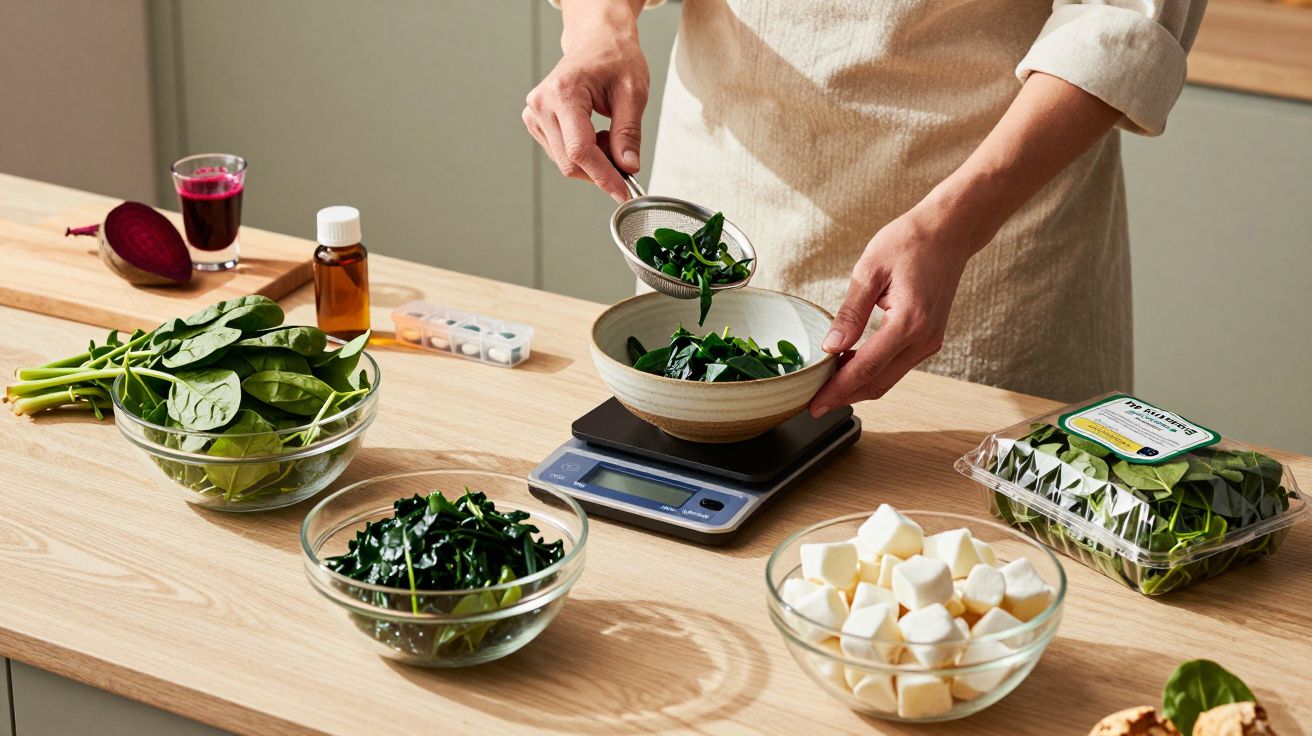
Spinach is back under professional scrutiny, and not because anyone has suddenly decided it’s “bad for you”. In kitchens, clinics and corporate canteens, spinach is being treated less like a default healthy add-on and more like a tool with trade-offs - alongside the elusive “” that sits between good intentions and what people actually eat. That shift matters if you rely on spinach for quick nutrition wins, manage a medical condition, or design menus for others.
For years it was the green you could slide into anything: smoothies, omelettes, pasta, dhal, salads. Now dietitians, sports practitioners and food safety teams are asking a more grown-up question: when does spinach help most, and when does it quietly complicate things?
The “superfood” era is giving way to precision
The old pitch was simple: spinach equals iron, fibre and virtue. Professionals haven’t stopped valuing those nutrients, but they’ve stopped pretending the context doesn’t matter.
Spinach brings real benefits - folate, vitamin K, carotenoids, potassium - yet its headline “iron” is often misunderstood. The iron in spinach is non-haem iron, which is harder to absorb, and its natural compounds can further limit mineral uptake if you depend on it too heavily.
Spinach isn’t being cancelled. It’s being put back into the category of “useful, but not magic”.
That nuance is showing up in meal plans. Instead of “add a handful of spinach to everything”, the advice is increasingly about rotation, preparation and portioning.
Why this matters more in 2025 than it did in 2015
Three pressures are colliding:
- More people are eating plant-forward and leaning on a small set of “safe” ingredients every day.
- Health guidance is more personalised, with kidney, gut and medication considerations moving into mainstream conversations.
- Convenience spinach (especially bagged) has become a staple - and convenience comes with its own risks and compromises.
The result is not anti-spinach sentiment. It’s professionals trying to prevent the “healthy default” from becoming the “unexamined habit”.
Oxalates: the conversation that keeps resurfacing
If there’s one reason spinach is being re-evaluated, it’s oxalates.
Spinach is high in oxalates, naturally occurring compounds that can bind to minerals like calcium and, in some people, contribute to calcium oxalate kidney stones. Most healthy people can eat spinach without drama, but clinicians see patterns: patients with a history of stones, high-dose smoothie habits, and “same breakfast every day” routines can be a messy combination.
What’s changed is how common that routine has become. A daily litre smoothie with spinach, nut butter and seeds can turn a “healthy” habit into a high-oxalate routine surprisingly quickly.
Where professionals are landing:
- If you’ve had kidney stones, don’t make spinach your daily green without medical advice.
- If spinach is a staple, rotate with lower-oxalate greens (for example: kale, cabbage, romaine, watercress).
- Pairing matters: getting adequate dietary calcium (from food, not necessarily supplements) can help bind oxalate in the gut rather than in the kidneys - something a renal dietitian may discuss with you.
Nitrates: performance booster, or a labelling headache?
Sports nutrition has long embraced dietary nitrates (most famously via beetroot). Spinach also contains nitrates, which can support nitric oxide production and, for some athletes, contribute to blood flow and endurance benefits.
But nitrates come with practical complications in professional settings:
- Portion control is inconsistent (a “handful” varies wildly).
- Content varies by season, farming conditions and storage.
- Institutional catering has to consider vulnerable groups (for example, infants) and regulatory guidance in certain contexts.
So chefs and sports practitioners are using spinach more deliberately: not as a vague “green health halo”, but as one nitrate-containing ingredient among several, with clearer serving sizes.
The new rule: stop hiding spinach in everything
Blending spinach into smoothies can be useful, but it also makes it easy to consume large amounts daily without noticing. Many professionals now prefer spinach in visible, portioned formats - sautéed, wilted into a meal, or served as a side - where “how much you’re eating” is obvious.
Food safety: bagged spinach isn’t the same as a bunch
Spinach is delicate, grows close to soil, and is often eaten raw. That combination means food safety teams pay attention - especially to pre-washed bagged leaves.
Washed-and-ready salads are convenient, but they’ve also been linked (across the wider leafy greens category) to periodic contamination scares. Most of the time, your bag is fine. The professional rethink is about risk management, not panic.
What professionals are doing differently:
- Choosing cooked spinach more often in settings serving many people (schools, hospitals, events).
- Tightening cold-chain discipline: storage temperatures, use-by compliance, avoiding leaves sitting out on prep benches.
- Treating “pre-washed” as “ready” in terms of prep, but not as “invincible” in terms of handling.
If you’re cooking at home, the practical takeaway is boring but effective: buy it fresh, keep it cold, use it promptly, and cook it when serving anyone at higher risk.
Vitamins and medications: the vitamin K factor
Spinach is rich in vitamin K, which is generally excellent for health. But for people taking warfarin or other vitamin K–sensitive anticoagulants, large swings in vitamin K intake can complicate dosing.
This is another reason clinicians are reframing spinach advice. It’s not “avoid spinach”; it’s “keep your intake consistent and tell your care team what you actually eat”.
For a patient, the problem isn’t the salad. It’s the pattern: no spinach all week, then a giant spinach smoothie every morning for three days because you “got back on track”.
The preparation shift: raw, cooked, or frozen?
Professionals are also quietly changing how they use spinach. Cooking reduces volume dramatically, which changes portion size, and can improve access to some nutrients while reducing certain compounds.
Frozen spinach is gaining status because it’s:
- picked and frozen quickly (often good nutrient retention),
- cheaper,
- less wasteful,
- easier to portion.
Here’s the practical lens many dietitians and chefs are using:
| Format | Best for | Watch-outs |
|---|---|---|
| Raw leaves | Salads, sandwiches, quick wilt into hot food | Bigger oxalate hit per “invisible” smoothie habit |
| Cooked (fresh) | Side dish, curries, eggs, pasta | Shrinks a lot; easy to overshoot portions if you start with huge bags |
| Frozen | Soups, sauces, batch cooking | Can be watery; squeeze/drain for frittatas and pies |
The “rotation” mindset: variety beats loyalty
One of the simplest professional shifts is also the most effective: stop treating spinach as the only acceptable green.
Menu planners are moving towards a “greens rotation” approach to reduce:
- nutrient blind spots (different greens bring different profiles),
- exposure to any single compound in high amounts (oxalates, nitrates),
- boredom (which is usually what kills healthy eating anyway).
A realistic weekly rotation might include spinach once or twice, then swap in:
- kale or cavolo nero (more robust in hot dishes),
- rocket (peppery, smaller portions),
- cabbage (cheap, long-lasting),
- mixed herbs (high flavour-to-volume ratio),
- broccoli or peas (still green, often more filling).
How to use spinach like a professional (at home or at work)
If you want the benefits without the common pitfalls, the emerging “best practice” is straightforward.
- Use spinach for what it’s good at: fast-cooking, mild flavour, easy bulk in savoury meals.
- Pair it intelligently: add vitamin C sources (lemon, peppers, tomatoes) when spinach is your main plant iron source.
- Avoid daily mega-doses by accident: especially via smoothies.
- Prefer cooked or frozen for high-frequency use: easier to portion and lower risk than raw, bagged leaves.
- If you have kidney stone history or take anticoagulants: treat spinach as a “discuss with a clinician” staple, not a wellness reflex.
The broader point is almost reassuring: spinach still belongs on the plate. It just doesn’t need to be on every plate.
FAQ:
- Is spinach actually “bad for you”? No. For most people it’s a nutrient-dense vegetable. The rethink is about context: portion size, frequency, and specific health conditions.
- Should I stop putting spinach in smoothies? Not necessarily, but avoid turning it into a daily high-volume habit. If you do use it, rotate greens and keep portions consistent rather than “a whole bag to be healthy”.
- Who should be cautious with spinach? People with a history of calcium oxalate kidney stones, and anyone on vitamin K–sensitive anticoagulants (such as warfarin) should get personalised guidance.
- Is frozen spinach a good alternative? Yes. It’s cost-effective, reduces waste, and is easy to portion for cooking. Drain it well for drier dishes.
- Does cooking “remove the nutrients”? Cooking changes the nutrient profile rather than simply removing it. Some compounds become more available; others may reduce. For most people, a mix of raw and cooked greens across the week is the most sensible approach.




Comments
No comments yet. Be the first to comment!
Leave a Comment