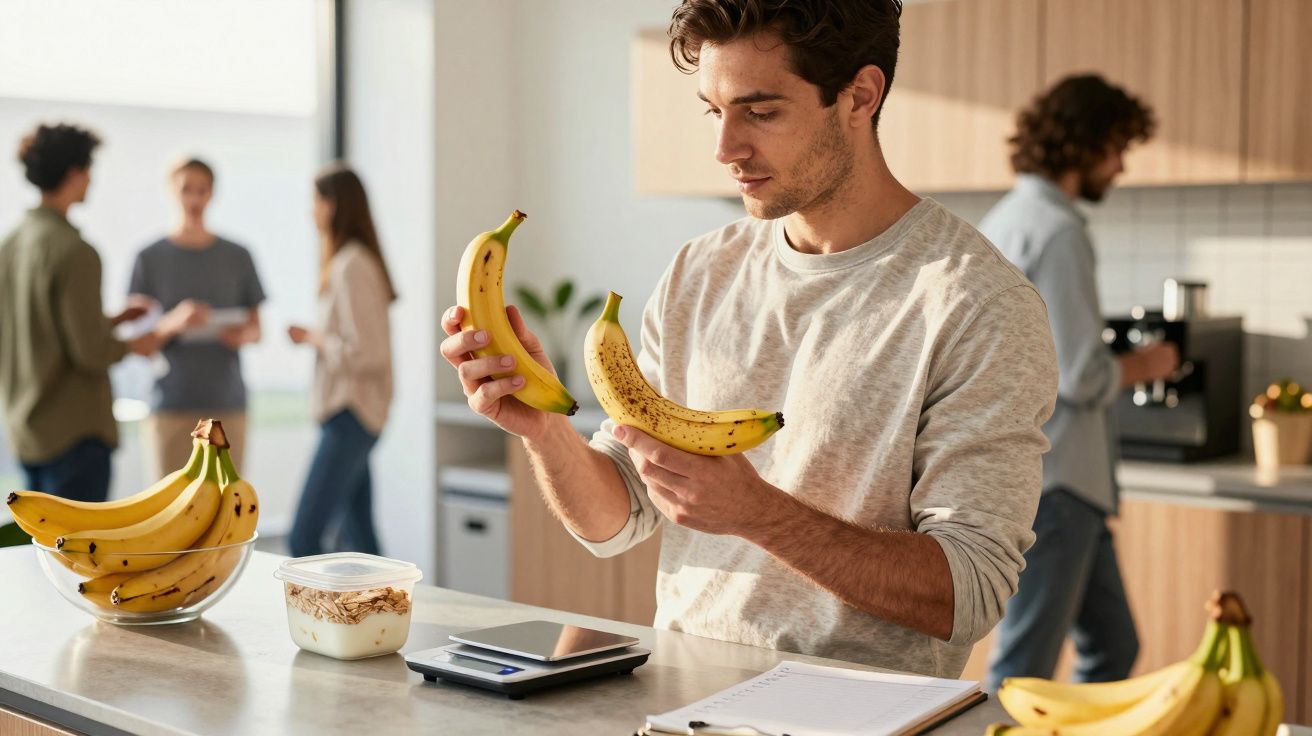
Bananas show up everywhere professionals eat: desk drawers, hospital staff rooms, gym bags and the “quick breakfast” corner of a studio kitchen. But bananas - and `` - are being rethought right now because the old assumptions (“perfect healthy snack”, “instant energy”, “always gentle”) don’t hold up in every workplace body, schedule or budget. If you rely on them to stay sharp, train hard, or simply avoid the 3 p.m. crash, the details suddenly matter.
The shift isn’t a ban on bananas. It’s a move towards using them more deliberately: choosing ripeness on purpose, pairing them better, and paying attention to waste, sugar spikes and supply-chain realities.
The banana was the default. Now it’s being audited.
For a long time, the banana did a particular job in professional life: cheap, portable, no cutlery, no mess. It was the snack equivalent of a plain white shirt-safe enough for almost any setting.
Now, more people who work with performance (dietitians, coaches), care (NHS staff, carers), and food (chefs, caterers) are treating it less like a universally “good” food and more like a tool with trade-offs. The same fruit can support a busy morning, or set you up for a hungry, foggy hour later, depending on timing and context.
The question has changed from “Is a banana healthy?” to “Which banana, when, and with what?”
Two forces sit behind that change. One is metabolic: more awareness of glycaemic response, satiety, and how “healthy” snacks can still create a loop of snack-crash-snack. The other is practical: waste and cost control in workplaces where food budgets are tight and fruit bowls are expected to look generous every day.
Ripeness is no longer a vibe. It’s a setting.
Most professionals don’t talk about bananas as “unripe” or “ripe”. They talk about “green-ish because I need it to last” or “spotty because it tastes better”. But the ripeness stage changes what you get.
A greener banana tends to contain more resistant starch, which behaves more like fibre and can be kinder on blood sugar for some people. A very ripe banana is generally easier to digest and tastes sweeter, but it can feel like a fast hit-especially if you eat it alone and you’re already running on stress and caffeine.
If you’ve ever watched a colleague inhale a banana between meetings and then rummage for biscuits half an hour later, you’ve seen the problem. It isn’t that bananas are “bad”. It’s that a solo, sweet snack often doesn’t anchor appetite for long.
| Banana stage | Best for | Watch-outs |
|---|---|---|
| Slightly green | Longer-lasting fuel, “desk fruit” that won’t vanish overnight | Can feel bloating/“heavy” for some guts |
| Yellow (just ripe) | All-rounder: breakfast, smoothies, on toast | Still easy to under-pair and get hungry soon |
| Spotty/very ripe | Quick carb for training, baking, reducing food waste | More “sweet snack” behaviour if eaten alone |
The overlooked trick: choose the banana for the job
If you’re buying bananas for a week of work, treat them like you would bread: you wouldn’t buy only one type for every meal. A mix means fewer wasted fruit and fewer “I needed something filling and this wasn’t it” moments.
- Slightly green for Mon–Wed desk snacking
- Yellow for breakfasts and lunches
- Spotty for oats, baking, or pre-training
The “perfect pre-workout” myth is being refined
Sports nutrition culture helped make bananas iconic: potassium, quick carbs, no fuss. That part is still true-bananas can be useful training fuel-but coaches increasingly frame them as one option rather than the option.
If your session is intense or long, a banana alone may be under-dosed for carbohydrate, sodium and fluid. If your session is short, a very ripe banana can be more sugar than you needed, especially if you’re also drinking something sweet on the way.
Professionals who train clients often steer towards clearer “use-cases”:
- Good fit: 30–60 minutes before a run, alongside water; or as part of a larger snack (banana + yoghurt).
- Better alternatives sometimes: a small bowl of cereal, toast with honey, or a purpose-made carb snack if you’re fuelling for performance.
- Post-session upgrade: banana plus protein (milk, yoghurt, kefir, cottage cheese) rather than banana alone.
The banana hasn’t been kicked out of the gym bag. It’s just stopped being a one-item plan.
In offices, the banana is colliding with the new satiety conversation
In knowledge work, the goal isn’t just “eat something healthy”. It’s “stay steady enough to think”. That’s where bananas can be brilliant-or slightly annoying-depending on what else is going on.
A banana on an empty stomach, after two coffees, in the middle of a deadline spiral, can act like a sweet snack that buys you 20 minutes. The better pattern is to make it part of something that actually holds you:
- Banana + peanut butter (or any nut butter)
- Banana + Greek yoghurt
- Banana sliced into porridge with seeds
- Banana with a small handful of nuts and a proper drink
These combinations don’t make the banana “healthier”. They make it more functional for focus, appetite control and mood.
The professional upgrade isn’t removing the banana. It’s stopping it from being eaten in isolation.
Gastro comfort: the “gentle fruit” isn’t gentle for everyone
Another reason some professionals are rethinking bananas is gut reality. In hospitals, schools, and corporate settings, “safe” snacks need to be safe for lots of people. Bananas are often tolerated well, but not universally.
Some people find greener bananas constipating, while others find very ripe bananas too fermentable and triggering. There’s also the latex–fruit connection: people with latex allergy can sometimes react to bananas (and a few other fruits) due to cross-reactive proteins.
If you’re managing food provision for a team, the take-home is simple: don’t let the fruit bowl become monoculture. A banana-only setup is convenient until it isn’t.
Cost, waste and the fruit-bowl economy
The banana’s reputation was built partly on price stability and predictable eating. Right now, many workplaces are noticing two things at once: fruit costs are jumpy, and a surprising number of bananas end up in the bin.
Bananas also have a narrow “desk window”: too green and people avoid them; too spotty and they look “past it” even when perfectly usable. In cafés and catering, this has pushed a small but real shift-buying slightly fewer bananas, but planning a second use for the ripe ones.
Practical systems that reduce waste without making food feel managed to death:
- Buy bananas at two ripeness stages, not one.
- Put a small sign by spotty bananas: “Best for smoothies/baking”.
- Keep a backup plan: banana bread, porridge topping, staff smoothies.
- Don’t overfill bowls just to make them look abundant.
That last point matters. A full bowl looks generous, but it also signals “help yourself” to people who don’t actually want a banana, which increases handling and bruising.
So… are professionals quitting bananas?
Not really. They’re just treating bananas like they treat everything else at work now: measured, optimised, and less sentimental.
A banana can be a genuinely smart choice when it matches the moment-quick carb, easy to carry, predictable. It becomes less smart when it’s used as a stand-in for a proper snack, or when teams buy them out of habit and bin them out of guilt.
If you want one rule that works across most professional routines, it’s this: bananas are best when they’re paired, planned, and chosen by ripeness-rather than grabbed by default.
FAQ:
- Are bananas “too sugary” for workdays? Not automatically. The issue is usually eating a banana on its own when you needed a more filling snack; pair it with protein/fat (yoghurt, nuts, nut butter) for steadier energy.
- Is a green banana healthier than a ripe one? It depends on the job you need it to do. Greener bananas often have more resistant starch (potentially steadier for blood sugar), while ripe bananas are easier to digest and feel sweeter.
- What’s the best way to stop bananas going to waste at home or in the office? Buy mixed ripeness and assign the spotty ones a purpose (smoothies, porridge, baking). A visible “use me first” cue helps more than good intentions.
- Can bananas cause stomach issues? For some people, yes-especially at certain ripeness levels. If you notice bloating or discomfort, try switching ripeness, reducing portion size, or pairing with other foods, and consider personal triggers (including latex-related sensitivity).

Comments
No comments yet. Be the first to comment!
Leave a Comment