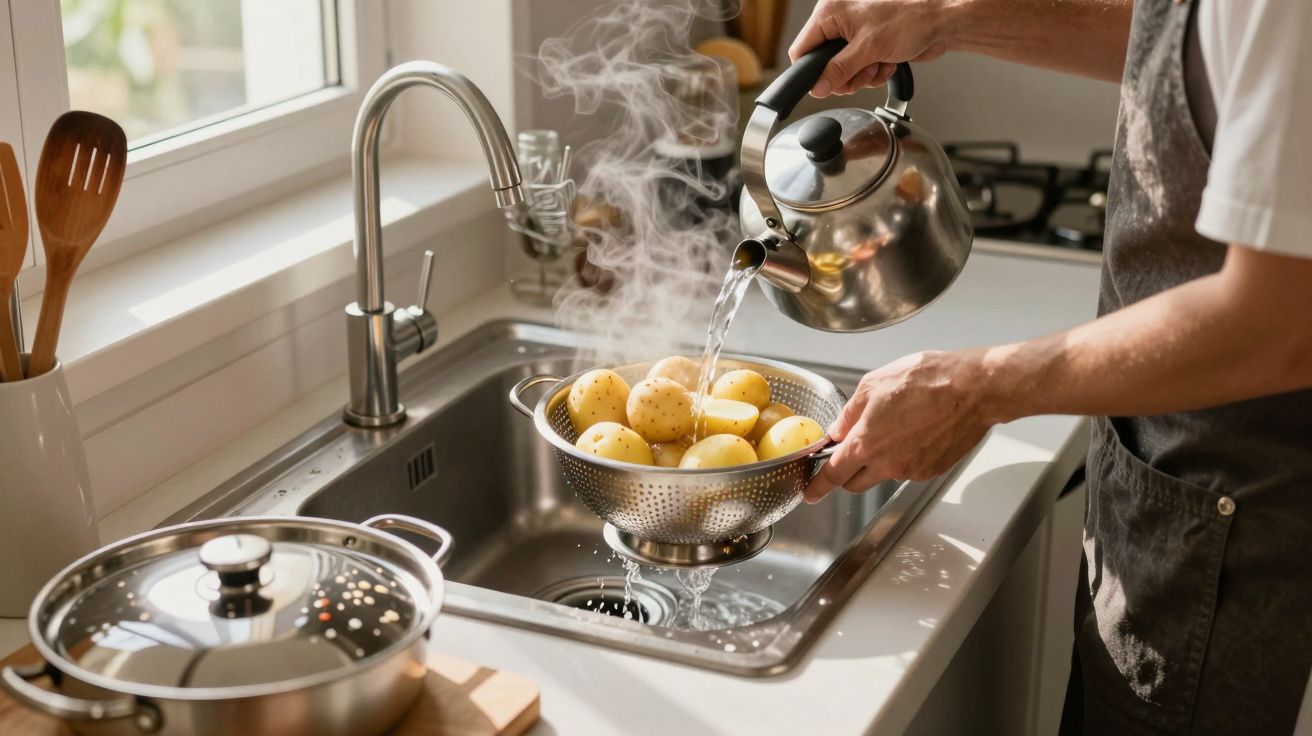
The pan was already clouded with steam when the argument started. Sunday, small kitchen, roasting tin heating in a slick of goose fat, the joint resting under foil. On the hob, your potatoes are doing their usual thing: boiled, drained, shaken, destined to emerge from the oven… fine. Golden-ish. Soft enough. Nothing you’d write home about.
Your friend-the one who owns more baking trays than plates-leans over the sink and says, “You’re missing the cold bit.” Before you can protest, they’ve up‑ended the colander, sluiced the steaming potatoes with a shocking gush of cold tap water, then set them back over the low flame to steam dry. The edges look different already: fractured, rough, almost fuzzy.
An hour later, you crack one open. The crust shatters, the centre is all cloud and comfort, and there’s a faint, irresistible crunch where oil met starch. The water did something the oven never could. One small interruption, right between boiling and roasting, quietly rewrote the ending.
The quiet science behind that cold‑water splash
Watch a potato boil and you can almost see its structure loosening. Starch granules swell, cell walls soften, water seeps into every gap. Left alone, that softness travels all the way to the edges, so by the time they hit hot fat, the outside is already half‑defeated. You get colour, yes, but not that glassy, armour‑like crust the obsessives chase.
Pour cold water over just‑drained potatoes and two useful things happen at once. The sudden temperature drop firms up the outer layer, so the surface cells stop collapsing into mush. At the same time, the rinse lifts off a film of loose surface starch, turning it into a slurry that clings back to the potato in tatters. Those tatters become the lacy, craggy bits that fry to deep, audible crispness.
Heat is still in charge, but now it’s organised. Inside, the potato stays hot enough to finish cooking to fluffiness. Outside, the cooled layer delays further softening just long enough for the oven to drive off moisture and dehydrate the surface. Less surface water means less steaming in the tin and more proper frying in fat.
A food scientist I spoke to described it as “controlled damage”: you are shocking the potato just enough to create micro‑fractures and starch paste, not enough to break it. That fine line is where the crunch lives.
How to use cold water for roast potatoes that actually shatter
You don’t need a restaurant kitchen or a three‑day recipe. You just need to be fussy about five minutes in the middle.
- Pick the right potato. Floury varieties are your friends: Maris Piper, King Edward, Desiree. Waxy all‑rounders will never crisp in quite the same way.
- Cut for contrast. Aim for chunks about the size of a golf ball, with as many flat faces as you can manage. More edges, more crunch.
- Parboil in well‑salted water. Start from cold water, bring to a simmer, and cook until a knife goes in easily but the pieces still hold their shape-usually 8–12 minutes, depending on size.
- Drain, then shock. Tip into a colander, let the first big burst of steam escape, then pour over a generous kettle’s worth of cold water. Toss gently so every surface gets hit.
- Rough and dry. Return the potatoes to the hot pan, lid on, and give them a few firm shakes. Then take the lid off and leave them over a very low flame or in the turned‑off oven for a few minutes so the remaining surface moisture steams away.
- Roast in furious fat. Your roasting tin and fat (duck, goose, beef dripping, or neutral oil mixed with a bit of butter) should already be properly hot-smoking at the edges. Only then do the potatoes go in.
Common slips make a big difference. Boiling until the potatoes are actually cooked through leaves you with nothing for the oven to do but brown the outside and collapse the inside. Using lukewarm or timidly hot fat means they absorb oil instead of frying in it. And skipping the drying stage after the cold rinse turns your tray into a sauna.
Let’s be honest: nobody does every step perfectly every single Sunday. So focus on the middle: a short parboil, a decisive cold douse, and a minute or two of patient drying. That trio covers for a multitude of other sins.
“Think of the cold water as your reset button,” says one London chef who runs entire tastings around potatoes. “It stops the cooking where you want it, firms the edges, and gives the surface just enough chaos. The oven finishes the story.”
- Best fats for aggressive crisp: goose or duck fat, beef dripping.
- Acceptable and easy: rapeseed or sunflower oil with a spoonful of butter for flavour.
- Seasoning timing: salt lightly before roasting, then finish with flaky salt at the table.
- Make‑ahead trick: take the potatoes all the way through the cold rinse and drying, then chill on a tray. Roast from cold later the same day.
Why cold water beats straight‑from‑the‑pan roasting
Skipping the cold rinse is like putting on a coat over damp clothes. You might get warm eventually, but it’s not the same kind of warm.
Boiled‑then‑drained potatoes go into the oven with their outer cells already swollen and fragile. As their surface moisture evaporates, the starch layer tightens into a relatively smooth skin. It will brown, but it won’t develop the same fractured terrain that catches and holds hot fat. Inside, continued gentle cooking can push them towards the dreaded grey, mealy middle.
Cold water changes the schedule. It arrests the cooking at that ideal “soft but not falling apart” moment, so the centre doesn’t keep drifting past fluffy into gluey. Rinsing also strips away excess free starch that would otherwise form a claggy glue in the bottom of the tin, welding potatoes to metal and to each other.
The thermal shock encourages hairline cracks and tiny flakes at the edges. When those hit hot fat, you effectively get thousands of miniature chips attached to each chunk. More surface area means more places for water to escape and more contact points for browning reactions. The result is a crust that starts crisp and stays that way for longer at the table.
There’s a practical bonus too. Because you’ve stopped the cooking and driven off some moisture, you have a wider safety window. If the meat needs “just ten more minutes”, your potatoes are far less likely to tip from golden to leathery while you wait.
What this tiny tweak does to your roast-and your week
Roast potatoes carry a silly amount of emotional weight. They’re the thing everyone reaches for first, the element that decides whether a Sunday feels generous or just fine. A simple cold‑water interruption puts that power more firmly in your hands.
You notice it first in the sound. The tray comes out, and instead of a soft sizzle and resigned sighs, you get that dry, confident crackle as you fork them over. On the plate, the contrast is bigger: armour outside, steam inside. They stay proud rather than slumping into the gravy at first contact.
You feel it in your timing too. Parboiling, shocking, and drying can be done earlier in the day, even the night before. Chilled potatoes actually rough up more easily and roast beautifully from cold. When guests arrive or children start circling the kitchen, you’re not juggling boiling pans and hot fat at the last minute. You’re simply sliding a tray into the oven.
This isn’t about culinary one‑upmanship or buying new kit. It’s about making an ordinary bag of potatoes behave like the best version of themselves, reliably, without needing a recipe every time. One small ritual between sink and hob can turn a weekly chore into the part of the meal you secretly look forward to most.
| Key point | Detail | Why it matters |
|---|---|---|
| Cold water “resets” cooking | Stops over‑softening and firms the outer layer | Fluffier middles, fewer collapsed, soggy potatoes |
| Rinse + roughing creates texture | Loosened starch and tiny fractures on the surface | Bigger, longer‑lasting crunch after roasting |
| Drier surface, hotter fat | Less steaming, more frying | More even browning and better timing control |
FAQ:
- Doesn’t pouring cold water on potatoes make them soggy? No, provided you follow with a brief drying step. The rinse is quick, and the return to the warm pan or low oven lets surface moisture evaporate so they go into hot fat dry and ready to crisp.
- Can I do the cold‑water step and then chill the potatoes? Yes. In fact, chilling after the rinse and roughing stage can improve texture. Spread them on a tray, cool completely, then refrigerate uncovered for up to 24 hours before roasting.
- Do I still need to shake the potatoes after rinsing? A gentle shake is helpful. The rinse loosens starch; shaking turns it into those fluffy, craggy edges that crisp in the oven. Just don’t go so hard that you end up with mash.
- Will this work in a fan oven as well as a conventional one? It does. In a fan oven you may want to reduce the temperature by about 10–20°C to avoid the edges over‑browning before the centres are hot through.
- Is this worth doing for small new potatoes? It’s less crucial for very small or waxy potatoes, which naturally roast with a thinner, more delicate skin. The cold‑water method shines with floury roasting potatoes cut into larger chunks, where you want a strong crust and soft interior.




Comments
No comments yet. Be the first to comment!
Leave a Comment