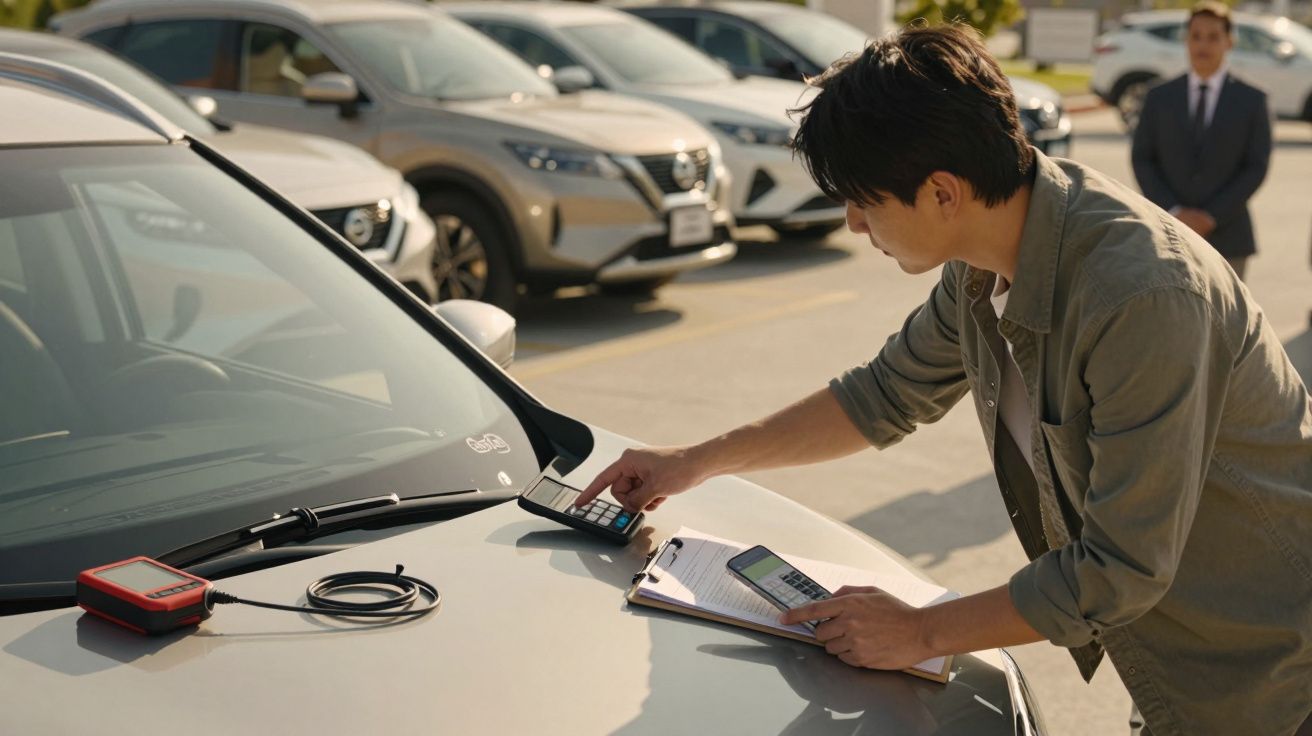
You might spot it in a showroom without anyone saying it out loud: Nissan shoppers are moving differently this year, and `` sits in the background as a reminder that not every “trend” needs a rival brand to explain it. People are still buying cars to do the same jobs - school runs, commutes, weekends away - but they’re being sharper about where the cost shows up and when it bites. If you’re looking at a Qashqai, Juke, Leaf or Ariya, these small habit changes can save you money and frustration before you sign anything.
The interesting part is how quiet it is. No grand statements about “never financing again” or “only electric from now on”. Just lots of practical tweaks that add up.
The first shift: people are shopping for the deal structure, not the car
A few years ago, many buyers would pick the model, pick the colour, then ask what the monthly payment looks like. Now it’s often the other way round. They start with a monthly ceiling, a deposit they’re willing to part with, and a list of non‑negotiables (automatic, CarPlay/Android Auto, heated seats, towing capacity), then hunt for the Nissan that fits.
That’s partly interest rates, partly cost‑of‑living fatigue. When money feels “louder”, shoppers become allergic to surprises.
A growing number of buyers aren’t asking “What’s your best price?” first. They’re asking “What’s the total to change, and what happens if I keep it an extra year?”
What people are doing instead
- Getting two quotes every time: PCP and HP (or a straightforward bank loan) for the same car.
- Checking the mileage assumptions properly, not just nodding at 8,000 vs 10,000 miles a year.
- Asking for the settlement figure logic upfront, especially if they might change cars early.
- Treating add‑ons (paint protection, GAP, service plans) as separate decisions, not part of “the deal”.
If you’re viewing a Nissan on finance, the headline monthly can be made to look tidy by stretching term length, pushing a balloon payment out, or leaning on optimistic future values. Shoppers are learning to read those levers.
The second shift: nearly‑new is eating into new‑car intent
Nissan buyers who once defaulted to factory order are increasingly starting with “delivery mileage” and one‑owner stock. Not because they’ve fallen out of love with new cars, but because the maths often behaves better.
A nearly‑new Qashqai or Juke can land in a sweet spot: modern tech, remaining manufacturer warranty, and less exposure to that first drop in value. For EVs like the Leaf or Ariya, it can also mean letting someone else absorb early depreciation while you still get a genuinely current car.
The quick checks people are making on nearly‑new stock
- Registration date vs build date: a late‑registered car can be a bargain, but it affects warranty start.
- Tyres and brakes: low miles doesn’t always mean gentle use.
- Service record clarity: especially on ex‑fleet or short‑term lease cars.
- Trim level reality: “Tekna‑style” phrasing in ads is making shoppers double‑check equipment lists.
This is one reason you’ll see buyers spend longer reading the spec sheet than walking around the car.
The third shift: EV curiosity is being replaced by EV due diligence
Nissan has been a familiar name in electric for years, but the mood has changed. Shoppers aren’t asking, “Could I go electric?” as much as, “Can I charge it the way I actually live?”
That means people are doing a kind of home-and-routes audit before they even book a test drive. They’re checking their driveway, their local public charging reliability, and what a winter motorway run does to range.
If you’re looking at a Nissan Leaf or Ariya, the questions getting sharper are:
- What’s the realistic range at 70mph in cold weather?
- Can I install a home charger, and what will it cost with my fuse setup?
- Which charging networks are actually convenient on my routes, and what do they cost per kWh?
- What’s the battery warranty, and what proof of battery health can I see on used stock?
People are also getting more specific about connectors and charging speed. They’re less impressed by vague promises and more interested in the boring details that affect a Tuesday night.
The fourth shift: shoppers are bringing their own checklist to the test drive
There’s a subtle change happening in how Nissan test drives go. Buyers are trying to recreate their daily annoyances on purpose, because that’s where the regret lives.
So instead of a polite loop around the dealer, they’re asking to drive the roads they’ll actually use: speed bumps, tight parking bays, fast A‑roads, school drop‑off traffic. They’re also spending time with the infotainment and driver assistance menus, because that’s what you live with every day, not the brochure.
The “real life” test drive routine people are copying
- Park it twice: once in an easy bay, once somewhere awkward.
- Try the camera system in drizzle or low light if possible.
- Use the sat nav and phone pairing, not just the radio.
- Turn off lane and speed warnings, then turn them back on - see how annoying it is to manage.
- Sit in the back seat for two minutes. Adults do this now, not just parents.
It sounds fussy, but it’s the opposite: it’s trying to avoid the slow burn of daily irritation.
What these new habits look like in practice
Small changes are easier to steal than big resolutions. Here are the patterns showing up again and again.
| Habit change | What shoppers are doing | Why it helps |
|---|---|---|
| Compare like‑for‑like monthly costs | Quote PCP, HP and personal loan side by side | Stops “cheap monthly” tricks |
| Default to nearly‑new first | Search 6–18 month old cars before factory ordering | Better value, faster availability |
| EV checks before the test drive | Map chargers, check home install, ask about battery health | Reduces range and charging surprises |
The quiet driver behind it all: risk feels expensive
A lot of this comes down to one feeling: buyers don’t want to be cornered.
They don’t want to be cornered by a charging setup that doesn’t work, by a finance deal that’s hard to exit, or by a trim level that looks great online but doesn’t have the one feature they assumed it did. Nissan shoppers aren’t uniquely cautious - it’s happening across the market - but the popular Nissan models make it easier to compare options quickly, so habits change faster.
There’s also a wider awareness that cars are becoming more software‑defined. People are paying attention to what’s standard, what’s optional, and what might be locked behind settings, subscriptions, or updates. Even if they don’t use that language, they’re feeling for it when they poke around menus.
A simple way to copy the new “smarter” Nissan shopping routine
If you want the benefits without turning car buying into a second job, steal this order of operations:
- Set your ceiling: monthly payment, deposit, and maximum term length you’ll tolerate.
- Choose the non‑negotiables: body style, gearbox, fuel type, and two must‑have features.
- Shop nearly‑new and new in parallel: don’t assume one will win.
- Ask for the full quote in writing: including fees, rate, mileage allowance, and optional extras separated out.
- Do one “boring” test: parking, phone pairing, visibility in rain, motorway noise.
- Sleep on it: the best deals survive a night; the pushy ones don’t.
None of this removes the emotional part - you still have to like the car - but it keeps the decision from being made in a fog.
FAQ:
- Are Nissan buyers choosing used over new more than before? Many are starting with nearly‑new first because the value can be stronger and the cars are often available immediately, then comparing against new once they know the numbers.
- Is a Nissan EV still worth considering if I can’t charge at home? It can be, but shoppers are increasingly checking local charger reliability and pricing first. If public charging is your only option, the “cost per mile” can vary wildly depending on network and tariff.
- What should I ask for when viewing a used Nissan Leaf or Ariya? Ask about battery warranty coverage, charging history if available, service history, and any battery health readout or report the seller can provide.
- What’s the biggest finance mistake people are trying to avoid? Fixating on the monthly payment without checking the term length, mileage limits, fees, and what it costs to exit early or keep the car longer than planned.






Comments
No comments yet. Be the first to comment!
Leave a Comment