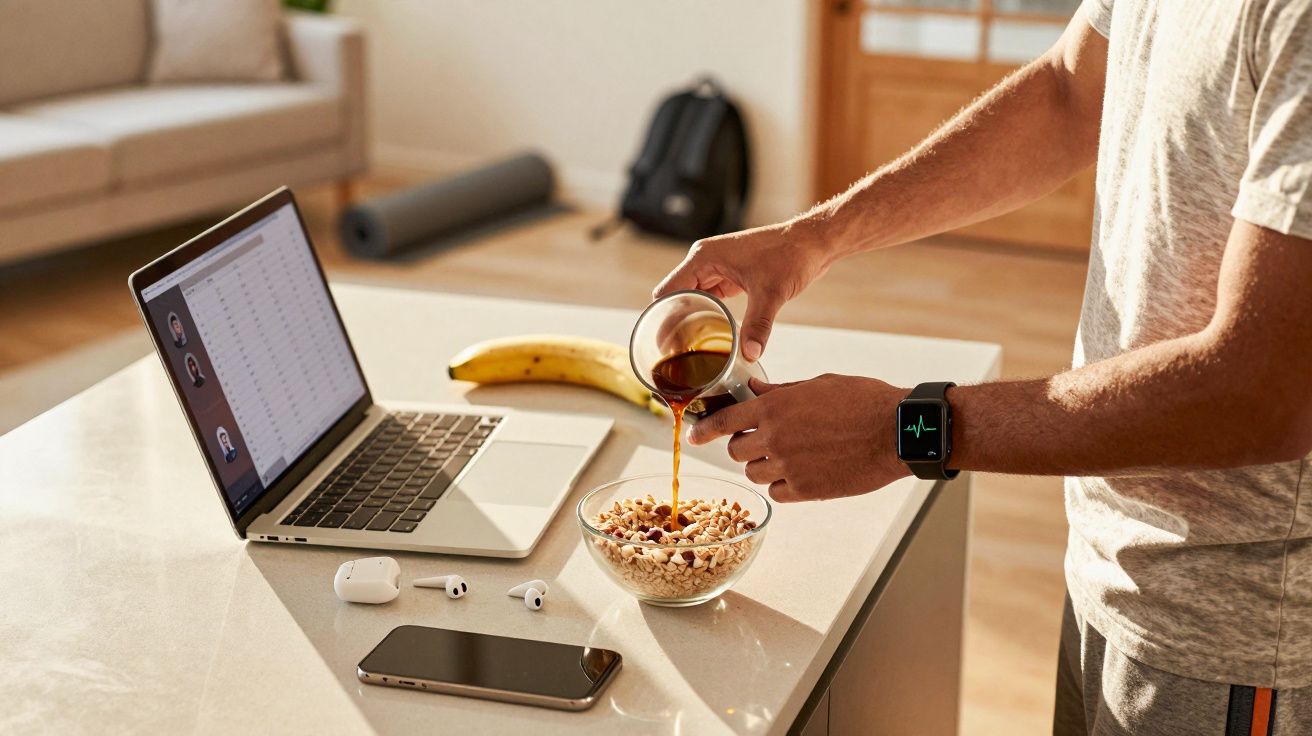
Most people still think of a morning routine as a fixed set of steps you repeat before work, usually starting with a smartphone alarm and ending with a rushed dash out the door. That idea is getting outdated faster than it looks, because the “morning” itself has changed: where we work, how we sleep, and what we measure. If your mornings feel slightly off lately, it’s not just you-it’s the timetable underneath you moving.
You can see it in small details: coffee pushed later, workouts pulled earlier, breakfasts simplified, phones checked in bed then regretted. The point isn’t to perfect your day at 6am. It’s to build a start that fits the life you actually have now, not the one you had five years ago.
The old “one-size-fits-all” morning is fading
For a long time, mornings were designed around one constraint: the commute. You woke at a certain time because the train left at a certain time, and you did everything else in the gaps-shower, caffeine, maybe a bit of news.
That structure quietly kept routines stable. Even if you didn’t love it, it was predictable, and predictability makes habits stick.
Now, that hard edge has softened. For many people, the day starts in the same room they slept in, and that changes the psychology of the first hour. When there’s no “out the door” moment, routines stop being inherited and start being improvised.
The forces speeding up the change
A lot of trend pieces blame “TikTok morning routines” or “biohacking”. That’s part of it, but the bigger driver is simpler: mornings are being reshaped by new constraints, new tools, and new anxieties, all at once.
Work without a commute rewrites the first hour
Hybrid work has turned mornings into a negotiation. Some days you have time; some days you don’t. Some days you need quiet focus at 8am; other days you can start later and stretch the morning into a slow ramp.
That variation makes rigid routines brittle. People are swapping fixed rituals for modular ones: a short version for busy days, a longer version when the calendar allows.
Phones and wearables created a constant feedback loop
Even if you don’t own a smartwatch, you’re surrounded by data language now: sleep scores, step goals, HRV, caffeine timing, sunlight exposure. The modern morning is full of tiny nudges.
The difference is subtle: you’re no longer following a routine because it’s “what disciplined people do”, but because you’ve seen your own body react to it.
The upside is personalisation. The downside is churn. When everything can be optimised, people change too much, too often, and mistake novelty for improvement.
Rising costs and shrinking time are reshaping breakfast
Food inflation and busy households have pushed mornings towards “cheap, fast, repeatable”. That’s why you see the same patterns everywhere: fewer elaborate breakfasts on weekdays, more batch-prepped options, more portable food.
It’s not that people stopped caring. It’s that the morning has become the place where you cut friction first.
The swaps people are making (often without noticing)
A lot of the change isn’t dramatic. It’s not a brand-new 5am life. It’s a series of small swaps that add up, and suddenly the morning you had in 2019 doesn’t match the one you live in now.
| Old default | New default | Why it’s happening |
|---|---|---|
| Alarm → phone scrolling | Alarm → “no phone for 10 mins” | People are noticing anxiety spikes and time loss |
| Coffee immediately | Coffee after water/food/light | Energy feels steadier for many people |
| Breakfast “when there’s time” | Same breakfast most weekdays | Decision fatigue and cost control |
Other shifts show up in conversation:
- News later, not earlier. People are moving headlines out of the first 30 minutes to protect mood and focus.
- Exercise split into micro-sessions. Ten minutes of mobility beats the abandoned plan for an hour.
- Morning light as a habit. Not always a walk-sometimes just opening blinds and standing by a window with a hot drink.
- Quiet starts replacing productivity starts. Less “win the morning”, more “don’t wreck it”.
Why it can feel like your routine “stops working”
There’s a particular frustration people describe: they had a routine, it helped, then suddenly it didn’t. Often, nothing “broke”. The context changed.
A few common examples:
- You started working from home, and your routine still assumes you need to be “ready to leave”.
- Your evenings got later (or your sleep got lighter), and your morning routine is still built for a version of you that sleeps deeply.
- You added health goals, but tried to stack them all at 7am-steps, protein, journalling, meditation-and it became too heavy to carry.
Mornings are especially sensitive because they’re the first domino. If the first hour feels crowded or fragile, the whole day feels more chaotic than it really is.
A realistic morning routine that adapts instead of collapsing
The routines that survive now tend to be simple, layered, and forgiving. Think “core + optional extras”, not a rigid checklist.
A strong 15-minute core
- Get light into your eyes. Open the curtains, step outside briefly, or stand by a bright window. This is less about motivation and more about telling your body it’s daytime.
- Drink something non-caffeinated first. Water, herbal tea, even just a few mouthfuls. The aim is to reduce that wired-but-flat feeling later.
- Move for two minutes. Not a workout-just enough to change state: a short walk, a stretch, a few squats, a quick mobility flow.
This core works because it’s hard to fail. It doesn’t need equipment, a perfect schedule, or a big mood shift.
Add-ons that match your day (not your fantasy)
Pick one, maybe two:
- If you need focus early: write the first task on paper before opening email.
- If you run late often: pack lunch and lay out clothes the night before, not in the morning.
- If you’re anxious: keep your phone out of bed and do a “messages after teeth” rule.
- If you’re training: prep your kit and do a short warm-up immediately after waking.
The trick is not to add more. It’s to add the right thing for the kind of day you’re about to have.
Small signs your morning needs an update
If you’re not sure whether your routine is helping or just happening, these are the tells:
- You feel behind within 10 minutes of waking.
- You check your phone, then feel oddly tense but can’t explain why.
- Your breakfast is either skipped or turns into random snacking by 11am.
- You rely on caffeine to create a personality.
- Weekday mornings and weekend mornings are so different they feel like different lives.
A routine isn’t meant to impress anyone. It’s meant to reduce friction and protect your energy when willpower is at its lowest.
The bigger reason this is changing so fast
Morning routines used to be cultural: you copied what people around you did. Now they’re algorithmic: you’re exposed to a thousand versions, plus constant advice, plus your own data.
That creates speed. People adjust, test, abandon, restart. The morning becomes the easiest place to “try a new you”, because it feels like the start line.
The stable version going forward will look less like a perfect ritual and more like a flexible system: a few anchors you keep, with room to adapt when life shifts again.
FAQ:
- Are morning routines actually important, or just internet hype? They matter if they reduce friction and improve your energy or mood. If your routine adds pressure or steals sleep, it’s doing the opposite of its job.
- Is checking my phone first thing really that bad? Not morally, but it can be disruptive. Many people find it pulls them into other people’s priorities before their brain has properly “come online”.
- What’s the simplest change with the biggest payoff? Build a 10–15 minute core you can do on busy days: light, water, and a small amount of movement. Then add only one optional habit that fits your schedule.
- Should I copy someone else’s routine? Copy the structure, not the specifics. Borrow ideas, but adjust them to your sleep, your job start time, your household, and what you can repeat without resentment.



Comments
No comments yet. Be the first to comment!
Leave a Comment