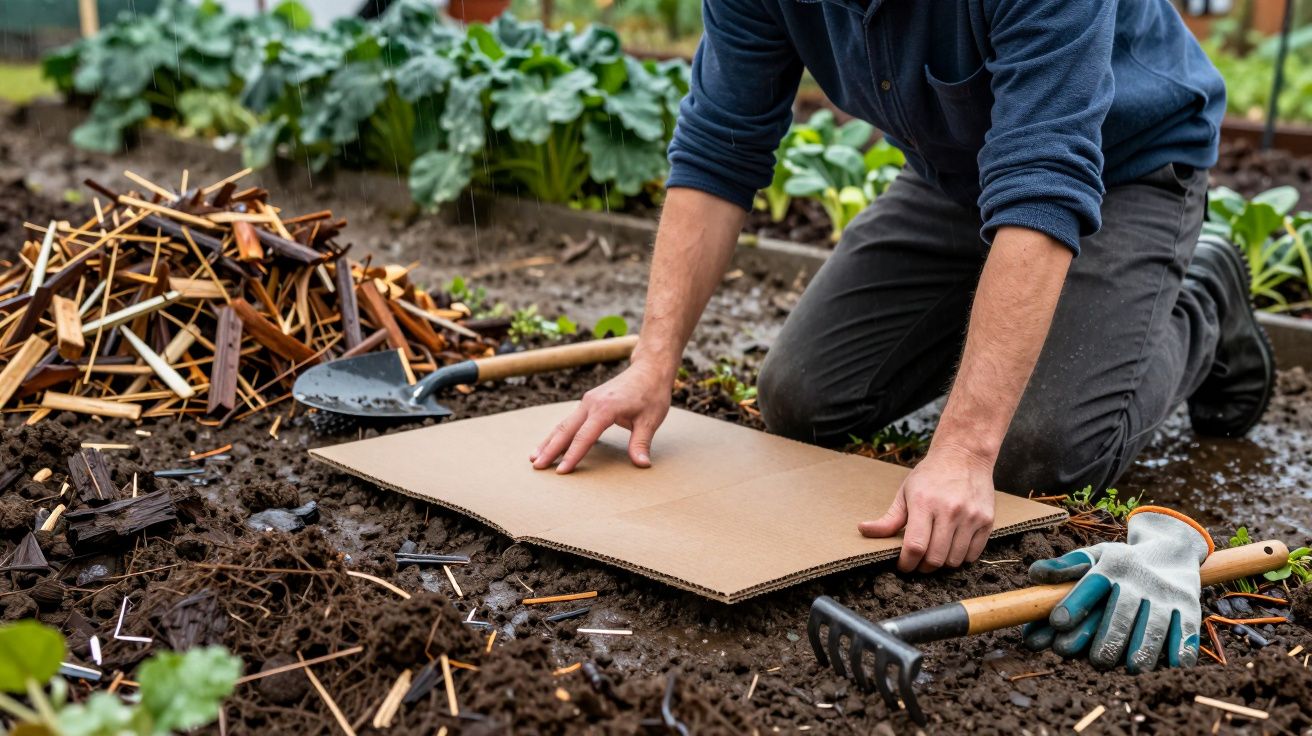
A damp Saturday on the allotments. The air smells of compost and tomato leaves, and a fine drizzle softens the edges of everything. On one plot, the soil is dark and clean between the rows; on the next, dandelions and couch grass are already winning the year. If you look closely at the tidy plot, just under the bark and grass clippings, you spot it: old cardboard, soft from the rain, vanishing slowly into the earth.
The plot holder shrugs when you ask how he keeps on top of weeds without resorting to sprays. He points at a supermarket logo half-buried under mulch. “That,” he says. “Free, quiet, and it works while you’re at work.” Around him, a few other veterans nod. They all have their own tweaks, but the spine of the method is the same: a layer of plain cardboard, covered deeply, laid down once and left to do its slow, patient job.
It looks almost too scruffy to be clever. Yet under many of the most productive, low-weed plots, there is a hidden patchwork of boxes, parcel sleeves and old moving cartons, flattening the chaos long enough for soil life to move in and take over.
Why cardboard under mulch beats battling bare soil
Weeds germinate in light, with access to air and bare soil. Cardboard breaks that triangle. It blocks light, slows air movement at the surface, and cuts off most seedlings before they see day. Deep-rooted perennials like couch grass and bindweed still exist underneath, but they are weakened every time they try to push up and meet a solid, light-proof barrier instead.
Unlike plastic sheeting, cardboard is porous and temporary. Water seeps through, worms can move up and down, and over a few months to a year the sheet itself softens and breaks down. You are not sealing the soil off; you are giving it a breather from constant disturbance.
The cardboard also partners with mulch above. The mulch protects the card from rapid breakdown, keeps it pressed against the soil, and adds its own layer of darkness. Together they do three quiet things:
- Suppress most annual weeds for a season or more.
- Soften perennial weeds so they are easier to pull later.
- Hold moisture in the top few inches, reducing watering needs.
“I used to spend my Sundays hoeing the same weeds,” says Mary, who has held her council plot for 18 years. “With cardboard I do the work once, then just flick out the odd intruder. It’s the difference between firefighting and actually gardening.”
Choosing the right cardboard (and what to avoid)
Not all boxes are created equal. The seasoned plotholders get quite picky about what goes into their soil, and where.
Aim for:
- Plain brown corrugated cardboard from delivery boxes.
- Boxes with minimal printing, ideally dark inks not metallic.
- Unwaxed, uncoated card that feels slightly rough, not shiny.
Avoid:
- Glossy, heavily coloured packaging (cereal boxes, gift boxes).
- Anything with a plastic sheen or waterproof feel.
- Sticky tape, labels, staples, plastic straps – strip these off first.
A quick rule: if you can easily tear the cardboard by hand and the torn edge looks fibrous and dull, it’s probably fine. If it peels into layers with a shiny film, or the edge stretches plastically, it is better in the recycling bin than under your beans.
Tear or cut boxes so they can lie flat. Some gardeners dunk them briefly in a water butt or leave them in the rain to soften first; others lay them dry and let the first watering do the work. Both approaches can succeed, as long as you cover them quickly.
Step-by-step: how allotment veterans lay cardboard
The method looks deceptively simple, but a few details make the difference between “mostly weed-free” and “green lacework in six weeks”.
Clear the worst growth
- Strim or cut tall weeds to ground level.
- Pull out obvious woody stems or thick crowns (dock, bramble, thistle) so card can lie flat.
- Leave the cut material as an initial mulch if it’s not seedy, or remove if it is going to spread.
Soak the ground
- Water the area well if it’s dry, or time the job for after rainfall.
- Damp soil helps worms move up quickly and pull the cardboard into contact.
Lay overlapping sheets
- Place cardboard in a brickwork pattern, overlapping edges by at least 10–15 cm so no cracks of light remain.
- Fold up around existing perennials or shrubs you plan to keep, cutting slits rather than leaving gaps.
Weigh it down immediately
- Spread your mulch straight away: compost, well-rotted manure, woodchip, grass clippings, leaf mould or a mix.
- Aim for 7–10 cm of mulch over the top so the card doesn’t curl or blow in the next wind.
Water again
- Give the whole area a gentle soak. This beds everything in and removes air pockets.
- Within a day or two, the cardboard will hug the soil surface and start to soften.
Leave it to work
- For paths, you can walk on it at once.
- For future beds, most veterans leave it a few weeks to a season before deep planting, depending on how tough the underlying weeds are.
Keep a knife or old bread saw in the shed. When you’re ready to plant, you simply slit a cross in the cardboard, peel back a flap, and tuck the seedling in with compost. The sheet keeps doing its weed-suppression job around the plant’s neck.
Quick reference: where and how deep?
| Area | Cardboard + mulch depth | Notes |
|---|---|---|
| Paths | 1 layer card + 5–10 cm woodchip | Top up chip annually as card breaks down |
| New beds over lawn | 1–2 layers card + 7–10 cm compost/manure | Best laid autumn–winter |
| Around fruit bushes | 1 layer card + 5–8 cm mixed mulch | Leave a gap around the stems |
What to plant where you’ve mulched
You can treat cardboard-and-mulch areas in two main ways: as instant beds or as future beds.
Instant beds: For shallow-rooted crops like salads, squash, courgettes and potatoes, you can plant straight after laying. Cut planting holes through the cardboard, add a handful of compost, and set the plant in. The roots will find their way through the softening card over time.
Future beds: For more demanding crops, or areas riddled with couch grass or bindweed, many plot holders sheet-mulch for a year. They cover the area in autumn or winter, then plant into rich, friable soil the following spring or beyond, when most perennial weeds have exhausted themselves.
Around perennials like fruit bushes, rhubarb and asparagus, the system works as a weed-quieting skirt. You renew the mulch yearly as the cardboard disappears, building a collar of dark, crumbly soil beneath that feeds the plant slowly.
Pitfalls, limits and how to dodge them
Cardboard mulching is not a magic carpet. The veterans are clear about its snags, and they adjust rather than abandon it.
Slugs and snails:
All that cool, damp cover can feel like a hotel for molluscs.
- Avoid piling mulch thickly right up to soft stems.
- Use rougher mulches (straw, coarse woodchip) for slug-prone crops.
- Lift the odd slab of cardboard or chip and check what’s hiding; remove problem clusters early.
Rodents:
In some areas, cardboard and thick mulch can make convenient runways for mice or rats.
- Keep food waste and fresh kitchen scraps out of these mulches.
- Disturb and refresh the top layer a couple of times a year.
- If rodents are already an issue, use thinner mulches and more open layouts.
Drying in light soils:
On very light, sandy plots, a thick, dry mulch can actually shed water.
- Water deeply before laying and after long dry spells.
- Mix finer, moisture-holding materials (compost, leaf mould) into the top of the mulch.
- Check under the surface with your hand; don’t trust appearances.
Persistent weeds:
Bindweed, horsetail and some grasses can still poke through.
- Accept this as a reduction, not an erasure.
- Pull or snap new shoots the moment they appear, weakening the roots over time.
- In worst patches, double-layer the cardboard and extend the covered area wider than the visible weed spread.
Beyond weeds: what this habit really changes
The cardboard itself is just fibre and ink. The bigger shift is how it changes your relationship with the plot. Instead of fighting bare soil every week, you are working with a covered, living surface that improves each season.
Less time weeding means more time staking, pruning, noticing pests early and actually harvesting. People who adopt sheet mulching often say their plot feels calmer; there is less visual noise, fewer “I should” thoughts triggered by a sea of green invaders.
There is also a quiet environmental satisfaction. Every box that avoids the skip or the bonfire and ends up under your raspberries is:
- Locking a bit of carbon into the soil as it decomposes.
- Feeding fungi and bacteria that build long-lasting soil structure.
- Saving you money on proprietary weed membranes and extra compost.
“I used to burn my boxes,” admits John, who gardens on heavy clay. “Now they’re my first line of defence. The clay is crumbly where the cardboard was. You can smell the difference when you dig.”
Over time, the cardboard vanishes but the effects remain: darker soil, more worms, fewer weeds that germinate easily. You will still meet the odd invader, but you are no longer starting from a carpet of them every spring.
Practical habits that make it stick
A few small routines turn “nice idea” into a working system:
- Keep a stash: Flatten clean boxes and store them in a dry corner of the shed, ready for the next bed or path.
- Top up yearly: Each winter or early spring, add a fresh scattering of mulch where last year’s cover has thinned.
- Think in patches: Cardboard doesn’t have to be all or nothing. Start with one path or bed, learn how it behaves, then spread the method.
Once you see one patch stay quiet and friable, it’s hard to go back to bare, crusted soil and endless hoeing.
FAQ:
- Will cardboard make my soil acidic or harm plants?
Plain brown cardboard breaks down into basic organic matter. Used in moderate layers under organic mulches, it does not significantly acidify soil and is widely used successfully around vegetables and fruit. Avoid waxed or heavily printed card, which brings more additives.- How long does the cardboard last before it disappears?
On a damp UK allotment with mulch on top, a single layer of corrugated cardboard usually softens within a few weeks and is largely broken down within 6–18 months. Thicker or double layers last longer but still rot away in time.- Can I sow seeds directly on top of cardboard?
For most crops, it’s easier to sow into a layer of compost or soil above the cardboard, or into holes cut through it. Very small seeds struggle to root through intact sheets. Save direct sowing for areas where the cardboard has already mostly decomposed.- Is it safe to use boxes with coloured logos and print?
Most modern box inks are relatively low in heavy metals, but many allotmenteers prefer to minimise them. A small amount of simple printing is generally considered acceptable; avoid heavily glossy, metallic or plastic-coated designs.- What if my allotment rules ban “plastic weed membrane”?
Cardboard is biodegradable and usually treated differently from plastic sheeting. Still, it is worth checking your site rules. Many committees actively encourage sheet mulching with organic materials as an alternative to both chemicals and synthetic fabrics.





Comments
No comments yet. Be the first to comment!
Leave a Comment