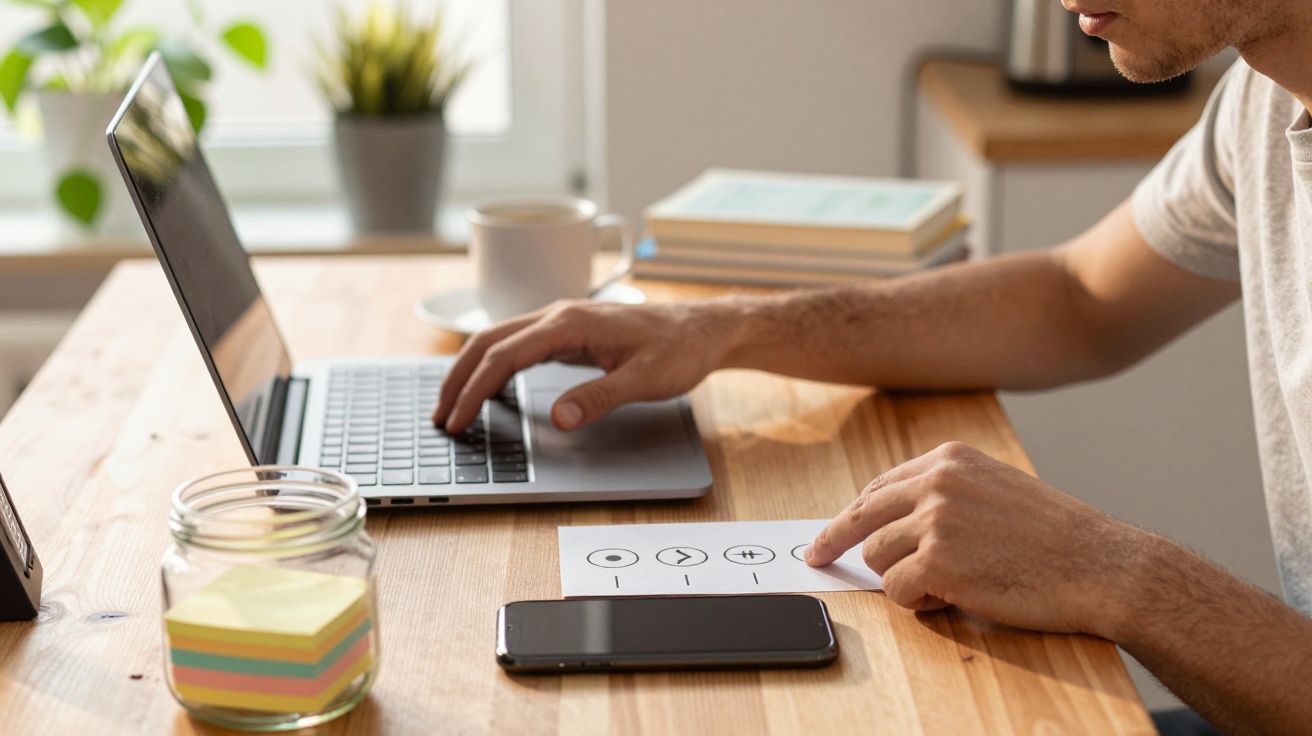
You’re not imagining it: brain plasticity, also known as neuroplasticity, is showing up in everyday life in ways that feel faster and more intense than they did a decade ago. It matters because the same rewiring that helps you learn a language or recover after a setback can also lock in distraction, stress loops and habits you didn’t consciously choose.
Most people still picture the brain changing slowly, like a tree growing rings each year. In reality, it’s closer to wet cement: it firms up in whatever shape your days press into it, and modern life presses hard.
The quiet shift people are missing
Brain plasticity isn’t new. What’s new is the pace and consistency of the inputs shaping it: constant notifications, always-on work chat, short-form video, late-night light, and a steady drip of low-grade uncertainty.
Plasticity follows attention. When your attention is fragmented for hours every day, the brain doesn’t just “cope” - it adapts, building pathways that make fragmentation feel normal and sustained focus feel strangely uncomfortable.
The brain doesn’t update because you want it to. It updates because you repeat something.
That’s why the change can feel sudden. You don’t notice the first hundred tiny repetitions, then one day you try to read a long article or sit through a meeting and realise your mind keeps snapping back to “check something”.
Why “faster” doesn’t mean “better”
A common misunderstanding is that more plasticity is automatically good. It can be, especially for learning, creativity and recovery. But high plasticity also means high sensitivity to whatever environment you keep feeding it.
The brain is a prediction machine. When your days are built around rapid rewards (scrolling, quick messages, instant entertainment), it starts predicting that rewards should arrive quickly and frequently. Anything slower begins to register as “not worth it”, even when it’s the exact thing you care about.
This is the uncomfortable bit: your preferences can be trained away from your stated goals, simply through repetition.
The modern accelerators: five forces that speed up rewiring
You don’t need a dramatic life change to reshape your brain. You need consistent cues and reliable rewards. Today, those are everywhere.
- Short reward cycles: likes, replies, new clips, new headlines-tiny hits of novelty that keep you hunting.
- Variable reinforcement: you never know which scroll will be interesting, which is exactly what makes it sticky.
- Chronic stress: even low-level stress pushes the brain towards threat-monitoring and quick relief behaviours.
- Sleep erosion: tired brains learn differently; they default to shortcuts and react more strongly to temptation.
- Reduced boredom: boredom used to be a doorway into deep focus. Now it’s a cue to reach for a screen.
None of these are moral failings. They’re predictable outcomes of an environment designed to hold attention.
What’s actually changing in the brain (in plain English)
“Brain plasticity” can sound abstract, so it helps to translate it into what people actually experience. The core idea is simple: neurons that fire together wire together, and neurons that don’t get used gradually lose efficiency.
Three layers of change you can notice
- Attention pathways
If you practise switching tasks all day, the brain gets good at switching-at the cost of staying. - Reward expectations
If your brain learns that relief and entertainment are one tap away, discomfort becomes harder to tolerate. - Stress and safety circuits
If your nervous system is constantly braced, you start scanning for problems even during calm moments.
That’s why “just concentrate” often fails. Concentration isn’t only willpower; it’s a trained capacity.
The fastest plasticity is often the most invisible
The rewiring that shapes you most tends to happen in micro-moments: what you do while waiting for the kettle, how you start your morning, what you reach for when you feel awkward, tired, or bored.
Those moments look too small to matter. But they repeat daily, which is exactly what the brain responds to.
A useful question is: what do I rehearse without meaning to? Checking. Switching. Seeking. Numbing. Or, on better days, walking, talking, reading, making.
A simple way to see it: cues, routines, rewards
You can map most modern habit loops with three parts:
- Cue: a feeling (boredom), a place (bed), a trigger (email ping)
- Routine: the behaviour (scroll, snack, tab-hop, people-please)
- Reward: relief, novelty, belonging, certainty
The reason plasticity can feel “faster” now is that cues and rewards are tightly engineered. Your phone delivers relief with almost no friction, so the loop closes quickly. Closed loops repeat. Repeated loops wire in.
Signs your brain is adapting to speed (even if you’re functioning fine)
Not everyone will relate to all of these, but they’re common tells that your environment is training your attention.
- You reach for your phone before you know why you’re picking it up.
- Quiet tasks feel oddly irritating, even when you enjoy them once you start.
- You consume information all day but struggle to recall what you’ve taken in.
- You feel “behind” even after completing work, as if your brain never got the finish-line signal.
- You find yourself craving background noise for everything.
These aren’t diagnoses. They’re feedback.
What to do with this information (without turning life into a wellness project)
The point isn’t to “optimise your brain”. It’s to reclaim choice over what you practise every day.
Small shifts that change the training signal
- Protect one block of single-task time (even 20 minutes). Same time, same place, no tabs.
- Add friction to the fastest habits. Log out, move apps off the home screen, keep the phone out of the bedroom.
- Practise boredom on purpose. A short walk without audio. Waiting in a queue without scrolling. Let the urge crest and pass.
- Create a “start ritual” for focus. One song, one drink, one page of notes-something that tells the brain, this is the mode now.
- Make sleep non-negotiable when you can. Plasticity consolidates during sleep; without it, you keep relearning the same day.
None of this requires a new identity. It’s just changing what your brain repeats.
The upside: the same speed works in your favour
The hopeful part is that faster plasticity cuts both ways. If your brain can learn distraction quickly, it can also relearn depth, calm and patience-provided you give it repeated, stable conditions.
You don’t need to become a monk. You need to become consistent.
Below is a compact way to think about “retraining”, without drama:
| What you want more of | What to repeat daily | What it feels like at first |
|---|---|---|
| Deeper focus | One task, one timer, one place | Restless, “itchy”, then clearer |
| Calmer baseline | Fewer late cues, more recovery | Boring, then stabilising |
| Better memory | Less switching, more summarising | Slower, then stickier learning |
The early discomfort is not failure. It’s your brain noticing the old reward pattern isn’t arriving.
A realistic timeline (so you don’t give up too soon)
People often expect change to feel instantly better. In practice, the first phase can feel worse: more boredom, more impatience, more urge to check. That’s not a sign you’re “bad at focus”. It’s a sign you’re interrupting a loop.
Give it days, not hours. A week of consistent signals can make a noticeable difference in how noisy your attention feels. A month can change what you reach for by default.
Brain plasticity is always happening. The only real question is whether it’s happening by design or by accident.
FAQ:
- Is brain plasticity the same as neuroplasticity? Yes. “Neuroplasticity” is the more technical term for the brain’s ability to change its connections and functioning in response to experience.
- Does faster brain change mean screens are “damaging” us? Not automatically. Screens can support learning and connection, but heavy use can train fast reward-seeking and constant switching if that’s what you repeatedly practise.
- Can adults still change their brains meaningfully? Yes. Adult brains remain plastic; change often depends more on repetition, attention, sleep, and stress levels than on age alone.
- What’s the quickest helpful change I can try? Pick one daily focus block (20–30 minutes) with your phone out of reach and no multitasking. Consistency matters more than duration.
- When should I seek professional support? If attention issues, anxiety, low mood, sleep problems, or compulsive behaviours are affecting daily life, it’s worth speaking with a GP or a qualified mental health professional.




Comments
No comments yet. Be the first to comment!
Leave a Comment