On a wet Saturday, you finally do it. You buy the cosy sausage-dog draught excluder, the sticky foam strips, the brush seal for the bottom of the door. You go home, seal every crack you can see, and enjoy the sudden, muffled quiet of a house with fewer rattles and no cold air licking your ankles.
Two weeks later, the bathroom mirror takes forever to clear. The spare room smells a bit musty. The window panes sweat in the morning, even though you haven’t changed how you live. You blame the weather, or the glazing, or the boiler. The quiet answer is lower down, along that neat, sealed line where the door meets the floor.
We tend to think of that strip of space under an internal door as wasted comfort: a leak to be plugged. For building engineers, it’s something else entirely. It’s one of the tiniest, cheapest pieces of ventilation your home has – and when you erase it, the house has to pay for air in other, less pleasant ways.
This isn’t an argument for freezing corridors and howling gaps. It’s about the slim line between “snug” and “stuffy”, and the small clearance experts quietly design into every doorway so you don’t have to think about it.
Why we want sealed doors – and why buildings don’t
Most of us grew up with at least one famously draughty room. The front door that rattled in a storm. The loft hatch that breathed cold. The gap under the bedroom door that turned late-night hallway light into a bar of glare across the carpet.
So when we finally get our own place, the instinct is simple: close every opening you can. New windows, thicker curtains, foam strips, door snakes. A tight house feels modern, efficient, and in winter it feels like relief.
The only problem is that houses are designed on the assumption that some air will sneak around the place. Modern building rules in the UK (Part F of the Building Regulations) assume that air can move from room to room under internal doors, especially towards bathrooms and kitchens where extract fans live. That undercut is not an accident; it’s part of the route stale, damp air is meant to take to get out.
Seal it fully, and the building doesn’t suddenly become cleverer. It just has to push and pull air through cracks you didn’t plan for.
What actually travels through that tiny gap
We often talk about “draughts” as if they were just cold. In practice, that gap under the door is carrying three quiet things around your home:
- Fresh air moving from “supply” spaces (hall, living room, bedrooms with trickle vents) towards “extract” spaces (bathrooms, utility rooms, kitchens).
- Moisture drifting from steamy rooms to drier ones, or to places where it can safely leave the building.
- Pressure differences equalising when fans or wind push on one side of the house.
That pencil-high strip of space under the door is a pressure-release valve and a mini ventilation duct, all for free.
You don’t see any of this until you block it. Then you meet it as condensation, stubborn smells, whistling keyholes, or doors that “stick” whenever the bathroom fan runs.
How blocking the gap can backfire
Sealing every gap feels like saving energy. In the right place, it does. Around certain internal doors, it can quietly cause a list of problems.
1. Steamy bathrooms that never quite dry
Your bathroom extract fan doesn’t magic air out of nowhere. It pulls moist air out and relies on drier air coming in from under the door to replace it. No gap, no easy replacement.
The result:
- The fan sounds the same but shifts far less air.
- Steam hangs around, creeping into corners and behind furniture.
- Mould spots appear on silicone, grout and cold external walls.
Often, the fan gets blamed and replaced, even though the real issue is a door that’s been sealed too well against the floor.
2. Musty rooms and condensation elsewhere
Block the undercut and moisture has fewer places to go. Instead of heading out via the planned extract route, it may:
- Condense on the coldest windows in the house.
- Lurk in under-heated spare rooms and behind wardrobes.
- Make the whole place feel “stale”, even if you clean constantly.
You haven’t added extra moisture; you’ve just trapped it in the wrong places.
3. Combustion appliances short of air
In homes with open-flued gas appliances, older boilers, or open fires, the consequences can be much more serious. These systems need a steady supply of combustion air. That air often moves through the house via internal doors.
If you enthusiastically block every undercut and close off any wall vents “because of the draught”, you can:
- Starve appliances of air, making them burn poorly.
- Encourage dangerous products like carbon monoxide to spill back into the room instead of up the flue.
If you have any fuel-burning appliance, a Gas Safe engineer will almost always advise against over-sealing doors and vents in that part of the house.
4. Odd noises, slamming doors and “mystery draughts”
Air, like water, will find another way. When you seal the obvious route under the door, it may sneak through:
- Keyholes and lock gaps, creating whistles.
- Cracks in skirting boards and floorboards, feeling like a worse draught than the one you tried to fix.
- Other rooms, causing doors to slam or “breathe” when an extract fan or tumble dryer runs.
The house still wants to equalise pressure. You’ve just made it work harder, and noisier, to do it.
The simple rule: the gap engineers expect
So how much space should there be under an internal door?
In UK guidance, a commonly used figure for internal doors is about 7,600 mm² of open area for air transfer. For a standard-width door, that works out at:
Roughly 10 mm (1 cm) clear gap between the bottom of the door and the finished floor covering.
In practical terms, that’s:
- About the thickness of a standard pencil lying flat.
- Enough for air, not enough to feel like a gale under normal conditions.
For rooms with mechanical extract (bathrooms, cloakrooms, some utilities), many engineers are happier with 10–15 mm so the fan can breathe without strain. In older, leaky houses, you might get away with slightly less. In newer, tighter homes, that undercut really does matter.
Here’s a compact guide you can keep in mind:
| Door location | Typical clear gap engineers expect* |
|---|---|
| Bedrooms & living rooms | ~10 mm |
| Bathrooms & WCs with fans | 10–15 mm |
| Internal doors near boilers/fires | As per appliance/vent spec – never less than 10 mm without professional advice |
*Measured from the bottom of the door to the top of the finished floor surface (carpet, tiles, laminate).
If you have certified fire doors inside a flat or between a garage and the house, do not change the gap without checking the manufacturer’s instructions and fire regulations. Many modern fire doors use special drop seals or threshold strips designed as a set; adding extra seals can quietly void their rating.
How to check (and fix) your own doors
You don’t need gauges or software, just a tape measure and a calm look at the worst offenders.
Step 1: Find the “heavy air” rooms
Start with:
- Bathrooms and shower rooms.
- Any room with an internal boiler cupboard or flueless gas fire.
- Rooms that regularly smell musty or fog up their windows.
Close the doors and look along the bottom edge in good light. Is there a clear, even gap? Or carpet fibres crushed hard into the door?
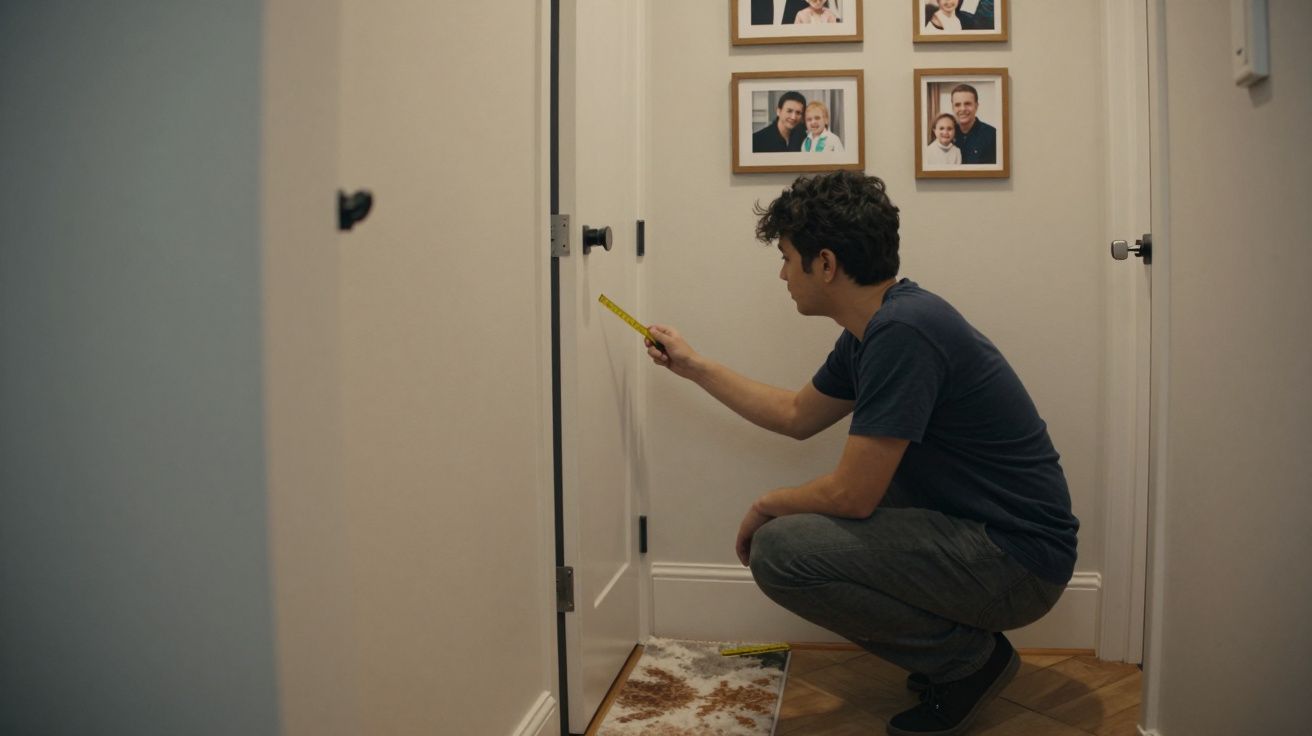
Step 2: Measure the undercut
- Slide a steel ruler or tape measure under the door.
- Note the smallest clearance – that’s the limiting point.
- If it’s under 8–10 mm in a room with an extract fan, you’ve probably over-tightened it.
If a draught excluder brush, rubber strip or “sausage dog” is living directly against the door on the inside of a bathroom or kitchen, assume it’s getting in the way of airflow when the fan runs.
Step 3: Adjust without undoing all the comfort
You don’t have to live with cold ankles to keep your house breathing. Try:
- Lifting seals slightly so the bristles just kiss the floor rather than sweeping it.
- Using side seals only on some doors, leaving the underside clear.
- Trimming the bottom of the door very slightly (a job for a joiner if it’s a fire door or you’re unsure).
- Adding a tidy door grille or transfer vent if undercutting isn’t practical, especially for very thick carpets.
The aim is a controlled, predictable gap, not a random leak.
Think in layers: seal the big, uncontrolled draughts from outside; keep a small, deliberate passage for air inside.
A small experiment you can run tonight
If you like seeing the physics for yourself, try this with a bathroom that has an extract fan:
- Close the bathroom door, block the gap at the bottom with a rolled towel.
- Turn the fan on and have a normal hot shower.
- Note how long the mirror takes to clear afterwards, with the door still shut.
- Next day, repeat the shower with the door shut but no towel under the door, and the same fan running.
- Time the mirror again.
In most reasonably tight homes, the difference is obvious. With the gap blocked, the fan simply cannot move as much air. Steam lingers, walls feel clammy for longer, and the room may even feel slightly pressurised when you open the door.
Once you’ve watched a fan “choke” on a blocked undercut, those tiny gaps start to look less like wasted heat and more like cheap insurance.
A calmer way to think about comfort and air
Sealing a home is not a bad instinct. With energy prices high, nobody wants to heat the garden. The trick is to distinguish between external leaks, which you’re usually right to control, and internal pathways, which your house actually relies on.
- Around windows, front doors and loft hatches, draught-stripping almost always helps.
- Under internal doors – especially to bathrooms, kitchens and boiler cupboards – that slim line of space does a job.
Once you know the quiet rule of thumb – aim for about a 10 mm gap under most internal doors, slightly more where fans or appliances need air – you can go back to shopping for cosy draught excluders with a clearer plan. Keep them for the front door. Let the inside doors breathe.
FAQ:
- Isn’t any gap under a door just wasted heat?
Not really. The heat loss through a 10 mm internal door gap is tiny compared with losses through external walls, windows and roofs. That gap is there to let your ventilation system (even a simple fan and trickle vents) do its job so you avoid damp, mould and stale air.- My bathroom fan is very powerful – do I still need a gap?
Yes. A stronger fan actually needs a clearer air path to work properly. Without enough undercut, the fan struggles, makes more noise and still moves less air than a smaller fan with a clear route under the door.- What if I have a thick new carpet and now the door barely clears it?
In that case, trimming the bottom of the door very slightly is usually the best solution. For rooms with fire doors or gas appliances, get professional advice so you don’t compromise safety.- Can I put a draught excluder on a fire door?
Only if it’s a type specifically tested and approved for that door, and fitted as per the manufacturer’s instructions. Adding random seals to a fire door can stop it closing properly or alter how it behaves in a fire.- I’ve blocked gaps for years and everything seems fine – should I change anything?
If you have no signs of damp, mould, stuffiness or appliance issues, you may not need major changes. But it’s still wise to ensure at least bathrooms and rooms with combustion appliances have a clear air path under or through the door, and to keep any required wall vents open.





Comments
No comments yet. Be the first to comment!
Leave a Comment