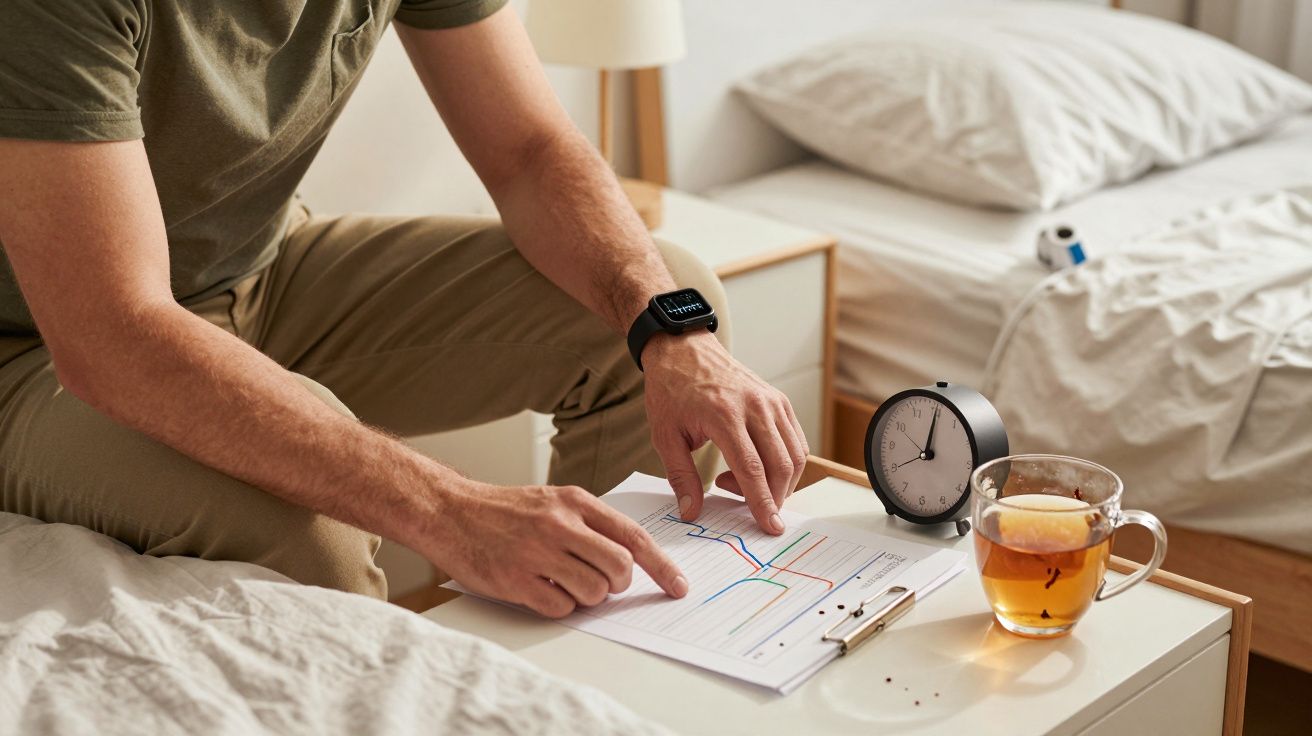
You only really notice sleep research when your own nights start falling apart, and suddenly every headline feels personal. Polysomnography-the overnight test used in sleep clinics and labs-sounds definitive, but the reality behind most sleep findings is messier than people expect. Knowing where the evidence is strong (and where it’s not) can save you months of chasing the wrong fix.
At first, it looks simple: sleep more, sleep better, wake up refreshed. Then you try to apply “what science says” to a 3am ceiling-stare, and you realise the science isn’t designed for panic.
The uncomfortable truth: most findings are about groups, not you
A lot of sleep science is built on averages. Researchers compare groups: people who sleep six hours versus eight, shift workers versus day workers, those with insomnia versus those without. That’s useful for spotting patterns, but it doesn’t automatically tell you what will work for your particular brain, schedule, hormones, medication, stress level, or home life.
The part nobody tells you is how wide “normal” can be. Two people can both be healthy sleepers while having wildly different sleep needs, bedtimes, and amounts of wake time during the night. If you treat a population average as a personal target, you can accidentally turn sleep into a performance.
The fastest way to make sleep worse is to start treating it like a test you’re failing.
Labs don’t look like bedrooms (and that matters)
Polysomnography is brilliant for certain questions-sleep apnoea, unusual movements, seizure activity, narcolepsy markers-but it’s not a perfect mirror of your normal night. Many people sleep differently when they’re wired up, in a new room, with a clinician down the corridor.
Researchers even have a name for it: the “first-night effect”. Your brain stays slightly more alert in unfamiliar surroundings, and your sleep architecture can shift. That doesn’t make the data useless, but it does mean your worst night in a lab isn’t necessarily your life sentence.
The quiet gap between “sleep” and “being asleep”
In a lab, sleep is scored in stages using brain waves, eye movements, and muscle tone. At home, you experience something else: how long it felt, how often you remember waking, and whether you feel functional the next day. Those don’t always match.
People with insomnia, for example, often experience “sleep state misperception”: they may be asleep more than they think, but the sleep feels light, fragmented, or untrustworthy. If you only chase numbers, you can miss what’s actually driving the distress.
What counts as “good sleep” depends on what you measure
Most of us grew up with one metric: hours. Sleep research uses several, and they can pull in different directions.
Here’s what clinicians and studies commonly look at:
- Total sleep time: the headline number, but not the whole story.
- Sleep onset latency: how long it takes to fall asleep (and how much you worry about it).
- Wake after sleep onset: the broken-up part of the night that people tend to remember.
- Sleep efficiency: time asleep divided by time in bed; often low in insomnia.
- Circadian timing: whether you’re trying to sleep at a biological “wrong time”.
- Sleep architecture: proportions of REM and deep sleep, which naturally vary night to night.
If you’re exhausted but technically “getting enough hours”, your issue might be timing, breathing interruptions, pain, anxiety, medication effects, or irregularity-things hours alone won’t catch.
Wearables are helpful, but not referees
Smartwatches and rings can be useful for trends: consistent bedtime drift, short nights during stressful weeks, how alcohol changes your resting heart rate. They can also backfire.
Most consumer devices infer sleep stages using movement and pulse signals, not brain waves. They’re improving, but they can confidently label quiet wakefulness as sleep, or restless sleep as “awake”, and that can feed the exact hypervigilance that keeps insomnia going.
A simple rule helps: treat wearables like a weather forecast, not a court judgement. If the “sleep score” makes you anxious, it’s not assisting your sleep anymore-it’s becoming part of the problem.
The headline trap: correlation isn’t a bedtime instruction
Sleep research headlines often read like commandments:
- “People who sleep less than seven hours are at higher risk of X.”
- “Going to bed late is linked to Y.”
- “This supplement improves Z.”
But many of these findings are associations, not proof of cause. Short sleep can be a symptom of stress, pain, low income, depression, caring responsibilities, or an untreated sleep disorder. Late nights can reflect shift work, loneliness, or a household routine you can’t change.
The hidden truth is that sleep is tangled up with almost everything. That makes it important, but it also makes it easy to oversimplify.
Why “sleep hygiene” advice can feel insulting when you’re struggling
Basic tips-cool room, no caffeine late, dim lights, consistent wake time-are genuinely helpful for many people. The problem is when they’re delivered like you’re simply not trying hard enough.
If your sleep issue is driven by apnoea, restless legs, trauma, perimenopause, ADHD, chronic pain, medication side effects, or a circadian rhythm disorder, you can do every “good habit” and still feel awful. Sleep hygiene is a foundation, not a diagnosis.
What actually moves the needle, according to the boring parts of the evidence
Most people don’t need a perfect routine. They need a few levers pulled consistently enough to let sleep rebuild trust.
These are the unglamorous ones that tend to matter:
- Wake time anchors: a reasonably consistent wake-up time trains your body clock more reliably than a forced bedtime.
- Morning light: daylight in the first hour or two after waking strengthens circadian cues, especially in winter.
- Caffeine timing: not just “how much”, but how late-caffeine can linger for hours, even if you “feel fine”.
- Alcohol realism: it can speed sleep onset, then fragment the second half of the night and worsen snoring.
- Wind-down that reduces arousal: not “perfect calm”, just less threat signalling-lower light, fewer arguments, fewer work emails.
- A worry buffer: 10 minutes earlier in the evening to write tomorrow’s tasks or anxieties can stop them ambushing you in bed.
- Bedroom cue clarity: if you spend hours awake in bed, your brain can learn that bed equals vigilance.
If you’ve had insomnia for a while, the approach with the strongest evidence is often CBT-I (cognitive behavioural therapy for insomnia). It’s structured, sometimes counterintuitive (especially around time in bed), and it’s aimed at breaking the cycle rather than adding more “tips”.
When it becomes a problem: the red flags sleep research can’t solve alone
There’s a point where reading studies and tweaking habits stops being useful, because what you need is assessment and treatment. If any of these are true, it’s worth speaking to a GP or a sleep specialist:
- Insomnia most nights for 3+ months, especially with daytime impairment.
- Loud snoring, choking/gasping, or witnessed pauses in breathing.
- Excessive daytime sleepiness (dozing off unintentionally, struggling to stay awake while driving).
- Unusual movements at night, acting out dreams, or frequent kicking.
- Restless legs sensations that worsen at night and ease with movement.
- Mood changes (anxiety/depression) that are escalating alongside sleep disruption.
- Medication or substance changes that coincide with the start of the problem.
A concise way to think about it is: if sleep is becoming something you fear, or if your days are becoming unsafe, you’re past the “optimise your routine” phase.
| What you notice | What it could suggest | Next step |
|---|---|---|
| Snoring + morning headaches | Sleep apnoea risk | GP; consider sleep clinic referral |
| Can’t fall asleep until very late, can’t wake | Delayed body clock | GP; circadian assessment, light/timing plan |
| Sleepless + wired, racing thoughts | Hyperarousal/insomnia cycle | Ask about CBT-I; review caffeine/stress load |
The part nobody says out loud: sleep research doesn’t protect you from sleep anxiety
Once sleep becomes a problem, you can start collecting rules: no screens, no naps, no carbs, no lying in, no staying up. The tragedy is that you can follow every rule and still feel tense, because the real issue has become the relationship with sleep itself.
Good sleep is partly biology, partly environment, and partly confidence-your brain believing it’s safe to switch off. Research can guide you, but it can’t substitute for that rebuilding process.
If your sleep is unravelling right now, aim for one reliable anchor (usually wake time), one helpful reduction in arousal (usually light and stress input), and one step towards proper support if red flags are present. The goal isn’t to win sleep. It’s to stop fighting it.
FAQ:
- What is polysomnography, and do I need it? Polysomnography is an overnight sleep study that measures brain activity, breathing, oxygen, movement, and more. It’s most useful when a clinician suspects conditions like sleep apnoea, narcolepsy, or unusual night-time behaviours, rather than straightforward insomnia.
- Are sleep trackers accurate for sleep stages? They can be reasonable for spotting general sleep/wake patterns, but stage estimates (deep/REM) are inferred and can be wrong for individuals. Use them for trends, not as proof you “slept badly”.
- Why do I feel tired even when I slept eight hours? Total hours don’t capture sleep fragmentation, breathing interruptions, circadian mis-timing, pain, medication effects, or mental load. If it’s persistent, it’s worth a medical review.
- What’s the most evidence-based treatment for chronic insomnia? CBT-I is one of the best-supported treatments for chronic insomnia and is often more effective long-term than relying on sleeping tablets alone.
- When should I see a doctor about sleep? If symptoms last over three months, affect safety or daily function, or include red flags like snoring with gasping, extreme sleepiness, or unusual behaviours at night, seek assessment.


Comments
No comments yet. Be the first to comment!
Leave a Comment