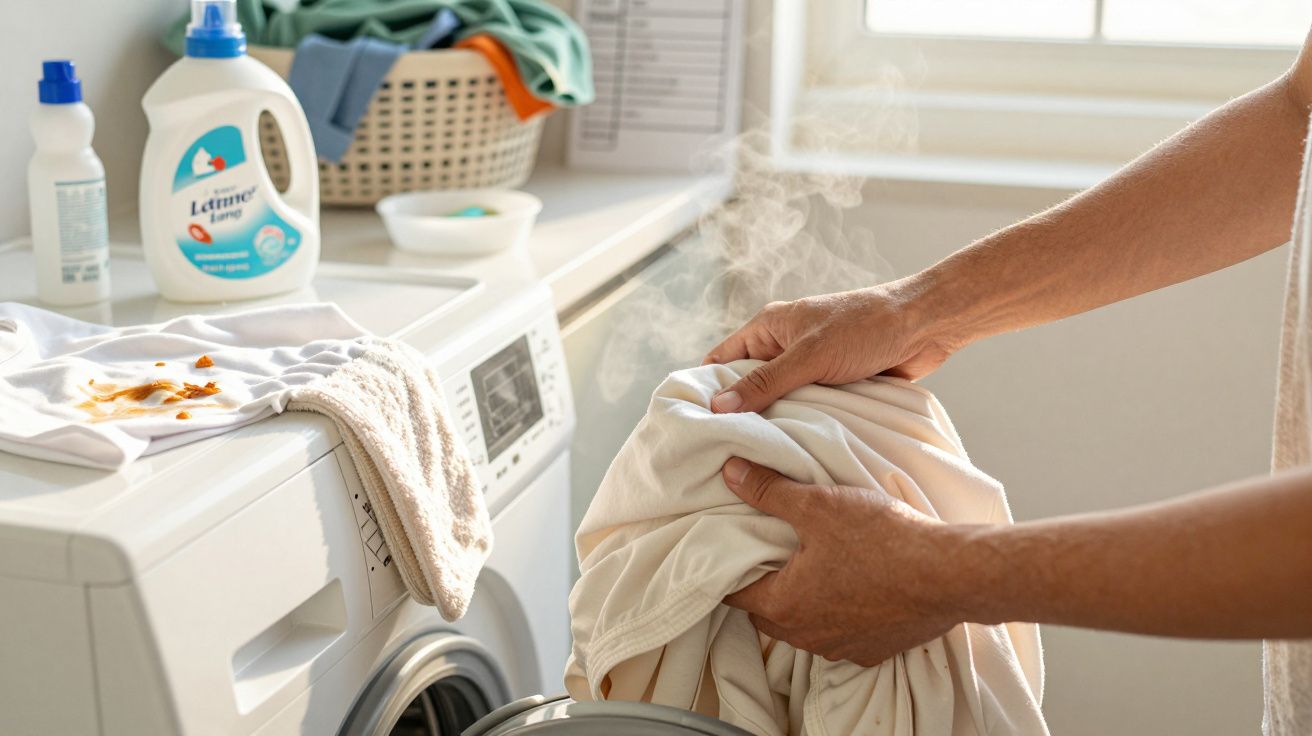
It usually starts as something you can’t quite name: towels that smell “clean-ish”, a jumper that’s lost its shape, a dark T‑shirt that never looks properly dark again. In a front‑loading washing machine, small habits around liquid laundry detergent build up quietly, because most mistakes don’t ruin a load straight away. They sit in the fibres, the drum, and the seal until one day it becomes a problem you can’t ignore.
Laundry is one of those chores we do on autopilot, which is exactly why it’s worth paying attention. The cost isn’t just replacing clothes sooner; it’s skin irritation, stubborn odours, and a machine that starts to feel permanently a bit… off.
The laundry mistakes that seem harmless-until they aren’t
Most people don’t “do laundry wrong”. They just repeat shortcuts that work until they don’t.
You can wash a hoodie on 30°C for years and think you’ve cracked it, right up until the armpits hold onto deodorant, the fabric goes stiff, and the washing machine develops that sour smell that clings to everything. The annoying part is the delay: cause now, consequence later.
Laundry problems rarely announce themselves in the moment. They show up as a slow drift in smell, softness, and fit.
The quiet problems laundry mistakes create (and why you notice late)
When laundry goes wrong, it tends to look like one of these “mystery” issues:
- Persistent odour that returns as soon as fabric warms up (gym kit, towels, bedding).
- Dull colours and greying whites, even though you’re “washing regularly”.
- Stiffness that feels like hard water, even when it isn’t.
- Itchiness on waistbands, socks, and fitted sheets.
- A washing machine that smells the moment you open the door.
- Clothes wearing out faster: thinning cotton, bobbling knits, stretched elastane.
What’s happening is usually simple: too much residue (detergent, softener, oils), not enough mechanical action (overloading), and not enough heat or time to clear bacteria and build-up.
Seven mistakes most people repeat (with quick fixes)
1) Using more detergent “for luck”
It feels logical: more detergent should mean cleaner clothes. In reality, excess detergent can trap dirt in a sticky film, especially on synthetics and towels.
Quick fix: dose for your water hardness and load size, not your guilt. If you can see suds in a modern front-loader during the main wash, you’re often using too much.
2) Overloading because you “can get away with it”
Stuffing the drum reduces agitation. Clothes rub less, rinse worse, and come out smelling fine until they warm up on your body.
Quick fix: leave a hand’s width at the top of the drum and avoid packing items down. Bulky loads (towels, bedding) need even more space to move.
3) Washing everything on cold/30°C forever
Low temperatures protect colours and save energy, but they don’t always shift body oils, deodorant, and microbes-especially in towels, underwear, and sportswear.
Quick fix: keep 30°C for lightly soiled everyday loads, but run a 40°C–60°C cycle weekly for towels/bed linen, and do an occasional hot maintenance wash (more on that below).
4) Letting wet laundry sit (in the drum or basket)
If clothes sit damp, bacteria get time to multiply. That “musty” smell can become stubborn because it bonds to fibres.
Quick fix: set a timer for the end of the cycle. If you can’t unload, do a quick rinse-and-spin later rather than leaving it overnight.
5) Treating fabric conditioner like a universal upgrade
Softener can coat towels (making them less absorbent) and trap smells in synthetics. It also builds up in the machine over time.
Quick fix: use it sparingly, avoid it on towels and sports kit, and consider white vinegar in the rinse only if your garment care labels allow (and never mix vinegar with bleach products).
6) Relying on the “eco” cycle for everything
Eco modes save energy by using less water and lower temperatures, often with longer run times. They’re great for normal soil, but they can struggle with heavy oils and lots of deodorant build-up.
Quick fix: use eco for everyday clothes, but choose a hygiene/towels or cottons 60°C cycle for the loads that actually need it.
7) Skipping pre-treatment and hoping the wash will “handle it”
Heat can set protein stains, and time can oxidise marks so they become harder to lift. Waiting until laundry day is how a light stain becomes permanent.
Quick fix: treat stains as close to the moment as possible. Even water and a small amount of detergent worked in with your fingers is better than nothing.
Here’s the short version you can screenshot mentally:
| Mistake | What you notice later | Small fix |
|---|---|---|
| Too much detergent/softener | Stiffness, dullness, odour rebound | Dose down; add an extra rinse |
| Overloading | Clothes smell fine then sour | Give the drum space |
| Only 30°C forever | Towels/sportswear never feel fresh | Add regular 40–60°C loads |
The “laundry reset” that fixes most homes in a week
If your laundry has drifted into that grey zone-nothing obviously wrong, but nothing feels truly clean-this is the simplest reset.
- Run one hot empty wash (60°C–90°C, depending on your machine) with a washing machine cleaner or the manufacturer’s recommended option.
- Wash towels and bed linen at 60°C once this week, correctly dosed, with no fabric conditioner.
- Do one “less is more” load: half a drum, correct detergent dose, and an extra rinse if you’ve been overdoing it.
- Dry properly: air-dry with good airflow, or tumble dry fully. Half-dry towels are an invitation to mustiness.
- Leave the door and drawer ajar after washing so the seals and dispenser dry out.
This isn’t about being perfect; it’s about breaking the loop of residue + damp + low heat.
When to stop guessing and do one proper clean
If you’ve tried adjusting cycles and your machine still smells when opened, it’s usually build-up in places you don’t look.
- Door seal (rubber gasket): wipe inside the folds where water sits.
- Detergent drawer: remove and rinse it; slime here will keep re-seeding odours.
- Filter (if accessible): check for lint, coins, and gunk (follow your manual).
- Drum “sweet spot”: the machine can look clean and still be coated in detergent/softener residue.
The goal isn’t a spotless washing machine. It’s a dry, low-residue machine that rinses properly.
The one thing no one says out loud
Laundry is less about the product than the pattern. The same detergent can work brilliantly in one home and cause constant issues in another, simply because of water hardness, load size, drying habits, and whether you ever give the machine a hot cycle.
Once you understand that, the fix becomes surprisingly unglamorous: measure, don’t overfill, add a bit of heat when it matters, and keep things dry.
FAQ:
- Is it bad to wash everything on 30°C? Not always. It’s fine for lightly soiled clothes, but towels, bedding, underwear, and sportswear often need regular 40–60°C washes to prevent odour and build-up.
- Why do my clothes smell fine out of the wash, then smell later? Usually residue plus bacteria. Detergent/softener build-up and overloading can prevent a good rinse, and the smell returns when fabric warms up.
- Do I really need to clean my washing machine? If you mostly use low temperatures or fabric conditioner, yes. A periodic hot maintenance wash and wiping the seal/drum area prevents the “permanent damp” smell.
- Should I use fabric conditioner on towels? It can make towels less absorbent and can trap odours. Use sparingly, or skip it on towels and sports kit.





Comments
No comments yet. Be the first to comment!
Leave a Comment