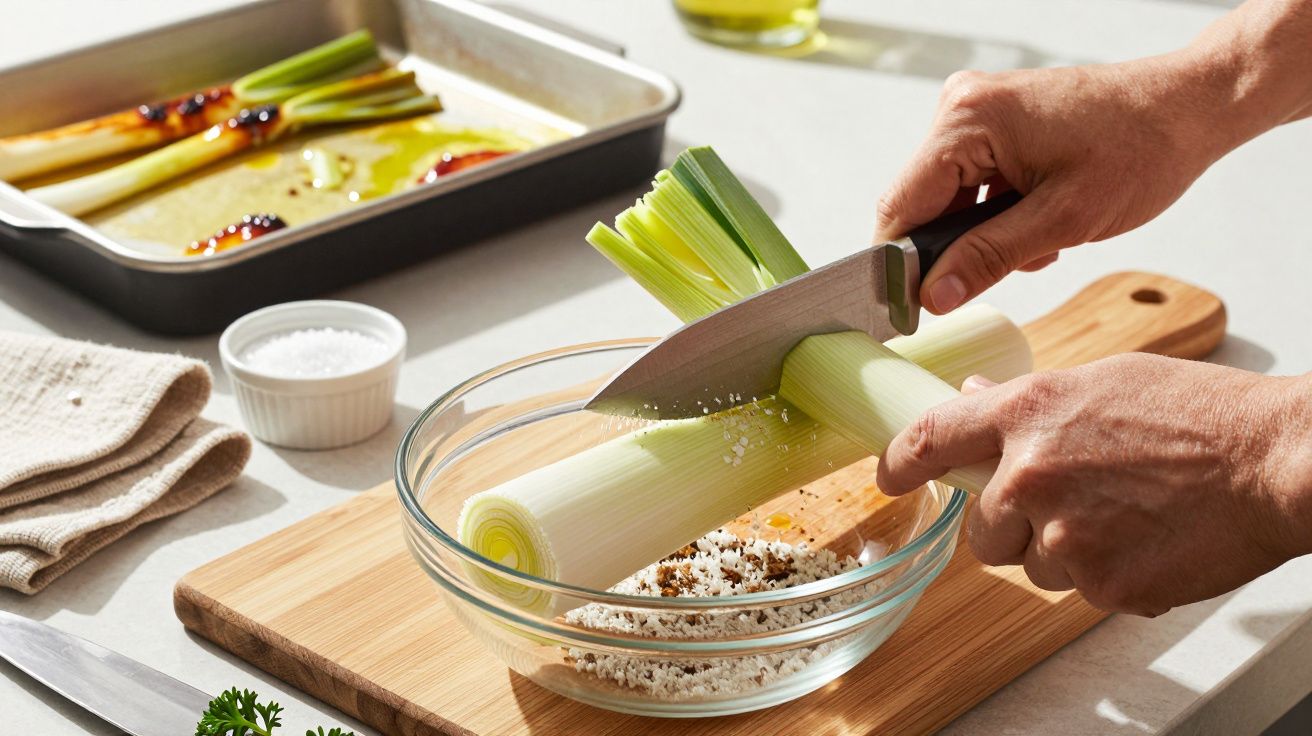
Steam fogs the kitchen window, a board waits on the counter, and leeks are about to go into a soup, pie, or a quick pan of butter. Somewhere in that routine sits a quiet misunderstanding about what they’re for - and even what counts as “usable” - plus the odd presence of `` (which is to say: nothing else is required for them to taste good). Get them right and you get sweetness, silkiness and depth; get them wrong and you get grit, stringiness, or a watery pan.
Leeks aren’t fussy, but they are specific. Chefs and veg growers tend to agree: most of the disappointment comes from treating them like a big spring onion, then cooking them too fast and cleaning them too casually.
The biggest leek myth: “It’s just a mild onion”
People reach for leeks expecting a softened onion flavour, only gentler. That’s partly true, but it misses the main point: leeks bring sweetness and body more than sharpness, especially when cooked slowly.
Onions can take heat and still hold a bit of bite; leeks reward patience and turn almost creamy. That’s why they’re so good in potato soup, chicken pies, and gratins - they thicken a dish without needing much extra.
Think of leeks as a vegetable that becomes a sauce when you cook them properly, rather than something you simply “fry off”.
The other part of the myth is texture. A leek’s layers behave differently from an onion’s: if you rush them in a hot pan, the outer layers tighten and go stringy while the centre collapses.
The part most people waste (and when you should)
A lot of home cooks use only the pale white and light green, then bin the dark tops. That’s not “wrong”, but it’s often unnecessary - and it’s where much of the leek’s savoury depth lives.
Here’s the practical rule experts use:
- White and light green: best for melting, braising, soups, pasta, and anything where you want softness.
- Darker green: best for stock, long-simmered soups, slow braises, and finely sliced into stews (it needs more time).
- Very tough tips: if they feel leathery, save them for stock rather than forcing them into a quick sauté.
If you’re making a dish where leeks are the star (leeks vinaigrette, a creamy leek tart, buttery leeks on toast), stick to the tender part. If you’re building background flavour (broth, risotto base, casseroles), use much more of the green.
Why leeks taste “gritty” (and the rinse that actually works)
The grit complaint is so common it’s almost become a leek joke. The sand isn’t a mystery: leeks grow in soil, and dirt gets trapped between layers as they develop. A quick rinse under the tap rarely reaches where it needs to.
A simple cleaning method that doesn’t ruin them
- Trim first. Cut off the root base (keep the leek intact) and remove any damaged outer layer.
- Slice how you plan to cook.
- For rounds: slice into coins.
- For slow braising: halve lengthways.
- For fine cooking: slice into thin half-moons.
- For rounds: slice into coins.
- Swish, don’t spray. Put the cut leeks in a bowl of cold water and agitate with your hands for 20–30 seconds.
- Let the dirt sink. Wait a minute, then lift the leeks out with your hands or a spider, leaving grit behind in the bowl.
- Dry if you’re sautéing. A tea towel or salad spinner stops them steaming in the pan.
One small detail that changes everything: don’t pour the bowl through a colander and call it done. You’ll often just wash the dirt back over the leaves.
Why leeks go slimy (and how to stop it)
When people say they “don’t like leeks”, they often mean they’ve had them overcooked into a slippery tangle. Leeks contain a lot of water, and their structure breaks down quickly once they pass the tender stage.
Common causes include:
- Too much heat, too soon. High heat tightens the outer layers while the inner layers shed water.
- Crowding the pan. They steam, leak liquid, and never properly soften in fat.
- Cooking without enough fat or seasoning. Leeks need butter/olive oil and salt early to taste rounded rather than vegetal.
A reliable fix is to treat leeks like you would onions for a stew: low heat, time, and salt. If you want colour, add it later once they’ve softened.
The methods that show what leeks can actually do
Leeks shine when you cook them in a way that matches their personality: gentle heat, enough fat, and a little time for sweetness to develop.
1) “Melted” leeks (the weeknight staple)
Slice leeks thinly, then cook on low in butter or olive oil with a pinch of salt for 12–15 minutes. They should collapse into a soft tangle, not fry into strands.
Use them as: - the base of soups and risottos - a topping for fish or chicken - a layer in a toastie with cheddar - a shortcut pasta sauce (add a splash of cream or pasta water)
2) Braised leeks (the restaurant trick that’s secretly easy)
Halve leeks lengthways, rinse carefully, then lay cut-side down in a pan with butter, salt, pepper, and a small splash of stock or water. Cover and cook gently until tender, then uncover to reduce the liquid into a glaze.
This is the backbone of classic leeks vinaigrette: tender leeks, sharp dressing, maybe a boiled egg, capers, or mustard.
3) Roasted leeks (for people who think they hate them)
Cut leeks into chunky lengths, toss with olive oil, salt and pepper, and roast until the edges caramelise. Roasting drives off water and concentrates sweetness, which is why it can convert leek-sceptics fast.
Add lemon at the end, or a spoon of mustardy yoghurt. If you want extra depth, scatter grated hard cheese for the last few minutes.
Buying and storing: what experts look for
A good leek should feel heavy for its size and smell fresh rather than sulphurous. Floppy leeks usually mean age, dehydration, or both.
Look for: - Firm shafts with tight layers (no sponginess) - Bright, unyellowed greens - Minimal slime around the top leaves - A clean base (a little soil is normal; wet rot isn’t)
At home, store leeks in the fridge, loosely wrapped, and use within a week for best flavour. If you’ve already washed and sliced them, keep them sealed and use within 2–3 days - they can pick up fridge smells and soften quickly.
Nutrition: the bit people overlook
Leeks often get reduced to “just flavour”, but they’re also a proper vegetable contribution: fibre, folate, and the same broad family of sulphur-containing compounds found in onions and garlic. They’re also a useful way to add bulk to a meal without making it feel “healthy” in a punishing way.
If you’re trying to eat more plants, leeks are a gateway ingredient: they make soups, stews, pies and pasta feel richer while quietly lifting the veg count.
A quick checklist for leek success
- Clean by soaking and lifting out, not just rinsing.
- Cook them slower than you think for sweetness.
- Use more of the green for stock and long cooking.
- If they’re watery, you likely crowded the pan or cooked too hot.
FAQ:
- Are leeks meant to be eaten raw? They can be, but they’re usually better cooked. If eating raw, slice very thinly and dress with acid (lemon/vinegar) and salt to soften them.
- Why do my leeks taste bitter? Older, tougher greens can taste more bitter, and high-heat cooking can emphasise harsh notes. Use more of the white/light green for quick dishes, and cook gently with salt and fat.
- Can I freeze leeks? Yes. Slice, wash, dry well, then freeze in a bag. They’re best used later in soups, stews and sauces rather than as a crisp side.
- Do leeks need to be blanched before cooking? Not usually. Blanching can help if you’re using thick halves and want an extra-tender finish, but slow braising achieves the same result with more flavour.






Comments
No comments yet. Be the first to comment!
Leave a Comment