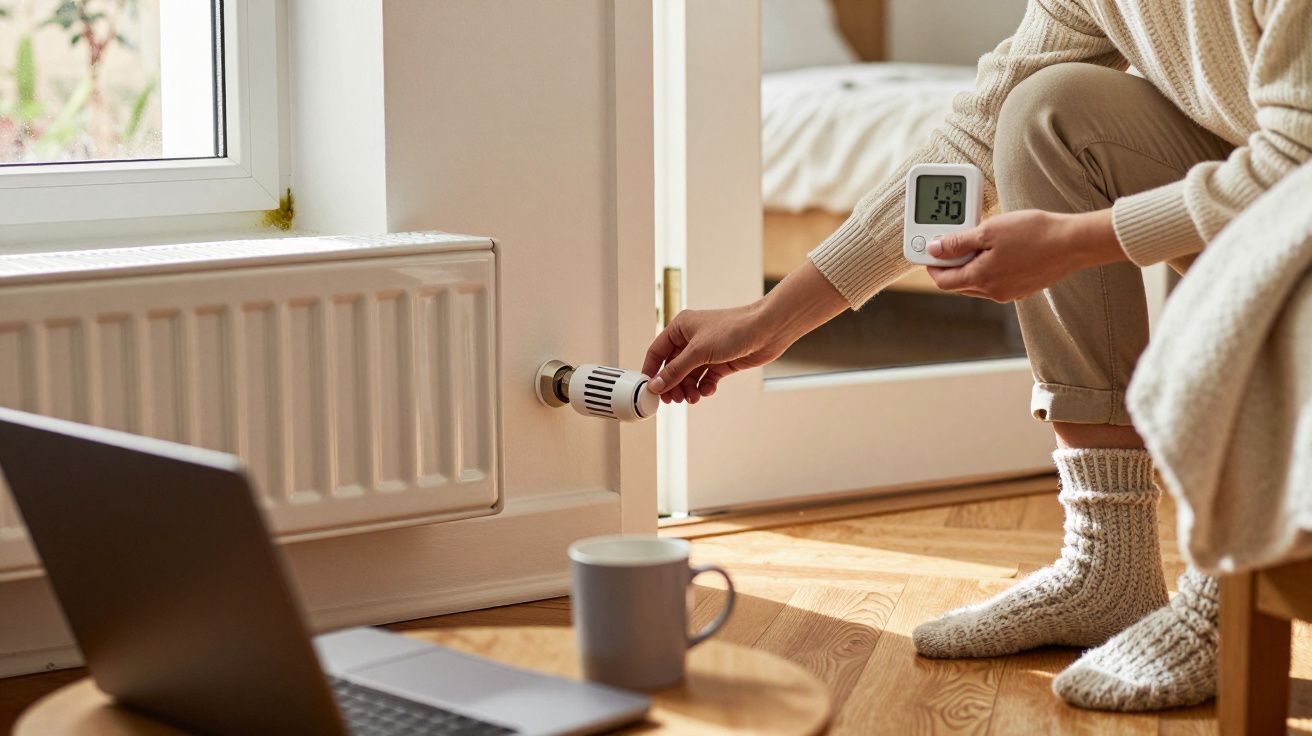
It’s not just you: Ofgem and the Energy Saving Trust have both noticed a clear shift in how UK households heat their homes, from when the boiler comes on to which rooms get warmed first. This matters this year because the same small tweaks that keep bills predictable can also change damp risk, indoor air quality, and how comfortable your home feels day to day.
Walk into a living room on a January evening and you can often tell: a thicker jumper, a throw on the sofa, the heating coming on later, and only where people actually sit. It’s not “going without” so much as heating with intention.
The quiet change: people stopped heating the whole house by default
For a long time, the standard British approach was simple: set the thermostat, set the timer, and let the house warm up as a single box. The last couple of winters nudged many homes into a different pattern: heat the occupied room, for shorter bursts, and let the rest tick along cooler.
That sounds like a minor behavioural tweak, but it changes everything from condensation on bedroom windows to how hard your boiler has to work at 6pm.
You can see it in the language people use now: “zoning”, “boost”, “pre-heat”, “only the lounge”, “turn it down at night”. Heating became something you manage, not just something that happens.
What actually changed in heating habits
These are the shifts that keep showing up across households, regardless of whether someone lives in a draughty terrace or a new-build flat.
- Lower thermostat set-points. Lots of homes moved from 21–22°C down towards 18–20°C, especially in living spaces.
- Shorter, sharper heating windows. Two bursts (morning and evening) replaced all-day background heating for many people.
- Room-first thinking. Closing doors, using TRVs properly, and prioritising one or two rooms over the whole house.
- More “micro-heat”. Heated throws, hot water bottles, and small electric heaters used tactically rather than central heating all evening.
- Timer discipline. People got stricter about not heating an empty home, especially with hybrid working patterns changing week to week.
- A bigger focus on humidity and ventilation. More dehumidifiers, more extractor fan use, and more awareness of mould.
The shift isn’t just “use less”. It’s “use smarter, but don’t accidentally create damp”.
Why it happened (and why it stuck)
The obvious driver was cost. When the price of energy stopped feeling like background noise and started feeling like a monthly shock, behaviour followed.
But other forces locked the change in place:
1) People started paying attention to controls
Thermostats and timers used to be “set and forget”. Now, many households have learned-sometimes the hard way-that the default settings aren’t sacred. A small change in flow temperature, schedule, or TRV position can make the home feel the same while using less.
2) Hybrid working scrambled “normal” heating hours
If you’re home on Tuesday but out on Wednesday, a rigid schedule wastes heat. That pushed people towards flexible timers, app controls, or at least a habit of adjusting the programmer as part of the weekly routine.
3) Comfort got separated from air temperature
People rediscovered the difference between warming the air and warming the person. A heated blanket in the evening can feel luxurious while the room stays a couple of degrees cooler.
That’s not a hardship story. It’s a comfort strategy.
Why it matters this year (beyond the bill)
Heating habits don’t just change spending. They change how your home behaves.
Condensation and mould risk goes up in cooler rooms
When you heat one room and keep others cold with doors shut, moisture from cooking, showers, drying laundry, and even breathing can drift into cooler spaces and condense on cold surfaces.
If you’ve ever found mould behind a wardrobe or along an outside wall, you’ve seen the result.
The fix isn’t “heat everything all the time”. It’s managing moisture as deliberately as you manage the timer.
Boiler efficiency can improve-or quietly get worse
Some people reduced costs by lowering boiler flow temperature and using heating for longer at a gentler rate (often more efficient for condensing boilers). Others leaned on frequent “boost” cycles that make the system surge, stop, surge again.
Neither is automatically right. The point is that the pattern matters, not just the number on the thermostat.
Health and sleep are part of the equation
A cooler bedroom often helps sleep, but a very cold home can worsen respiratory symptoms and joint pain, and it can be risky for older people. The “ideal” heating plan is different if you’re 25 and healthy than if you’re caring for someone who’s vulnerable.
If cutting heat means you’re sitting in a room that feels clammy, it’s a sign the balance is off.
The three heating patterns that show up most now
Think of these as the new default modes people switch between, depending on budget, property type, and routine.
The “one warm room” plan
Heat the living area well, keep doors shut, let bedrooms run cooler, add throws and slippers.The “low and steady” plan
Keep the home at a lower constant temperature to avoid big swings and condensation spikes, especially in leaky properties.The “targeted bursts” plan
Heat in short periods around wake-up and evening knowable times, using a quick boost if needed.
Each can work. Each can also backfire if ventilation and humidity are ignored.
A quick guide: what to copy, what to be careful with
| Habit shift | Why people like it | Watch-out |
|---|---|---|
| Turning the thermostat down 1–2°C | Often the easiest saving with minimal comfort loss | Don’t let unused rooms become cold, damp stores |
| Heating only one or two rooms | Fast comfort where you actually sit | Moisture migrates; ventilate and manage humidity |
| Using electric “top-up” heat | Warms a person quickly, less whole-house heating | Some heaters are costly per hour; use tactically |
The 15-minute check that makes these habits safer
If your heating style has changed, this is the small reset worth doing once, then repeating when the weather turns.
1) Walk the home and find the coldest “quiet” spots
Behind sofas on outside walls, corners of box rooms, behind wardrobes, and around window reveals are where mould starts.
If a room is consistently cold, don’t treat it like a cupboard. Crack the door sometimes, and consider a short heat period to stop it dropping too low.
2) Set a humidity baseline
If you have a cheap hygrometer, aim for a steady middle range rather than chasing perfection. A home that feels “dry enough” but has wet windows in the morning is telling you something.
If you don’t have one, use the simplest indicator: regular condensation on windows (especially in bedrooms) means you need more ventilation, better extraction, or less indoor drying.
3) Match ventilation to the new heating pattern
Shorter heating bursts can mean colder surfaces between bursts. That’s fine-until humid air hits them.
- Use extractor fans for showers and cooking, and run them long enough to clear steam.
- Open trickle vents if you have them.
- If you dry laundry indoors, do it with ventilation and, ideally, in one space you can manage.
4) Don’t “fight the system” with constant boosts
If you’re boosting daily, the schedule probably doesn’t match your life anymore. A small timer tweak often feels better than repeated manual overrides.
Treat your heating like a calendar, not an emergency button.
The bigger picture: why these shifts matter for the country too
When lots of homes move peak demand away from the same few evening hours, it can reduce pressure on the grid. When people learn to use controls properly, it also makes future upgrades-like heat pumps or smarter tariffs-less intimidating.
But there’s a flip side. If many households keep rooms cold without managing moisture, we’ll see more mould problems, more repair bills, and more health impacts, especially in older housing stock.
This year, the “right” heating habit isn’t just the cheapest one. It’s the one you can repeat all winter without turning your home into a damp box.
FAQ:
- Is it better to keep heating on low all day or use short bursts? It depends on your home’s insulation and damp risk. Leaky homes with condensation issues often do better with steadier warmth plus ventilation; well-insulated homes can be comfortable with timed bursts.
- Do heated throws actually save money? They can, if they replace some room heating for a seated evening. They’re best used as targeted comfort rather than an add-on while the whole house stays at 22°C.
- Will heating fewer rooms cause mould? It can if moisture isn’t managed. Cold rooms plus humid air equals condensation, so pair “one warm room” living with extractor fans, ventilation, and occasional heat in colder spaces.
- What’s the quickest sign my new heating routine isn’t working? Persistent window condensation, a musty smell, or cold, clammy corners-especially behind furniture on outside walls.






Comments
No comments yet. Be the first to comment!
Leave a Comment