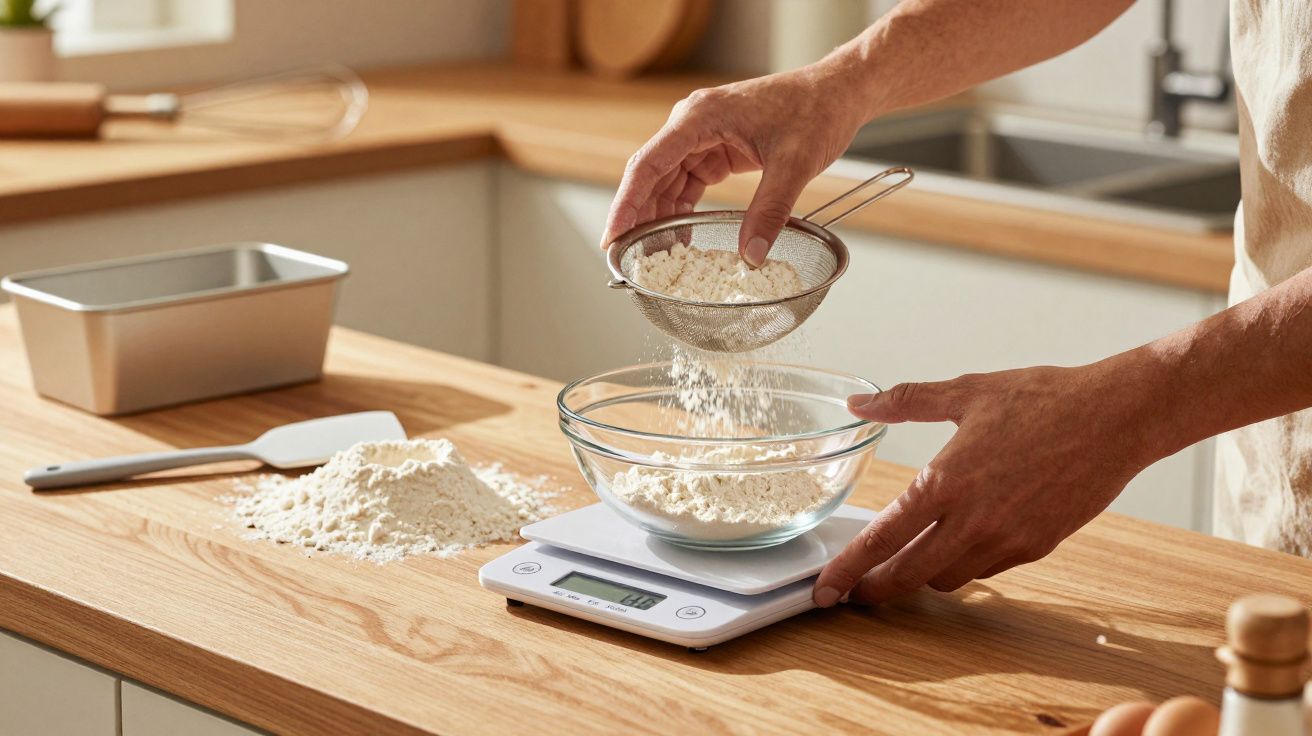
A batch of biscuits can go from “fine” to bakery-level simply by using digital kitchen scales instead of measuring cups. It’s the same recipe, the same oven, the same Sunday afternoon - but the results get more consistent, fast. For home bakers, that consistency is the difference between making something once and making it on repeat.
You don’t need new tins, a stand mixer, or fancy flour. You just need to stop guessing what “one cup” looks like in your kitchen, on your spoon, on your humid Tuesday.
The simple shift: weigh everything in grams
Cups and scoops are convenient, but they’re not precise. Flour compacts. Brown sugar clumps. Cocoa and icing sugar fluff up. Two people can follow the same recipe and unknowingly end up with different doughs.
Scales flatten that variability. When your flour is always 250g - not “a cup-ish” - your dough behaves the same way each time, which makes timing, texture, and browning far easier to predict.
The quiet win is confidence: you’re not troubleshooting your measuring technique, you’re just baking.
Why it delivers outsized results (even with ordinary recipes)
It fixes the number-one baking problem: too much flour
Most “dry, crumbly” cakes and “why won’t this dough come together” moments trace back to flour. A packed cup can be 20–40g heavier than a lightly spooned cup, which is enough to stiffen cookies, toughen scones, and mute chocolate flavour.
Weighing doesn’t just make things accurate. It makes them repeatable - and repeatable is what people mean when they say something is “reliable”.
It makes mixing gentler (and bakes more tender)
When ingredients are measured properly, you spend less time “adjusting” with extra milk, more flour, or another spoon of sugar. That typically means less mixing, which often means a softer crumb and fewer tough bakes.
It speeds up baking and cuts washing-up
This is the part most people don’t expect. With scales, you can build a recipe straight into one bowl: tare, add, tare, add. Fewer cups, fewer spoons, fewer sticky measures.
What you actually need (and what to ignore)
A basic set-up is enough. Don’t overthink it.
- Digital scales that measure in 1g increments (0.1g is nice, not necessary)
- A mixing bowl that fits on the scale platform
- A spoon or small jug for adding ingredients gradually
- A notebook note in your phone: “favourite recipes in grams”
If your scales have a tare button, you’re set. If they don’t, it’s worth replacing them.
A quick guide to switching recipes without rewriting your whole life
1) Start with the recipes you bake most
Pick two things you make often: banana bread, Victoria sponge, shortbread, muffins. The goal is to build trust quickly, not convert your entire recipe folder in a weekend.
2) Use gram-based recipes first (so you feel the difference)
Plenty of UK recipes already use grams. Make one familiar bake from a grams-only source and notice how the batter looks: thickness, pour, and bake time tend to feel more predictable.
3) Convert only the “problem ingredients” if you’re stuck with cup recipes
If you love a recipe written in cups, you don’t have to bin it. Convert the ingredients that cause the most chaos:
- Flour (plain, self-raising, bread flour)
- Brown sugar
- Cocoa powder
- Icing sugar
Liquids are usually more forgiving, but weighing them still helps with consistency.
| Ingredient | Why cups vary | What weighing prevents |
|---|---|---|
| Flour | Compacts easily | Dry cakes, stiff dough |
| Brown sugar | Packs and clumps | Over-sweet, heavy bakes |
| Cocoa | Fluffy or compressed | Bitter, dry brownies |
Small habits that make scales even more powerful
- Tare between ingredients. Don’t do mental maths; just zero the bowl every time.
- Add slowly near the end. Overshooting by 15g of flour matters more than overshooting by 15g of chocolate chips.
- Write one “house version”. Once you nail a recipe, save it in grams exactly as you like it (including your preferred salt and vanilla).
- Don’t chase perfection where it doesn’t matter. A handful of berries is a handful of berries. The structure ingredients are where the precision pays off.
The one caution: baking still needs judgement
Scales won’t fix an oven that runs hot, or a cake pulled ten minutes early. They won’t stop overmixing, and they won’t make stale raising agents work miracles.
What they do is remove a big, invisible variable - so when something goes wrong, you can actually diagnose it. And when something goes right, you can repeat it.
FAQ:
- Do I need to weigh eggs too? Not usually. Most home recipes assume “medium eggs” and work fine. For very precise bakes (macarons, some sponge cakes), weighing beaten egg can help, but it’s optional for everyday baking.
- Are ounces good enough instead of grams? Yes, weighing is the key improvement. Grams are just simpler for small adjustments and most UK recipes.
- What if my favourite recipe is in cups? Keep it, but consider converting flour and sugars first. Once you’ve baked it a couple of times by weight, you’ll have a more dependable “house version”.
- Will this help bread as well as cakes? Absolutely. Bread is where weighing often feels most dramatic: hydration, kneading feel, and rise are all easier to control when flour and water are consistent.


Comments
No comments yet. Be the first to comment!
Leave a Comment