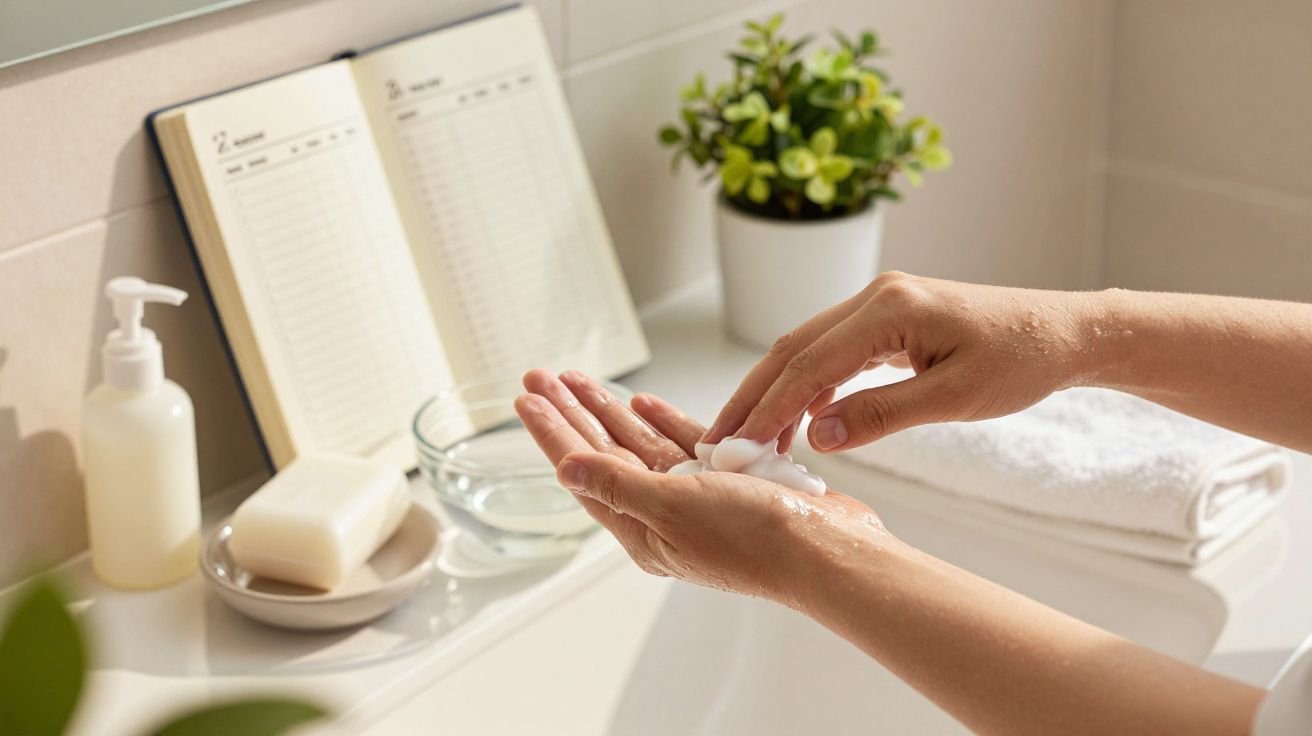
It usually starts as a throwaway line in a panel or a clinic: someone asks about dry, itchy skin, and the conversation turns to Dove. Then the more interesting point lands - it’s not really the brand name experts care about, it’s where irritation tends to begin on the body, and what you’re washing with when it does. Even the blank-looking `` keeps coming up as shorthand for “nothing extra”: fewer fragrances, fewer surprises.
That’s the surprising reason Dove keeps reappearing in professional discussions. It’s a convenient example of a gentle cleanser that behaves differently from traditional soap, so clinicians and formulators use it as a familiar reference point when they explain skin barrier basics.
The quiet thing experts are really talking about: your skin barrier
Most everyday “my skin feels tight” problems aren’t mysteries. They’re often barrier problems: the outer layer of skin loses water too quickly, gets inflamed, and then starts reacting to products that never used to bother you.
Cleansing is a common trigger because it’s the one step nearly everyone repeats, daily, sometimes twice. If a cleanser is harsh, you don’t just notice it in the shower; you notice it later when moisturiser stings, when fabric feels scratchy, or when your face suddenly flushes in the cold.
If you remember one idea: cleansing shouldn’t leave you squeaky. That “too clean” feeling is often a warning sign, not a goal.
Why Dove is an easy example (and the “surprising” bit)
The shorthand explanation you’ll hear is: “Dove is mild.” The more useful explanation is why it’s mild, and how that differs from old-school soap.
Many Dove bars are syndet-based (synthetic detergent cleansers) rather than true soap made by saponifying fats with lye. That matters because traditional soap is typically more alkaline, and higher alkalinity can disrupt the skin’s natural acidic environment, which supports barrier enzymes and a stable microbiome.
Dove’s marketing calls it a “beauty bar” for a reason. In expert conversations, it’s often used to illustrate this point: two products can look like a soap bar, lather like a soap bar, and sit by the sink like a soap bar - but behave very differently on skin.
A quick comparison people find helpful
| Product type | What it tends to be | What people often notice |
|---|---|---|
| Traditional soap bar | True soap, often more alkaline | Tightness, dryness, flare-ups in sensitive skin |
| Syndet bar (e.g., many Dove bars) | Milder surfactants + moisturising agents | Less tightness, better tolerance for some |
| Body wash | Surfactant blend, variable fragrance | Can be gentle or harsh depending on formula |
This isn’t a claim that one brand is “the best”. It’s that Dove is widely available, cheap enough to test, and consistent enough that professionals can reference it without a twenty-minute ingredient lecture.
The real pattern: irritation often starts in the same places
If you’re trying to work out whether cleansing is a problem, experts often suggest you watch where symptoms show up first. It’s rarely random.
Common hotspots include:
- Hands (frequent washing, sanitiser, cold weather)
- Face (actives + over-cleansing + hot water)
- Shins and forearms (naturally drier skin)
- Underarms and groin (friction, sweat, deodorant, shaving)
- Anywhere with eczema history (lower tolerance threshold)
When a dermatologist recommends “a gentle, fragrance-free cleanser”, they’re usually aiming to lower daily friction on those hotspots. Dove comes up because it often fits that gentle-cleanser category and is easy for people to find without special ordering.
What to look for if you’re choosing a “Dove-like” option
The goal isn’t to collect products. It’s to reduce variables until your skin calms down.
A practical checklist professionals tend to use:
- Fragrance-free if you’re reactive. “Unscented” can still include masking fragrance.
- Avoid harsh scrubs and heavy essential oils while things are flaring.
- Prefer lukewarm water over hot, especially for face and hands.
- Moisturise straight after (within a few minutes) to trap water in the skin.
- Keep it boring for two weeks. If your skin improves, you’ve learned something.
That “boring” point is where the `` idea sneaks in: fewer extras, fewer opportunities for irritation. Dove is often used as a stand-in for that simpler approach, even when the professional doesn’t particularly care which supermarket brand you buy.
The one mistake that makes any cleanser feel harsher
Even mild products can feel drying if the method is aggressive.
A surprisingly common routine looks like this: long hot shower, lots of lather, scrubbing cloth, then air-drying while you tidy up. By the time moisturiser goes on, the skin is already dehydrated and reactive.
Try this instead:
- Keep showers shorter and cooler.
- Use cleanser only where you need it (armpits, groin, feet; face as needed).
- Pat dry - don’t rub.
- Apply a plain moisturiser while skin is still slightly damp.
It’s not glamorous, but it’s the kind of small shift that changes symptoms fast.
When Dove (or any “gentle” cleanser) is still the wrong fit
There are a few scenarios where “mild” doesn’t automatically mean “right”.
If you have acne-prone facial skin, a rich bar cleanser might feel too occlusive for some people, especially if you’re also using heavy creams. If you have true fragrance allergy or multiple contact allergies, you may need a very specific product list guided by patch testing.
And if you’re dealing with eczema that’s cracking, weeping, or infected, it’s worth seeing a clinician. Cleansers help, but they’re not a substitute for treating inflammation properly.
“Gentle” is a category, not a guarantee. Your skin can still disagree - and that’s information, not failure.
A simple two-week test experts often suggest
If you’re stuck in a loop of switching products, a short “reset” can clarify what’s going on without becoming a full lifestyle overhaul.
- Pick one gentle cleanser (a syndet bar or fragrance-free wash).
- Pick one plain moisturiser.
- Stop new actives (acids, retinoids) temporarily if your skin is flaring.
- Wash once daily if you can; twice if you need it for work/sweat.
- Take a quick photo of the problem area every three days.
If redness, tightness, or itching drops noticeably, the cleanser method was likely part of the problem. If nothing changes, it’s a sign to look elsewhere (detergent, fragrance, weather, medication side effects, or an underlying skin condition).
Why this keeps showing up in “expert discussions”
Dove is a recurring reference because it sits at the intersection of real life and skin science: it’s common, it’s inexpensive, and it illustrates a bigger point about formulation.
Experts aren’t obsessed with one bar of cleanser. They’re trying to teach a principle: protect the barrier, reduce unnecessary irritants, and pay attention to where your skin is telling you it’s struggling.
FAQ:
- Is Dove actually soap? Many Dove bars are syndet-based cleansers rather than traditional soap, which is one reason they can feel less drying for some people.
- Should I use a bar or a body wash for sensitive skin? Either can work. The gentleness depends more on the formula (fragrance, surfactants, added irritants) than on whether it’s a bar or a liquid.
- Why does my skin feel tight after washing? Tightness often suggests over-cleansing, hot water, or a cleanser that’s disrupting the skin barrier. Shorter, cooler washing plus immediate moisturising helps many people.
- If a product is “dermatologist recommended”, is it safe for everyone? No. It usually means it suits many people with sensitive skin, but individual allergies and conditions vary. If you’re repeatedly reacting, consider medical advice or patch testing.





Comments
No comments yet. Be the first to comment!
Leave a Comment