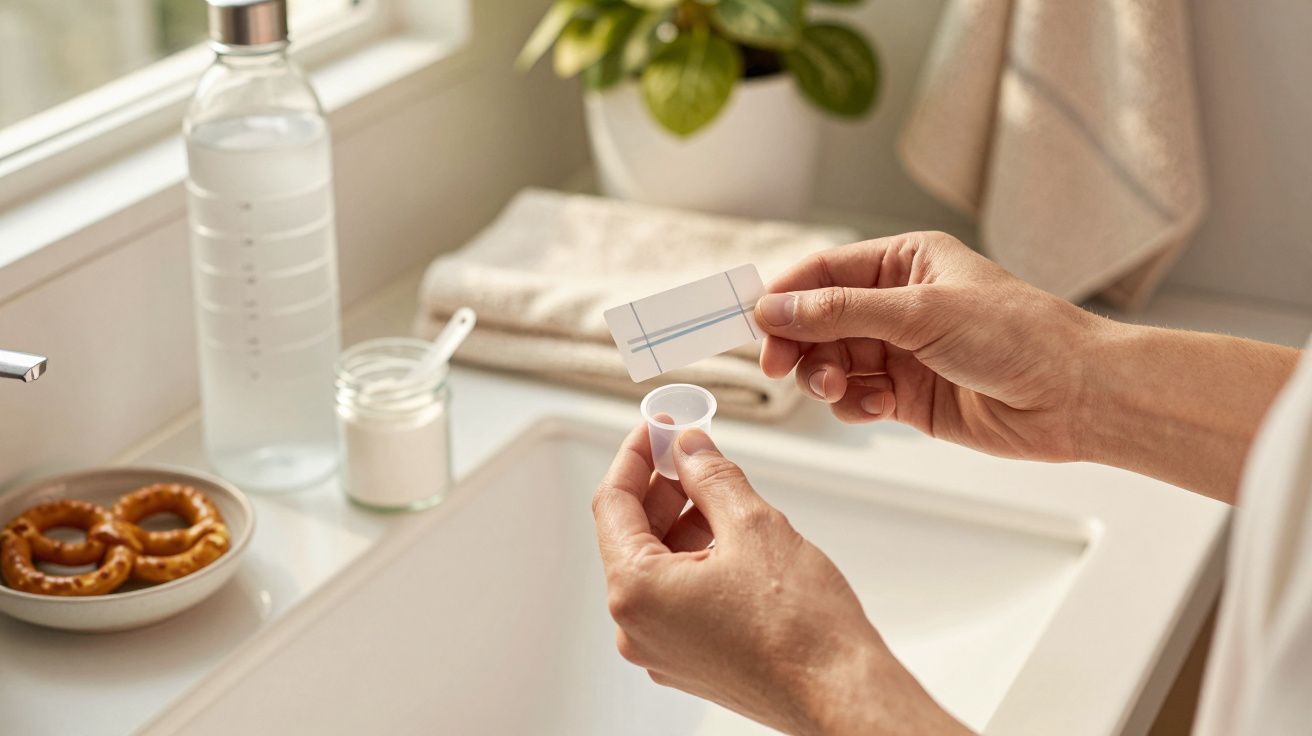
Cold walk, busy desk, a bottle on the go.
Somewhere between “eight glasses a day” and “always be sipping”, hyponatraemia gets ignored - even though electrolytes are the thing that stop water turning from helpful into a problem. The subtle warning sign isn’t dramatic thirst or obvious dehydration; it’s the quiet, confident belief that the clearer your urine is, the healthier you must be.
That myth travels fast because it feels clean and controllable. But bodies don’t run on purity tests - they run on balance.
The hydration myth that sounds healthy, but isn’t
The internet version of hydration is simple: more water equals more energy, better skin, fewer headaches, and a “detox” you can see in the toilet bowl. The giveaway is how often advice turns into a rule, not a response.
A common one is the idea that your wee should be totally clear all day. People treat it like a scoreboard, then push fluids to keep the colour down.
Clear urine can happen when you’re well hydrated. It can also be your first nudge that you’re overdoing it.
For most people, the better target is boring: pale straw. Not apple juice, not neon, not pure water. Just lightly coloured.
The subtle warning sign most people miss: constant, clear wee
If you’re peeing very frequently and it’s consistently crystal-clear, it can look like a win. In reality, it may be a sign you’re drinking past what your body needs, especially if you’re also cutting salt hard or sweating a lot.
That’s where the risk creeps in. When you dilute the sodium in your blood too far, water shifts into cells. In mild cases you feel “off”. In severe cases, it becomes a medical emergency.
Why it happens (without the drama)
Your kidneys can only excrete water at a certain rate. If you’re drinking large volumes quickly - or steadily over hours without replacing sodium - you can outpace that system.
A few situations make it more likely:
- Long endurance exercise (running, cycling, hiking) where you keep “topping up”
- Hot yoga or sauna sessions paired with aggressive water intake
- “Water challenges” and oversized bottles used as daily targets
- Very low-salt diets combined with high fluid intake
- Some medications (including certain diuretics and antidepressants) that affect fluid balance
The tricky bit is that people often do this while trying to be healthier. That’s why it’s subtle.
The symptoms that get blamed on “not drinking enough”
Mild overhydration doesn’t announce itself as “too much water”. It often feels like the exact thing you’re trying to avoid.
Watch for this cluster, especially if you’ve been pushing fluids:
- Headache that feels dull or pressurised
- Nausea or loss of appetite
- Bloating, sloshy stomach, or feeling “waterlogged”
- Unusual fatigue, brain fog, irritability
- Muscle cramps despite drinking plenty
- Lightheadedness that doesn’t improve with more water
People commonly respond by drinking more. That’s the trap.
If symptoms are severe (confusion, vomiting, seizures, worsening headache) seek urgent medical help. Hyponatraemia can escalate quickly.
Why “drink more” became the default advice
Hydration messaging works because dehydration is real and common - but the slogans flatten everything into one direction.
You can see the pattern everywhere:
- A fixed number (two litres, eight glasses) that ignores body size and weather
- The idea that thirst is “too late” (it usually isn’t)
- The belief that caffeine “doesn’t count” (tea and coffee still contribute to fluid intake)
- The assumption that more water is always safer than less
In most day-to-day settings, your body’s thirst cues do a decent job. Not perfect, but better than forcing a target that makes you feel unwell.
A simpler way to hydrate that actually respects real life
Instead of treating hydration like a punishment, use a few low-effort checks that adapt to your day.
A quick “am I drinking the right amount?” checklist
- Thirst: drink when you’re thirsty, and don’t ignore it for hours
- Urine colour: aim for pale straw, not constantly clear
- Urination frequency: very frequent trips can be a sign you’re overdoing it
- Sweat losses: if you’re sweating heavily, water alone may not be enough
- Salt and food: eating regular meals often provides the sodium you need
That last point matters more than people think. Food is an electrolyte strategy in disguise.
When electrolytes matter (and when they’re just expensive flavouring)
Electrolytes aren’t a magical add-on for a sedentary day. But in specific contexts, they’re the difference between hydration and dilution.
They matter most when:
- You’re exercising for more than ~60–90 minutes
- You’re sweating heavily (heat, humid weather, heavy clothing)
- You’re doing back-to-back training sessions
- You’ve had vomiting/diarrhoea, or you’re struggling to keep food down
In those moments, consider:
- An oral rehydration solution (especially if unwell)
- A sports drink (useful during endurance work; less useful as a casual sip)
- Salty foods with water (soups, salted nuts, sandwiches)
You don’t need to turn every bottle into a chemistry experiment. You just need to stop treating water as the only lever.
The “healthy” habits that can quietly push you too far
A lot of overhydration risk comes from stacking habits that are fine on their own:
- Carrying a 2-litre bottle and treating it as non-negotiable
- Going low-sodium for “clean eating” while training hard
- Replacing meals with liquids (smoothies, juices, broths)
- Doing long workouts and drinking at every possible moment
None of these are inherently bad. The issue is the direction never changes, even when your body is already topped up.
Hydration isn’t a goal you hit. It’s a state you maintain.
A small guide you can actually remember
If you like rules, use the ones that keep you flexible.
- Drink to thirst most of the time.
- Let urine be lightly coloured, not constantly clear.
- During long, sweaty sessions: include sodium (drink or food).
- After hard sweating: rehydrate steadily, not as a race.
- If you feel headache/nausea and you’ve been drinking a lot: pause, reassess, eat something salty if appropriate, and don’t keep forcing water.
A quick “myth vs reality” table
| Myth | What’s closer to true | What to do instead |
|---|---|---|
| “Clear wee means I’m doing it right.” | Constantly clear can mean you’re overhydrating. | Aim for pale straw most of the day. |
| “Thirst means I’m already dehydrated.” | Thirst is a useful early signal. | Respond to it; don’t fear it. |
| “More water fixes headaches.” | Some headaches worsen with dilution. | Check your intake, eat, and consider electrolytes if sweating. |
Who should be extra careful
Most healthy adults won’t stumble into severe hyponatraemia from normal drinking. The risk rises when you combine high fluid intake with high sweat loss, low sodium, or certain health conditions.
Be cautious if you:
- Train for endurance events or do long gym sessions
- Are on medications that affect fluid balance
- Have kidney, heart, or endocrine conditions (follow clinician guidance)
- Are supporting a teen/young adult in sport where “drink, drink, drink” is coached aggressively
Hydration advice should change with context. If it never changes, it’s probably advice designed for content, not bodies.
FAQ:
- Is it bad if my urine is clear once in a while? Not necessarily. A clear wee after a big drink can be normal. The concern is when it’s consistently clear and frequent, especially alongside symptoms like headache or nausea.
- How much should I drink in a day? There isn’t one number that fits everyone. Use thirst, urine colour, and how much you’re sweating as your main guides.
- Do tea and coffee count towards hydration? Yes. They still contribute to fluid intake for most people, even though caffeine can have a mild diuretic effect in those not used to it.
- When should I use electrolytes? They’re most useful during long or very sweaty exercise, or when you’re unwell with fluid loss. For a normal day with regular meals, plain water is usually fine.
- What’s the biggest red flag that I’m overdoing water? Feeling unwell (headache, nausea, fogginess) while you’re also peeing frequently and very clear - and then trying to “fix it” by drinking even more.



Comments
No comments yet. Be the first to comment!
Leave a Comment