On the surface, neuroplasticity sounds like a buzzword you’d hear in a podcast, not something you’d notice while making tea or scrolling your phone. But cognitive reserve is built (or quietly lost) in those ordinary moments, which is why a subtle change in how “new” things feel can matter more than most people realise. The problem is that the earliest warning sign doesn’t look like a symptom - it looks like comfort.
You don’t wake up one day with “less plasticity”. You just find yourself doing the same things, the same way, and feeling oddly proud that nothing surprises you anymore.
The subtle warning sign most people miss: your world stops correcting you
A surprisingly useful way to think about brain plasticity is this: it thrives on prediction errors. Your brain makes a guess, reality disagrees, and your circuits update.
When plasticity is healthy, you notice little mismatches all day - a new route that’s faster than you expected, a conversation that shifts your opinion, a skill that improves because you corrected your form. When plasticity is sliding, you start organising your life to avoid those mismatches.
The warning sign isn’t “forgetting names”. It’s this:
You feel less often gently wrong - because you’ve stopped putting yourself in places where you can be corrected.
That can look like sticking to the same meals, the same music, the same colleagues, the same news sources, the same walking route. It can even look like “discipline”. But a life with fewer small surprises gives the brain fewer reasons to rewire.
Why that matters more than doing a crossword
Most people associate plasticity with brain-training apps, puzzles, or learning a language in January. Those can help, but they’re not the core mechanism.
Plasticity is less about “mental effort” and more about updating. If you repeat what you already know, you’re rehearsing. If you do something that forces adjustment - especially under mild pressure - you’re changing.
A crossword can be useful, but only if it keeps you near the edge of your ability. The moment it becomes a soothing ritual you can do half-asleep, it stops asking your brain to remodel.
The modern trap is that daily life can be engineered to be frictionless. Sat nav prevents you from building a map. Autoplay removes choice. Same-day delivery removes planning. Even social feeds remove disagreement, which is one of the strongest drivers of cognitive updating when it’s handled safely.
What “low plasticity” looks like in real life (and why it’s easy to rationalise)
This is not about blame. It’s about noticing patterns before they calcify.
Common, easy-to-miss signs include:
- You avoid being a beginner. You tell yourself you’re “too busy” for new hobbies, when the real issue is discomfort.
- You choose familiarity over curiosity by default. Same podcasts, same genre, same topics, same friends.
- Your attention becomes more brittle. Not just “shorter”, but less willing to stay with difficulty.
- You reduce unstructured social time. Less banter, fewer spontaneous chats, more transactional interactions.
- You stop changing your mind. Not because you’ve become wiser, but because you’ve stopped encountering information that forces revision.
None of these guarantee a problem. But together they often signal a life that’s stopped generating the kind of input the brain uses to stay adaptable.
The hidden driver: stress makes the brain efficient, not flexible
A brain under chronic stress tends to prioritise quick, reliable patterns. That’s not a personal failing - it’s biology.
When you’re overloaded, the brain becomes a conservationist. It leans on habits, shortcuts, and familiar routines because they cost less energy. Over time, you can end up with a life that is extremely manageable and quietly less malleable.
This is why people often notice the “warning sign” after a demanding period: a new job, caring responsibilities, money pressure, poor sleep, long-term anxiety. The issue isn’t that your brain can’t change; it’s that it’s been trained to avoid the conditions that demand change.
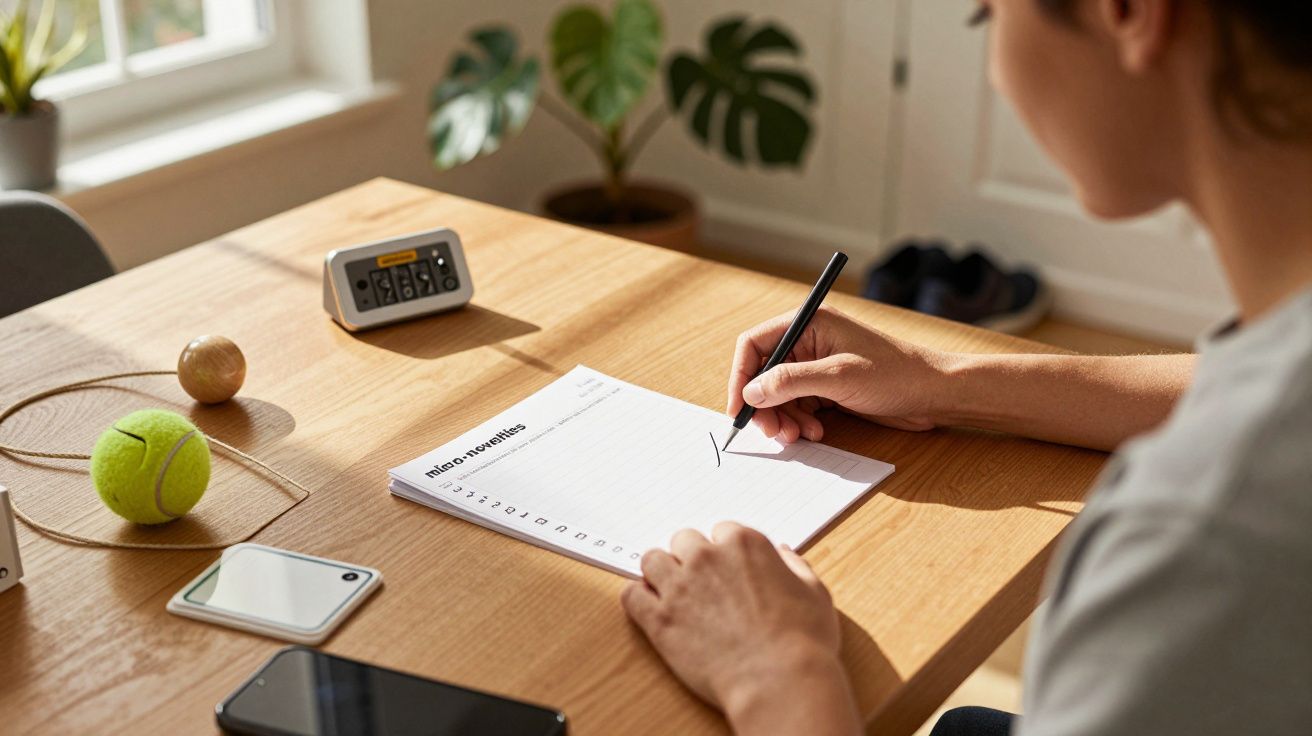
A simple self-check: count your “micro-novelties” for seven days
You don’t need a scan to get a useful signal. You need a week of honest observation.
For seven days, keep a quick note (phone or paper) of moments where you did something slightly unfamiliar and had to adjust. Think micro, not dramatic:
- Took a different route and had to orient yourself
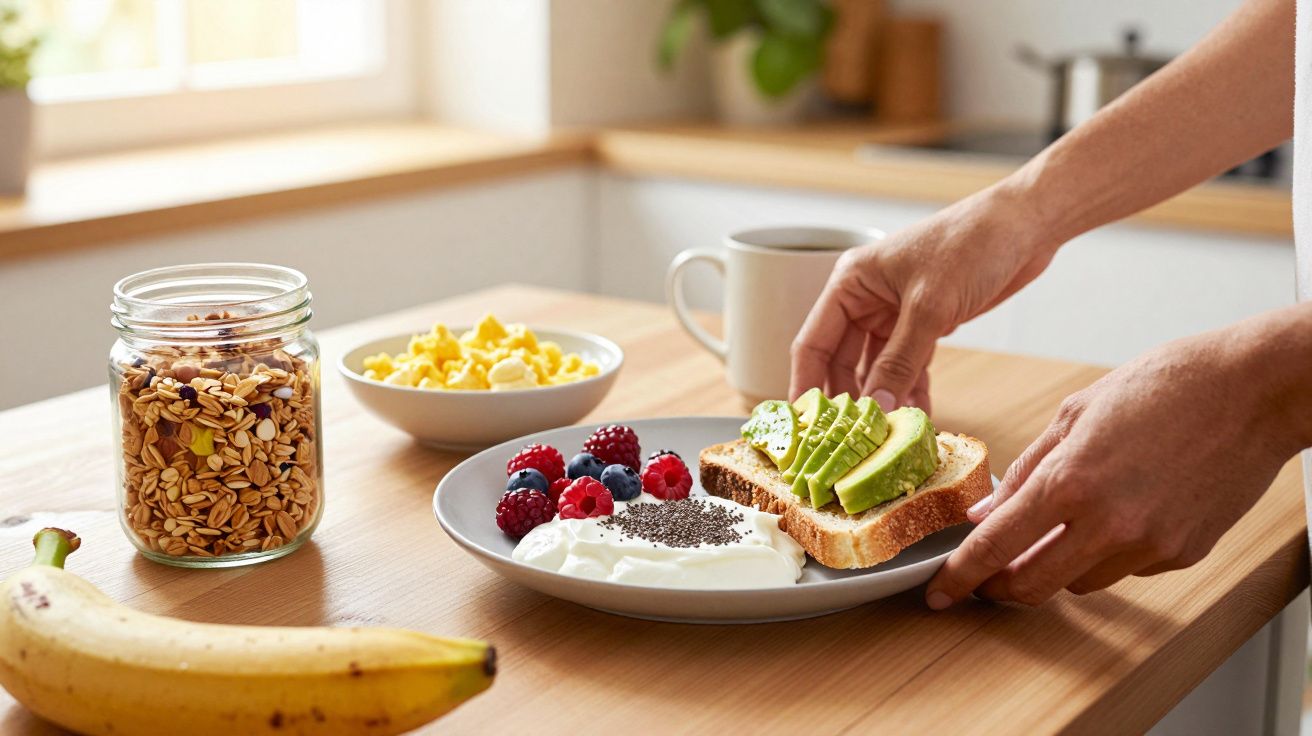
- Cooked without a recipe you’ve memorised
- Spoke to someone new (or had a longer conversation than usual)
- Tried a new class, a new gym machine, a new swim stroke
- Read something you don’t agree with and stayed with it for 10 minutes
- Made a small mistake and corrected it (instead of avoiding the task)
At the end of the week, don’t ask “did I do enough new things?” Ask:
Did my week contain regular, low-stakes moments where reality made me update?
If the answer is “not really”, that’s the warning sign. Not because novelty is a moral good, but because your brain adapts to what you repeatedly ask of it.
The “keep it teachable” habits that work without turning life upside down
The goal isn’t to live in chaos. It’s to add small, repeatable friction - enough to trigger updating, not enough to trigger shutdown.
Here are options that tend to work because they’re specific and realistic:
1) Pick one skill that has feedback built in
Choose something where you can tell, quickly, whether you’re improving: dancing, drawing, a language exchange, climbing, a musical instrument, even darts.
Feedback is plasticity’s fuel. Vague goals (“get smarter”) don’t give the brain a clear signal. Clear outcomes do.
2) Make movement slightly coordinated, not just sweaty
Brisk walking is excellent for health, but coordination-heavy movement adds an extra layer of neural demand.
Think: tennis, table tennis, swimming drills, martial arts, basketball, yoga transitions, dance steps. The point is learning sequences and correcting form, not chasing exhaustion.
3) Rotate your inputs on purpose
If you always consume the same kind of media, your brain gets very good at predicting it - and very bad at updating.
A simple rule: one new input source per week. A different newspaper, a different genre, a long-form lecture on a topic you don’t already “own”.
4) Use “desirable difficulty”, not punishment
If a change makes you freeze, it’s too much. If it feels slightly effortful but doable, it’s in the right zone.
That zone is where plasticity tends to happen: mild challenge, consistent repetition, adequate rest.
A compact plan you can actually follow
If you want something practical, aim for this for two weeks:
| Lever | What to do | What it signals to the brain |
|---|---|---|
| Novelty | 10 minutes daily of a new or rusty skill | “Update needed” |
| Feedback | 2 sessions/week with clear correction (coach, app, partner) | “Here’s the error” |
| Recovery | Keep sleep consistent for 5 nights/week | “Store the learning” |
You’re not chasing perfection. You’re giving your nervous system a steady stream of reasons to remodel, plus the recovery time to lock it in.
Small risks and when to take it seriously
A lower-novelty lifestyle is common and often reversible. But a few patterns deserve more attention, especially if they’re new or worsening:
- Significant changes in memory, language, or judgement
- Personality change noticed by others
- Getting lost in familiar places
- Low mood or anxiety that’s shrinking your world
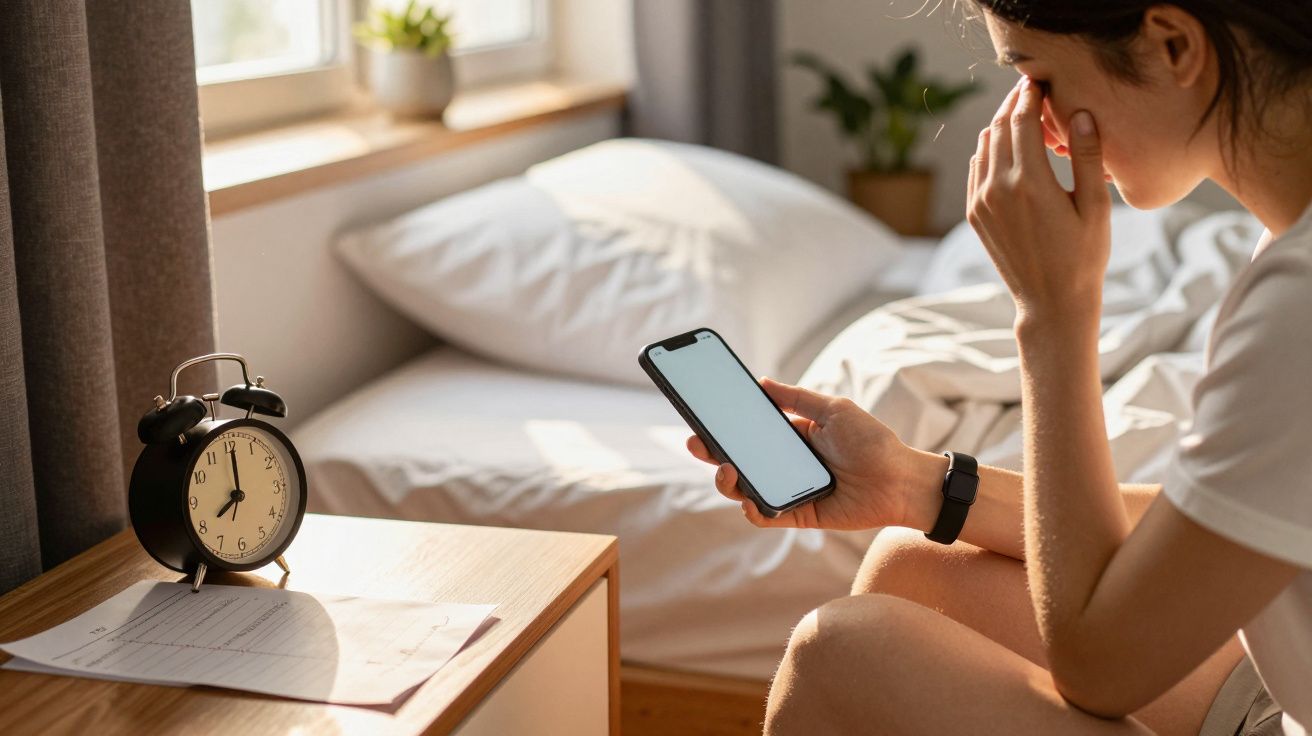
- Sleep problems that persist and affect daytime function
If any of those are in the picture, it’s worth speaking with a clinician. Plasticity is influenced by stress, depression, medication effects, hormones, and health conditions - and you don’t have to guess alone.
The point of the warning sign
The subtle warning sign in brain plasticity isn’t that you can’t learn. It’s that your life stops asking you to.
Once you notice that “everything feels familiar” has become your default setting, you can treat it like a quiet boundary line: not a crisis, just a prompt to step back into small, safe forms of challenge - the kind your brain has been built to respond to.
FAQ:
- What is neuroplasticity, in plain terms? It’s the brain’s ability to change its wiring based on experience - strengthening, weakening, and reorganising connections as you learn and adapt.
- Is routine bad for the brain? No. Routine reduces stress and frees up energy. The issue is only routine, with no regular moments that require correction and learning.
- Do puzzles prevent cognitive decline? They can help if they’re genuinely challenging and varied, but they’re not a magic shield. Movement, sleep, social interaction, and managing stress often matter just as much.
- How quickly can plasticity improve? Many people feel changes in attention and mood within weeks of better sleep and regular challenge. Skill changes take longer, but the “teachable” feeling can return sooner than you’d expect.
- What’s one small change with a big payoff? Learn something with immediate feedback twice a week (a class, a coached session, or structured practice). Feedback is what turns effort into rewiring.



Comments
No comments yet. Be the first to comment!
Leave a Comment