The culprit isn’t the cobwebs. It’s the corners we forget. One quiet habit, done every autumn, invites eight-legged lodgers back: crack a window, ignore the sill, spray something sharp-smelling once, and hope for the best. The spiders don’t mind. The draft feels cosy, the nooks stay dry, and by the time you notice the first web thickening in the top corner, they’ve already filed a change-of-address form.
One September evening, I was half-watching a drama, half-folding washing, when a hefty house spider strolled across the skirting like it paid council tax. I grabbed a glass, did the usual rescue-and-release, and realised I’d done the same dance three nights in a row. The diffuser was on, the windows cracked, yet the corners still felt like a spider Airbnb. The room smelt of “linen breeze”; the spiders clearly hadn’t read the label.
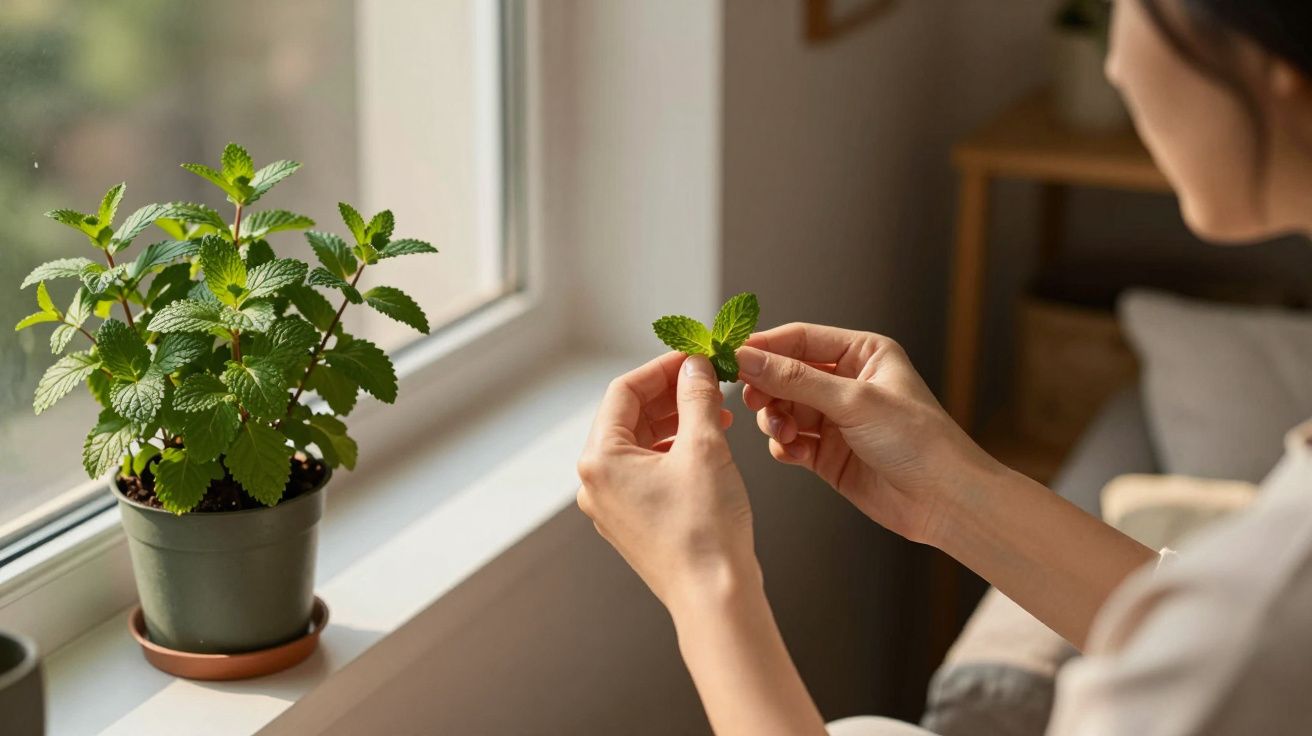
The fix came from the kitchen, not the cleaning aisle. A single pot of peppermint, bought for 99p to chop into potatoes, had outgrown its mug and was sulking on the worktop. I repotted it, parked it on the living-room windowsill, bruised a leaf between my fingers, and wiped the oil along the frame. The change was immediate: the room smelled like a fresh packet of mints, sharp but clean. The spiders? They chose another corridor.
Why peppermint makes spiders think twice
Spiders don’t hate you; they hate surprises. Peppermint is one long, minty surprise. Its leaves are packed with menthol and other aromatic oils that smell invigorating to us but overwhelming to small creatures that navigate the world through their legs and lungs. To a spider, a peppermint-scented sill is like walking into a cloud of strong aftershave with no exit sign.
I noticed it slowly. Corners that usually collected fine, silky webs stayed bare. The nightly dash of big, brown legs across the carpet… just stopped. One straggler tried the usual route along the window frame, paused at the mint-slicked strip, and retreated behind the bookshelf instead. It wasn’t a miracle. It was a line they didn’t fancy crossing.
There’s a simple logic at work: strong, volatile oils muddle a spider’s ability to read its environment. They don’t mimic predators; they scramble the cues that say “safe”. Peppermint doesn’t kill or trap, it just makes your chosen entry points feel like bad news. Different species react differently-tiny money spiders seem more tolerant than the big house spiders-but the odds tilt in your favour. Not a force field, a nudge.
How I turned one mint pot into a quiet spider barrier
My first attempt was rough-and-ready. I repotted the peppermint into a slightly larger, heavy pot so it wouldn’t topple, then parked it right on the windowsill where the evening visitors seemed to appear. South-facing? Fine. North-facing? Also fine. Peppermint is forgiving as long as it isn’t bone dry and roasted.
Then I made a tiny ritual out of it. Every few days, usually while the kettle boiled, I pinched off one or two leaves, crushed them lightly between thumb and forefinger until my fingers tingled with that cool, sweet scent, and wiped the oils along:
- the inner window frame and sill
- the top edge of the skirting board
- the tiny gap where the radiator pipe meets the wall
It took under a minute. The room smelled faintly of chewing gum, not chemicals, and the webs simply… didn’t rebuild. Let’s be honest: nobody does that every single day, but two or three times a week was enough to keep the mint note present.
A few tweaks helped it actually work:
- I kept the pot close to likely entry points, not tucked prettily in the middle of the sill.
- I trimmed the plant regularly so it bushed out, giving more leaf and more scent.
- I avoided saturating painted wood with water; oil, not drips, is the aim.
If you prefer neat lines, plant two or three small peppermint pots in a tray and line them along the sill like a mini hedge. The continuous scent matters more than any dramatic gesture.
Grow it once, enjoy it for months
Peppermint isn’t fussy. If you can keep a basil plant alive for a fortnight, you can manage mint until winter. It actually prefers a bit of neglect to constant fussing.
Quick care notes that stop it sulking:
- Water when the top of the compost feels dry, not on a schedule.
- Give it decent light but shield it from full midday scorch behind glass.
- Snip often; a regularly harvested mint plant is a fuller, better-smelling one.
You can be thrifty, too. Those supermarket “living herbs” in plastic sleeves? Split the root ball gently into two or three clumps, pot each into its own container, and you’ve got multiple spider-deterring stations for the price of one. One for the kitchen window, one for the sitting room, one for the bathroom shelf.
If the leaves start to look tired or the scent fades, don’t overthink it. Compost the straggler, replace with a fresh plant, and start the wipe-and-pinching routine again. The real power isn’t in one heroic weekend of cleaning; it’s in small, repeatable moves that keep the message clear: this route is taken.
Keep the mint, lose the myths
Peppermint won’t evict every spider overnight, and any method that promises that is overselling. What it does offer is a kind, low-effort way to make your favourite rooms less attractive to surprise guests while they still stay useful outdoors where they belong.
A few common pitfalls are easy to dodge:
- Relying on a single untouched plant and never bruising the leaves. (No scent release, no effect.)
- Parking mint where pets chew it constantly. Most cats and dogs are fine with an occasional nibble, but daily grazing isn’t the goal.
- Expecting one pot in a big, draughty hallway to change the whole house. Start with the rooms where you actually sit and sleep.
If you already use peppermint oil, you can layer the effect: add a couple of drops to a spray bottle of water, shake, and lightly mist skirting boards and window frames once a week, topping up the scent between plant-wipes. Just avoid spraying fabrics that stain and keep it away from small pets’ bedding.
Think of peppermint as a polite boundary, not a declaration of war. You still might meet the odd eight-legger in the bath, but the steady stream marching into your lounge during spider season? That’s where the mint quietly edits the script.
| Point | Detail | Why it helps |
|---|---|---|
| Peppermint line on entry points | Bruised leaves wiped along sills and skirting create a scented barrier | Spiders are nudged away from rooms you actually use |
| Living herb, not harsh spray | One pot on the sill, trimmed and watered now and then | Fresh, clean scent for you, no heavy chemicals indoors |
| Simple, repeatable routine | Pinch leaves while the kettle boils, reapply twice weekly | Fits real life and keeps the deterrent working |
FAQ:
- Does peppermint get rid of spiders completely? No, but it significantly reduces how often they choose mint-scented routes, especially around windows and skirting boards. Think “fewer surprise visits”, not “none ever again”.
- Can I use dried mint instead of a plant? You’ll get a weaker result. Dried mint smells nice in sachets, but fresh leaves release far more oil when bruised. A living plant on the sill is noticeably more effective.
- Is peppermint safe around children and pets? A potted mint plant is generally safe if not eaten in silly quantities. Go easy with concentrated essential oils: keep them out of reach, and don’t spray near pet beds or fish tanks.
- Which other herbs bother spiders? Strong-smelling herbs like lavender, rosemary, and eucalyptus also seem to put spiders off, but peppermint is the easiest to grow on a bright windowsill and gives the clearest, freshest scent.
- What if I can’t keep plants alive? Use a good-quality peppermint essential oil instead: add a few drops to warm water, wipe along frames and skirting with a cloth, and repeat weekly. It’s the same scent message, just without the pot.


Comments
No comments yet. Be the first to comment!
Leave a Comment