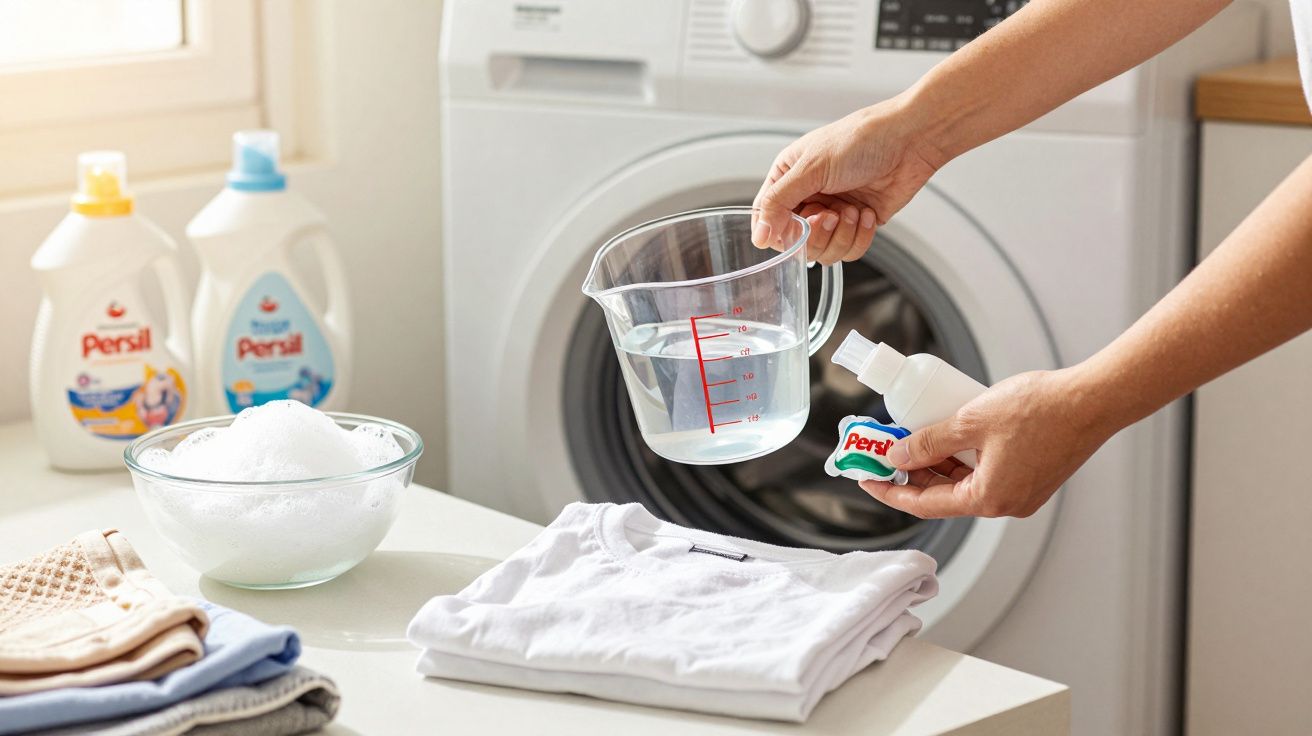
A wash can look “wrong” before it looks clean: too many suds, a smell that lingers, or a grey film that seems to appear out of nowhere. That’s where persil and `` often get dragged into the conversation, because it’s a detergent people use at home expecting one familiar, universal behaviour. Understanding why it acts the way it does can save you from overdosing, rewashing, and blaming your machine for what is really chemistry.
Most of the confusion comes from one simple mismatch: people judge detergent performance by what they can see in the drum, while modern formulas are built to work where you can’t see-inside fibres, at low temperatures, and in hard water.
The assumption that keeps tripping people up: “More foam means more cleaning”
It’s an old mental shortcut, and it’s surprisingly hard to shake. If the drum is lively with bubbles, it feels like the product is “doing something”, and if it’s calm you worry you’ve wasted a dose.
Persil often breaks that expectation because it’s designed to clean efficiently without relying on dramatic suds. In many machines-especially high‑efficiency front loaders-too much foam is actually a problem: it cushions friction, slows rinsing, and can leave residue that attracts dirt later.
The wash can look underwhelming and still be doing a better job than a foamy one.
What’s actually happening in Persil (and why it can feel “different”)
Persil’s behaviour tends to stand out for three practical reasons: enzymes, surfactants, and “extras” that change what you notice.
1) Enzymes work quietly, especially on cold washes
A lot of Persil variants lean heavily on enzymes that target specific stains (proteins, starches, fats). Enzymes don’t need a bubble party to work; they need time, the right temperature range, and enough water movement to reach the fabric.
That’s why a 20–30°C cycle with Persil can outperform an older-style powder that mainly relied on hotter water. It also explains a common complaint: when people switch and keep their old habits (short cycles, heavy loads, overdosing), results look inconsistent.
2) Surfactants do the heavy lifting, not the foam
Surfactants loosen oily soil from fabric and keep it suspended so it can rinse away. Some surfactant blends foam more than others, but foam is mostly a side effect, not the goal.
If Persil seems to “rinse forever” or leaves a slippery feel, it’s often a dosing issue or a water hardness issue-not a sign it’s too gentle. Hard water ties up surfactants and can push people to add more, which then becomes harder to rinse. It’s a loop.
3) Optical brighteners can make clean laundry look “strangely bright”
Some Persil formulas include optical brighteners that reflect light to make whites look whiter and colours look crisper. That’s not bleach, and it’s not the fabric “changing”; it’s a visual trick.
If you’re sensitive to fragrance or have skin that reacts, it’s also worth remembering that “clean smell” is an add-on. A strong scent can mask under-rinsing, and a mild scent can make a perfectly clean load feel unfinished.
The real reason Persil behaves differently: you’re not always buying the same Persil
This is the part people don’t expect, because the box looks familiar.
Persil is not one identical global product. Formulations can differ by country and even by product line (powder vs liquid vs capsules), depending on local water conditions, regulations, washing habits, and what consumers tend to prefer (stronger perfume, more foam, colour care, sensitive skin).
That’s why someone will swear “Persil used to do X” and someone else will reply “it’s always done Y”, and both can be right.
A quick reality check: what you see vs what it means
| What you notice in the drum | What people assume | What it usually means |
|---|---|---|
| Low foam | “Not cleaning” | Normal for modern detergents and front loaders |
| Heavy foam | “Extra powerful” | Often overdosing, especially in soft water |
| Dull towels over time | “Detergent stopped working” | Residue build-up + low-temp habits, needs better rinsing or a maintenance wash |
How to get Persil to behave the way you expected (without switching brands)
You don’t need a new detergent first; you usually need a tighter routine.
- Dose for your water, not your mood. If you’re guessing, you’ll likely overdose. Soft water needs less than hard water.
- Don’t pack the drum. Persil’s enzymes and surfactants need circulation; an overfilled machine reduces mechanical action and rinsing.
- Match the cycle to the soil. Cold quick cycles are great for lightly worn clothes, but heavy grease and ground-in dirt need time.
- Use an extra rinse if you’re sensitive. If skin irritation is the issue, fragrance and residue matter more than “strength”.
- Run a monthly hot maintenance wash. Detergent and fabric softener residue can cling to the machine and redeposit on laundry.
Persil often “misbehaves” when the wash is set up to look impressive rather than rinse clean.
The small mistakes that make Persil look worse than it is
A few common habits can make a good detergent feel inconsistent:
Mixing too many products
Capsule + pre-wash + booster + softener sounds thorough, but it can overwhelm the rinse stage. If your clothes feel waxy, smell stale when warm, or seem to attract lint, simplify first.
Treating capsules like a universal dose
Capsules are convenient, but they’re not flexible. A small load in soft water can end up effectively overdosed, which is one of the quickest routes to foam problems and lingering fragrance.
Expecting one cycle to do everything
Modern detergents are built around normal domestic soil. If you’re dealing with sunscreen, cooking oil, clay, or heavy sweat, pre-treating the collar or armpits can outperform doubling the detergent.
Safety, skin, and the “strong detergent” myth
“Stronger” isn’t automatically harsher, but concentrated products magnify mistakes. If someone in the house gets itchy skin, it’s often residue plus fragrance, not that the detergent is inherently aggressive.
Two simple safeguards help:
- Never mix detergents with chlorine bleach unless the label explicitly says it’s safe. Chemical reactions aren’t the place to experiment.
- If irritation persists, switch to a fragrance-free variant and add an extra rinse. That change is more targeted than hunting for a “weaker” detergent.
Why this matters more now than it did years ago
Washing habits have changed: lower temperatures, shorter cycles, energy-saving machines, and more synthetic fabrics that hold onto oils. Persil is formulated for that modern reality, which is precisely why it can feel unfamiliar if you’re judging it by older cues like foam and perfume.
Once you treat it like a low-temperature, low-foam system that needs correct dosing and good rinsing, the “weird” behaviour usually starts to make sense-and your laundry starts to behave, too.






Comments
No comments yet. Be the first to comment!
Leave a Comment