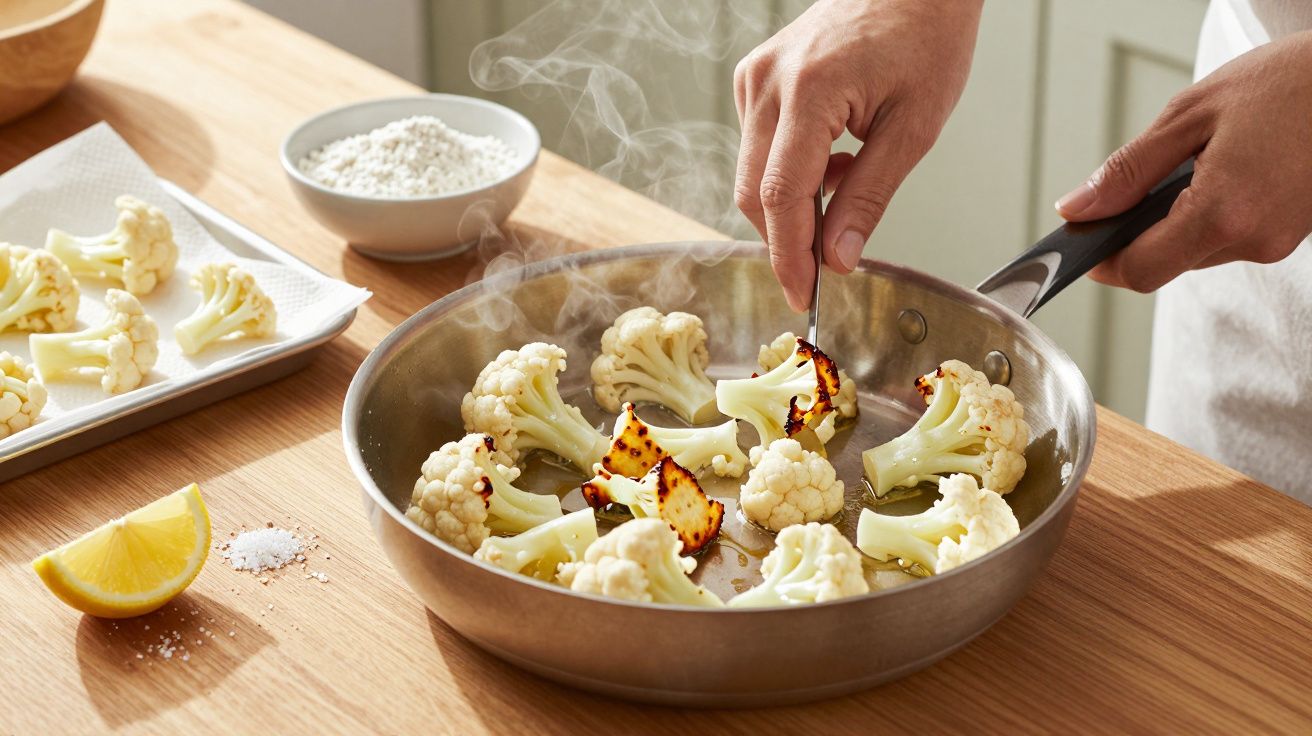
People treat cauliflower like a blank, starchy filler, then act surprised when it turns watery, smells a bit “cabbagey”, or refuses to crisp like a potato. Cauliflower (alongside “”) shows up everywhere from Sunday roasts to low-carb mash and traybakes, so understanding its quirks saves you from limp florets and soggy “rice”. The real reason it behaves differently is simple: it isn’t a root, and it doesn’t cook like one.
It’s a tightly packed cluster of flower buds on thick stems, built to hold a lot of water and a lot of sulphur-containing compounds. That biology is why it can be sweet and nutty when roasted properly - and why it can also collapse into wet confetti if you treat it like pasta.
The mistake: assuming cauliflower is “basically potato”
A potato is a starch store. When you cook it, the starch granules swell, the interior turns fluffy, and you get structure you can mash, fry, or bake into crispness.
Cauliflower is the opposite: it’s mostly water, with a fine lattice of plant cell walls and relatively little starch. Instead of “fluffing”, it tends to:
- Release water as heat breaks down its cells
- Soften fast once the pectin in the cell walls gives way
- Go sulphurous if you overcook it in water or keep it hot too long
That’s not a failure of technique. It’s the ingredient doing what it was designed to do.
Cauliflower doesn’t turn crisp or creamy because it “acts like potato”. It does it only when you manage moisture and heat like it’s a flower made of water.
What’s actually happening in the pan (and why it changes everything)
1) Water is the main character
Cauliflower’s structure is like a sponge made of tiny stems and buds. When you chop it into “rice”, you massively increase surface area, so there’s more opportunity for water to escape.
That’s why cauliflower rice so often ends up as a damp pile. It’s not undercooked - it’s overloaded with moisture.
What to do instead: - Cook it hot and fast in a wide pan so steam can escape. - Salt after (or lightly) while cooking; heavy early salting pulls out more water. - If it’s already wet, spread it on a tray and give it 5–8 minutes in a hot oven to dry out.
2) It browns differently because it’s low in starch
The deep, reliable browning you get on roast potatoes comes from dehydration plus plenty of starch on the surface. Cauliflower can brown (and it’s brilliant when it does), but it needs help:
- Dry surface (steam is the enemy of browning)
- High heat (think 220°C fan, not a gentle roast)
- Enough fat to conduct heat and encourage caramelisation
- Space on the tray so it roasts instead of steams
If your tray is crowded, cauliflower doesn’t “roast”; it sweats.
3) The smell is chemistry, not moral failure
That boiled-cabbage aroma comes from sulphur compounds that become more noticeable with longer cooking, especially in water. A lid on the pan traps those aromas, making the kitchen feel like it’s judging you.
Simple fixes that actually work: - Steam or boil briefly, then drain well. - Avoid holding it warm for ages (that’s when the smell lingers). - Roast, grill, or stir-fry when you want maximum sweetness and minimum funk.
The “behaviour change” you can feel: three common dishes that go wrong
Cauliflower mash that turns thin
People expect cauliflower mash to behave like potato mash: thick, spoonable, and stable. But cauliflower doesn’t have enough starch to bind water, so the mash can go loose the second you add butter, milk, or cheese.
A better approach: - Steam florets until just tender, then drain and dry (even a quick return to the hot pan helps). - Blend with fat first (butter/olive oil/cream cheese), then add any liquid slowly. - For body, add one of these: - a spoon of cream cheese - a handful of grated Parmesan - a small amount of potato (if you’re not avoiding it)
“Cauliflower wings” that never crisp
If you batter cauliflower and bake it, the inside releases steam. Steam softens the coating from within, so you get a nice flavour with a slightly soggy bite.
To stack the odds in your favour: - Roast florets plain first for 10 minutes to drive off moisture. - Coat and bake on a wire rack over a tray. - Sauce at the end, or serve sauce on the side if you want crunch.
Cauliflower steaks that collapse
Slicing a cauliflower into “steaks” looks great on Instagram, but the centre stem is doing all the structural work. If you cut too thin, or cook too gently, the slices break into rubble.
For steaks that hold together: - Cut 2–3cm thick slices through the core. - Use high heat and a confident amount of oil. - Treat the loose bits as a bonus: roast them alongside as “cauliflower crumbs”.
A quick mental model: treat it like a water-rich vegetable, not a carb replacement
Once you stop demanding potato behaviour, cauliflower becomes much easier to control. Think of it as closer to courgette or cabbage than to anything you’d chip.
Here’s the practical rule set that keeps paying off:
- Want sweetness and nutty flavour? Roast hard, keep it dry, don’t crowd the tray.
- Want tenderness without smell? Steam briefly, drain aggressively, finish with fat and acid.
- Want “rice”? Hot pan, small batches, minimal stirring, optional oven-dry at the end.
The best cauliflower dishes aren’t pretending to be something else. They’re built around how cauliflower actually behaves.
Small tweaks that make cauliflower taste “expensive”
A lot of cauliflower’s popularity comes from its neutrality - but neutrality is a blank canvas, not a finished painting. If it tastes boring, it usually needs one of three things: browning, salt, or acid.
Try these upgrades: - Lemon zest + capers + browned butter on roasted florets - Tahini + yoghurt + garlic + lemon as a sauce (not a drizzle afterthought) - Mustard + mature Cheddar for cauliflower cheese that doesn’t rely on overcooking - Cumin + chilli flakes + olive oil for a warm, savoury roast profile
And if you’re cooking it in water, salt the water properly - then finish with something sharp (lemon, vinegar, pickled onions). Acid lifts cauliflower’s sweetness and distracts from any sulphur notes.
The one table that stops most cauliflower disasters
| Goal | What people do | What works better |
|---|---|---|
| Crisp roast | Crowd the tray, low heat | 220°C fan, space, dry florets, oil |
| Thick mash | Add milk early | Dry well, blend with fat, add liquid last |
| Good “rice” | Stir constantly in a small pan | Wide pan, high heat, small batches, vent steam |
FAQ:
- Can I stop cauliflower rice going watery? Yes. Cook it hot and fast in a wide pan, in small batches, so steam escapes. If it still looks wet, spread it on a hot tray for a few minutes to dry.
- Why does boiled cauliflower smell stronger than roasted? Boiling and long holding times make sulphur compounds more noticeable, and a lid traps them. Roasting drives off moisture and creates browning flavours that balance the aroma.
- How do I get better browning? Dry the florets, use enough oil, don’t overcrowd, and roast at high heat. Browning needs dehydration; steaming on a crowded tray blocks it.
- Why is my cauliflower mash runny even after draining? Cauliflower is low in starch, so it can’t bind water like potatoes do. Dry it more, blend with fat first, and add liquids slowly (or use cream cheese/Parmesan for body).





Comments
No comments yet. Be the first to comment!
Leave a Comment