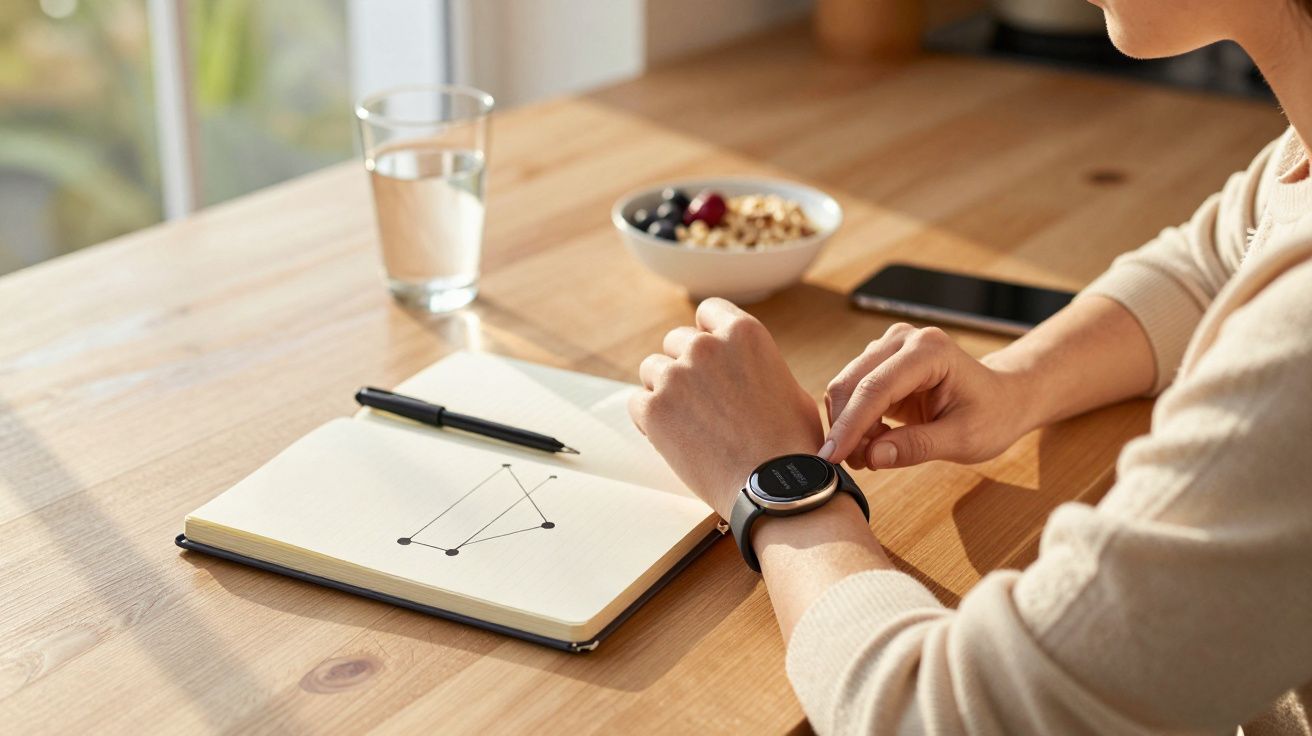
You don’t have to guess how stressed you are any more. Heart rate variability is now being used in day-to-day life - on watches, rings, and phone apps - as a quiet “stress signal” that can change how you train, sleep, work, and even drink alcohol. Cortisol still matters, but this trend is shifting attention towards what your body is doing minute by minute, not just how you feel.
It’s catching on because it’s subtle. No dramatic detox, no complicated protocol, just a number that rises when you’re recovering well and tends to dip when your system is under strain.
The shift: from “I feel fine” to “my nervous system says otherwise”
For years, stress was treated like a mood problem: anxious, overwhelmed, burnt out. That’s real, but it’s incomplete. The newer framing is physiological - how your autonomic nervous system is behaving under the surface.
Heart rate variability (HRV) is essentially a measure of variation between heartbeats. Higher isn’t always “perfect”, but in most people it tracks with better recovery, resilience, and parasympathetic (“rest and digest”) activity, while sudden dips can show up after poor sleep, heavy drinking, illness, overtraining, or a rough week.
People aren’t becoming obsessed with numbers. They’re becoming curious about patterns.
Why HRV is suddenly everywhere
This is one of those trends that spreads because it fits modern life. It’s passive, it’s repeatable, and it gives feedback fast enough to feel useful.
A few reasons it’s taken off:
- Wearables got better at night-time tracking, when HRV is less noisy.
- Work-from-anywhere life blurred recovery time, so people want a signal that says “ease off”.
- Training culture matured from “push harder” to “recover smarter”.
- Stress isn’t just emotional now; it’s sleep debt, ultra-processed eating, caffeine timing, screens, and constant low-grade pressure.
The result is a new kind of self-check: not “am I lazy today?” but “am I depleted today?”
What HRV is picking up that you might miss
The most useful part of HRV is not the exact number. It’s the direction, compared with your own baseline.
Common “quiet stressors” that often show up as a dip include:
- Two or three nights of short sleep (even if you feel wired and productive)
- Alcohol, especially late in the evening
- Back-to-back intense workouts with no low-intensity day
- Long-haul travel, dehydration, and irregular meals
- A brewing cold before symptoms arrive
- High mental load (deadlines, family stress, decision fatigue)
HRV can also rebound when you do boring, sensible things consistently - the sort that don’t feel like a hack.
The mistake that makes people quit: treating it like a daily grade
If you wake up and your HRV is low, it doesn’t mean you’re broken. It usually means your body is asking for a lighter touch.
The win is using it as a steering wheel, not a judgement.
A simple way to interpret your “stress signal” without spiralling
Try this three-step approach for two weeks:
- Track at the same time (overnight averages are best; morning readings can be jumpy).
- Look for 3-day trends, not single-day drops.
- Pair it with one note: sleep hours, alcohol, hard training, late meal, or “high-stress day”.
Patterns appear quickly. Most people find one or two behaviours that move the needle far more than they expected.
The quiet behaviours that tend to lift HRV (and calm stress without drama)
These aren’t flashy. That’s why they work.
Breathing you can actually stick with
Slow breathing is one of the most reliable ways to nudge the nervous system towards parasympathetic tone. You don’t need a complicated routine; you need something you’ll do when you’re busy.
- 4–6 breaths per minute for 3–5 minutes
- Exhale slightly longer than inhale
- Do it before bed, or before your first coffee
If you only do one “HRV habit”, make it this.
Training that respects recovery
HRV has made more people comfortable with the idea that low-intensity days are not a failure. They’re the glue that lets hard sessions work.
If your HRV has dipped for a couple of days and your resting heart rate is up, swap:
- intervals → easy Zone 2 walk/cycle
- heavy lifts → technique work + mobility
- “push through” → finish feeling better than you started
Food timing that stops night-time stress
A late, heavy meal can raise night-time heart rate and suppress HRV, even if the food was “healthy”. Many people see improvement simply by shifting dinner earlier and keeping it lighter.
A practical template:
- Eat dinner 2–3 hours before bed
- Keep it protein + veg + carbs you tolerate well
- Save high-fat, high-sugar “treat” meals for earlier in the day if possible
Alcohol: the most common HRV plot twist
People are often surprised by how strongly alcohol shows up in their data. Even one or two drinks can flatten HRV overnight, especially close to bedtime.
If you want a low-effort experiment, try:
- one week with no alcohol Monday–Thursday
- drinks only with food, and finish 3+ hours before sleep
You’re not looking for perfection - just a clean comparison.
A quick “if this, then that” guide for stressful weeks
| If your signals look like… | Try this for 24–48 hours | Why it helps |
|---|---|---|
| HRV down + resting HR up | Easy movement + early bedtime | Reduces load, restores recovery |
| HRV down after drinking | Hydration + light day + earlier meal | Supports sleep quality and regulation |
| HRV down + you feel fine | Keep plans, lower intensity | Prevents the delayed crash |
The boundary this trend is quietly teaching
There’s a subtle mindset change underneath all the graphs. People are learning that stress isn’t just “in your head”, and recovery isn’t something you earn only after you’ve suffered.
HRV doesn’t replace medical care, therapy, or proper blood tests when needed. But it does give you a small daily mirror - and for many, that’s enough to stop ignoring the early warning signs.
Safety notes worth saying out loud
Wearable data is not a diagnosis. HRV varies widely by person, age, medication, menstrual cycle phase, and illness.
If you notice sudden sustained changes alongside symptoms like chest pain, fainting, severe breathlessness, or palpitations, treat that as a medical issue rather than a “stress metric” problem.
FAQ:
- Is higher HRV always better? Generally higher HRV is associated with better recovery, but what matters most is your baseline and long-term trend. Sudden spikes can also happen with fatigue in some people.
- Can cortisol tests replace HRV tracking? They answer different questions. Cortisol is a hormone measured at a point in time; HRV is a day-to-day nervous system signal that responds quickly to sleep, alcohol, illness, and training.
- What’s the best time to measure HRV? Overnight tracking tends to be most consistent. If you use a morning reading, do it at the same time and in the same position each day.
- What’s the quickest way to improve HRV? For most people: better sleep timing, less late-night alcohol, and a few minutes of slow breathing daily. The biggest gains usually come from consistency, not intensity.


Comments
No comments yet. Be the first to comment!
Leave a Comment