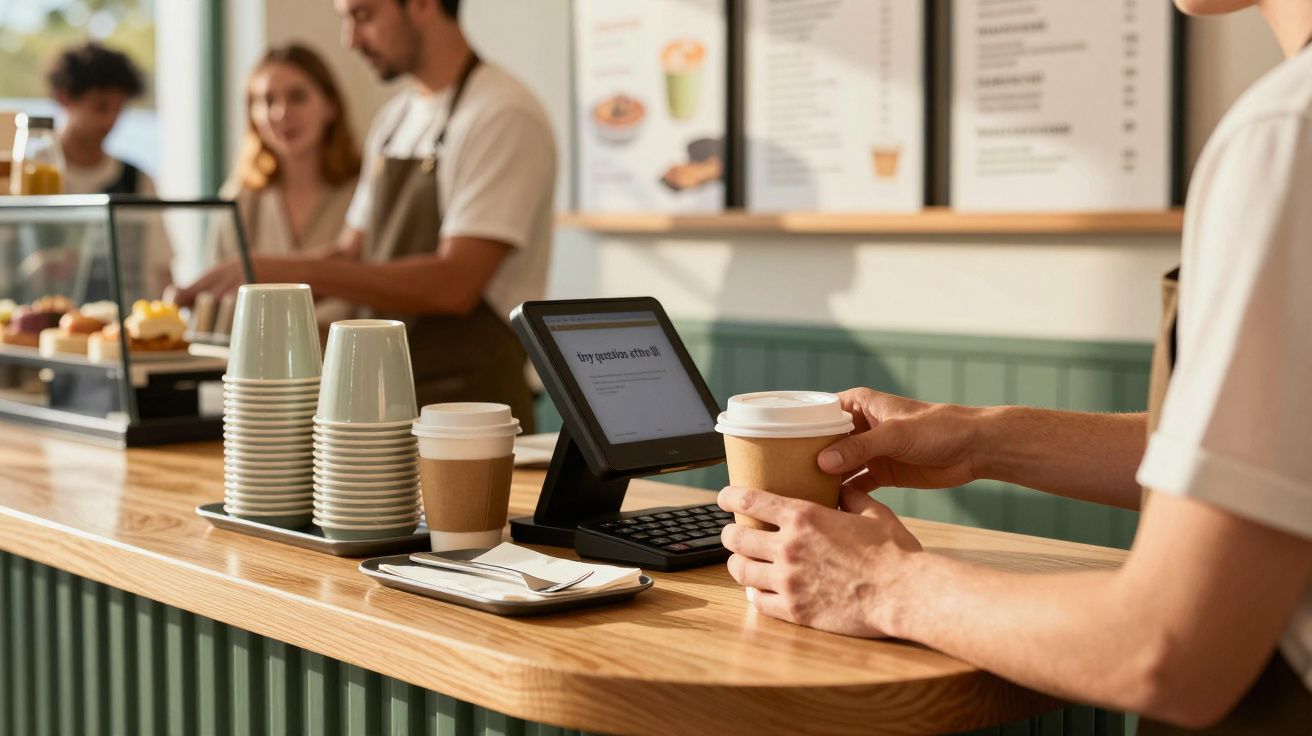
Lunch queues at Pret A Manger have a special way of making your brain forget the basics, and you end up paying more while holding up the line. There’s no secondary entity or partner offer needed for this one - it’s simply a till rule that changes the price and the whole checkout flow. Get it right and you save a little money, but more importantly you avoid the annoying “can you redo that?” moment at peak lunchtime.
Most people know Pret is quick. Fewer people clock that it’s also two different transactions, depending on where you’ll eat.
The tiny question at the till that changes the price
Pret (like many UK food-to-go chains) charges differently for eat in versus take away because VAT is applied differently depending on where the food is consumed. In practice, that means the same item can come up at one price to take away and a higher price to eat in.
The overlooked rule is simple: you need to clearly say “take away” or “eat in” before they scan everything - and check the screen if you can. If the wrong option is tapped, the fix is rarely elegant when the queue is already wrapping around the fridge.
It’s not a “hack”. It’s just making sure the till is set to the correct VAT treatment before the receipt prints.
Why it saves more frustration than money
Yes, the saving can be modest - sometimes it’s just a few pence, sometimes more noticeable depending on what you’re buying. The bigger win is that it prevents the classic Pret bottleneck: the staff member has to pause, void, refund, re-ring, or call for an override, while you stand there feeling like you’ve personally paused lunchtime.
You also avoid the quiet confusion when you thought you ordered to take away (bag in hand, already backing away from the counter) but you’ve been charged at the eat-in rate because the default button was used.
What to do (without becoming “that person”)
The point isn’t to game the system - it’s to match the option to reality and keep everything smooth.
- Decide before you reach the till. If you’re heading back to the office or the platform, lead with “take away, please”.
- Say it early, not at the end. “Take away” as your first line works better than adding it after they’ve scanned four items.
- Glance at the display. You’re not auditing anyone; you’re just catching the easy mistake while it’s still easy.
- If it’s wrong, be direct but polite. “Sorry - that should be take away” is quicker than explaining your whole lunchtime plan.
The one line that keeps it simple
If you freeze under pressure, borrow this script:
- “Hi - take away, please. Just this and a coffee.”
It’s short, it’s clear, and it stops the transaction drifting into the wrong mode.
A quick guide to when each option actually applies
This is where people trip up, especially in stores with seating upstairs or a few stools by the window.
| Situation | What to say | Why it matters |
|---|---|---|
| You’re leaving the shop with it | Take away | Typically avoids the eat-in VAT price |
| You’re using Pret seating | Eat in | Matches how the purchase is treated |
| You’re unsure (meeting someone, might sit) | Eat in | Prevents an awkward rethink at the counter |
If you do change your mind after paying, treat it like a normal human moment: go back immediately and ask what they prefer you to do. Staff deal with it all day; the painful part is when it’s raised five minutes later with a long queue behind you.
The quiet extra: it also helps you compare prices properly
When you’re watching your spend, inconsistent “eat in” versus “take away” pricing can make Pret feel randomly expensive. Once you consistently choose the right option, your receipts become comparable week to week - and you can actually tell whether it was the pastry, the extra snack, or the pricing mode that moved the total.
That clarity is what stops the daily drip of small annoyances: paying more than you expected, querying it, feeling rushed, and starting your afternoon slightly irritated.
FAQ:
- Can I just say “take away” and then sit down? If you’re using Pret’s seating, the clean approach is to say “eat in”. The goal here is to avoid accidental mischarging and queue-stopping corrections, not to outsmart a VAT button.
- Do staff always ask “eat in or take away?” Often they do, but not always - especially when it’s busy or you’re ordering quickly. Saying it first prevents assumptions.
- Does it make a difference for every item? Not always, and the difference can be small on a single purchase. But if you buy Pret regularly, consistency adds up - and it’s the checkout smoothness that most people notice immediately.
- What if they’ve already charged me the wrong way? Mention it straight away, before you tap your card again for something else. Fixing it is usually simplest while the transaction is still “current” on the till.

Comments
No comments yet. Be the first to comment!
Leave a Comment