Your morning routine doesn’t fall apart because you’re lazy. It falls apart because you’re deciding too much, too late, while The Two‑Minute Launchpad rule is sitting unused in the background and the coffee‑shop default is waiting to spend your money for you. Used at home, before you go to bed, this tiny rule quietly removes the last‑minute choices that create delays, missed items, and “I’ll just grab breakfast out” spending.
It’s not a productivity hack with a timer and a playlist. It’s a boundary: mornings are for executing, not negotiating.
The overlooked rule: mornings are for doing, nights are for deciding
The Two‑Minute Launchpad rule is simple on purpose: anything you’ll need to decide in the first hour of the day should already be decided the night before-or it doesn’t belong in your morning at all.
That includes clothes, breakfast, your first drink, your bag, your keys, your route, and what you’re taking to work. If you routinely make those calls at 7:42am, you’ll pay for it in minutes, stress, and often cash.
The goal isn’t a perfect routine. It’s a morning with fewer decision points than a self‑checkout.
Once you see it, you start spotting the same leak everywhere: you open the wardrobe, you hesitate, you change your mind, you check the weather, you re-pack your bag, you realise your lunch isn’t sorted, you leave late, and suddenly the coffee‑shop default feels “necessary”.
Why morning routines quietly get expensive
Time loss is obvious: you’re late, you rush, you forget things. The money loss is sneakier because it hides in “small treats” that are really just emergency purchases.
Common morning costs that come directly from last‑minute decisions:
- A takeaway coffee because you didn’t set up a drink at home.
- A pastry or meal deal because breakfast wasn’t planned.
- A taxi because you missed the bus by two minutes.
- A duplicate charger/umbrella/notebook because you keep forgetting one item.
- A rushed online order to replace something you could have packed.
None of these are outrageous on their own. But they repeat, and repetition is where budgets quietly fail.
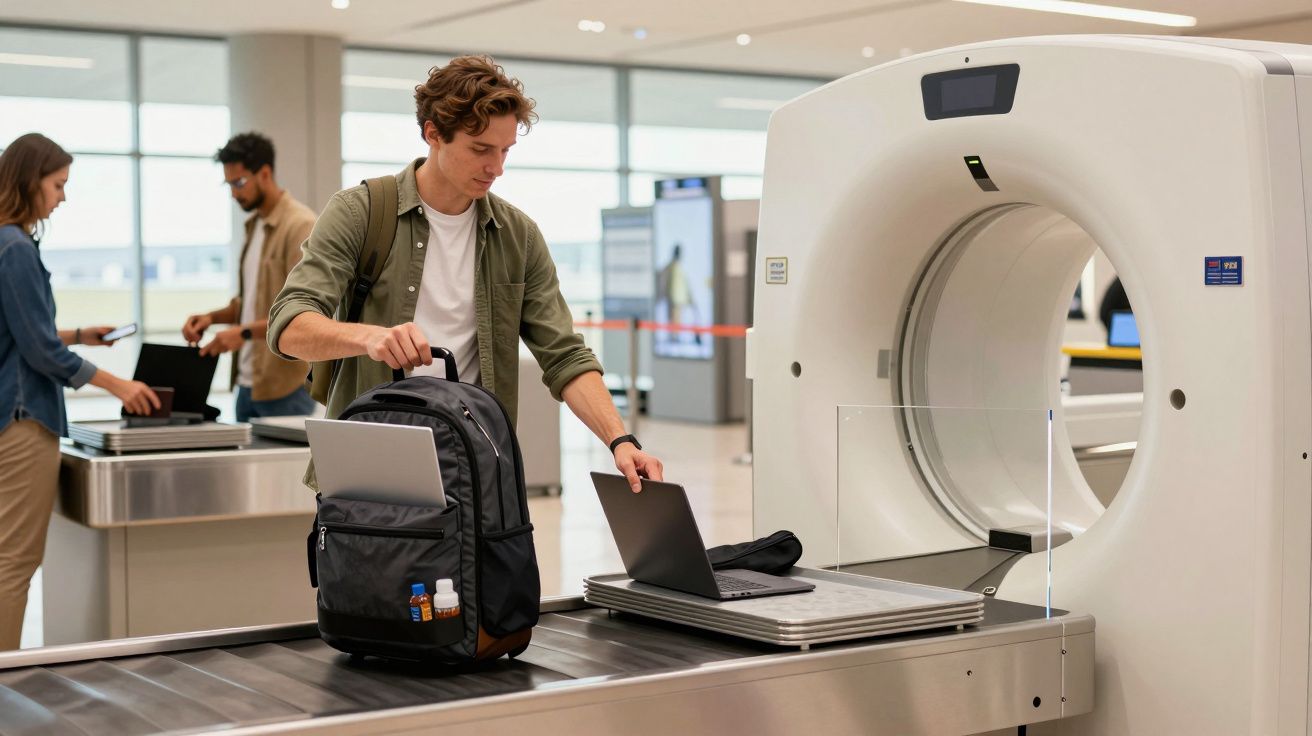
If you want a useful mental model, treat your morning like an airport: the more you try to sort at the gate, the more you pay.
The “launchpad” that stops the chaos
A launchpad is not a Pinterest shelf. It’s a single, consistent place where your morning decisions get stored so you don’t redo them under pressure.
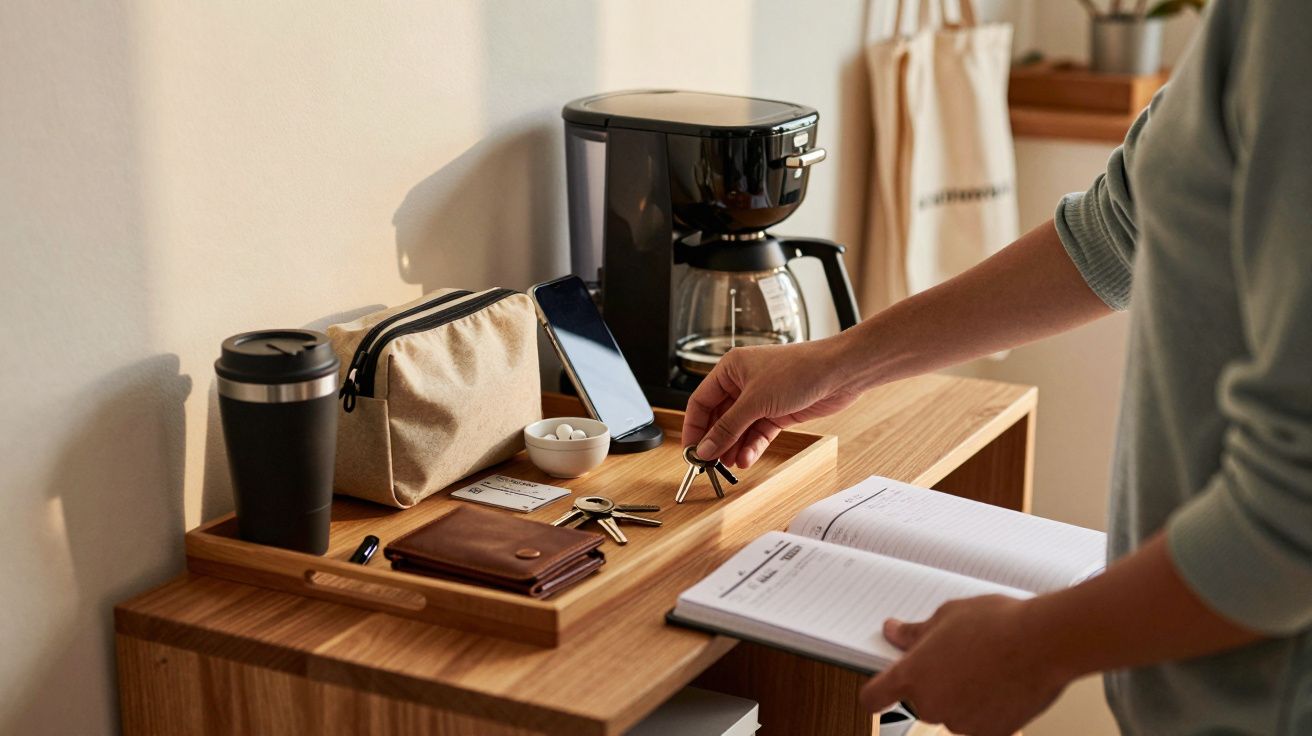
The best part: you can build one with what you already have-one hook, one bowl, one bag area, one small surface.
What belongs on the launchpad (and what doesn’t)
Keep it strict. A cluttered launchpad becomes another decision.
Put here: - Keys, wallet, travel card - Work pass / ID - Bag (already packed) - Lunch (in the fridge, on a dedicated shelf if possible) - Chargers/power bank (if you routinely need them) - One “weather item” slot (umbrella, gloves, sunglasses-seasonal)
Don’t put here: - Post you “need to sort” - Random receipts - Loose change piles - Anything that needs a decision in the morning
That last point matters. If you place an item here that still requires thinking, you’re just moving the problem closer to the door.
The Two‑Minute Launchpad routine (night before)
This is the whole system. It fits into real life because it’s short, and because it’s the same every night.
- Reset the kitchen for morning-you. Clear the counter, fill the kettle, set out a mug, or prep the cafetière. You’re reducing friction, not creating a café.
- Choose breakfast on purpose. Overnight oats, yoghurt and fruit, toast ingredients ready, or a packed option for commuting. The win is deciding once.
- Pack the bag completely. Laptop, notebook, gym kit, headphones-whatever your day needs. Zip it shut when it’s done.
- Stage the exit. Put keys/wallet/ID on the launchpad. Put the bag by the door. Put lunch where you’ll see it.
- Set a “first ten minutes” rule. No phone scrolling until you’re washed and dressed. Not for discipline points, but because it restarts the decision cycle.
You’ll notice this isn’t “wake up at 5am” energy. It’s closer to laying your clothes out for a school trip: basic, boring, effective.
The routine works because it removes the moment your brain says, “What should I do now?” and replaces it with, “Right. Next step.”
A quick template you can copy (with real-world savings)
If you’re not sure what to prioritise, focus on the decisions that trigger spending and delays.
| Leak point | Night-before decision | What it saves |
|---|---|---|
| Coffee run | Set up kettle/mug or cold brew | £3–£5 and 10 minutes |
| Breakfast scramble | Choose and prep one option | £4–£8 and a calmer commute |
| Forgotten item | Pack bag and zip it | Re-buying + wasted time |
You don’t need to do all of it perfectly. Even fixing one leak point-coffee, breakfast, or forgotten items-usually pays for the habit within a week.
How to stop the coffee-shop default without feeling deprived
The coffee-shop default isn’t really about coffee. It’s about arriving at work feeling unprepared, and using a purchase to patch the feeling.
If you like buying coffee sometimes, keep it intentional:
- Pick one day a week for bought coffee, and call it what it is: a treat.
- Keep a backup at work (instant coffee, teabags, a small tin of oats) so a chaotic morning doesn’t force a spend.
- If you commute, decide your “no spending” route in advance (different street, avoid walking past the same tempting counter).
When people say they “can’t stick” to a cheaper morning, they’re often trying to win a willpower battle at 8am. The Launchpad rule avoids the battle by moving the decision to the night before, when you’re not rushing.
Small adjustments that make the rule easier to keep
A rule fails when it requires constant motivation. These tweaks make it automatic.
- Keep duplicates where you use them. One charger by the bed, one in your work bag. This prevents the daily “where is it?” search.
- Use a single default breakfast for weekdays. Variety is lovely, but not at 7am. Save experiments for weekends.
- Create a “missing items” note. If you notice you’re out of something (oats, milk, deodorant), add it to a list immediately. Don’t rely on morning memory.
- Make the launchpad unavoidable. Put it where your hand already goes: near the door handle, not tucked in a drawer.
The point isn’t to become a different person. It’s to make your current life require fewer emergency decisions.
FAQ:
- Can I still have a flexible morning routine? Yes. The rule only locks in the first-hour essentials (clothes, bag, food, exit items). You can still choose music, a walk, or a different order once the basics are handled.
- What if my mornings are different every day? That’s exactly when this helps. Pack to a checklist the night before and decide a “default” breakfast and drink so variation doesn’t create chaos.
- Does this work if I work from home? Yes. The money leak becomes deliveries and snacks. Decide your first drink and breakfast the night before, and set up a “start-of-work” launchpad (laptop, charger, notebook) so you don’t drift.
- How long does it take to feel the difference? Usually within a few days. The first obvious change is leaving the house with fewer forgotten items; the second is fewer “I’ll just buy something” stops.


Comments
No comments yet. Be the first to comment!
Leave a Comment