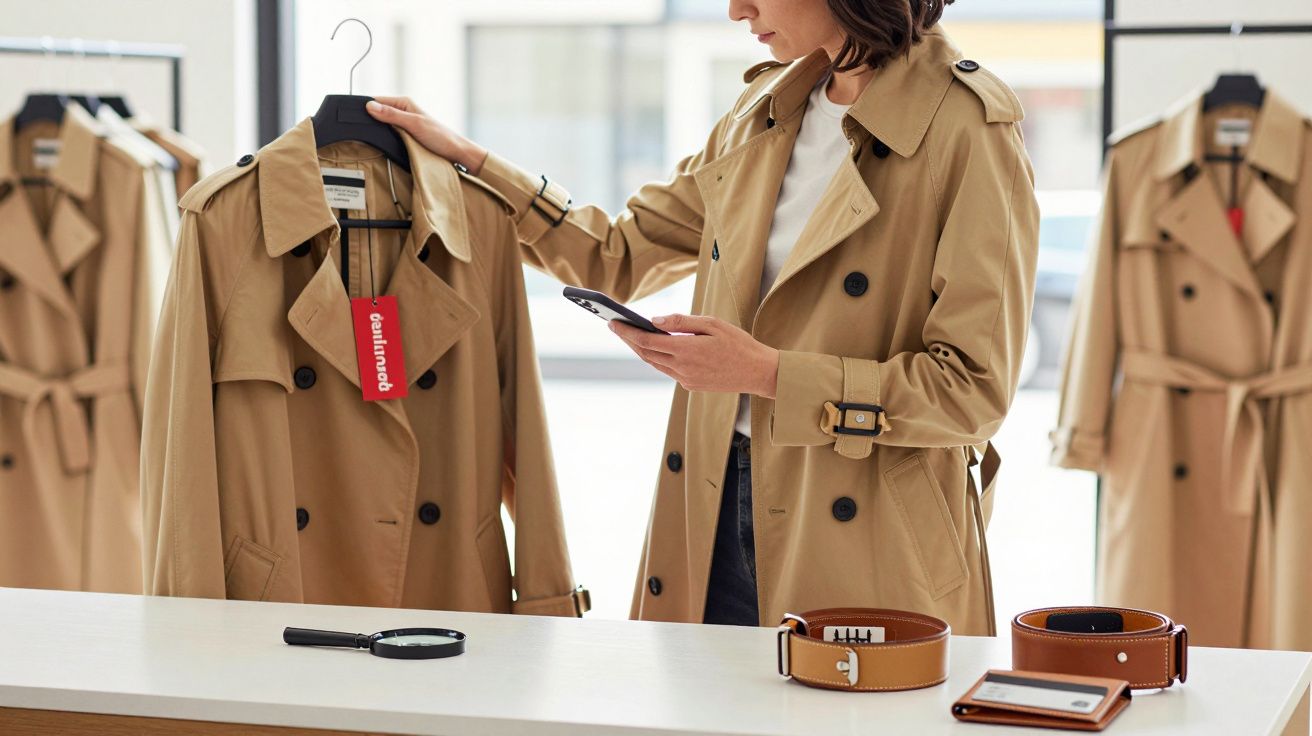
A “half-price” trench can feel like a rare win, right up until it starts shedding buttons, won’t take a return, or turns out to be a different product entirely. That’s where burberry trips people up: the brand is used everywhere from flagship stores to outlets to resale sites, and there’s no secondary entity to lean on when things go wrong. The overlooked rule is simple, but it’s the difference between a bargain you’ll wear for a decade and an expensive headache.
Most of the frustration comes from assumptions. Shoppers see the check, the logo, the familiar silhouette, and presume everything with the name is equivalent. It isn’t.
The overlooked rule: never judge a Burberry “deal” by the discount
The rule is to treat Burberry like a product family, not a single product. A discounted piece might be past-season mainline stock, or it might be made specifically for outlet/discount channels with different fabrics, trims, construction and aftercare expectations.
If you only take one habit from this: verify what you’re buying before you compare prices. Without that step, you’re not comparing “£1,690 vs £690”. You’re comparing two different items that merely share a label.
A Burberry discount only means something if you can confirm the exact product and specification you’re discounting.
Why this saves money (and the argument at the till)
Luxury outlets are designed to feel like the main shop with lower prices. The lighting, the rails, the big percentage-off signs: it all nudges you to move fast. But the real cost shows up later, when you try to resell, repair, or return and realise you bought something that doesn’t behave like the version you had in mind.
The money you “save” can vanish in three familiar ways:
- You overpay for a lower-spec item because the reference price in your head was a different model.
- You miss your exit because some discounted purchases have tighter return terms or shorter windows.
- You get stuck with maintenance surprises (delicate coatings, glued trims, fussy linings) that cost more to care for than you expected.
How to check in under a minute (even in an outlet)
You’re looking for proof of identity, not vibes. Do this before you fall in love with the cut.
- Find the style code/SKU on the tag (often on a swing tag, care label, or inside pocket label).
- Search the code on Burberry’s own site, reputable department stores, or trusted resale platforms with detailed listings.
- Compare fabric composition and lining (cotton gabardine vs blends; full lining vs partial; wool cashmere vs wool blend).
- Check hardware and finishing: weight of buckles, stitching density, pattern matching at seams, and how the belt feels in hand.
- Ask directly whether it’s past-season mainline stock or produced for outlet. The question alone often changes the conversation.
The “looks the same” trap
Burberry designs are copied by Burberry itself across tiers: similar checks, similar trench shapes, similar knit styles. That’s normal. The trap is assuming similarity equals equivalence.
A quick mental reset helps: if you can’t match it to a specific model and spec, price it as its own product. That keeps your expectations (and your wallet) realistic.
Where the real savings actually are
Once you’re comparing like-for-like, the savings become cleaner and less stressful. These routes tend to beat impulse outlet buying:
- Buy pre-owned, but only with verifiable details (clear interior label photos, fabric composition, measurements, and condition notes).
- Prioritise classic, repairable pieces (a well-made trench, wool coat, scarf) over trend items that are harder to maintain.
- Budget for upkeep up front: occasional professional cleaning, minor alterations, and button replacements are normal on long-life outerwear.
- Pay for the right spec once instead of “upgrading” later. Two compromised purchases usually cost more than one correct one.
A quick decision checklist before you pay
- Can I identify the exact model (style code) and spec? If not, I’m not allowed to compare it to full-price.
- Do I know the return window and conditions in writing? Especially for discounted and outlet purchases.
- Does the fabric match my real life? Commute, rain, heat, storage, and how often I’ll actually wear it.
- Would I still want it at this price if it wasn’t Burberry? This is the fastest logo-tax test.
- If I plan to resell later, is this a piece buyers search for by name? If it’s hard to describe, it’s hard to sell.
FAQ:
- Is Burberry outlet stock “fake”? Not necessarily. The bigger issue is that some outlet stock can be made for outlet channels, meaning it may not match the mainline item you’re imagining.
- What’s the quickest way to avoid a bad “deal”? Match the style code and fabric composition to a known listing before you let the discount anchor your expectations.
- Should I avoid outlets entirely? No. Outlets can be great for past-season mainline pieces-just don’t assume everything on the rail is comparable to full-price versions.
- Does this apply to scarves and knitwear too? Yes. Material blends and finishing details can vary significantly, and those differences affect feel, durability and resale value.





Comments
No comments yet. Be the first to comment!
Leave a Comment