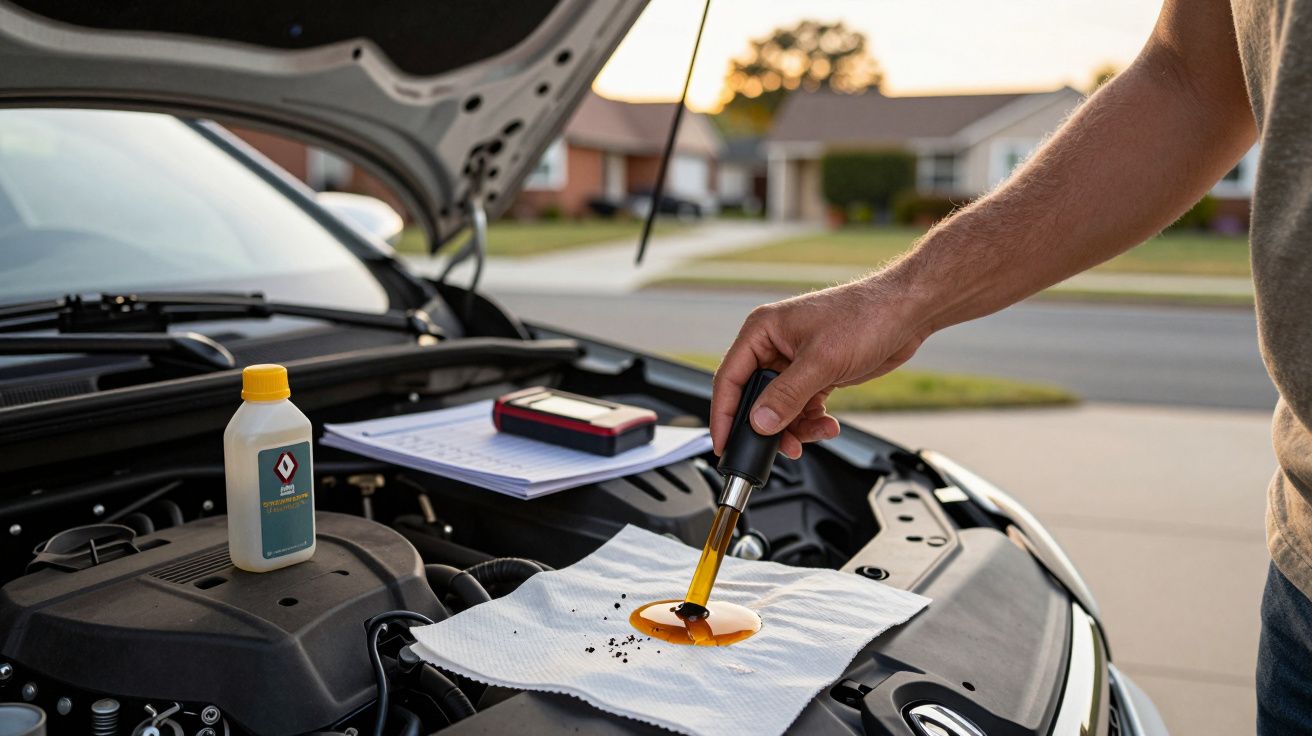
Buying a used hatchback for commuting, school runs or a first car feels like a safe, boring decision - until it isn’t. Renault sits right in the middle of that everyday UK market, and the hidden problem many owners only learn about after the warning lights arrive is how quickly modern engines can be damaged by the wrong kind of “normal use”. The clue is in the tiny details most of us skip, including the ``, where a small habit quietly turns into a four-figure bill.
It’s not about one dramatic design flaw that affects every model. It’s about the gap between the service schedule you think you’re following and what short journeys, stop-start traffic and modern emissions kit actually do to the oil - especially in turbo petrols and newer diesels.
The issue nobody mentions at the dealership: oil that looks fine but isn’t
Renault engines aren’t uniquely fragile, but many of them are less forgiving than buyers expect when oil quality degrades. The problem is that degraded oil rarely announces itself with a clear symptom at first. The car still starts, still pulls, still passes an MOT.
Then one day it doesn’t.
Short trips (cold starts, five-mile runs, idling in traffic) can leave fuel and moisture in the oil, speeding up sludge formation and thinning lubrication. On some engines that can mean timing chain wear, turbo bearing wear, or blocked oil pick-ups - and those failures don’t arrive politely.
The trap is psychological: if the car “feels fine”, we assume the oil must be fine too.
Why it catches Renault owners in particular
A lot of Renaults in the UK live exactly the life that accelerates oil degradation: urban miles, short commutes, lots of stop-start. Add long service intervals, “dealer history” that’s a stamp not a spreadsheet, and a used-car market that rewards low running costs over preventative work.
Three things combine to make this feel like it comes out of nowhere:
- Long-ish intervals on paper. Many owners treat the schedule as a target, not a maximum, and stretch it further.
- The wrong oil spec is easy to get. Not every garage uses the exact spec the engine expects, and receipts often don’t list it clearly.
- Failures aren’t gradual in the way people expect. A chain can rattle for weeks… or it can be quiet until it isn’t. A turbo can whine… or it can just let go.
None of this is Renault-exclusive. But Renault’s popularity in the “cheap to run” segment means more cars are maintained to a price, and that’s where the risk lives.
The “too late” moment: what it looks like when oil-related wear finally shows up
When people say “it was absolutely fine yesterday”, they’re often telling the truth. Oil problems tend to build slowly and then cross a line.
Common late-stage signals include:
- A timing chain rattle on cold start that lasts longer than a second or two
- Turbo whistle/whine that wasn’t there before, or a sudden loss of boost
- Oil warning messages (not just a service reminder)
- Rough idle, misfires, hesitation under load
- Excessive oil consumption that you only notice once the dipstick is low
- A DPF regeneration cycle that seems constant (on diesels doing short trips)
If you’re already at the warning-light stage, the cheapest outcome is usually “sensor and service”. The expensive outcome is “metal in oil” - and that’s where the numbers get ugly fast.
A quick reality check on costs (UK ballpark)
Prices vary by engine, access, and whether you’re dealing with secondary damage, but it helps to know the typical shape of the bill.
| What’s failed (often oil-related) | What you might notice | Typical outcome |
|---|---|---|
| Timing chain wear/stretch | Cold-start rattle, engine light | £800–£1,800 repair on many cars |
| Turbo wear/failure | Whine, smoke, loss of power | £700–£1,500+, more if debris spreads |
| Sludge/blocked pick-up | Oil pressure warnings, noisy top end | Can escalate to engine rebuild/replacement |
A painful detail: by the time a chain or turbo fails, you’re not paying for a “part”. You’re paying for labour, ancillaries, flushing, and sometimes the clean-up of damage the failing part caused on its way out.
Why short trips are the silent killer (and motorway miles are oddly protective)
Short journeys are hard on oil because the engine spends more time cold, and the oil never stays hot long enough to evaporate contamination. In plain terms: the oil becomes a dirty sponge and stays one.
Longer, steady runs do two useful things:
- They bring oil fully up to temperature for long enough to boil off moisture and fuel dilution.
- They reduce the stop-start load that hammers turbo lubrication and chain tensioning.
This is why two Renaults with the same mileage can have completely different outcomes. A 60,000-mile motorway car can be healthier than a 35,000-mile school-run car.
How to spot a Renault that’s at risk before you buy it
If you’re shopping used, the aim is to catch “maintenance-by-stamp” cars - vehicles that look serviced but weren’t serviced well.
Bring a torch, a calm tone, and ask for specifics:
- Oil change evidence: invoices showing oil grade/spec, not just “service carried out”.
- Interval pattern: yearly oil changes matter more than hitting a mileage number.
- Cold start behaviour: insist on hearing it start from cold (touch the bonnet; a warm engine hides rattles).
- Dipstick check: oil level and condition (low oil is a story, not a quirk).
- Owner usage: “mostly short trips” isn’t a deal-breaker, but it should change what you budget for.
If you’re already paying for a pre-purchase inspection, ask the inspector to listen specifically for timing noise on start-up and to check for oil leaks that suggest neglect or chronic top-ups.
The boring fix that avoids the dramatic bill
The preventative version of this story is almost offensively dull. It’s also much cheaper.
For many Renault owners, a strong “risk-reduction” routine looks like:
- Change oil and filter more often than the maximum interval, especially if you do short trips (think annually as a baseline).
- Use the correct oil spec, not just the right viscosity number.
- Let the engine warm properly before heavy throttle, particularly on turbo petrols.
- Give it a longer run regularly (even one decent weekly drive can help if your normal use is urban).
- Don’t ignore a one-second start-up noise that becomes two seconds. That trend matters.
It’s not about babying the car. It’s about matching maintenance to how the car is actually used, not how the brochure imagines it’s used.
If you suspect it’s already starting: what to do this week
If your Renault has started doing the “small things” - a faint rattle, a new whistle, a bit of hesitation - don’t wait for the dashboard to make it official.
A sensible next step list:
- Check oil level now (and correct it if low).
- Book a proper diagnostic with a garage that will listen on cold start, not just read codes.
- Ask about an early oil and filter change and whether an engine flush is appropriate (it isn’t always).
- Avoid hard driving until you know whether oil pressure/timing/turbo are implicated.
The goal is to catch wear while it’s still “maintenance” rather than “recovery”.
The uncomfortable truth: it’s rarely one big mistake
Most owners who end up with a big Renault engine bill didn’t skip every service and drive like a maniac. They did normal life: short trips, busy weeks, one delayed service, one garage invoice without the oil spec, one year of “I’ll do it next month”.
That’s why it’s hidden. It doesn’t feel like neglect.
It feels like owning a car.
FAQ:
- What’s the single best way to reduce the risk? Change the oil and filter more frequently if your use is mostly short trips, and make sure the correct oil specification is used.
- Are all Renault engines affected? No. The risk varies by engine and how it’s driven, but oil degradation from short-trip use can affect modern turbo petrols and diesels across many brands.
- Is a full service history enough? It helps, but invoices showing oil spec and consistent intervals are more meaningful than stamps alone.
- Should I avoid buying a used Renault for city driving? Not necessarily. Just budget for stricter oil-change discipline and prioritise cars with clear, detailed maintenance records.
- What’s the earliest warning sign worth acting on? A timing rattle on cold start that’s getting longer, or any new turbo noise paired with reduced power-those are “book it in” signals, not “keep an eye on it”.






Comments
No comments yet. Be the first to comment!
Leave a Comment