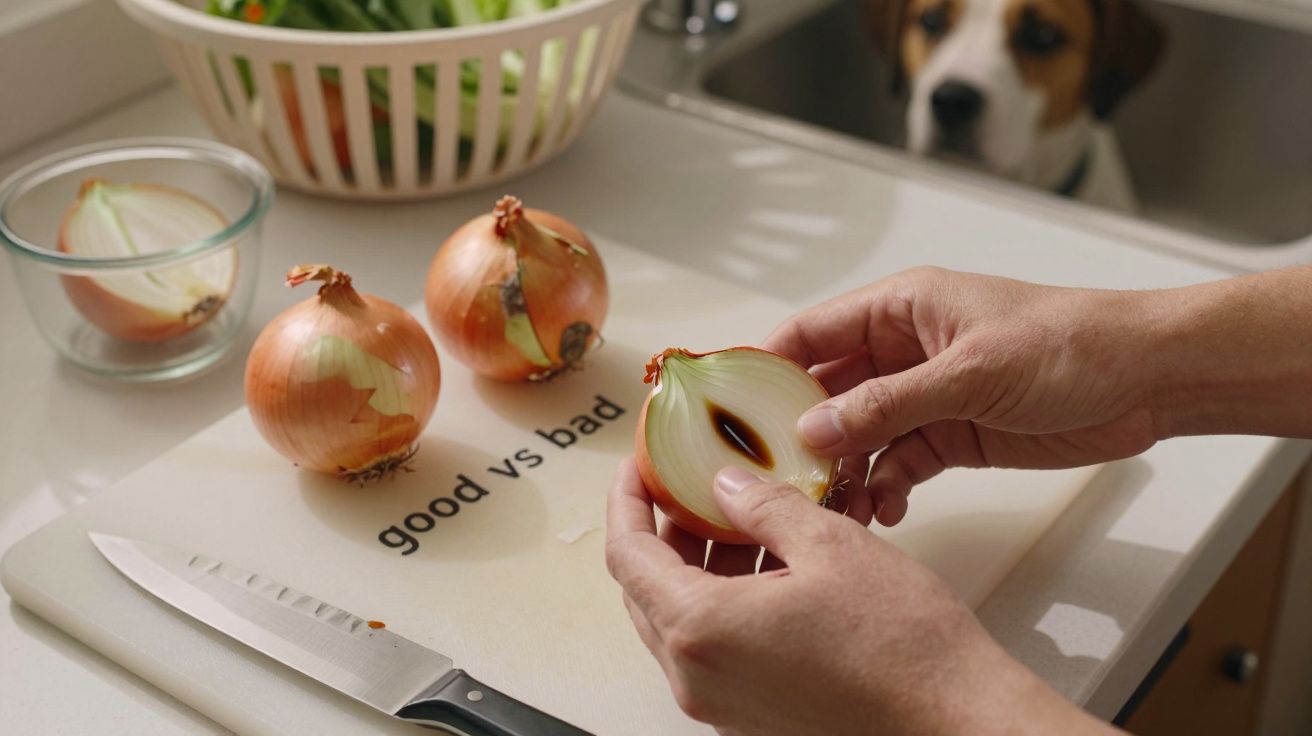
You only notice onions when they’re missing: the base note in a stew, the sweetness in a tray of roasted veg, the thing that makes a quick pasta sauce taste “finished”. But there’s a hidden issue with onions that catches people off guard at home, because it builds quietly in the cupboard and only announces itself when you’re already mid‑cooking.
It’s not the tears, or even the smell on your hands. It’s the way onions spoil from the inside out, and how one bad bulb can turn an entire bag into a soft, mouldy mess before you realise what’s happening.
The onion problem that feels harmless until it isn’t
Most of us buy onions the same way we buy milk: on autopilot. A net of brown onions, a couple of reds, maybe spring onions for salads, and we assume they’ll wait patiently until we need them.
The catch is that onions don’t always fail loudly. The skin can look perfectly fine while the layers underneath are starting to break down, ferment, or grow mould. By the time you smell something “off”, you’re often dealing with multiple onions that have been sharing moisture and microbes for days.
A bad onion rarely sits politely on its own. It leaks, it softens, and it speeds up the decline of everything touching it.
That’s why this issue tends to hit at the worst possible moment: guests arriving, pan already heating, knife in hand, and you cut into what should be a crisp bulb only to find brown slime, black spots, or a sour, cellar‑like stink.
Why onions go bad in ways you don’t expect
Onions are built to store energy, which is exactly what rot and mould feed on. They also have layers and a tight neck (where the leaves were), so damage can be sealed in and hidden.
A few common triggers do most of the damage:
- Poor airflow: nets and bowls are fine; sealed tubs and plastic bags trap humidity.
- Bruising: one knock in a shopping bag can start a soft patch that spreads.
- Warmth: cupboards near ovens, dishwashers, and sunny windows speed up breakdown.
- Mixing with potatoes: potatoes release moisture and gases that encourage sprouting and spoilage.
You can do everything “normally” and still lose onions faster than you think, especially in warmer kitchens or older houses where cupboards run hot.
The part nobody talks about: inside rot and cross‑contamination
The hidden issue isn’t just that an onion can be unpleasant. It’s that spoiled onions can contaminate your storage space and neighbouring produce.
When an onion begins to rot, it often weeps liquid. That liquid spreads bacteria and mould spores onto the skins of other onions. Then you handle those skins, put them on your chopping board, and only discover the rot when you slice into the next one.
It’s rarely dramatic food poisoning territory for most healthy adults, but it is a common way to end up with:
- a meal that tastes strangely bitter or sour,
- a whole batch of onions spoiled at once,
- a fridge or cupboard that holds a lingering “gone off” smell,
- and, in some cases, stomach upset from using onions that were already on the turn.
If you cook for someone pregnant, immunocompromised, or very young, it’s one of those “be fussier than you think you need to be” ingredients.
A quick “is this onion safe?” checklist
You don’t need to memorise rules. You need a fast routine that catches problems early.
What’s fine (and common)
- Dry papery skin that flakes off easily.
- Sprouting: a green shoot doesn’t automatically mean the onion is unsafe. If the onion is still firm and smells normal, you can trim the sprout and use it soon (it may taste sharper or slightly bitter).
What’s a clear bin job
- Softness: if you can press a thumb in and it doesn’t bounce back, it’s going.
- Wet patches or leaking at the base or sides.
- Black mould (often around the neck or between layers).
- A sour, alcoholic, or “musty cellar” smell.
- Brown, slimy layers when you cut it open.
If you cut into an onion and find rot in the centre, don’t “save the outer rings”. The breakdown products and microbes don’t respect neat boundaries.
The storage fix that saves the most onions (and money)
Most advice says “cool, dark place”, which is true but vague. What matters in real kitchens is airflow and separation.
Here’s the simple setup that works for most homes:
- Store whole onions in a breathable container (mesh bag, open bowl, wire basket).
- Keep them away from heat: not next to the oven, kettle, dishwasher, or radiator.
- Don’t store with potatoes: give each its own spot.
- Check the batch once a week: pick up a couple and squeeze gently. Remove any that feel soft immediately.
That weekly check is the difference between losing one onion and losing eight.
If you only change one thing
Stop keeping onions in a plastic carrier bag “just for now”. That “now” turns into a warm, humid microclimate, and you won’t notice until the smell arrives.
What to do with half an onion (the bit that causes the most waste)
Cut onions are where people get casual, and it’s also where quality drops quickly.
Once cut, onions lose their protective skin and can pick up odours and microbes from the fridge. Handle them like a leftover, not like a cupboard staple.
- Wrap tightly (or use an airtight container) and refrigerate.
- Use within 1–2 days for best flavour and texture.
- If it’s gone slimy or smells “fizzy”, bin it.
If you often cook for one, it’s worth chopping onions in bulk and freezing them. They won’t be crisp for salads, but they’re perfect for sauces, soups, curries, and mince.
The “one glance” guide to common onion issues
| What you see | What it usually means | What to do |
|---|---|---|
| Firm onion with green shoot | Sprouting, not necessarily spoilage | Use soon, trim sprout |
| Soft base or damp patch | Early rot spreading through layers | Bin the onion, check the rest |
| Black spots between layers | Mould growth | Bin, clean storage area |
A small safety note people forget: onions and pets
If you have a dog or cat that hoovers kitchen scraps, onions are not a harmless treat. Onion (and garlic) can damage red blood cells in pets, sometimes after repeated small exposures.
It’s not the main “hidden issue” in most kitchens, but it’s a common “too late” moment at the vet that’s easy to avoid: keep peelings and trimmings out of reach and secure the food bin.
The habit that keeps onions boring (in a good way)
Onions are supposed to be the reliable ingredient. The goal is to make them unremarkable again.
Buy what you’ll use in a couple of weeks, store them with airflow, keep them away from potatoes, and do the quick squeeze‑check once a week. It takes less than a minute, and it stops that familiar cycle of cutting into a perfect‑looking onion and finding the mess inside.
FAQ:
- Can I eat an onion that’s sprouted? Yes, if it’s still firm and smells normal. Trim the sprout and use the onion soon; the flavour can be sharper.
- Is it safe to cut away the bad part and use the rest? If an onion is slimy, mouldy, leaking, or rotten in the centre, bin it. Rot and mould can spread beyond what you can see.
- Should onions go in the fridge? Whole onions usually do best in a cool, dry, well‑ventilated place. Once cut, refrigerate in a sealed container and use within 1–2 days.
- Why shouldn’t I store onions with potatoes? Potatoes release moisture and gases that can encourage onions to sprout and spoil faster (and vice versa). Keeping them separate extends the life of both.



Comments
No comments yet. Be the first to comment!
Leave a Comment