Grapes are the go-to “healthy” snack in UK kitchens: tossed into lunchboxes, served with cheese, or eaten straight from the punnet while the kettle boils. The secondary entity here is, awkwardly, nothing at all - because the hidden problem isn’t a sauce, additive, or pairing, it’s the grape itself. It matters because when it goes wrong, it can turn from harmless habit into a true emergency in seconds.
They’re small, sweet, and feel safer than sweets or biscuits. That’s exactly why people stop thinking about them.
The hidden issue with grapes that doesn’t look like a hazard
A whole grape is the near-perfect shape to block an airway. Smooth skin, firm flesh, and just the right size to lodge in the throat - especially for young children, older adults, and anyone with swallowing difficulties.
The tragedy is how normal it looks right up until it isn’t. No sharp edges, no warning label that matches the risk, and no “crunch” that makes you slow down.
A grape doesn’t look like a choking hazard. That’s the problem.
Who it catches out (and why it happens so fast)
People tend to associate choking with nuts, hard sweets, or chunks of meat. Grapes slide under the radar because they’re fruit, and fruit feels self-evidently safe.
In reality, the risk clusters around a few everyday situations: eating while walking, eating in the car, toddlers copying older siblings, or adults offering “just one” to keep a child quiet.
| Situation | Why grapes are risky | Safer move |
|---|---|---|
| Under-5s snacking | Small airway + poor chewing | Cut lengthways into quarters |
| Older adults | Dentures, dry mouth, slower swallow | Slice or halve lengthways; serve with yoghurt |
| Eating on the move | Distraction reduces chewing | Sit down for grapes, even “just a few” |
The simple fix most people don’t do consistently
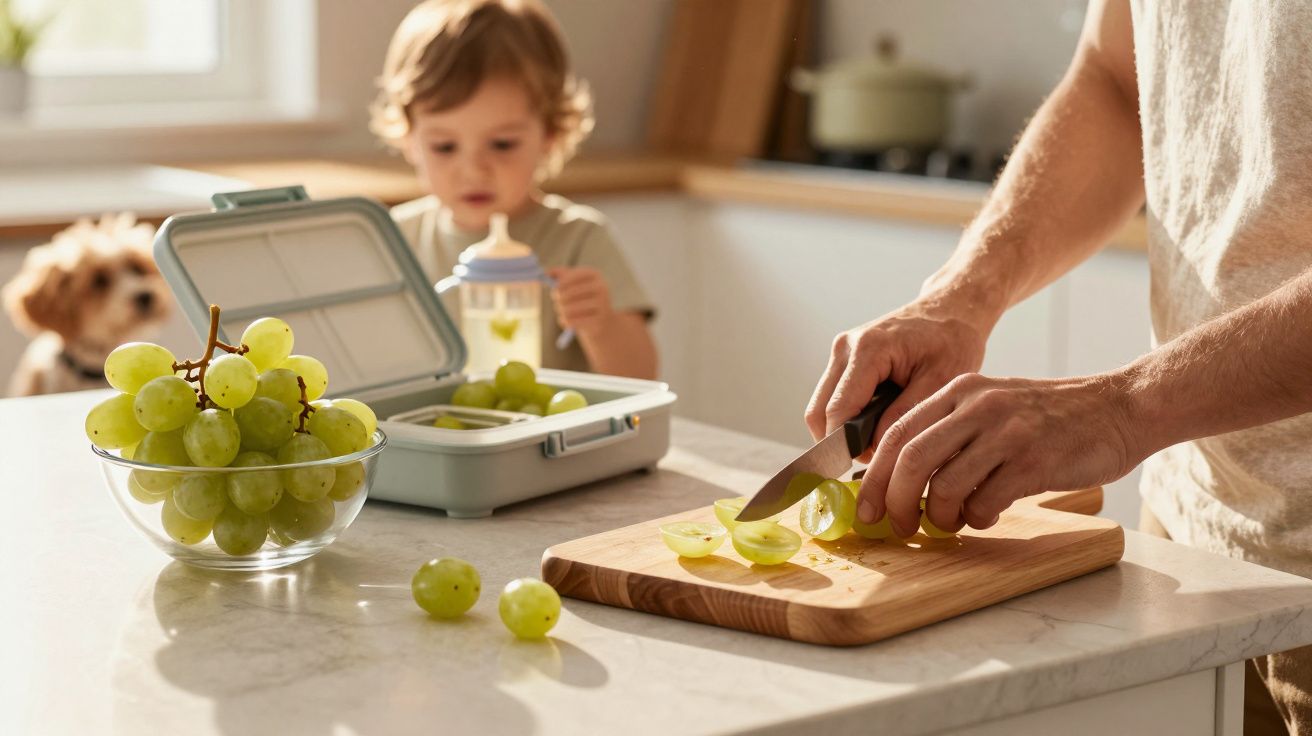
The fix is boring, which is why it’s often skipped: cut grapes lengthways. Not across.
Cutting them into round “coins” can still create a neat plug shape. Lengthways cutting breaks that seal and makes the pieces less able to block the airway.
A quick, realistic method for busy days
- Wash the grapes.
- Slice each grape lengthways into quarters for young children (or at least halves for older kids and adults who need it).
- Serve in a bowl, not loose in the car seat or pram tray.
- If you’re packing lunch, cut them the night before and keep them chilled in a lidded container.
If you want speed, cluster a few grapes together on a board and slice through carefully lengthways, then rotate and slice again. It’s not perfect, but it’s much safer than whole.
The “healthy snack” trap in lunchboxes and party food
Grapes show up where supervision is weakest: kids’ parties, buffet tables, school pick-ups, cinema seats. They’re clean, cheap, and universally liked - which makes them a default.
If you’re putting out a communal fruit bowl for mixed ages, it helps to decide in advance: either pre-slice the grapes, or swap them for fruit that doesn’t carry the same choking profile.
Good alternatives that keep the same grab-and-go feel:
- Blueberries (still supervise very young children)
- Satsuma segments
- Thin apple slices (soften for toddlers)
- Strawberries cut into small pieces
- Banana chunks
One more “too late” grape issue: pets
There’s another grape problem people often learn the hard way: grapes (and raisins) can be toxic to dogs, sometimes causing acute kidney failure. The exact toxin isn’t fully pinned down, and not every dog reacts the same way, which makes it easy to dismiss-until it’s an emergency.
If a dog eats grapes or raisins, the safest move is to contact your vet urgently (or an out-of-hours service) and follow their advice, even if the dog seems fine at first.
What to do if you want to keep grapes in the house without the risk
You don’t need to ban grapes. You just need a system that doesn’t rely on remembering in the moment.
- Keep a “grapes are sliced” rule for under-5s, full stop.
- Pre-slice a small container and put the rest out of reach.
- Tell grandparents and babysitters explicitly (many people simply don’t know).
- Avoid handing whole grapes to children in buggies, car seats, or on sofas during a film.
Small changes on the counter are the ones that hold up when you’re tired, distracted, or in a rush - which is exactly when this kind of thing tends to happen.
FAQ:
- Are grapes actually a choking hazard in the UK? Yes. Whole grapes are widely recognised as a choking risk for young children because of their size, shape, and slippery skin.
- How should I cut grapes for toddlers? Slice them lengthways into quarters. Halves are better than whole, but quarters are the safer standard for very young children.
- Is it only children who are at risk? No. Older adults and anyone with swallowing difficulties can also be at higher risk, especially if eating quickly or distracted.
- Can dogs eat grapes? No. Grapes and raisins can be toxic to dogs. If your dog eats any, contact a vet urgently for advice.




Comments
No comments yet. Be the first to comment!
Leave a Comment