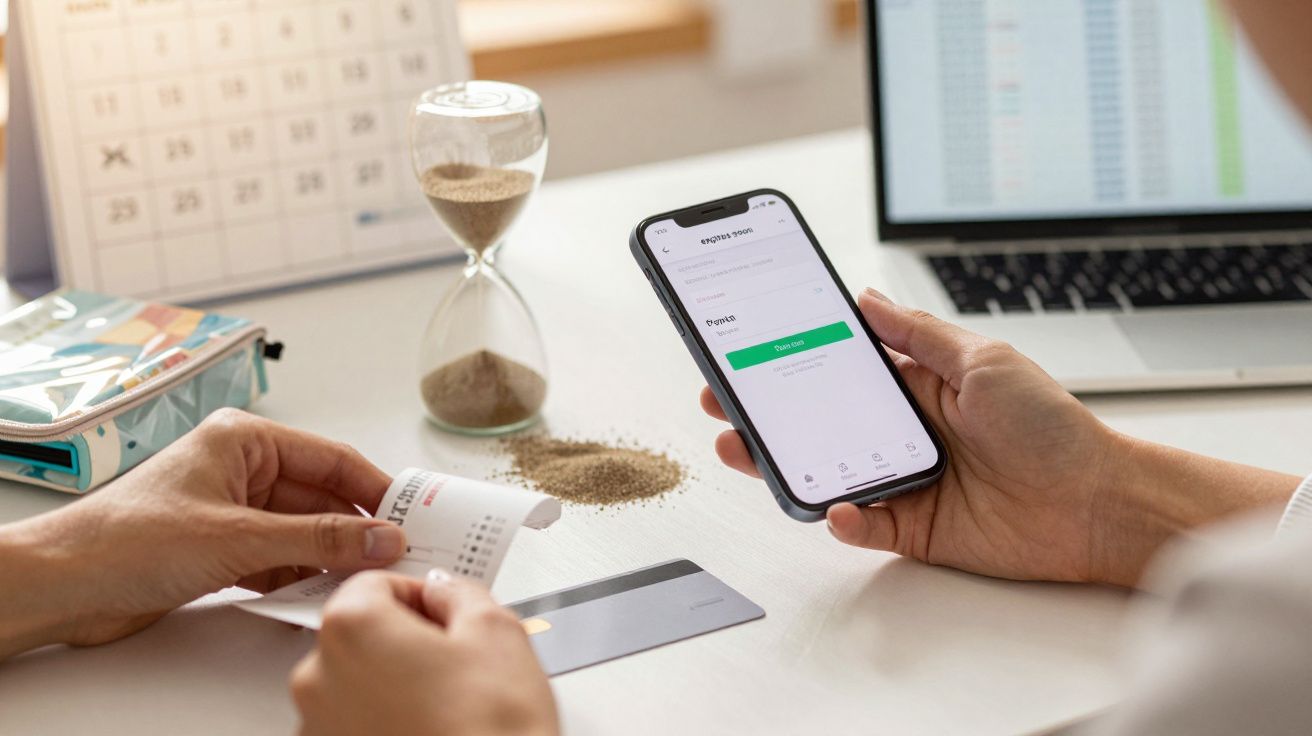
Most of us treat boots as a boring, dependable part of the weekly routine: pop into Boots for paracetamol, shampoo, a sandwich deal, maybe to collect a prescription on the way home. It feels safe because it’s familiar, and because the Advantage Card turns tiny purchases into a comforting little balance you plan to “use later”. The hidden issue is that “later” has rules - and people usually learn them after the balance drops to zero.
It’s not a scandal, and it’s not the kind of thing you rant about at dinner. It’s the quiet, admin-flavoured problem that only hurts when you’ve built up enough points to actually matter.
The problem isn’t the points. It’s the clock.
Boots Advantage Card points can disappear if your account is inactive for long enough. Many shoppers assume points behave like cash: once earned, they’re yours until you choose to spend them. Loyalty schemes don’t work like that, and the detail is easy to miss because it’s buried in terms, emails you don’t read, and app screens you don’t open.
In practice, inactivity doesn’t feel like a decision. It looks like a year where you happened to buy toothpaste elsewhere, used up your toiletries stash, or switched to online groceries. You haven’t “left” Boots - you just haven’t scanned the card.
Then you go back, ready to treat yourself, and the points aren’t there.
Points feel like savings. But they behave more like a subscription benefit: keep using it, or lose it.
Why nobody talks about it until it happens
Because day to day, nothing looks wrong. You scan, you get a handful of points, you forget about it. The scheme is designed to be low-friction, and the warning signs are equally low-friction: a message in an inbox you don’t check, a notification you swiped away, a line in a help page.
There’s also a psychological trap: points are just abstract enough that people don’t monitor them like money. If your bank balance dropped unexpectedly, you’d notice. If your points balance is lower than you remember, you assume you misremembered.
By the time you’re sure, you’re already in the “too late” category.
The modern loyalty shift: more digital, more conditional
Boots has leaned harder into app-based shopping: personalised offers, targeted deals, digital receipts, nudges that change week to week. That can be genuinely useful, but it also means your “value” increasingly depends on what you click, activate, or remember to bring up at the till.
If you’re not in the habit of opening the app, it’s easy to become the person paying full price while thinking you’re “good with points”.
The second hidden issue: points make spending feel smaller
Even when points don’t expire, they can still cost you money in a different way. Loyalty schemes work because they change behaviour: they encourage extra trips, add-on purchases, and “might as well” decisions.
It’s rarely a dramatic overspend. It’s the £4 here, £7 there:
- buying a larger size to “get the points”
- picking the branded version because the offer is attached to it
- adding a third item because the deal triggers at a threshold
- doing a separate Boots run instead of adding it to a cheaper supermarket shop
The odd thing is how responsible it feels. You’re not impulse-buying - you’re “maximising value”. But value that only exists if you keep playing the game has a habit of turning into expensive habits.
The real-life ways people get caught out
Most point-loss stories follow the same patterns. They aren’t careless people; they’re people living normal lives.
- Life disruption: new baby, caring responsibilities, illness, moving house - the year blurs, routines go.
- Shopping channel changes: you switch to home delivery, supermarket own-brand, or subscribe-and-save basics.
- Card/app friction: you change phones, forget a password, swap email addresses, or stop carrying the card.
- Family “sharing”: multiple people using one account can create confusion about what’s been spent and when.
And because it’s not a service you log into daily, you don’t spot issues early. You spot them at the checkout when you’re trying to pay with the points you were mentally counting on.
A quick self-check that takes five minutes
If you use Boots even occasionally, do a small audit now rather than when you’re already annoyed.
- Open your Boots account (app or online) and note your current points.
- Check your last transaction date - not “roughly”, the actual date.
- Make sure your email address and phone number are current.
- If you’ve got a physical card, note the card number somewhere safe (not on a screenshot you’ll lose).
This isn’t about being paranoid. It’s about treating points like a perishable benefit, not a piggy bank.
How to avoid the “too late” moment without obsessing
The aim is not to build a new weekly chore. The aim is to remove the single points-of-failure that cause most losses.
- Create one annual trigger: set a calendar reminder for a small points-earning purchase well before a year passes.
- Make one “Boots basics” rule: if you need toothpaste, paracetamol, deodorant, or cotton pads, buy one of those from Boots when convenient and scan the card.
- Don’t hoard indefinitely: if you’ve built up a meaningful balance, spend some of it instead of treating it as untouchable savings.
- Keep access boring: use a password manager, update contact details when you change phones, and keep the card number recorded.
The mindset shift that helps most
Treat points like food in the fridge. They’re useful, but they’re not immortal. You don’t need to eat everything today - you just need to know what goes off first.
The “late discovery” table people wish they’d seen earlier
| What trips people up | What to do instead |
|---|---|
| Assuming points last forever | Check inactivity rules and set one reminder |
| Only scanning “when it’s a big shop” | Scan on small, routine purchases too |
| Saving points for years | Redeem periodically so you’re not exposed to one wipeout |
| Changing email/phone and losing access | Update details before you switch devices |
What this means if you’re keeping points for something specific
A lot of people mentally allocate points to Christmas, a birthday haul, or a pricey skincare restock. That’s sensible - until it isn’t. If you’re saving for a particular spend, the safest approach is to turn “someday” into a timeframe you control.
Pick a month, plan to redeem, and work backwards. Points feel best when they reduce a bill you were going to pay anyway, not when they become a fragile pot you’re scared to touch.
FAQ:
- What’s the hidden issue here, in plain English? Points can be removed if your account is inactive for long enough, and many shoppers only discover the rule after they’ve built up a meaningful balance.
- Do I need to shop at Boots all the time to protect my points? No. The simplest tactic is one small points-earning transaction within the required period, plus keeping your account access details up to date.
- Is it better to save points or spend them quickly? Don’t hoard indefinitely. If the balance would genuinely upset you to lose, redeem some of it periodically so you’re not relying on a single future checkout moment.
- Are personalised offers “bad”? Not automatically. They’re useful if they match what you already buy; they’re expensive if they push you to add items just to trigger a deal. The key is noticing the difference.


Comments
No comments yet. Be the first to comment!
Leave a Comment