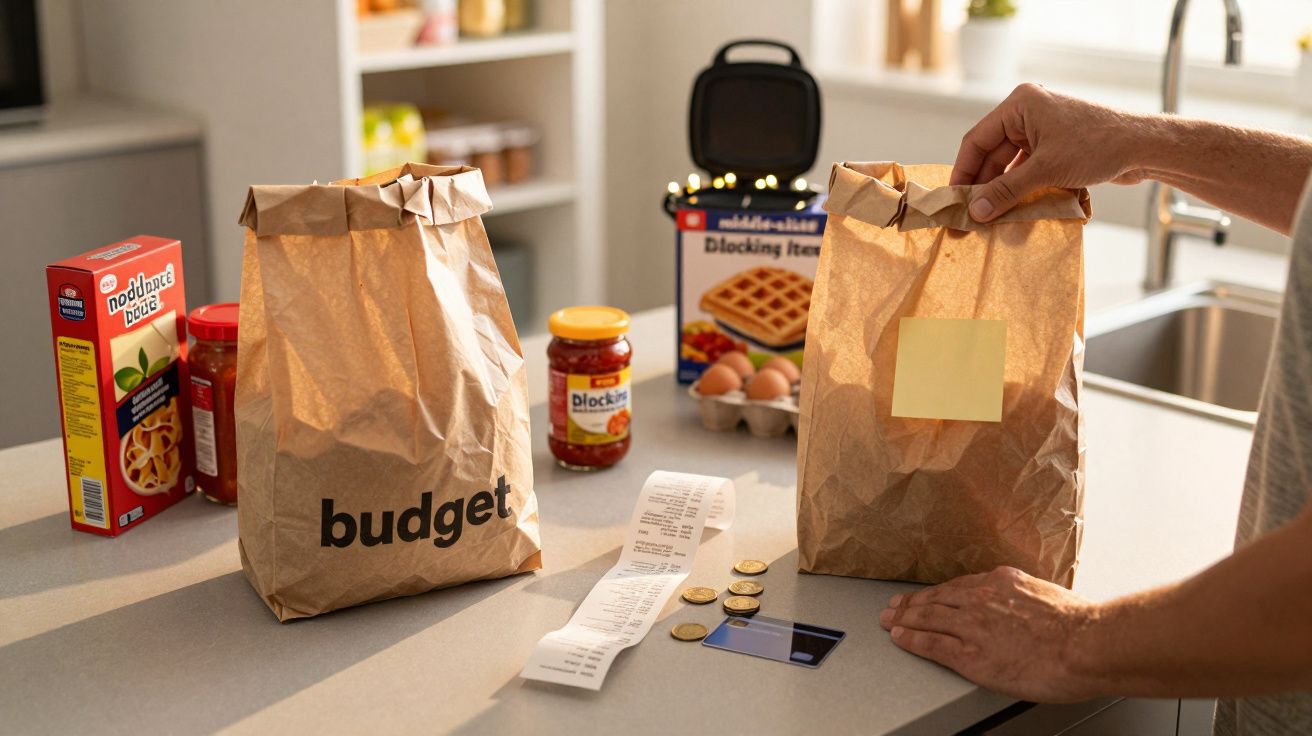
You don’t notice it when you first start shopping at Aldi, and `` isn’t much help in warning you either. You just see the prices, the fast-moving aisles and the oddly satisfying feeling of walking out with a week’s food for less than you expected. It matters because the hidden issue doesn’t show up on the receipt - it shows up in your second trip.
At first it feels like a one-off: you forgot one ingredient, or your usual brand “wasn’t in”. Then it becomes a pattern. The savings are real, but so is the quiet tax that arrives when Aldi can’t complete the shop you actually needed to do.
The “second shop” problem (and why it creeps up on you)
Aldi’s model is built for speed and simplicity: a tight range, lots of own-label, and rapid stock turnover. That’s exactly why it’s cheap - and exactly why you can end up leaving without the one or two specific items that make the rest of your trolley useful.
The issue isn’t that Aldi is “missing loads”. It’s that the missing items are often the blocking items: the thing your recipe hinges on, the pet food your cat will actually eat, the allergy-safe snack your child can take to school, the specific size of nappies that isn’t there this week.
So you do what almost everyone does.
You “just pop” into a second supermarket.
The hidden cost of a bargain shop isn’t always the price per item. It’s the extra trip you didn’t plan to take.
It looks like this in real life
- You save £12 on the main shop, then spend £18 at a nearby convenience store because you only went in “for coriander and tortillas”.
- You buy the basics cheaply, but the gluten-free range is patchy, so you top up elsewhere at premium prices.
- You’re missing one key cleaning product or a lunchbox staple, so you do another run midweek - and buy more than you intended because you’re already there.
None of that is a moral failing. It’s how modern grocery shopping works when a shop can’t reliably cover every household’s version of “the essentials”.
Why it’s hard to spot until it’s already eating your savings
The second-shop tax hides behind three things: habit, urgency and self-deception.
Habit makes it feel normal to split shopping across stores. Many of us already do it, so it doesn’t ring alarm bells.
Urgency turns small gaps into immediate problems. If you’re cooking tonight, you don’t have time to wait for next week’s stock rotation.
Self-deception is the sneakiest: you still feel like a savvy shopper because the Aldi total was low - even if the full-week total wasn’t.
Aldi’s receipts can be brutally satisfying. But the weekly cost of feeding a household rarely lives on one receipt.
It’s not just range - it’s availability and timing
Even when Aldi does stock the thing you need, it may not be there when you arrive. Fast-selling lines can disappear, and some categories vary sharply by store size and local demand.
That creates a specific kind of stress: you don’t know whether to plan around Aldi or treat it like a “see what we can get” shop. Planning is where the savings live. Uncertainty is where the extra spending sneaks in.
A few patterns shoppers report again and again:
- Fresh herbs, niche spices, and recipe-specific items are the first to force a top-up elsewhere.
- Popular branded equivalents (certain sauces, cereals, pet foods) may not have an own-label substitute your household accepts.
- Special dietary lines can be good value but inconsistent in stock and breadth.
- Late-day shopping increases the chance you’ll be improvising - and improvisation costs money.
The middle-aisle trap that turns “cheap” into “more”
Aldi’s middle aisle is fun. That’s the problem.
It’s designed to be. The offers feel time-limited, the prices feel irrationally good, and the items are often the kind of thing you’d never search for online - which makes them feel like a “win” when you spot them.
But those purchases don’t usually replace anything you were going to buy. They stack on top.
If you’re already doing a second shop because Aldi didn’t cover everything, the middle-aisle extras can tip the whole week into “we spent more than usual, but can’t explain how”.
Aldi doesn’t just compete on price. It competes on temptation - and it’s very, very good at it.
A quick self-check that catches it early
Ask yourself one question after a month of Aldi shops:
Did Aldi replace another supermarket, or did it become an additional stop?
If Aldi is an additional stop, your savings need to beat:
- extra fuel or bus fares
- extra time (which usually becomes paid convenience elsewhere)
- extra impulse buys across two shops, not one
What to do if you love Aldi but hate the “too late” moment
The fix isn’t “stop shopping at Aldi”. It’s to stop treating Aldi like it can be every type of shop for every household, every week.
1) Decide what Aldi is for in your life
Pick one primary mission and stick to it:
- Staples shop (pasta, rice, tinned goods, dairy, bread)
- Fresh-value shop (fruit, veg, meat - only if your local store is reliable)
- Batch-cook shop (big-ticket ingredients for soups, stews, lunches)
- Treat shop (snacks, desserts, weekend bits - with a hard limit)
Once you define the mission, you stop expecting Aldi to cover everything. That expectation is what triggers the second trip.
2) Keep a “blocking items” list (and buy those elsewhere on purpose)
Blocking items are the things that cause emergency top-ups. Write down yours and stop gambling on them.
Common examples:
- specific baby formula or nappies
- a particular pet food
- gluten-free staples your household relies on
- key sauces/spices you don’t want to substitute
- school-safe snacks (nut-free, etc.)
Buy those in one deliberate, predictable place - even if it’s a touch pricier. Predictability is cheaper than panic.
3) Budget for the middle aisle like it’s a category, not a surprise
If you enjoy the middle aisle, you don’t need to ban it. You need to price it.
Try a rule that doesn’t require willpower:
- £0 weekdays
- £10 weekend cap
- One item only, no exceptions
The point is to turn “impulse” into “planned spending” so it can’t quietly inflate the week.
4) Track the weekly total once, just to see the truth
Do one honest week where you add up everything:
- Aldi shop
- top-up shop(s)
- takeaway you bought because you ran out of time
- petrol/parking if it was a special trip
You don’t have to do this forever. You only have to do it once to learn whether Aldi is saving you money in your real routine, not in theory.
A simple way to spot the second-shop tax
| Pattern | What it feels like | What it costs |
|---|---|---|
| “Just one top-up” twice a week | Quick, harmless | Often £10–£30 extra |
| Convenience-store rescue shop | Urgent, unavoidable | High prices per item |
| Impulse buys across two shops | “Little treats” | Hard to notice, adds up |
The bottom line
Aldi is brilliant at what it’s designed to do: sell a tight range cheaply, quickly, with minimal fuss. The hidden issue is that many households don’t shop in a way that fits neatly inside a tight range - and the “extra” shop that follows is where the savings can quietly disappear.
If you name the problem early, you can keep the good bit (the value) and ditch the bad bit (the unplanned second trip). Leave it unexamined, and it tends to surface in the same place for everyone: at the end of the month, when the bank balance doesn’t match the feeling of all those “cheap” receipts.
FAQ:
- Is Aldi actually cheaper overall? Often, yes - if it replaces another supermarket for the bulk of your shop. If it becomes an extra stop plus a top-up elsewhere, the savings can shrink fast.
- What’s the quickest way to stop the “second shop” habit? Identify your blocking items and stop expecting Aldi to cover them. Buy those deliberately in a single reliable place.
- Are middle-aisle buys really that big a deal? They can be, because they’re usually additive. Even £8–£15 per week becomes noticeable over a month, especially alongside top-up shops.
- How do I shop Aldi without overbuying? Go with a mission (staples, batch-cook, fresh) and a short list. If you enjoy browsing, give yourself a fixed middle-aisle budget so it stays a choice, not a leak.


Comments
No comments yet. Be the first to comment!
Leave a Comment