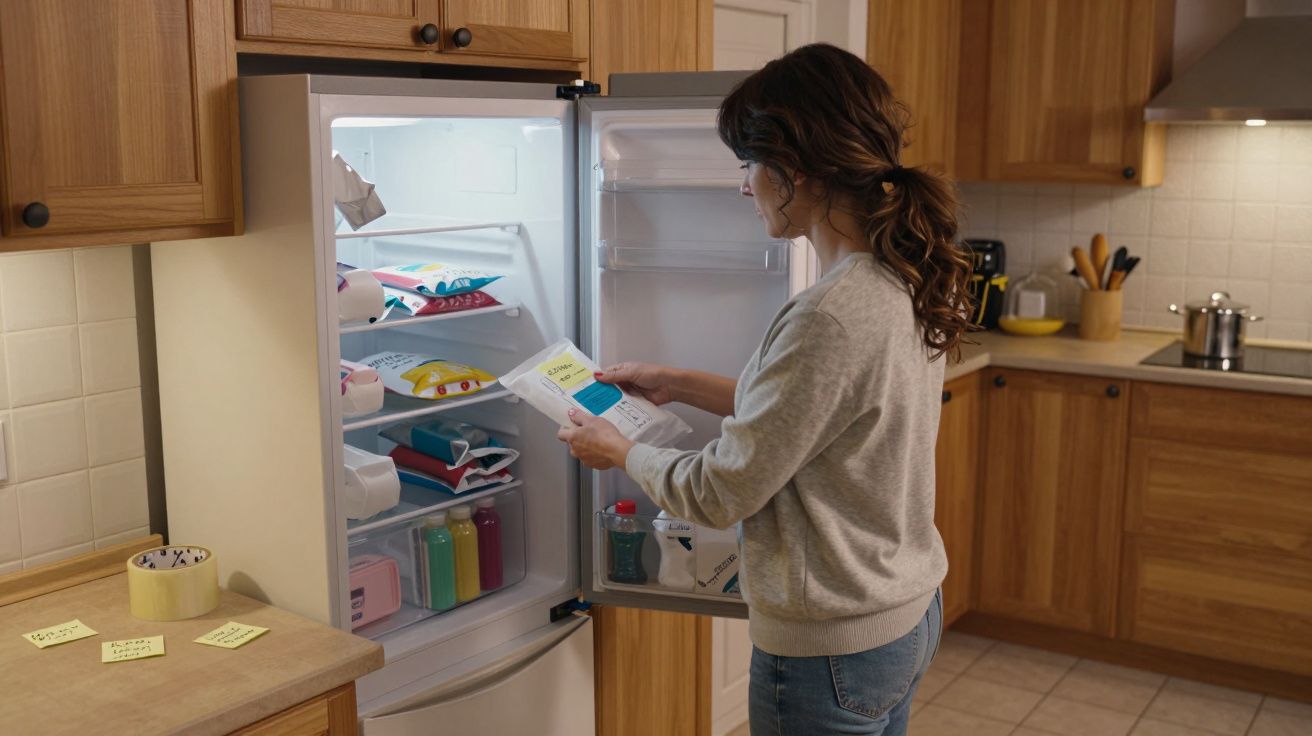
The thud of frozen peas hit the worktop just as the oven timer beeped. I was sure we had chips in there somewhere, buried under the “emergency” pizzas and that box of filo pastry I swear multiplies every Christmas. I dug past a frost-bitten lasagne, a bag of “mystery something” in an unlabelled tub, and a loaf end that could double as a brick. No chips. Just cold fingers and quiet annoyance.
At the bottom corner of the drawer, face pressed into a veil of ice crystals, was the date I didn’t want to read: January last year. I’d bought that mince on offer, felt extremely smug, and then… forgotten it existed. The packet went straight from frosted grave to the bin. That tiny clunk was the sound of a couple of pounds landing in landfill. One pack doesn’t feel like much. Add it up over a year, and it’s closer to £200 silently slipping away.
Somewhere between good intentions and the weekly shop, most of us have flipped the one freezer rule that actually works. Instead of “first in, first out”, we live by “last in, first out” - new food at the front, older food shuffled to the back, quietly ageing in the dark. The freezer stops being a money saver and turns into cold storage for regret.
The rule we think we’re following (but usually aren’t)
On paper, “first in, first out” is simple. The food that went in first should be the next thing you eat. Restaurants and supermarkets live by this rule because waste = money. At home, we nod along, then stand in front of the open freezer and shove tonight’s bargains right where we can see them.
That one move reverses the rule. New food sits proudly at the front or on top. Older food slides deeper into the drawer, literally out of sight. Two months later you’re peeling apart frosty bags, declaring, “We really must use this up,” while quietly planning to buy fresh instead.
Freezers feel safe because food isn’t rotting in a bowl on the side. Yet “safe” doesn’t mean infinite. Texture, flavour, and quality all drift downhill, even at -18°C. Most UK guidance suggests:
- 3–4 months for cooked leftovers
- Up to 6 months for raw meat and fish
- About 1 month for opened bread products
After that, it’s more “edible if desperate” than “actually nice”. The trouble is, you rarely notice the deadline passing. The drawer still closes. The ice builds. The food just slips off your mental map.
How £200 quietly disappears into the ice
Food charities and waste trackers estimate the average UK household bins hundreds of pounds of edible food a year. A thick slice of that is “freezer waste” - items technically still there, but degraded, forgotten, or too unappealing to eat when finally uncovered. When you add up:
- Yellow-sticker meat that never made it back out
- Homemade leftovers frozen “for a busy day” that never arrived
- Half-bags of veg welded into a solid lump
- Bread, pastry, and fruit kept “just in case” but never chosen
…it’s easy to creep towards £200 worth of food a year slowly turning into frost sculptures.
The strangest part is that it doesn’t feel like throwing food away. It feels like future planning. You buy in bulk to “save money”. You box up leftovers because you’re being sensible. You transfer discounted packs straight from shopping bag to freezer and feel oddly virtuous. The waste only becomes visible on bin day, when a misshapen bag of something unidentifiable slides in with a guilty thump.
The tiny movement that flips the freezer back to “saving”
The fix isn’t a label maker or a Pinterest-perfect inventory. It’s a habit that takes less than ten seconds: every time you put something new in the freezer, move what’s already there slightly towards the front, and slide the new item to the back.
That’s it. You’re literally reversing the reversal.
Oldest at the front, newest at the back. Top-down, front-to-back, however your freezer is laid out. The thing you’re most likely to grab next time - the one staring you in the face - becomes the item that’s been in there longest, not the thing you bought yesterday.
Do it every time and “first in, first out” stops being a slogan and starts being the way the drawer naturally behaves. You don’t need to remember dates in your head. The layout does the remembering for you.
Let’s be honest: nobody stands in the kitchen after work doing freezer algebra. You open, you grab, you shut. That’s why the physical order matters more than any good intention.
A real-world “first in, first out” freezer, step by step
I tested a low-effort system one Sunday when the freezer was already half defrosted by a door left ajar. Mild swearing, some towels, and ten minutes later, it made sense to start again properly.
Here’s what worked - no spreadsheets, no guilt trip:
Empty in zones, not chaos
Pull out one drawer or shelf at a time. Spread everything on the counter. Don’t empty the whole freezer in a frenzy; you’ll just panic and shove it back in.Quick triage: keep, use-soon, bin
- “I would happily eat this next week” = keep
- “I’m not sure about this, but maybe” = use-soon
- “I genuinely don’t know what this is / when it went in” = bin
Trust your future self. If you’re hesitant now, you’ll avoid it later.
- “I would happily eat this next week” = keep
Assign each drawer a time frame
- Top drawer/shelf: things to eat in the next 1–2 weeks
- Middle: next 1–2 months
- Bottom: bulk and backups (meat, bread, veg)
Within each drawer, front = oldest, back = newest.
- Top drawer/shelf: things to eat in the next 1–2 weeks
Label like a tired person, not a perfectionist
A roll of masking tape and a biro live next to the freezer now. Short codes only:- “Chilli x2 12/12”
- “BNS soup 05/01”
- “Minced beef 750g 19/02”
Writing takes three seconds; decoding frozen brown mystery takes much longer.
- “Chilli x2 12/12”
Start a “freezer first” habit before you shop
Before you write a single item on a shopping list, open the freezer and spend 30 seconds scanning the front of each drawer. Decide on one thing you’ll use this week. Build a meal around that, not the other way round.
The day after I reset mine, dinner wasn’t dictated by the latest purchase. It came from a tub of curry I’d forgotten, sitting patiently at the front. Ten minutes of rice and some frozen peas, and that was a night saved - and £10 not spent on a takeaway.
The patterns that sabotage you (and simple ways around them)
You don’t need more willpower. You need fewer traps. The same small mistakes crop up in almost every freezer:
Opaque bags
Black or solid-colour bags hide what’s inside. Use clear tubs or bags as much as possible. If you can’t see it quickly, you won’t pick it.Random portion sizes
Giant tubs of stew that only work if four people are starving on the same evening. Freeze in single or double portions instead; they actually get used.No “emergency tonight” box
Keep a small front section purely for things you’d eat on a day you’re exhausted: a portion of bolognese, some dumplings, a bit of garlic bread. That box should empty and refill regularly.Overfreezing bread
Freezers full of bread ends that no one likes. Decide in advance: breadcrumbs, croutons, or bin. If you’re not prepared to blitz and use them within a month, skip the guilt and let them go.Frost build-up
A snowdrift on the inside walls isn’t just annoying; it steals space and makes it harder to see what you have. A quick annual defrost - hairdryer off, towel on - resets visibility and capacity.
The small win is this: once your freezer works with you, it quietly nudges you to eat what you already own. The choice stops being “something from the freezer” vs “something new”, and becomes “which of these already-paid-for meals shall we have?”
A quick reference you can stick on the door
| What to do | How long it takes | Why it matters |
|---|---|---|
| Slide new items to the back, pull older ones to the front | 5–10 seconds per shop | Makes “first in, first out” automatic |
| Label with name + month/day | 3 seconds per item | Saves guessing and prevents mystery tubs |
| Scan freezer before writing your shopping list | 30–60 seconds per week | Swaps “buy more” for “use what’s here” |
| Defrost and reset once a year | 30–60 minutes | Recovers space and cuts hidden waste |
How to keep it going when real life gets loud
Good systems survive busy weeks. That’s the only kind worth building. A few guardrails help:
- Don’t overstuff: leave a bit of air space. An overpacked drawer becomes a jumble, and jumble eats food.
- Accept “good enough” labelling: if you manage “curry 4/3” scrawled at an angle, you’ve won.
- Set a quiet reminder: a recurring note in your phone every three months: “Freezer front check – what’s oldest?”
- Make it visible: a simple list of 5–10 key items taped inside a cupboard door near the hob - crossed off as you use them. Not every pea, just the main “meals in waiting”.
You’ll still have the odd casualty. A sad bag of spinach that sank to the bottom. Ice cream that went gritty. That’s life. The point isn’t perfection; it’s turning the freezer back into what you bought it for: a money-saving pause button, not long-term storage for forgotten good intentions.
When the next yellow-sticker haul lands on your counter, the choice is simple. Slide the drawer, move the older meals gently to the front, tuck the bargains at the back, scribble two words on a bit of tape. Tiny habit, big quiet shift.
FAQ:
- Do I really need to label everything? Aim to label anything that won’t be obvious later. Chips look like chips. Bolognese, chilli, and stew all look like brown blocks when frozen; they’re the ones worth naming and dating.
- How long can meat actually stay in the freezer? For best quality, most guidance suggests up to 6 months for raw meat and 3–4 months for cooked. After that it may still be safe if kept frozen, but taste and texture usually suffer.
- Is it worth freezing leftovers if I’m bad at using them? Yes - if you pair freezing with a “freezer first” check before shopping. If leftovers just pile up with no plan, freeze fewer and aim to eat them within a couple of days instead.
- My freezer is tiny. Does this still help? Small freezers benefit most. A single drawer can still have a “use this week” front and a “later” back. The ten-second slide-new-to-back habit stops limited space becoming permanent clutter.
- What about batch cooking months in advance? It still works with “first in, first out”. Freeze in dated portions, keep the oldest at the front, and plan one batch-cooked meal into each week so the stash actually turns back into dinners.


Comments
No comments yet. Be the first to comment!
Leave a Comment