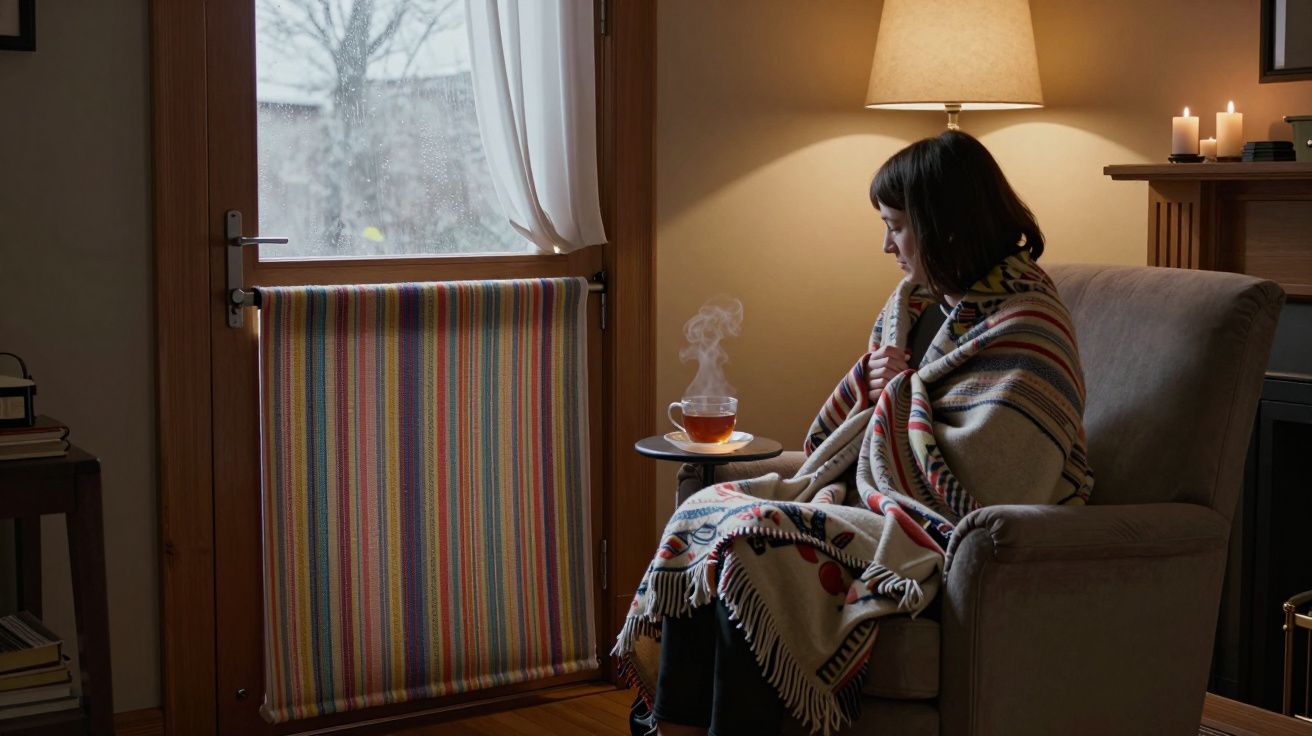
The evening settles in the way it does in January: fast, grey, a bit unforgiving. You close the curtains, turn the thermostat up a notch, and, in a last act of domestic common sense, you pull a sausage‑shaped draught excluder tight against the gap under the sitting‑room door. The room looks snug on Instagram-candle lit, blanket ready, a soft fabric “door snake” pressed like a loyal pet against the threshold.
An hour later, your toes say otherwise. The air by the sofa feels oddly sharp, your nose is cold, and there’s a faint damp on the inside of the windows that wasn’t there before. You swear you’ve done everything the energy‑saving tips told you to do. The fabric tube is still there, doing its solid, simple job. And yet the room feels colder. Something isn’t adding up.
When blocking a gap makes a room feel colder
Draught excluders have a brilliant, intuitive promise: stop the little river of cold air at floor level and you stop that creeping chill round your ankles. In plenty of cases-especially on leaky external doors-they do exactly that. The trouble starts when that simple idea collides with the messy reality of how air actually moves through a home.
Rooms don’t just exchange air through the obvious gap under a door. They “breathe” through cracks in window frames, gaps in floorboards, keyholes, chimneys, trickle vents and even plug sockets on outside walls. Warm air naturally wants to rise and escape up and out; colder air sneaks in lower down to replace it. Block one convenient path and the air doesn’t give up. It goes looking for another way.
Sometimes your dutiful door snake doesn’t so much stop the draught as reroute it. Cold air that used to sneak under the sitting‑room door is now pulled in through the tiniest gaps in your window frame instead, right behind your favourite chair. The overall heat loss of the house can stay much the same, but the cold is now arriving exactly where you sit and where you notice it.
The quiet physics behind those “cosy” sausages
There are three main reasons a draught excluder can make a room feel colder, even if a heat‑loss calculation on paper says you’re winning: where the air now leaks, how humid it becomes, and what happens to nearby rooms.
First, location. Before you blocked the door gap, the draught may have been spread out as a thin, low‑level river along the hall floor. Now, because warm air is still drifting upstairs and out of the building, replacement air is being sucked in through any other crack available. That might be straight onto your neck via the ill‑fitting sash behind the sofa, or through a badly sealed loft hatch so the whole room feels a degree sharper. You haven’t magically reduced the pressure difference driving the airflow; you’ve just changed its route.
Second, humidity. A bit of ventilation helps keep indoor air drier. Drier air feels warmer at the same temperature because it pulls moisture off your skin more gently and reduces that clammy chill. When you over‑seal a room with draught excluders, heavy curtains and stuffed‑up vents, moisture from breathing, cooking or drying clothes has fewer ways out. The air gets marginally warmer on a thermometer-but stickier and more uncomfortable. Condensation creeps onto cold panes, surfaces look damp, and your body reads that as “cold and uninviting”.
Third, knock‑on effects. That snug sausage at the living‑room door can rob other parts of the house of warm air they relied on. A hallway with the only radiator in the ground floor may now end up cooler, increasing heat loss up the stairwell or through a poorly insulated front door. In older, draughty homes, the whole system is a shabby sort of balance. Touch one piece and the rest shifts.
Common ways door draught excluders backfire
Most of the time, the problem isn’t the product itself, but where and how it’s used. A few classic own‑goals:
On internal doors to the warmest room, not the leakiest one
The sitting‑room gets a fabric snake because it’s where we spend time, while the truly draughty front door goes untouched. You end up isolating your cosiest space from the rest of the heating rather than tackling the main source of cold air.Blocking the only route for “spent” air to escape
In small, modern flats with sealed windows, that gap under the door is sometimes the only real path for stale, humid air to drift towards an extract fan in the kitchen or bathroom. Plug it completely and you trap moisture and pollutants, making the room feel stuffy and paradoxically chill.Interfering with combustion and extract fans
Where you still have an open‑flued gas fire, a woodburner, or a powerful kitchen extractor, the house needs enough incoming air to balance what’s being pulled out. Stuffing every door gap can increase negative pressure and draw cold air in through chimneys or around window frames-exactly where you sit. In bad setups, it can also risk pulling flue gases back into the room.Half‑measures that change comfort but not heat loss
One lonely sausage under the door, while the letterbox gapes, the keyhole whistles and the sash cords rattle, often just moves where you feel the draught. The energy bill barely notices, but your ankles have a new enemy at the other side of the room.Becoming damp, mouldy cold‑bridges
Fabric excluders that soak up moisture from wet floors, pet bowls or a poorly sealed threshold turn into clammy, cold objects in their own right. Touch them and they feel like a block of ice. The brain registers that sensation and tells you the whole room is chilly, even if the air temperature hasn’t budged.
Let’s be honest: nobody does a full airflow survey before buying a cute draught snake that matches the cushions. We place it where it looks right, not where the physics sends us.
How to use draught excluders so they actually help
The goal isn’t to bin every door snake in the house. It’s to put them on the right doors, in the right way, and not expect them to solve everything alone.
Start by mapping your draughts for a day or two. On a cold, slightly windy evening, walk slowly round the house with bare ankles and the back of your hand exposed. Feel along skirtings, around frames, by sockets on outside walls. Note where the air is coming from, not just where you notice it first. That fifteen‑minute wander tells you more truth than any product label.
Then, think in order of priority:
Tackle the worst external leaks first
- Front and back doors with visible light round the frame.
- Letterboxes without brushes or flaps.
- Gaps under external doors wide enough to see the outside.
A well‑fitted brush or rubber seal on the door itself often beats a loose sausage that you have to kick back into place every time.
- Front and back doors with visible light round the frame.
Be cautious on doors that support ventilation
- Doors between rooms without opening windows and those that do.
- Doors to rooms with boilers, gas fires or solid‑fuel stoves.
In these cases, aim for “softened” draughts rather than total blockage: slim brush seals that reduce the blast but still allow some air movement.
- Doors between rooms without opening windows and those that do.
Avoid sealing a cold room off from the only heat source
If the only radiator is in the hallway, leaving bedroom doors slightly ajar can help the warm air spread. A draught excluder under a bedroom door, combined with a closed door, can make the room behind it colder while the hallway bakes.Combine door excluders with other small fixes
- Fit keyhole covers and letterbox brushes.
- Use low‑cost foam strips on rattling window sashes (without painting vents shut).
- Close thick curtains at dusk, but keep them clear of radiators so heat can reach the room.
Each step is minor; together they matter more than one heroic sausage.
- Fit keyhole covers and letterbox brushes.
Watch the moisture
More condensation on windows after a week of hardcore “cosying up” is a warning sign. Crack trickle vents, open a window for five minutes after showers and cooking, and consider where the steam from a drying rack actually goes. Warm and damp is the enemy of comfort, lungs and woodwork.
“We see people over‑sealing a single room and then wondering why it feels clammy and cold,” notes building physicist Aaron Patel. “Good draught‑proofing is about directing air, not just blocking it. You want control, not a Tupperware house.”
A tiny object in a much bigger energy story
Those soft tubes at the bottom of doors are part of a broader shift: households trying to claw back control over bills and comfort in buildings that were never designed for today’s prices or today’s climate. One winter we’re told to ventilate well against viruses, the next to block every gap to save on the gas bill. Somewhere in between sits the reality of an old terrace with rattly sash windows and a single‑skin kitchen wall.
A draught excluder feels tangible, cheap, and oddly reassuring. You can see it, kick it, move it. By contrast, the big wins-loft insulation, external wall insulation, decent double glazing, properly balanced mechanical ventilation-are expensive, invisible once done, and tangled in landlord decisions or planning rules. The temptation is huge to over‑invest our hopes in the thing we can buy on a Saturday afternoon.
Seen clearly, door snakes are what they’ve always been: a useful prop, not the main act. They make most sense once the bigger leaks are calmed, the worst cold bridges are dealt with, and the home has at least some planned path for stale, humid air to leave. Used that way, they help tip the balance: a small, fabric nudge towards a home that wastes less heat and feels kinder on the bones.
| Key point | Detail | Why it matters |
|---|---|---|
| Draughts reroute, they don’t vanish | Blocking a door gap can push cold air in through windows or loft hatches instead | Explains why a “sealed” room can still feel chilly |
| Comfort ≠ just temperature | Humidity, air movement and where draughts hit the body shape how warm you feel | Helps you target fixes that match real discomfort |
| Smart placement beats over‑sealing | Focus on leaky external doors, respect ventilation needs, combine with other measures | Gets more warmth per pound spent and avoids damp |
FAQ:
- Should I remove draught excluders completely?
Not usually. They’re helpful on leaky external doors and on rarely used internal doors to cold spaces (like unused spare rooms), as long as the house has other routes for fresh air and moisture to escape.- Why does my room feel colder after I “cosied it up”?
You may have blocked its easiest ventilation path, so air is now sneaking in through colder, less comfortable spots (like old windows), and humidity has risen. The combination feels clammy and chilly even if the thermostat reads the same.- Are brush strips better than sausage‑shaped draught excluders?
Fixed brush or rubber strips on the door tend to seal more evenly and don’t get kicked out of place. Fabric “snakes” are flexible and cheap, but they’re easy to misplace and can trap moisture if they get damp.- Can blocking draughts be dangerous with gas appliances or woodburners?
It can be if you over‑seal the room and starve the appliance of air, or if you increase negative pressure so flue gases are pulled back in. Always follow the installer’s ventilation guidance and keep permanent vents clear.- What’s the simplest check to avoid mistakes?
After adding draught excluders, spend a cold, slightly windy day noticing where you now feel air movement and watching for extra condensation. If a room feels stuffier but not warmer, ease back: reopen a vent, adjust a door, or move the excluder to a different gap.






Comments
No comments yet. Be the first to comment!
Leave a Comment