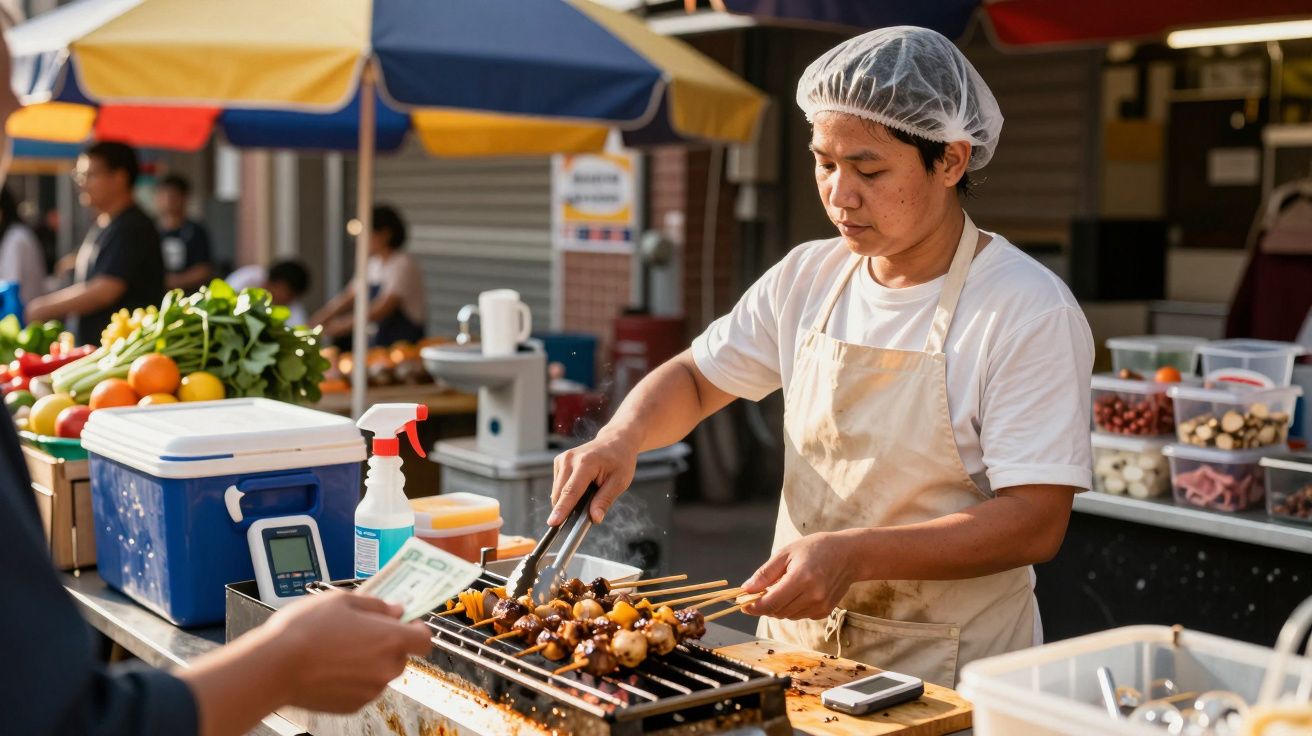
It’s late, you’re hungry, and the best smell on the street is coming from a hot grill. Street food and food hygiene sit uncomfortably close in people’s heads, mostly because one bad story travels faster than a thousand good meals. Knowing what’s true (and what’s just repeated) matters, because it can save you money, discomfort, and a lot of unnecessary suspicion towards the people cooking.
The myth that refuses to die is simple: street food is inherently dirty, risky, and more likely to make you ill than a restaurant. It sounds sensible, but it’s not how food safety actually works.
The myth everyone repeats: “Street food will make you sick”
Ask a group of friends why they “don’t do” street food and you’ll hear the same handful of lines.
- “It’s been sitting out all day.”
- “They don’t have proper kitchens.”
- “You never know what’s in it.”
- “Restaurants get inspected. Stalls don’t.”
The problem is that these statements bundle together a few real risks (time, temperature, cross-contamination) with a lot of assumptions about where danger comes from.
Food poisoning isn’t a street-versus-restaurant issue. It’s a time-and-temperature issue, plus basic hygiene.
A quiet truth: plenty of outbreaks come from perfectly respectable indoor kitchens, because the setting isn’t the safeguard. The system is.
What’s actually true: risk is about process, not postcode
Food safety is mostly boring. It’s handwashing, clean utensils, hot food kept hot, cold food kept cold, and raw ingredients kept away from ready-to-eat items.
Street food can meet those standards-and often does-because the business model pushes it that way:
- High turnover: the best stalls sell quickly, meaning ingredients don’t linger.
- Short menus: fewer dishes can mean tighter control and less “stuff” to manage.
- Visible cooking: you can often see exactly how food is handled and finished.
- Reputation pressure: one bad day can kill a stall’s footfall faster than a bad review hurts a chain restaurant.
That doesn’t mean every market is a safe haven. It means the “street food is always dodgy” belief is too blunt to be useful.
Why the myth sticks (even when you’ve eaten great street food)
Part of it is psychology. Street food is public, sensory, and easy to judge at a glance, so people lean on shortcuts: if it looks improvised, it must be unsafe.
There’s also a class and culture edge to it. In many places, street food is associated with migration, informality, and “cheapness”, and those associations get mislabelled as “unclean”. Once that bias lands, a single horror story becomes proof.
Finally, there’s the very real fact that street food is often eaten while travelling-when your sleep, alcohol intake, and hydration are all off. Stomach issues that are really “holiday body” get blamed on the last thing you ate.
A better way to think about it: look for control points
If you want a practical filter, don’t ask “Is this street food?” Ask, “Do they look in control?”
Green flags that usually matter more than a food-hygiene certificate on the wall
You’re looking for signs that the stall has systems, not just vibes.
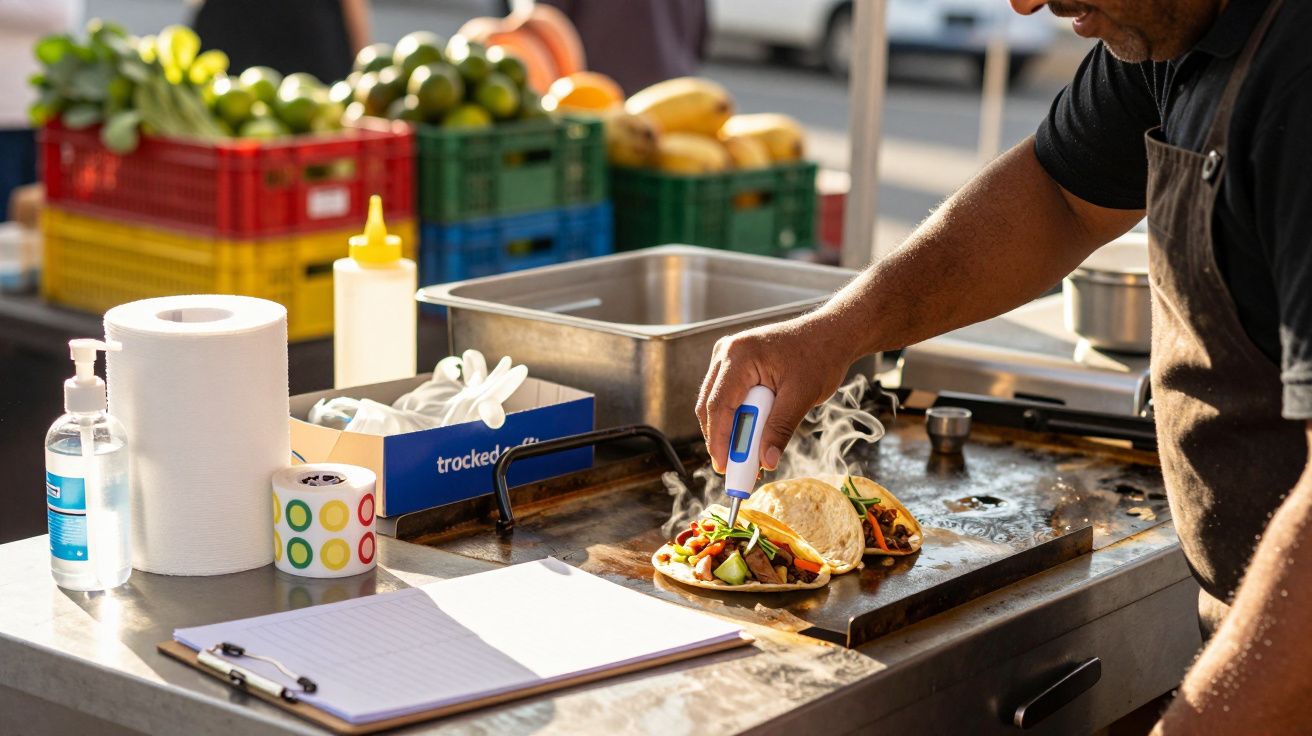
- A clear hot zone and cold zone: hot food is steaming; chilled items are actually chilled.
- Separate tools: different tongs/boards for raw meat and cooked food (or a clear routine).
- Handwashing or sanitising: you see it happening, not just a bottle sitting untouched.
- Busy, steady trade: a queue isn’t a guarantee, but it often indicates turnover and routine.
- Simple, repeatable workflow: the same motions, the same station layout, no frantic improvising.
None of this requires you to be a food inspector. You’re just watching whether the operation looks calm and consistent.
Red flags that are worth taking seriously
Some things are immediate “maybe not” signals, whether it’s a stall or a café.
- Raw chicken or mince handled and then money handled with the same gloves, no change
- Cooked food being put back onto the same tray that held raw meat
- Lukewarm “hot” food sitting around (especially rice, pasta, stews, gravies)
- Sauces or dairy left in the sun with no cooling
- A general sense that they’re constantly catching up rather than keeping pace
If you see one red flag, you don’t need to start an argument. Just buy something else. The point is to eat well, not prove a point.
The street food paradox: the “freshest” stall can be the safest one
People worry that street food is “left out”. Sometimes it is-but the stalls most likely to leave food sitting are often the quiet ones with slow sales.
A good operator designs the menu around what can be cooked quickly and held safely. Think skewers grilled to order, fresh flatbreads, dumplings steamed in batches, tacos assembled from hot fillings, chips straight from oil.
Meanwhile, the restaurant that feels “safer” can have a fridge full of prepped ingredients held for days, a tired staff member rushing service, and a complex menu that creates more chances for cross-contamination.
“Street food” isn’t a hygiene rating. It’s a format.
If you only remember five rules, make them these
You don’t need paranoia. You need a short checklist you can run in ten seconds while you queue.
- Go where it’s busy (steady turnover beats empty trays with food hanging around).
- Prefer cooked-to-order (or at least cooked-and-kept-hot).
- Avoid lukewarm mixed foods (especially rice dishes and creamy salads).
- Watch the hands and tools (money + food handling needs a barrier or a routine).
- Trust your senses (hot should be hot, cold should be cold, and “off” smells aren’t brave to ignore).
These rules work at markets, food trucks, festivals, and yes-restaurants too.
The one group who shouldn’t “risk it for the vibe”
Most healthy adults can handle occasional exposure without issues, but some people should be more cautious because the consequences are higher.
That includes anyone who is pregnant, immunocompromised, very young, or elderly. For them, the “safe enough” threshold changes, and it makes sense to choose stalls with clear control: proper refrigeration, hot holding, cooked-to-order food, and clean handling.
It’s not snobbery. It’s risk management.
So what should we retire, exactly?
Retire the idea that street food is automatically unsafe, and replace it with something truer: unsafe food is unsafe because of handling.
Street food deserves the same judgement you’d give any place you eat-based on process, cleanliness, and temperature control-not on whether there’s a dining room and a billfold menu.
And if you find a stall that does it well, you’re not “being brave”. You’re just eating food made by someone who knows what they’re doing.
FAQ:
- Is street food less regulated than restaurants in the UK? Not necessarily. Many street traders must register as food businesses and can be inspected; the key is whether safe practices are followed on the day.
- What’s the biggest risk item to watch for at stalls? Lukewarm foods that should be piping hot or properly chilled-particularly rice dishes, creamy salads, and meat held at uncertain temperatures.
- Does a long queue mean it’s safe? A queue suggests turnover and popularity, which helps, but it’s not a guarantee. Still do a quick scan for hand/tool hygiene and temperature control.
- Are gloves a sign of good hygiene? Only if they’re changed appropriately. Gloves used to handle both money and food can be worse than bare hands with proper handwashing.
- What’s the safest “default order” if you’re unsure? Something cooked in front of you and served hot, with minimal cold toppings or sauces that may have been sitting out.



Comments
No comments yet. Be the first to comment!
Leave a Comment