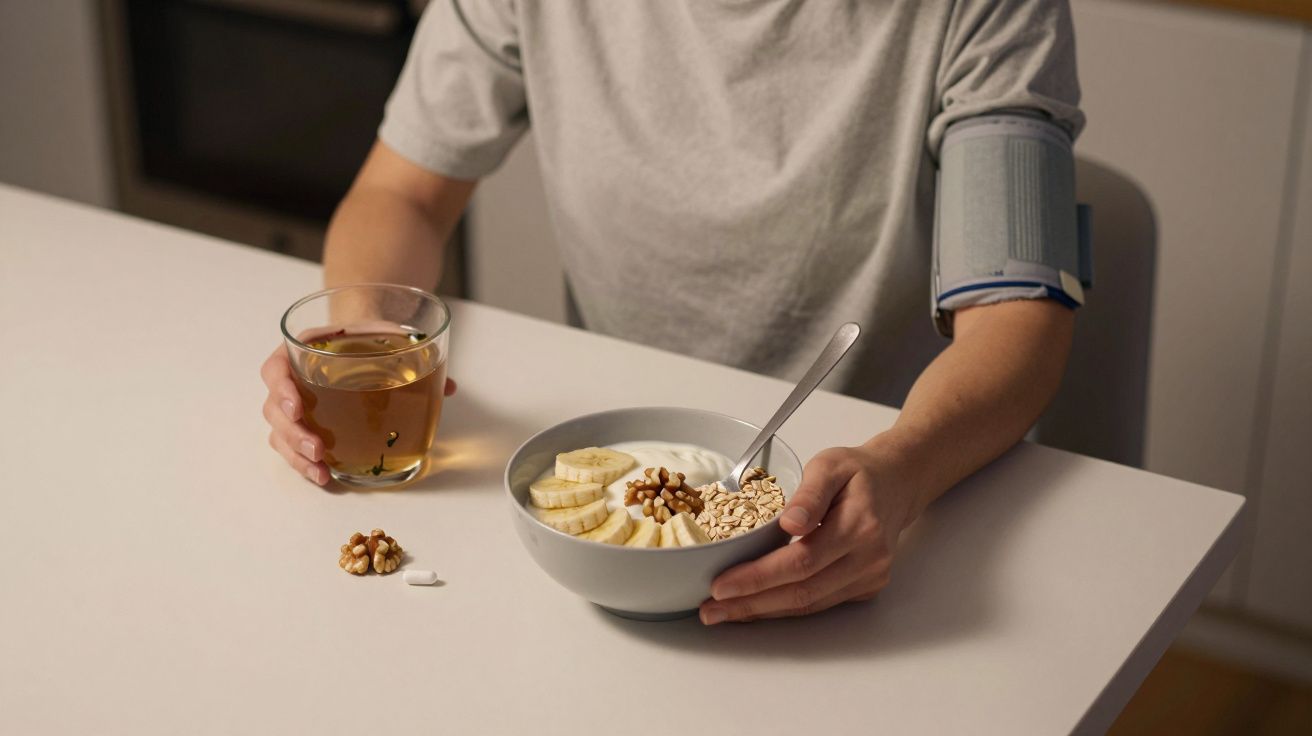
You only notice it if someone straps a cuff to your arm overnight. On paper, your daytime readings look fine. At 3 a.m., though, the trace tells a different story: pressure that never quite “dips”, a restless heart doing daytime work in the middle of the night.
Cardiologists see this pattern all the time. Heavy dinners, salty snacks and late‑night scrolling keep the sympathetic nervous system humming. Your body was supposed to be in repair mode; instead, it is on standby. You do not need a miracle supplement to nudge it back. You need a quieter evening and, for many people, a very particular sort of bedtime snack.
The goal is not “eating at night”. It is sending your blood vessels one last calm, low‑salt signal before sleep.
A small combination of slow‑burn carbohydrate, potassium‑rich fruit and a little protein or healthy fat can help smooth out night‑time blood pressure swings. It is not a replacement for medication or weight loss, but it can make the rest of your routine work with you rather than against you.
Why night‑time blood pressure matters more than you think
Blood pressure should fall by about 10–20% when you sleep. Cardiologists call this “nocturnal dipping”. When that dip fails to appear, or pressure even rises at night, the risk of stroke, heart attack and kidney disease climbs, even if clinic readings are “borderline” in the day.
Sleep itself is part of treatment. Deep, regular sleep lowers adrenaline, cools inflammation and lets arteries relax. The problem is that what you eat in the two to three hours before bed can quietly undo a lot of those gains. Salty takeaway, large late dinners and sugary puddings push blood pressure up and keep it up.
A light, targeted snack is sometimes better than going to bed hungry, especially if you take evening blood pressure tablets or blood sugar medications. The right mix buffers dips in glucose, calms the nervous system and gives your arteries minerals they actually like.
The three‑part snack cardiologists keep coming back to
When cardiologists talk about a “heart‑friendly” bedtime snack, the pattern is remarkably consistent. It is not exotic. It does three simple jobs at once: lower sodium, support steady blood sugar and add potassium and magnesium.
The basic template looks like this:
A potassium‑rich fruit
Think banana, kiwi, a small orange or a handful of berries.A small portion of plain fermented dairy or plant yoghurt
Natural yoghurt or kefir, or an unsweetened soya/almond alternative if you avoid dairy.A spoonful of fibre and healthy fats
A small handful of unsalted nuts or seeds, or a tablespoon of plain oats or chia seeds.
Put together, this might be:
- Half a banana sliced into a small bowl of plain yoghurt, topped with a tablespoon of oats and a few chopped, unsalted walnuts.
Portion size is key. This is a snack, not a second dinner. For most adults, that means something in the region of:
- ½–1 small piece of fruit
- 100–150 g yoghurt
- 1–2 tablespoons of nuts, seeds or oats
The cardiology logic: low salt, modest calories, high potassium and magnesium, and no sugar spike.
How this snack steadies your blood pressure overnight
Each part of the combination is doing quiet work while you sleep.
Potassium tells blood vessels to relax
Potassium‑rich foods (like bananas and kiwis) help the kidneys excrete excess sodium and support the smooth muscle in artery walls. That encourages a more natural dip in pressure without the jolt you get from a salty crisp packet.Protein and healthy fats stop 3 a.m. “stress” wake‑ups
A little protein and fat from yoghurt and nuts slows digestion. Instead of a sharp rise and fall in blood sugar, you get a gentle curve. That makes night‑time adrenaline surges and cortisol spikes less likely.Calcium and magnesium support vascular tone
Yoghurt, nuts and seeds supply minerals involved in vessel relaxation and heart rhythm. They are not medications, but they reinforce what your tablets are trying to do.Low sodium avoids hidden pressure climbs
Swapping biscuits, cheese or crisps for this combination removes a late salty hit that can push your night‑time readings up for hours.
You may not feel any of this in the moment. What you do notice, over weeks, is fewer throbbing‑head mornings, steadier home readings and sometimes small but meaningful improvements on a 24‑hour monitor.
The snack, broken down
| Part of snack | Easy options | Why it helps at night |
|---|---|---|
| Potassium‑rich fruit | ½ banana, 1 kiwi, small orange, berries | Helps kidneys excrete sodium and relaxes vessel walls |
| Fermented dairy / alternative | Plain yoghurt, kefir, unsweetened soya yoghurt | Adds protein, calcium, gentle support for blood sugar |
| Fibre & healthy fats | Walnuts, almonds, pumpkin seeds, oats, chia | Slows digestion, reduces sugar swings, adds magnesium |
How to make it work in real life
A snack template is only useful if it survives Tuesday nights and long workdays. The trick is to make it boringly easy.
Keep ingredients visible and ready
Put the yoghurt at eye‑level in the fridge. Keep a small jar of unsalted mixed nuts or seeds on the same shelf. Fruit in a bowl near the kettle beats fruit in a drawer.Decide your “house snack”
Pick one default combination and repeat it most nights you actually need a snack. For example: plain yoghurt + ½ banana + tablespoon of oats. Routine reduces rummaging.Time it gently
Aim to finish the snack 1–2 hours before sleep. That gives digestion a head start without leaving you hungry. If you usually go to bed at 11 p.m., a 9–9:30 p.m. window works for many people.Match it to your medication
If you take evening blood pressure tablets, this snack can help you avoid light‑headedness from going to bed on an empty stomach. If you are on diabetes medication, discuss timing and portion size with your GP or practice nurse.
Think of it as a small, predictable “bridge” between your day and your night, rather than a treat you have to earn.
A few concrete combinations
You can rotate within the same template to keep things interesting:
- Plain yoghurt + sliced kiwi + chopped almonds
- Kefir + berries (fresh or frozen) + tablespoon of oats
- Unsweetened soya yoghurt + half a banana + pumpkin seeds
- A small oat‑based porridge made with semi‑skimmed milk, topped with berries and a sprinkle of flaxseed
The same principles apply if you do not like yoghurt. The key pieces are still: potassium‑rich, low‑salt, slow‑release.
What to avoid as a “harmless” bedtime bite
Some of the most common evening habits tug your night‑time blood pressure in the wrong direction.
- Salty snacks: crisps, salted nuts, cured meats, instant noodles. Short, sharp pleasure, long, slow sodium load.
- Large, high‑fat meals late in the evening: rich curries, big portions of red meat, heavy puddings. They push your heart to work harder digesting when it should be winding down.
- Sugary desserts and biscuits: rapid spikes in blood glucose followed by a drop that can unsettle sleep and hormones.
- Liquorice: real liquorice (and some herbal teas containing it) can raise blood pressure directly in some people.
- Alcohol as a “nightcap”: it may feel like it knocks you out, but it fragments sleep and pushes sympathetic activity up in the second half of the night.
If you are regularly peckish at 10 or 11 p.m., planning a steadying snack earlier is often better than “resisting” and then raiding the biscuit tin.
A realistic evening routine that supports your numbers
Imagine a typical evening for someone with borderline blood pressure.
They finish dinner by 7:30 p.m., keep portions sensible and go easy on the salt. By 9 p.m. they are a little hungry and used to making toast with cheese or grabbing crisps. Instead, they pour 100 g of plain yoghurt into a bowl, slice in half a banana, add a spoon of oats and a few walnuts. Kettle on, herbal tea, phone down.
They take their prescribed blood pressure tablet with the snack, dim the lights and are in bed by 10:30 p.m. No miracle, no perfection-just fewer spikes and jolts for their arteries to deal with overnight.
Over three to six months, that kind of quiet consistency, alongside medication and daytime habits, can show up on follow‑up monitors. Not because of the yoghurt alone, but because the whole evening has been gently rewired towards rest rather than stimulation.
Blood pressure care is rarely about one big change. It is about a series of small decisions that all point in the same, calmer direction.
FAQ:
- Is any bedtime snack better than none for blood pressure? Not always. A large, salty or sugary snack can worsen night‑time readings. The benefit comes from a small, low‑salt, potassium‑rich, slow‑release snack when you are genuinely hungry or need to support your medication.
- What if I have diabetes as well as high blood pressure? The same principles apply, but portion control and carbohydrate choice matter more. Go lighter on fruit, avoid added sugar, and lean on yoghurt, nuts and seeds. Discuss any changes with your diabetes team so they can adjust medication if needed.
- How soon before bed should I eat this snack? For most people, finishing the snack 1–2 hours before sleep works well. Closer than an hour can leave you feeling too full; much earlier and you may get hungry again.
- Can I just take potassium or magnesium tablets instead? Supplements have a place, but they are not automatically safer or more effective than food, and high‑dose potassium can be dangerous if you have kidney or heart rhythm problems. Never start supplements without checking with your GP or cardiologist.
- Will this snack replace my blood pressure tablets? No. It is a supportive habit, not a substitute for prescribed treatment. Think of it as making the medication’s job easier, not unnecessary.

Comments
No comments yet. Be the first to comment!
Leave a Comment