Why identical temperatures in every room no longer make sense
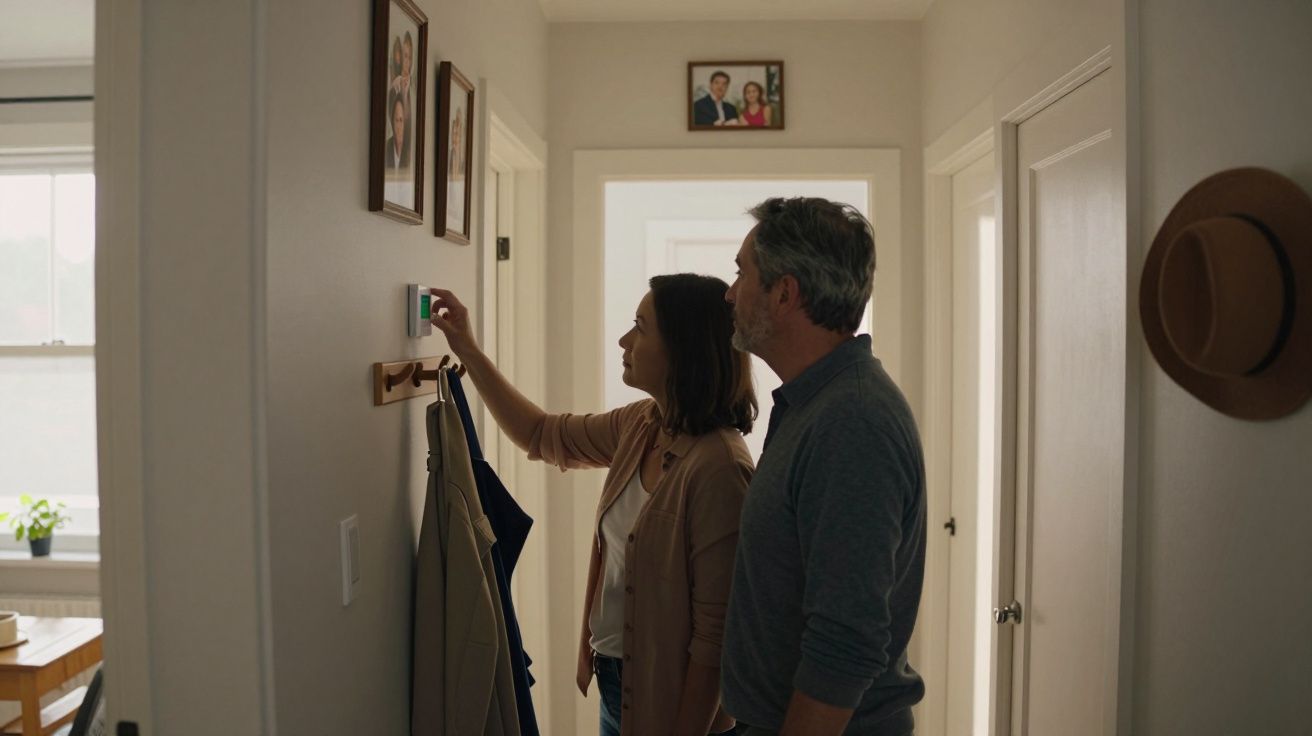
In countless British semis, the routine is the same. The thermostat sits in the hall, the boiler whirs into life, and the standing instruction is: “Leave all the radiators on, keep the whole house at 20.” It feels sensible, tidy, even a bit grown‑up – one number, one setting, no arguments.
Yet when heating engineers step into these homes, they often see something else: spare rooms that sit empty yet stay toasty, bedrooms overheated at night, and a boiler dutifully burning gas to maintain comfort where nobody needs it. The “all rooms the same temperature” rule was built for old‑fashioned systems and cheap fuel. Neither applies any more.
The quiet shift in the trade is towards simple zoning: letting different parts of the house run at different temperatures and times, without making the system complicated to live with.
The surprise for many owners of semi‑detached homes is that they already have most of what they need. With a few small tweaks to how you use valves and controls – and, in some cases, one extra device – you can stop heating every room the same and cut your gas use by a meaningful chunk.
Why the one‑temperature rule became standard in the first place
Decades ago, heating systems in UK houses were cruder. Many had no thermostats on radiators, basic timers, and boilers that simply switched on and off. Engineers, quite reasonably, advised people to “set a comfortable temperature and heat the whole house”, because:
- It reduced the risk of condensation and damp in little‑used rooms.
- It avoided constant fiddling with manual valves.
- It kept old boilers within a predictable operating pattern.
Fuel was cheaper, loft insulation was thinner, and a semi‑detached home might leak heat so quickly that big temperature differences between rooms were hard to maintain anyway. Uniform heat felt like the least bad compromise.
What has changed is not just prices. Modern semis, even 1980s and 1990s ones that have been modestly upgraded, hold heat better. Most radiators now have thermostatic radiator valves (TRVs). Boilers modulate their output instead of simply slamming on and off. The hardware quietly moved on, but the “same temperature everywhere” habit lingered.
What engineers recommend instead: zones by use, not by guesswork
Ask a heating engineer how they’d run a typical three‑bed semi, and few will say “20°C in every room, all day”. Instead, they talk about zones: groups of rooms that behave differently and can reasonably sit at different temperatures.
Common patterns look like this:
- Day zone: lounge, kitchen‑diner, home office. Warm when you are awake and around.
- Night zone: bedrooms, landing, bathroom. Comfortable in the evening and early morning, cooler in the day.
- Background zone: hallways, utility, rarely used spare room. Kept above about 15–16°C to avoid damp and draughts, but not fully heated.
“You are paying to hold a temperature,” as one engineer puts it. “So hold it where people actually are.”
The key shift is psychological as much as technical. Instead of seeing the house as one uniform bubble of air, you start treating it as a set of spaces with different jobs. You stop chasing a perfectly even number on a hallway thermostat and aim for comfort where it matters, backed by a safe, cool baseline elsewhere.
The simple zoning tweak most semis can add
In many semi‑detached homes, you do not need to rip out pipework or fit an expensive smart system to get basic zoning. Three pieces usually do most of the work:
- A room thermostat and programmer (often already there by the front door or in the lounge).
- TRVs on most radiators.
- Doors that you actually use.
Here is how heating engineers suggest turning that into a simple two‑ or three‑zone set‑up.
1. Decide what belongs in each zone
Take fifteen minutes and walk the house:
- Day zone: rooms used most when people are awake (typically lounge and kitchen).
- Night zone: bedrooms and the main bathroom.
- Background zone: hall, landings, box room, utility, dining room you only use on Sundays.
You are not changing the pipework – you are grouping rooms in your mind, ready to set different targets for each.
2. Set different temperatures with the TRVs
Use the numbers on your radiator valves as rough guides. They are not exact degrees, but the principle holds:
- Day zone: set TRVs around 3–4 (often about 19–21°C).
- Night zone: set TRVs a notch lower, say 2–3 (roughly 17–19°C).
- Background zone: set TRVs to 1–2 (around 15–17°C), not off.
Then:
- Keep internal doors mostly closed between zones to help them behave differently.
- Leave the door open between rooms that belong to the same zone (e.g. lounge–diner).
3. Use your existing programmer more boldly
Many programmers in semis are set to “on” from early morning until late evening, just in case. Engineers suggest tighter schedules:
- Weekdays:
- Morning heat on: ~6:00–8:30
- Evening heat on: ~16:30–22:00
- Morning heat on: ~6:00–8:30
- Weekends: adjust later or longer only if you are at home more.
Because cooler rooms build up less heat, the boiler runs for shorter bursts and modulates to lower outputs. You may not notice much difference in comfort, only in how often the boiler fires and in your gas use.
The hidden win is not just lower peak temperatures; it is reducing the number of hours your boiler works hard to maintain them.
If you want to go one step further, many semis can add a simple wireless room thermostat for the main living area for under £150 installed. That puts the main control in the room you most care about, not in a chilly hallway.
How much can zoning actually save?
Engineers are careful with promises, but the numbers are not imaginary. In a typical gas‑heated semi:
- Space heating often accounts for over half of the yearly energy bill.
- Dropping the average indoor temperature by just 1°C can save around 8–10% on heating energy.
- Avoiding full heat in little‑used rooms can reduce gas use by 10–20%, depending on how you live.
For a semi‑detached home spending £1,000–£1,500 a year on gas, a well‑set‑up zoning approach can realistically trim £150–£300 from annual costs, more if you previously overheated the whole house without thinking.
A few common tweaks, with ballpark figures, look like this:
| Tweak | Typical upfront cost | Potential annual saving* |
|---|---|---|
| Using existing TRVs to create zones | £0 | £50–£150 |
| Adding a simple wireless room stat in lounge | £80–£150 | £50–£100 |
| Upgrading to smart TRVs in key rooms | £150–£350 (selective) | £80–£200 |
*Indicative figures for a gas‑heated semi; actual savings vary with tariffs, house fabric and habits.
The point is less about hitting a specific number and more about stopping obvious waste. You would not leave every light on all day in every room. Heat is simply harder to see.
A quick set‑up guide for a typical three‑bed semi
If you want a practical checklist rather than theory, engineers often suggest this order.
Step 1: Check what you already have
- Find your room thermostat. Note the current setting.
- Open and look at each radiator valve. Are they TRVs with numbers or simple on/off wheels?
- Look at the programmer by the boiler or fuse board. Note existing on/off times.
If you do not have TRVs at all, fitting them on the main radiators is often one of the best value upgrades a heating engineer can do.
Step 2: Choose temperatures by zone
As a starting point:
- Main living room: 19–21°C
- Kitchen/diner and home office: 18–20°C
- Bedrooms: 17–19°C
- Hall, landings, spare room: 15–17°C
Set the room thermostat in the main living area to around 19–20°C. Then adjust TRVs in other rooms relative to that.
Step 3: Tighten the time schedule
- Shorten heating “on” periods to the times someone is usually at home and awake.
- Avoid “constant” mode except in rare cases (very draughty houses or vulnerable occupants).
- On very cold days, extend the on‑times slightly before turning the thermostat up.
Step 4: Live with it for a week and tweak
- If a background room feels too cold or shows condensation, nudge its TRV up half a notch.
- If a bedroom feels stuffy, nudge its TRV down and see how it feels the next night.
- Listen for how often the boiler fires. In a well‑tuned system, you should notice longer pauses.
Zoning is not a one‑evening job; it is a small experiment over a couple of weeks. Once set, you rarely need to touch it again.
Common worries engineers hear – and what they say back
FAQ:
- Will colder rooms make the boiler work harder and cancel the savings?
No. The boiler works hardest to raise temperatures and to hold higher temperatures against heat loss. Cooler rooms lose less heat, so the system as a whole does less work, not more.- Is it safe for damp to let some rooms be much cooler?
The key is “cool, not unused fridge”. Keep even little‑used rooms around 15–16°C and let some air circulate. That is usually enough to avoid condensation in a reasonably maintained semi.- Do I need an expensive smart system for zoning to work?
Not necessarily. Smart controls can make zoning easier to fine‑tune, but the basic savings come from simple TRVs, sensible door use and a realistic time schedule.- What about the party wall with next door in a semi?
The shared wall usually loses less heat than external walls, so zoning still works. You are mainly managing heat loss to the outside, not to your neighbour.- Is turning radiators off in unused rooms a good idea?
Turning them down is usually better than off. A background level of heat protects the fabric of the building and avoids very cold corners where mould can start.
What to change this week
You do not need to rebuild your heating system to leave the old one‑temperature rule behind. Over the next few days you could:
- Walk room by room and assign each space to a day, night or background zone.
- Adjust the TRVs so those zones sit at different rough temperatures.
- Shorten the heating times on your programmer to match when you are actually home.
- Consider asking an engineer about a better‑placed room thermostat in your main living space.
The physics is simple: you pay for every degree of warmth, and you pay for every hour you hold it. Once you stop keeping empty rooms as warm as lived‑in ones, a semi‑detached home starts to behave very differently – and so does your bill.






Comments
No comments yet. Be the first to comment!
Leave a Comment