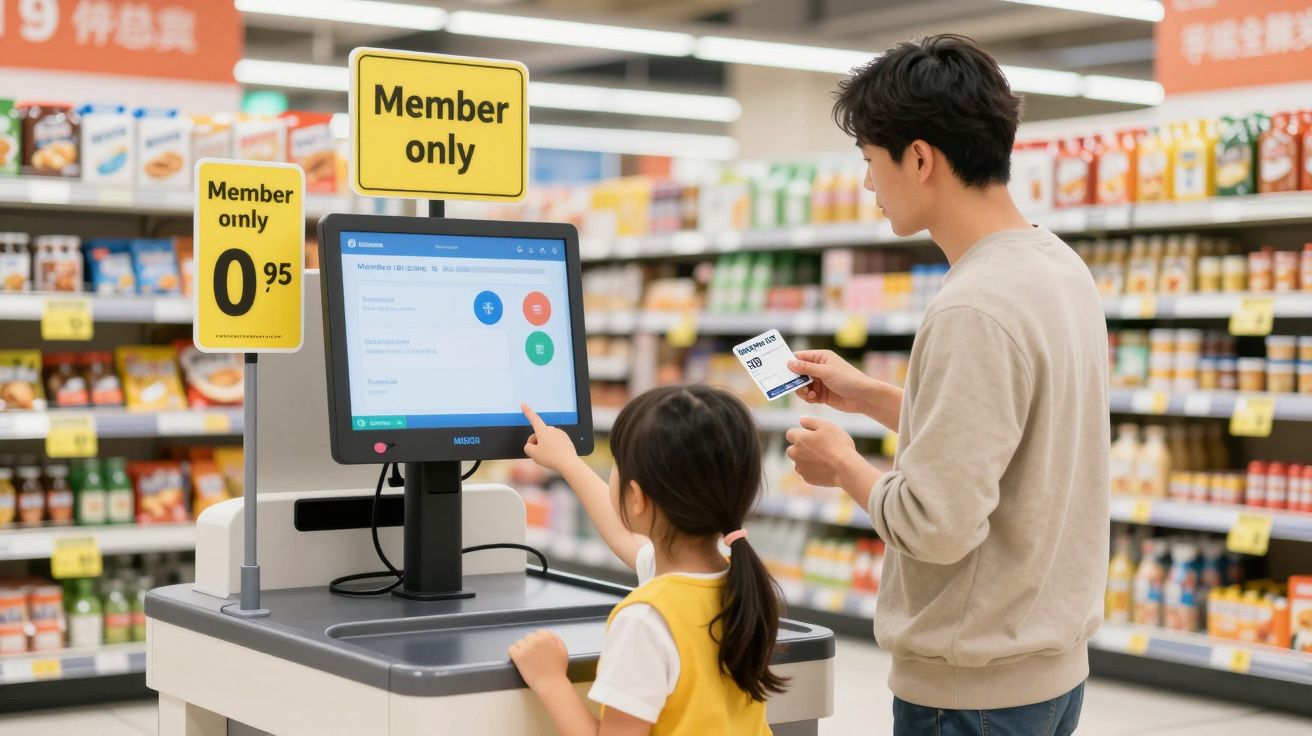
The yellow tags blur after a while. “Club price”, “Member only”, “With card” – tiny qualifiers in the corner of big numbers that promise you are one tap away from a bargain. At the self‑checkout, a child asks why the cereal is “£4 on the screen but £2.50 on the sign”. You scan the loyalty card and watch the total jump down, one beep at a time, as if you have just won something instead of finally paying the price you saw on the shelf.
On the way home, the receipt tells a more complicated story: “You saved £8.73 today.” It does not say you bought the branded sauce because it had a loyalty price, skipped the cheaper own‑label, and picked up an extra pudding “while it’s on offer”. A new study of supermarket loyalty pricing suggests this gap between what we feel and what we actually save is widening. Some shoppers are genuinely shaving hundreds off a year. Others, it turns out, are quietly paying more so those yellow tags can exist at all.
There has to be a clearer way to see who is really winning here. It is, predictably, hiding in the fine print.
Why “loyalty prices” feel like free money
Loyalty prices are designed to trigger one powerful emotion: fear of missing out. The full price anchors your brain – £3.50 for coffee – and the member price suddenly looks like a win, even if that lower number is close to what the standard price used to be.
Supermarkets layer the effect. You swipe a card, open an app, or type in a phone number and watch numbers fall. The saving feels like a reward for belonging, not a discount for handing over data. That’s the quiet trade: your shopping habits, your household make‑up, your regular pay‑day splurges – all swapped for access to the “real” price.
“The psychology isn’t subtle,” says one pricing analyst quoted in the study. “The ‘non‑member’ price sets up a loss. The loyalty price steps in as the rescue.”
And it works. Membership numbers are at record highs, and for good reason: when used deliberately, loyalty prices can blunt some of the sting of food inflation. The problem is that they don’t work like that for everyone.
What the new study actually looked at
The new research tracked supermarket prices and anonymised basket data over a year across major UK chains. Instead of just asking what a ready meal costs, it compared three numbers side by side:
- The standard shelf price without a loyalty card.
- The member‑only price displayed to cardholders.
- The cheapest comparable alternative in the same store, including own‑label.
It then grouped shoppers by behaviour rather than income or postcode. Three patterns emerged:
- “Power users” who plan their shops around loyalty offers, use apps, and are happy to switch brands.
- “Casual joiners” who scan a card when they remember, but rarely change what they buy.
- “Non‑participants” who do not, or cannot, sign up at all.
Across the year, power users did well, often saving the equivalent of several weeks’ worth of groceries. Casual joiners saved far less, and sometimes spent more overall because loyalty prices nudged them into premium brands and multi‑buys. Non‑participants mostly saw one thing: higher shelf prices and fewer conventional offers than a decade ago.
Who really saves – and who quietly pays more
The study paints a split system: one where some shoppers play the game and others fund the prize pot.
The likely winners
People who tend to benefit from loyalty pricing share a few traits:
- They shop regularly in the same place. Points and personalised deals stack up only when you give a scheme time to “learn” you.
- They are flexible on brands. If pasta, beans or yoghurt are all fair game, you can chase the best loyalty price within a category.
- They like (or at least tolerate) apps. Digital vouchers, weekly boosts and personalised price cuts usually live on screens first.
- They buy a lot of “middle aisle” items. Cleaning products, toiletries and snacks often carry the fattest nominal discounts.
For these households, loyalty cards act like a private sale. Their real bill is lower than the list price suggests, especially on bigger, planned shops.
The people paying more
Others are propping up the system, often without realising.
- Non‑members. Anyone wary of data‑sharing, lacking ID, or simply short on admin time faces higher headline prices and fewer untagged deals.
- Shoppers locked into small convenience branches. Local Express and Metro‑style stores tend to have higher base prices and thinner loyalty discounts. You get the bright labels, not always the big saving.
- Cash‑only or less digital customers. If you struggle with apps, do not own a smartphone, or share a family phone, you may never see the “personalised” end of the scheme.
- People who are tired or rushed. Under pressure, we reach for whatever is on the end aisle with the biggest sign, not the quiet own‑label a shelf below.
In the data, these groups frequently paid more per unit than power users for the same products over the year, even when they shared a post‑code or income bracket.
The uncomfortable reality is that “loyalty” is less about rewarding your history with a shop and more about how well you fit its preferred customer profile.
The hidden costs: data, complexity and two‑tier pricing
Loyalty pricing does not operate in a vacuum. It shapes the whole shelf.
Once the “member price” becomes the de facto real price, the non‑member price turns into something else: a scarecrow number, there to make the discount look generous and to nudge fence‑sitters into handing over their data. Over time, that makes it harder to see what anything is actually worth.
Consumer groups and regulators such as the Competition and Markets Authority have raised flags about this two‑tier world. Their concern is less that discounts exist, more that:
- Shoppers struggle to compare prices between chains when one relies heavily on loyalty tags and another does not.
- Non‑members, including some of the most vulnerable, can be left with systematically higher bills.
- Data gathered in the name of “personalised savings” can feed back into finely tuned price discrimination.
For individual households, the privacy question is easy to ignore when money is tight. But the study notes that the value of your data often outweighs modest annual savings for casual users. You might be trading away detailed insight into your life for what amounts to a couple of takeaways a year.
How to make loyalty schemes work for you (without losing your weekend)
None of this means you should bin your cards on principle. It does mean using them on your terms, not the supermarket’s.
Start with a simple filter: if a loyalty programme saves you less than you could gain by switching one or two regular items to a cheaper brand, it is not worth rearranging your week for. The aim is not to win the game, just to stop losing by default.
Practical steps that help:
- Pick one main supermarket, if you can. Concentrating most of your big shops in one chain makes points, vouchers and personalised deals tangible.
- Treat the loyalty price as the “real” price – then compare. Ignore the scary non‑member number and ask: is this still cheaper than own‑label, another brand, or a rival supermarket down the road?
- Beware of “was/now” traps. “Was £4, now £2 with card” is meaningless if that item has been £2.50 for most of the year. Price‑per‑100g on the shelf label is your friend.
- Use deals on staples, not treats. Base your loyalty hunting around things you would buy anyway – rice, oil, loo roll – not impulse desserts or snacks.
- If apps are a barrier, ask for alternatives. Many supermarkets still offer physical cards, paper coupons at the till or vouchers by post if you register once.
For those stretched thin, the study found that one small habit made the biggest difference: planning just one shop a week. Shoppers who picked a main day, checked the core offers on essentials, and stuck mostly to a written list captured most of the savings power users enjoyed, without living in their supermarket’s app.
A small card, a big shift
Loyalty pricing is not going away. It solves problems for supermarkets – richer data, sharper marketing, less blunt discounting – that they are not about to give up. For some households, that is fine: they save money, accept the trade‑off and carry on.
But the new research underlines a quiet flip in who carries the weight. The full price on the shelf used to be the honest starting point, with offers sprinkled on top. Now, the real price has slid behind a sign‑up wall, and anyone unwilling or unable to follow pays extra so others can “save”.
The best loyalty scheme is the one you understand clearly. If a card or app makes you hesitate, second‑guess or overspend, it is not helping. Share what you learn with a neighbour who never got round to signing up, or with a relative who finds apps daunting. A little clarity goes further than the flashiest yellow tag.
| Point clé | Détail | Intérêt pour le lecteur |
|---|---|---|
| Two‑tier pricing | Loyalty prices now act as the “real” price, leaving non‑members facing higher shelf prices | Helps you see when a discount is genuine and when it is just access to a hidden baseline |
| Who wins, who loses | Savvy, app‑using “power shoppers” gain most, while non‑members and rushed shoppers often overpay | Shows which habits help or hurt your budget under loyalty pricing |
| Smarter use | Focus on one scheme, staple items and price‑per‑unit, not headline “was/now” claims | Offers concrete ways to benefit without turning shopping into a part‑time job |
FAQ:
- Do loyalty cards always save you money? Not automatically. Heavy users who plan around offers tend to save, but casual users may spend more if loyalty prices lure them into pricier brands or extras they would not normally buy.
- Is it worth joining if I only shop occasionally? If you do a few decent‑sized shops a year at the same chain, signing up is usually worthwhile, especially for fuel or bulk items. For tiny, infrequent baskets, the admin and data trade‑off may outweigh the gain.
- What if I do not want to share my data? You can opt out entirely and focus on own‑label, discount chains and simple price‑per‑unit comparisons. You may pay more on certain items, but you keep your data and can still build a low‑cost basket.
- Are supermarkets allowed to charge non‑members more? Yes, as long as prices and conditions are clear. Regulators are watching to ensure loyalty pricing does not mislead shoppers or hide the true cost of goods.
- How can I protect older or less tech‑confident relatives? Help them register once for a physical card, show them where to find the price‑per‑unit labels, and encourage them to stick to a short list of staples on offer rather than chasing every flashed‑up deal.






Comments
No comments yet. Be the first to comment!
Leave a Comment