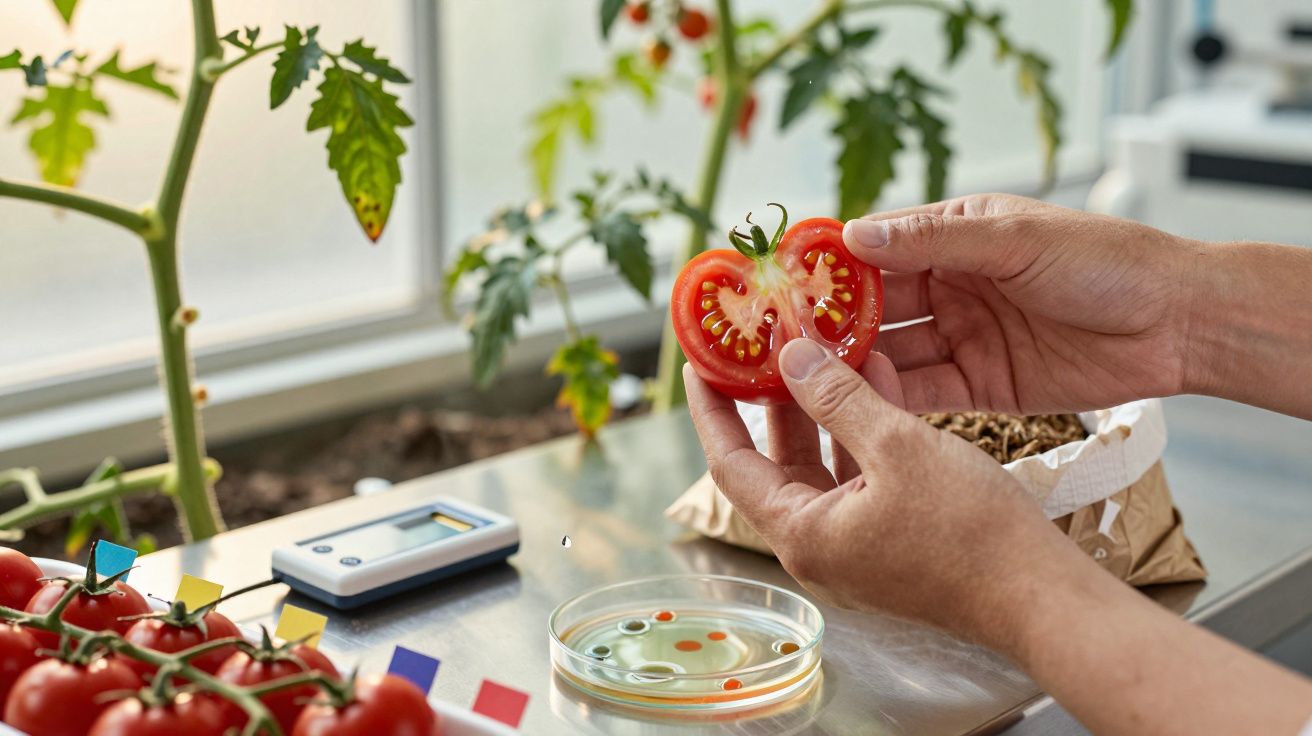
On a Tuesday night, tomatoes end up everywhere: simmered into pasta sauce, sliced into sandwiches, blitzed into soup, or eaten raw with a pinch of salt. Researchers are asking new questions about tomatoes - and, with no single secondary entity in the frame, they’re looking at the whole system instead: flavour, genetics, farming inputs, shelf life and waste. It matters because the tomato is both a daily staple and a stress-test crop for a warmer, more expensive, more data-driven food chain.
For years the story was simple: breed for yield, ship well, look perfect under supermarket lights. Now the questions are getting sharper, and the answers are starting to affect what growers plant, what retailers stock, and what ends up tasting like summer.
The tomato problem nobody wants to admit: flavour got engineered out
If you’ve ever bitten into a glossy winter tomato and felt… nothing, you’re not imagining it. One strand of research is revisiting how modern breeding prioritised firmness, uniform ripening and long-distance transport, and what that did to aroma compounds and sugars.
The shift isn’t about nostalgia for knobbly heirlooms. It’s about a measurable trade-off: varieties that travel and stack neatly often produce fewer of the volatile compounds that make tomatoes smell like tomatoes.
The new goal in breeding programmes isn’t just “will it survive the lorry?” It’s “will it taste of anything when it arrives?”
Researchers are now mapping which genes and growing conditions influence:
- sweetness (sugar accumulation and dilution through water)
- acidity (the “lift” that stops tomatoes tasting flat)
- aroma volatiles (the compounds that read as grassy, fruity, or savoury)
- texture (skin thickness, mealiness, and the gel around seeds)
The uncomfortable implication is that flavour isn’t a single dial you can turn back up. It’s a bundle of traits that interact with each other - and with how the tomato is grown and stored.
Climate stress is forcing a rethink of what a “good” tomato is
The second big shift is climate. Tomatoes are famously adaptable, yet they’re also picky: heatwaves can disrupt pollination, drought can stunt growth, and sudden heavy rain can split skins right before harvest.
Instead of only asking “how do we maximise tonnes per hectare?”, researchers are asking more practical questions:
- Which varieties hold yield under heat stress without becoming bland?
- Can plants maintain fruit quality with less water or lower fertiliser input?
- What happens to disease pressure when seasons get warmer and longer?
This is where older wild relatives of tomatoes - and unfashionable landraces - come back into the conversation. They may not look supermarket-perfect, but they can carry traits for resilience that modern lines lost.
The new breeding brief: resilient, not just productive
In real terms, “resilient” can mean tolerating:
- higher night-time temperatures (which affect sugar formation)
- salty irrigation water in coastal and drought-prone regions
- new pest ranges moving north
- unpredictable sunlight patterns in protected growing systems
Researchers are also paying attention to how resilience is measured. A plant that survives heat but produces watery fruit doesn’t solve the problem; it simply moves it to the kitchen.
The microbiome question: what lives on a tomato, and does it matter?
One of the newer angles is microbial. Not just pathogens and food safety, but the broader “microbiome” living on leaves, roots and fruit surfaces - and how it affects plant health and, potentially, flavour and shelf life.
This is still emerging science, but the direction is clear: instead of treating the farm like a sterile factory floor, researchers are asking whether managing beneficial microbes could reduce disease and cut chemical inputs.
There’s a tension here. The public hears “microbes” and thinks “risk”. Scientists hear “microbes” and think “ecosystem” - something that can be nudged to protect plants, improve nutrient uptake, and reduce waste.
Post-harvest science is getting less romantic, and more useful
A huge amount of tomato quality is decided after the fruit is picked. That’s not just about “vine-ripened” labels; it’s about temperature, handling and timing.
Chilling injury remains a big topic. Domestic fridges are often too cold for tomatoes, muting aroma and altering texture. But retailers also rely on cold chains to slow spoilage and prevent shrink (waste and theft).
So researchers are asking awkward, practical questions:
- What is the best compromise temperature range for flavour and shelf life?
- Can packaging reduce bruising without trapping moisture and mould?
- Which varieties tolerate storage without turning mealy?
In parallel, there’s increasing interest in “dynamic quality” systems - using sensors and data to route tomatoes differently depending on ripeness. The best fruit goes to fresh eating; softer lots go quickly to sauces, soups, or ready meals before they tip into waste.
The processing renaissance: tomatoes aren’t just “fresh” or “tinned”
The tomato is one of the world’s most processed crops, and research is starting to treat that as a strength rather than a downgrade.
Processing questions now include:
- How to preserve more flavour volatiles during heating
- How to reduce energy use in concentrating and canning
- How to use skins and seeds (often waste streams) for fibre, oils, or pigments
This matters in the UK because processed tomatoes underpin cheap, reliable meals. When fresh prices spike, the kitchen falls back on tins, passata and purée. Improving processed quality - and reducing its footprint - is a direct cost-of-living issue, not a foodie side quest.
Pesticides, residues and the “trust gap” in everyday produce
Another reason tomatoes attract research attention is that they sit at the intersection of public concern and high-volume production. People want affordable tomatoes, but they also want reassurance about residues, labour conditions and environmental impact.
Instead of simply testing “is it within limits?”, researchers and regulators increasingly look at:
- cumulative exposure across multiple foods
- integrated pest management to reduce spray reliance
- resistant varieties that need fewer interventions
- greenhouse biological controls (predatory insects, targeted approaches)
The challenge is communication. “Safe within regulations” is not the same as “feels trustworthy”, and tomatoes are visible enough - in salads, lunchboxes, and children’s meals - that the gap matters.
What might change for shoppers in the next few years
Most people won’t read a paper about tomato volatiles. They’ll notice outcomes: price, taste, and whether the tomatoes they buy actually get eaten rather than binned.
If current research directions hold, expect more of these shifts:
- More variety names on packs, not just “salad tomatoes”, as flavour becomes a selling point again
- Seasonal honesty, with retailers leaning harder on British greenhouse crops at certain times and signalling when imports are doing the heavy lifting
- More “best use” routing, where slightly soft tomatoes are marketed for cooking rather than quietly wasted
- Breeding claims you can understand, like “better flavour in winter light” or “grown with less water”, instead of vague marketing language
A quick cheat sheet: why your tomatoes keep disappointing you
| Problem you notice | Likely cause | What researchers are targeting |
|---|---|---|
| Watery, bland taste | variety + high water + early picking | flavour genes, water management |
| Mealy texture | cold storage + bruising | post-harvest handling, tolerant varieties |
| Short shelf life | ripeness mismatch + damage | smarter routing, packaging, sensors |
The bigger question underneath it all
The new tomato research isn’t really about making a perfect fruit. It’s about designing a tomato system that can survive pressure: hotter seasons, tighter margins, higher energy costs, and consumers who are tired of paying more for less taste.
The interesting part is that the solutions don’t live in one place. Some are genetic. Some are agronomic. Some are about logistics and storage. And some are simply about admitting that “long life” and “good flavour” have been treated like enemies for too long.
FAQ:
- Should I keep tomatoes in the fridge? Usually no: cold temperatures can dull aroma and worsen texture. Keep them at room temperature and eat sooner; chill only if they’re very ripe and you need to slow them down for a day.
- Are “vine” tomatoes actually better? Sometimes, but the label isn’t a guarantee. Variety and handling matter more than whether a tomato arrived on a truss.
- Why do winter tomatoes taste worse? Lower light levels, long transport times, and varieties chosen for durability all play a part. Research is trying to improve flavour under low-light growing and long supply chains.




Comments
No comments yet. Be the first to comment!
Leave a Comment