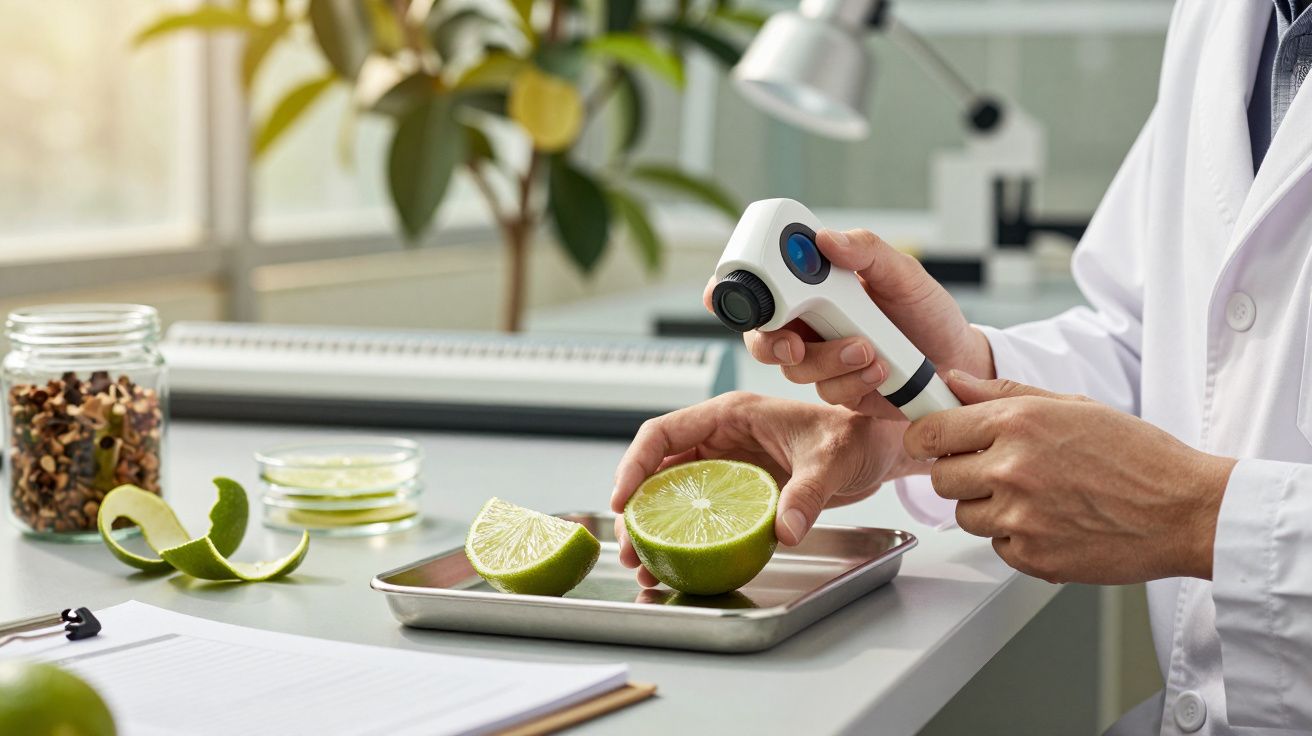
Limes sit in your kitchen as quietly as any other citrus, yet they shape everything from a gin and tonic to a Thai curry, and even the oddly named `` variable that keeps popping up in lab notes and grant applications. Researchers are asking new questions about limes because the fruit is becoming harder to grow, less predictable to flavour, and more valuable to waste less of. What looks like a simple wedge is turning into a case study in climate stress, food chemistry and supply-chain fragility.
A decade ago, most of us only noticed limes when they were missing from the supermarket, or when they arrived rock-hard and pale. Now scientists are treating those moments as data: signals that the fruit’s biology and the systems around it are changing faster than our assumptions.
The lime problem: flavour that won’t sit still
Ask a bartender what a lime should taste like and you’ll get confident answers: bright, sharp, aromatic. Ask a food scientist to define “lime flavour” and they’ll start listing dozens of volatile compounds, harvest timings and storage conditions that push the profile around.
One of the newer research angles is simple to state and hard to solve: why do two limes that look identical deliver such different juice?
Researchers are now mapping lime flavour as a moving target shaped by heat, water stress, sunlight and post-harvest handling. In practical terms, that means the same recipe can drift from perfect to flat depending on a fruit’s journey from orchard to fridge.
“Acidity is only the start,” one citrus chemist told a conference audience recently. “A lime’s aroma can do half the work your tongue thinks is ‘sour’.”
Measuring what your palate notices first
Modern studies focus on a few repeatable markers:
- Titratable acidity (how much acid is actually there, not just how sour it tastes)
- Brix (sugars and dissolved solids)
- Volatile aromatics (the compounds that give zest its punch)
- Bitter compounds that creep in with age or bruising
The emerging point is uncomfortable for anyone who wants consistency: storage and transport can reshape a lime almost as much as growing conditions do.
The climate question: can limes cope with hotter, messier seasons?
Limes have always been a warm-climate crop, but “warm” is no longer the same thing as “stable”. Heat spikes, irregular rainfall and shifting pest pressures can change fruit size, peel thickness and juice yield, sometimes within a single season.
This is why plant scientists are borrowing tools from broader climate-resilience research: stress physiology, predictive modelling, and breeding strategies that look beyond yield to quality traits.
The questions sound niche until you attach them to everyday outcomes. A thinner peel can mean less zest for cooking, but also more damage in transit. A stressed tree may set fruit unevenly, which complicates harvesting and pushes waste up the chain.
The new focus: resilience and flavour
For years, breeding programmes leaned heavily towards productivity and disease tolerance. Now teams are trying to keep the sensory side from collapsing under the weight of survival traits.
That balancing act shows up in the lab as trade-offs:
- Selecting for hardier trees can alter oil gland density in the peel.
- Water stress can concentrate juice, but may reduce aromatic complexity.
- Faster growth can dilute flavour if harvest timing isn’t recalibrated.
The goal isn’t a “super lime”. It’s a lime that tastes like a lime even when the weather doesn’t behave.
Disease pressure: the shadow hanging over citrus
Any conversation about citrus research eventually runs into disease, especially as global trade and warmer temperatures help pests spread. For limes, researchers are tracking how disease and pest management affects not just yield but chemistry: the compounds that make the fruit useful in food and drink.
What’s changing is the framing. Instead of treating quality as a luxury, scientists are treating it as part of resilience. A lime that survives but tastes dull still fails in the market, which sends growers chasing inputs, retailers rejecting batches, and consumers wondering why the bag is so expensive.
In citrus, “healthy” is increasingly being defined as “able to ship, sell, and still taste right”.
Waste, peel and the “whole lime” mindset
Another new question sounds almost domestic: why do we throw so much of the lime away?
Food scientists and sustainability teams are studying the peel as an ingredient rather than a by-product. Lime zest and peel oils are already prized, but research now targets scalable ways to use peel in:
- Natural flavouring extracts
- Bakery and confectionery inclusions
- Preservative-like applications (because some citrus compounds inhibit microbes)
- Upcycled fibres for food textures
This isn’t just eco-virtue. If processors can monetise peel, it can soften the economic shock of volatile harvests and reduce pressure to squeeze every last penny from juice yield alone.
What researchers actually do with discarded peel
A common line of work is extraction and profiling: how to pull oils and functional compounds out efficiently, without harsh solvents, and without destroying the “fresh” character people expect.
Here’s the kind of measurement set that keeps showing up across studies:
| What’s measured | Why it matters | Where it shows up |
|---|---|---|
| Peel oil composition | Aroma strength and “lime-ness” | Drinks, desserts, perfumery |
| Antioxidant activity | Stability and potential health claims | Supplements, functional foods |
| Microbial effects | Shelf-life and safety | Ready-to-eat foods |
From kitchen to clinic: nutrition questions that aren’t just about vitamin C
Limes are often reduced to vitamin C in popular advice, but nutrition researchers are asking subtler questions: how do lime compounds interact with other foods, and what survives typical cooking and storage?
A squeeze of lime is rarely consumed as “lime”; it’s consumed with fish, beans, rice, salt, chilli, sugar, alcohol. That context matters, because acidity changes how we perceive saltiness, how proteins denature, and how some nutrients are absorbed or degraded.
Researchers are investigating:
- How lime juice affects iron absorption in plant-based meals
- Whether certain compounds in lime peel have measurable anti-inflammatory effects in realistic dietary amounts
- What happens to key aromatics after refrigeration, freezing, or pasteurisation
The answers are usually less dramatic than the headlines, but more useful: small, practical changes to how limes are stored and used can preserve flavour and reduce waste.
The supply chain is part of the experiment now
One reason limes are under the microscope is that the journey from farm to shopper has become more complex. Longer transport routes, tighter margins, and greater demand for “always available” produce mean the fruit is handled more, chilled more, and sometimes picked earlier.
Scientists are collaborating with growers and retailers to test interventions that look boring but matter:
- Different wax coatings to slow moisture loss
- Packaging that reduces bruising without trapping humidity
- Storage temperatures that preserve aromatics, not just appearance
- Sorting systems that detect internal dryness before the consumer does
The surprising shift is cultural: quality is being treated less as a judgement at the end, and more as a design problem at every step.
What this means for how you buy and use limes
You don’t need a lab to benefit from the research direction. The practical thread running through it all is freshness, handling, and using more of the fruit.
A few habits line up neatly with what the science keeps highlighting:
- Choose limes that feel heavy for their size (often a proxy for juice content).
- Store limes cool, but not forgotten; longer storage usually flattens aroma first.
- Zest before you juice if you want maximum fragrance.
- Freeze zest or juice in small portions if you’re wasting halves.
None of this fixes climate stress or disease pressure. But it does mean fewer disappointing wedges and fewer limes binned because they dried out before you remembered they existed.
FAQ:
- Can limes really taste different week to week? Yes. Growing conditions, harvest timing and storage can shift acidity and aroma compounds, so “lime flavour” isn’t fixed.
- Is the zest more important than the juice? For aroma, often yes. Many of the signature “lime” notes live in peel oils, while juice delivers most of the acidity.
- Should I keep limes in the fridge? If you’ll use them soon, room temperature can keep aroma lively; for longer storage, refrigeration slows drying, though flavour can still fade over time.
- Are researchers trying to breed new varieties? In many programmes, yes-often aiming for resilience to stress and disease while protecting flavour and peel-oil quality.
- Is using the whole lime actually realistic? It can be. Zest, peel infusions and upcycled peel products are areas of active work because they reduce waste and add value beyond juice.



Comments
No comments yet. Be the first to comment!
Leave a Comment