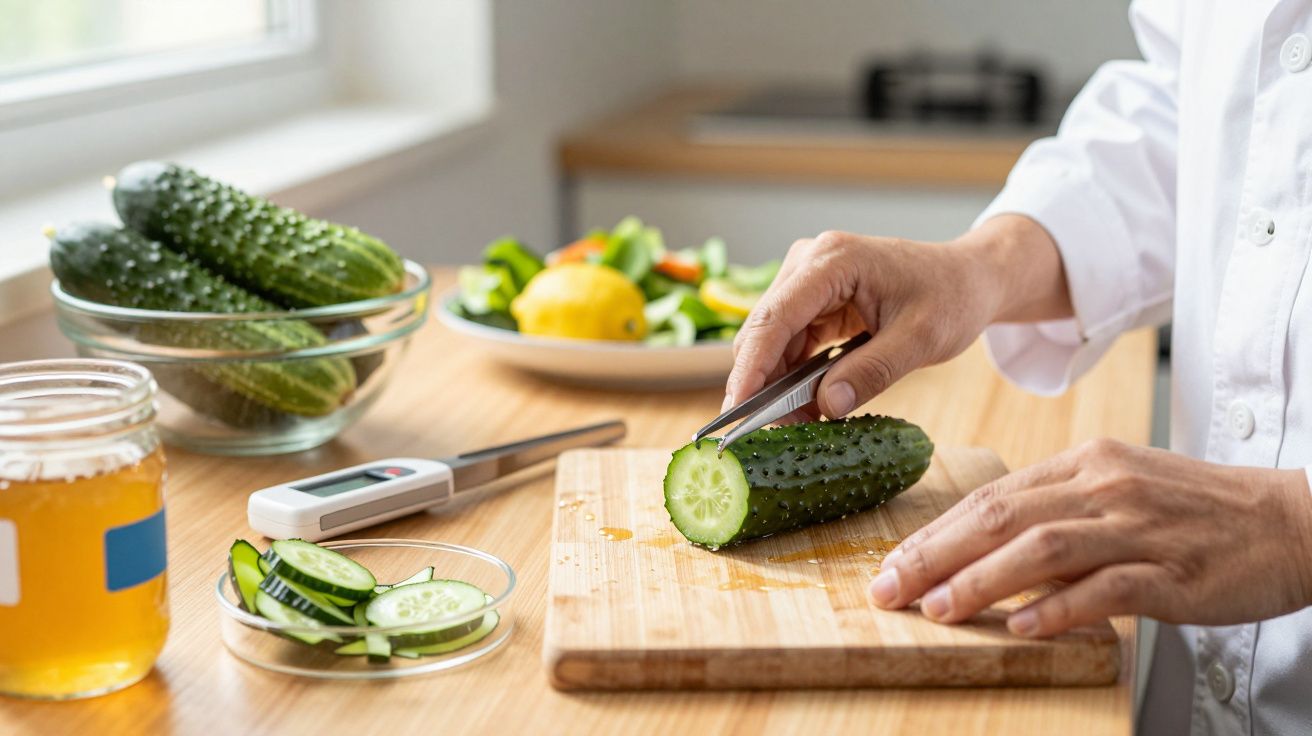
Cucumbers sit in the salad drawer like background noise: sliced into sandwiches, grated into yoghurt, dropped into water jugs to make them feel “spa”. Yet researchers are asking new questions about cucumbers, and no single secondary entity, because this everyday fruit turns out to be a neat test case for hydration, plant defences, gut microbes and food waste.
The surprising bit is not that cucumbers are healthy in a vague way. It’s that small details-skin on or off, seed maturity, storage temperature, even how bitter one bite tastes-can change what you get from them, and how long they last.
Why scientists are looking at cucumbers again
Cucumbers are mostly water, which once made them easy to dismiss as “crunch with nothing behind it”. But that simplicity is exactly why labs like them: fewer moving parts, clearer signals, and a crop grown at scale in greenhouses and fields.
Pressure is coming from several directions at once. Heatwaves stress plants, shoppers want fresher produce with fewer preservatives, and growers need varieties that travel well without sacrificing flavour.
Cucumbers are becoming a quiet stand‑in for a bigger question: can we breed and handle fresh produce for taste, resilience and nutrition at the same time?
The questions driving current cucumber research
1) What is bitterness really telling you?
That occasional harsh bite is usually linked to cucurbitacins-natural compounds plants use to deter pests. Plant scientists are mapping which genes and growing conditions make cucurbitacin levels rise, because bitterness is both a flavour issue and a quality‑control flag.
A very bitter cucumber is uncommon in supermarkets, but it can happen, especially with stress (heat, irregular watering) or certain varieties.
Practical upshot for readers: if a cucumber tastes aggressively bitter, don’t force your way through it. The normal “fresh green” taste is what you’re looking for.
2) Does the skin change the nutritional picture?
Nutrition studies keep circling back to the peel because that’s where a lot of fibre and plant compounds sit. Researchers are also interested in the waxy coatings used to reduce moisture loss during transport, and how those coatings affect texture, perceived freshness and even how well a cucumber takes on salt in quick pickles.
If you peel everything by habit, you may be stripping away part of what makes cucumber useful: crunch, fibre, and some of the phytonutrients that tend to cluster near the surface.
3) Can cucumbers help people eat more veg-or is that the wrong question?
Public health researchers sometimes use cucumbers as a “gateway veg”: low bitterness (most of the time), no cooking needed, and socially easy to add to meals. The newer angle is behavioural: do simple, low‑friction foods actually shift diets long term, or do they just decorate plates?
It’s less about cucumbers saving anyone, and more about what they reveal about habit formation: convenience beats good intentions, over and over.
4) What happens to a cucumber after you cut it?
Food safety and shelf‑life research gets practical fast. Once sliced, a cucumber’s wet surfaces become an easier place for microbes to grow, and the texture can slump as water migrates.
That’s why studies keep testing packaging, temperature swings (fridge door vs back of the shelf), and simple handling steps that slow softening without turning cucumbers into plastic‑wrapped artefacts.
What the evidence is pointing towards (in plain terms)
Here’s the direction of travel, without pretending every study agrees perfectly:
| Research angle | What’s being tested | Why it matters at home |
|---|---|---|
| Bitterness & stress | Heat, watering patterns, genetics | Helps you choose and store better cucumbers |
| Peel vs peeled | Fibre/compounds, texture, coatings | Skin on often means more crunch and fibre |
| Fresh-cut storage | Temperature, packaging, moisture control | Sliced cucumbers go limp and spoil faster |
Small choices that make cucumbers work harder for you
This is the unglamorous part researchers and cooks meet in the middle: storage, prep, and pairing.
- Store them cold, but not frozen. Cucumbers hate very low temperatures; if they partially freeze, they go watery and mushy. Keep them in the main fridge area, not pushed against the coldest back panel.
- Keep them dry. Moisture speeds soft spots. If they come wrapped, consider leaving the wrap on until you use them, or store in a breathable bag with kitchen paper.
- Salt with intent. Salting sliced cucumber and letting it drain for 10–15 minutes pulls out water, which is useful for salads that otherwise turn into puddles.
- Pair with fat or protein if you want staying power. Cucumber alone is light; with hummus, eggs, oily fish, yoghurt or cheese, it turns into a snack that actually lasts.
The quiet risks worth knowing about
Cucumbers are low drama, but a few issues come up repeatedly in research and recalls:
- Pre-cut and prepared pots spoil faster. Once cut, keep them refrigerated and treat the use‑by date seriously.
- Very bitter cucumbers aren’t a “taste preference” moment. Strong bitterness can signal higher cucurbitacin levels; best practice is to discard and choose another.
- Wash, even if you peel. Dirt and microbes transfer from the outside to the knife and cutting board.
Where this leaves the average shopper
The new cucumber questions aren’t about turning lunch into a science project. They’re about making a familiar food more reliable: less waste, fewer disappointments, better texture, and a clearer idea of what “fresh” should taste like.
If you want a simple reset, buy two cucumbers, keep one whole and slice the other straight away. You’ll feel the difference in crunch and flavour by day two-and you’ll understand why so much research focuses on what happens after harvest, not just in the field.
FAQ:
- Are cucumbers actually good for you, or just water? They’re mostly water, but they also provide fibre (especially with the skin), small amounts of vitamins, and plant compounds that add up when eaten regularly.
- Should I peel cucumbers? Peel if you dislike the texture or you’re making something delicate, but keeping the skin on usually improves crunch and fibre. Wash well either way.
- Why does my cucumber sometimes taste bitter? Bitterness is often linked to plant stress and naturally occurring cucurbitacins. If it’s mildly bitter, it may just be that end or variety; if it’s strongly bitter, discard it.
- How do I stop cucumber salad going watery? Salt the slices lightly, rest 10–15 minutes, then drain (and pat dry if needed) before dressing. This keeps the crunch and stops the bowl turning into cucumber soup.



Comments
No comments yet. Be the first to comment!
Leave a Comment