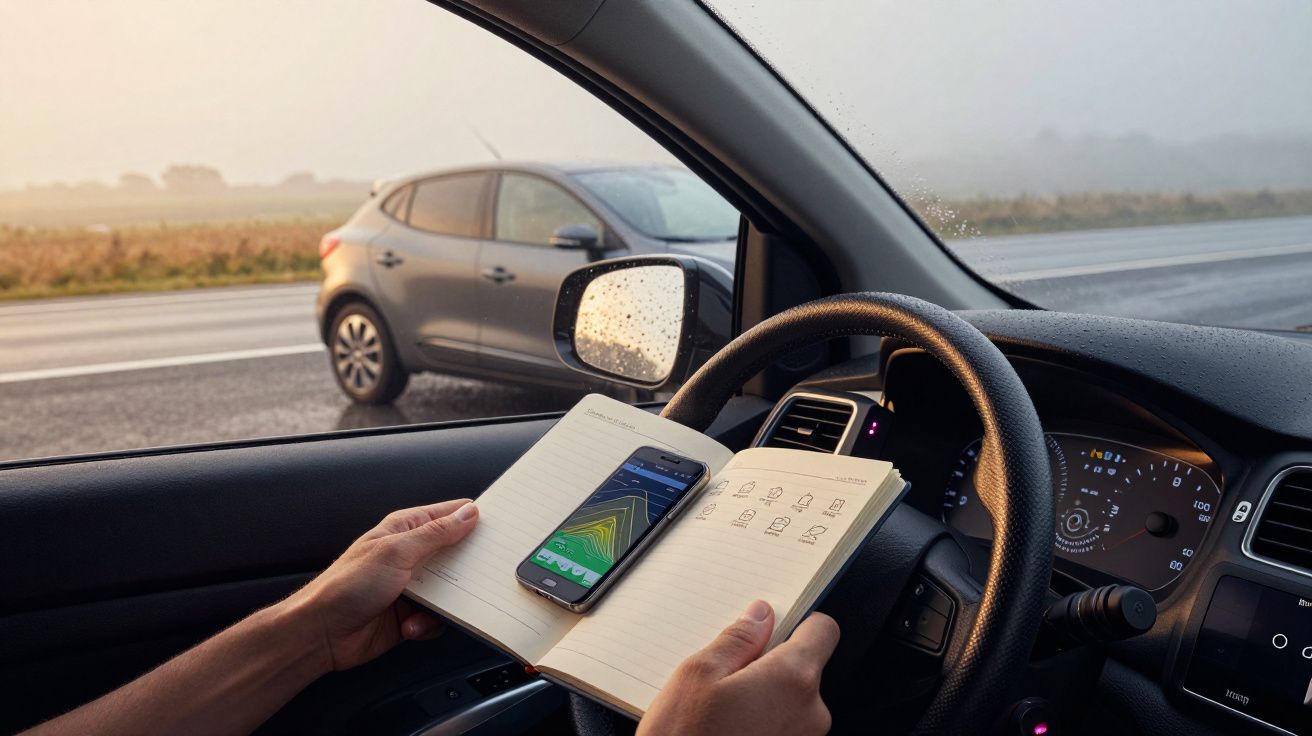
On a mild Tuesday, almost any modern car feels sorted: quiet cabin, light steering, everything where you expect it. Renault often shines in exactly that everyday UK rhythm - the school run, the commute, the supermarket loop - and the relevance is simple: that’s how most of us actually drive. The problem is the `` factor: the conditions you didn’t replicate on a test drive, from cold snaps to motorway slogs to a week of stop-start traffic.
Renault can be a genuinely easy car to live with when your routine stays stable. It’s when the inputs change - temperature, load, driving pattern, battery state, road surface - that the “fine” bits can turn into niggles, warnings, or a sudden drop in comfort and efficiency.
The Renault sweet spot
Renault’s best moments tend to be the boring ones. Around town and on A-roads, the ride is usually compliant, cabins are sensibly laid out, and the cars feel engineered for normal speeds rather than heroics.
In that lane, the value proposition makes sense: decent equipment, good safety tech for the money, and often a pleasant “small car that doesn’t feel cheap” vibe. If you live in a city, do short trips, and want something that’s more grown-up than the cheapest alternatives, Renault can feel like a clever compromise.
But that same “tuned for everyday” character is why the edges show up faster than you’d like when conditions get harsher.
Renault is often at its best when life is predictable - and most frustrating when it isn’t.
The conditions that change everything (fast)
You don’t need extreme scenarios. Small shifts are enough to expose weak spots, especially in newer cars where comfort and efficiency depend on sensors, software, and perfect assumptions.
Common “condition changes” that catch Renault owners out include:
- A cold week that turns short trips into repeated cold starts
- Switching from urban pottering to regular motorway mileage
- Carrying four adults, luggage, and a roof box for the first time all year
- Months of wet grit that coat cameras, radar panels, and parking sensors
- Long gaps between drives that drain a 12V battery behind the scenes
- A change in tyres (or tyre pressures) that alters noise, grip, and range
None of these are exotic. They’re just… real life.
When the weather turns: cold, wet, and the myth of “same car, same performance”
Cold weather has a way of making a normal car feel slightly unwell. Batteries deliver less, engines take longer to get up to temperature, and condensation plus road grime interferes with sensors.
With Renaults - particularly hybrids and EVs - the winter hit can feel bigger because the car’s “good days” are so efficient. A few degrees drop, and suddenly:
- fuel economy dips more than you expected on the same route
- the heater feels like it’s costing you range (because it is)
- driver-assistance features complain about blocked sensors
- the car seems to do more “thinking” before it responds smoothly
A lot of this isn’t a Renault-only story, but Renault’s systems can feel more sensitive to the environment: great when everything lines up, slightly flustered when it doesn’t.
If you want one practical habit that pays off in winter, it’s boring: keep tyres at the right pressure and keep the sensor areas clean. You’re not “detailing”; you’re restoring the assumptions the car’s software is making.
When your driving pattern changes: short trips vs long hauls
Many Renaults are happiest when the driving pattern matches their engineering brief. Change that pattern, and you may feel the mismatch.
If your life shifts to mostly short trips, you can see:
- more frequent stop/start intervention and a less settled idle
- higher fuel use because the engine never reaches full efficiency
- a greater chance of 12V battery complaints (especially if the car sits between trips)
If your life shifts to long motorway runs, you might notice:
- road noise becoming more obvious than it was around town
- driver assistance behaving differently on badly marked lanes or heavy spray
- a sense that the powertrain is “fine” but not relaxing, especially in crosswinds
The frustrating part is that neither scenario is “wrong”. It’s simply that a car set up to feel light and friendly at 30 mph will always have trade-offs at 70 mph in February rain.
The tech that behaves until it doesn’t
Modern Renault ownership is often less about mechanical catastrophe and more about small systems losing confidence. When conditions change, those systems are the first to wobble.
The usual suspects:
- Infotainment and connectivity: stable for weeks, then glitchy after an update or a phone change
- Parking sensors and cameras: excellent in clean, bright conditions; fussy when coated in winter film
- Keyless and locking quirks: most noticeable when the 12V battery is marginal
- Driver assistance alerts: lane and distance features can get chatty in heavy rain or low sun
This is where owner experience diverges. Some people shrug and reboot. Others feel like they’re babysitting a car that was meant to remove hassle.
The most annoying faults are the ones that come and go, because you can’t prove them - even to yourself.
A quick “symptom to condition” cheat sheet
| Condition change | What you notice | What usually helps |
|---|---|---|
| Cold snap + short trips | More warnings, slower warm-up, poorer economy | Tyre pressures, longer run weekly, check 12V health |
| Wet grit on roads | Parking/ADAS errors, false beeps | Clean sensor/camera areas, clear number-plate surrounds |
| New motorway routine | More noise, higher consumption than expected | Tyre choice, alignment check, accept real-world mpg |
None of these fixes are magical. They’re about making the car’s environment predictable again.
How to make a Renault more “condition-proof”
You can’t control British weather or your job changing location. You can control how resilient your car is when those things happen.
A small checklist that tends to reduce the drama:
- Treat the 12V battery like a service item, not a surprise. If the car is used infrequently, a weak 12V can make everything feel haunted.
- Be picky about tyres. The wrong budget tyres can turn a quiet Renault into a loud one, and can make traction control feel jumpier in the wet.
- Keep software up to date - but don’t ignore new quirks. If something changes after an update, document it early rather than waiting for “it might settle”.
- Clean the boring parts. Cameras, radar panels, and sensor circles aren’t cosmetic; they’re operational surfaces.
- Match the car to the new routine. If your life becomes 90% motorway, a model you chose for urban comfort may no longer feel like the right tool.
The underlying point is simple: Renault can be a great “default” car. It just doesn’t always forgive changing inputs.
What to ask yourself before you blame the car
A lot of complaints that feel like “Renault reliability” are actually “Renault sensitivity”: the car is responding to conditions that were always there, but only now matter.
Before assuming you’ve bought a dud, it’s worth asking:
- Did my route change (speed, hills, stop-start)?
- Did the temperature swing?
- Has the car been sitting unused?
- Did I change tyres, or let pressures drift?
- Are sensors visibly dirty, or is there heavy spray/fog?
If the answer is “yes” to any of the above, you may be dealing with a predictable reaction rather than a random fault.
FAQ:
- Why does my Renault feel worse in winter even on the same commute? Cold reduces battery performance and engine efficiency, and heaters/defrosters add load. Short trips exaggerate it because nothing gets fully up to temperature.
- Are sensor warnings a sign something is broken? Not always. Heavy rain, low sun, or a film of road grime can cause temporary errors. If the warning persists in clean, dry conditions, then it’s worth a proper check.
- What’s the one maintenance item that prevents the most weird behaviour? A healthy 12V battery. When it’s weak, unrelated systems (locking, infotainment, alerts) can start acting up in ways that mimic bigger faults.






Comments
No comments yet. Be the first to comment!
Leave a Comment