You open the wardrobe and the air has a memory. Not of your favourite perfume, but of last winter’s rain and radiators. The jumpers are clean, technically, yet there’s that faint, flat, “just been in a cupboard too long” smell. You wash again, you add fabric softener, you tuck in a scented sachet. A week later, the odour is back, just politely muted.
In damp climates, especially in small or north‑facing bedrooms, wardrobes quietly become mini climate zones. Warm bodies, steamy bathrooms and drying racks in the next room load the air with moisture. All that humidity drifts into cupboards, meets cool walls, and settles into fibres. You don’t see it, but your clothes can smell it.
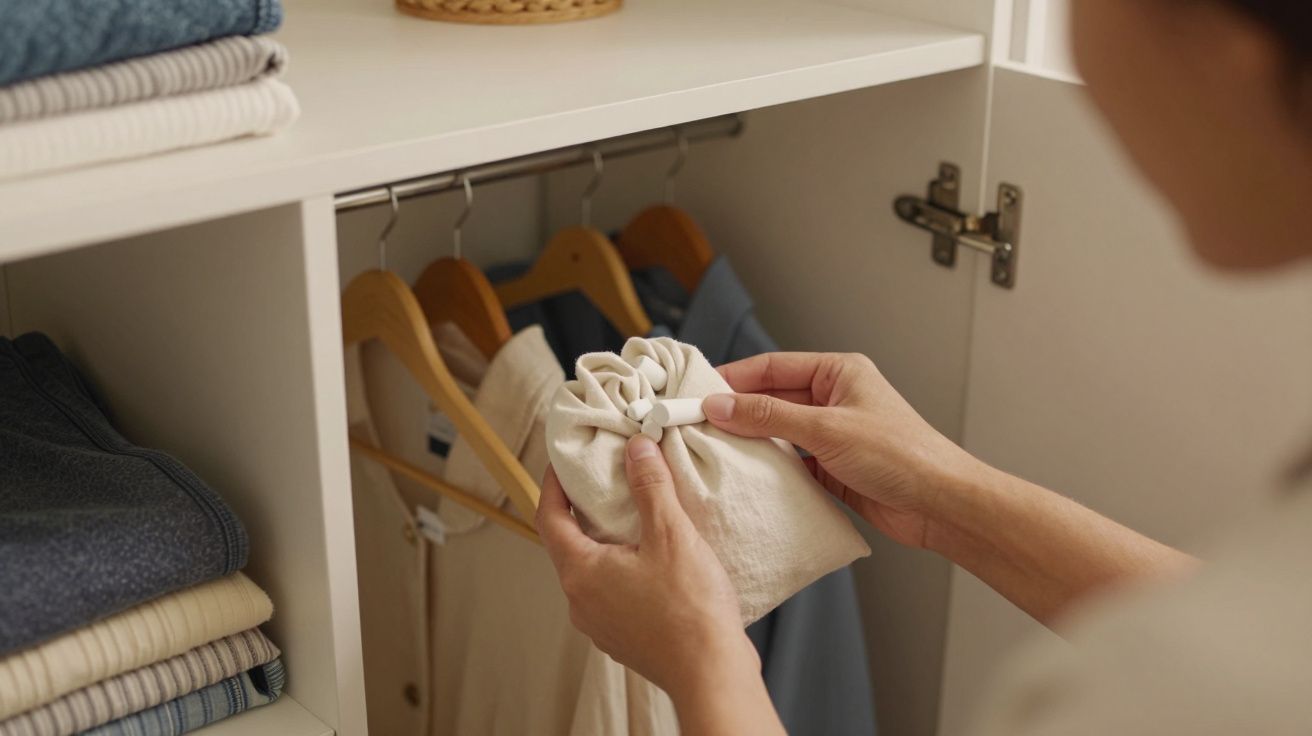
That’s why some people are slipping a surprisingly old‑fashioned object between their shirts and folded sheets: plain white chalk. Not the scented kind, not a complex gadget. Classroom chalk, bundled into tiny sachets and pegged to hangers like improvised dehumidifiers.
It sounds almost too simple, but used properly, it can shift the “cupboard smell” without turning your bedroom into an appliance showroom.
Why wardrobes go musty in the first place
A wardrobe is essentially a sealed box with a lot of fabric inside. Every time you open the door, you let in moist air from the room. Close it again, and that dampness gets trapped. Over days and weeks, it sinks into cotton, wool and linings.
Add a few other ingredients:
- Coats and jumpers put away still slightly damp from rain
- Body oils and perfume residues that never fully wash out
- An outside wall that gets cold at night and attracts condensation
- Doors that stay firmly shut all day “to keep the dust out”
and you have the perfect recipe for stale, slightly sour air around otherwise clean clothes.
Musty smell is usually less about “dirt” and more about tiny pockets of moisture that never quite dry out.
If the humidity stays high enough, mould spores can wake up and start feasting on dust and fibres. Even before you see black spots, your nose will often tell you something is off.
What chalk actually does in a cupboard
Most white “board” chalk is made largely from calcium carbonate, a mineral that’s naturally porous on a microscopic level. It doesn’t drink water the way silica gel does, but it does attract and hold small amounts of moisture from the air around it.
Think of it as a gentle, low‑budget sponge for humidity:
- It soaks up excess moisture in very small, enclosed spaces.
- It helps air feel drier, which blunts that flat, damp smell.
- It slows surface condensation, so fabrics and leather don’t stay clammy for as long.
Tuck a little bundle of chalk into a wardrobe and it quietly evens out those “wet peaks” when you shower, dry laundry indoors or have the heating on and windows closed.
Chalk will not fix a serious damp problem in your home, but it can keep borderline‑damp cupboards on the right side of fresh.
Because it’s inert and unscented, it won’t fight with your detergent smell or leave a fake floral cloud behind. Clothes just smell more like they did when they came off the line.
How to use chalk in your wardrobe
You don’t need anything fancy, but a bit of preparation stops chalk dust getting everywhere.
1. Choose the right chalk
- Go for plain white school or blackboard chalk.
- Avoid waxed, oil‑based or heavily dyed craft chalks.
- If you’re unsure, look for sticks labelled “dustless calcium carbonate chalk”.
2. Make simple sachets
Use whatever breathable scraps you have:
- A small square of muslin or cotton, tied with string
- An old clean sock with the toe knotted
- A paper coffee filter folded and stapled at the edges
Pop 4–6 chalk sticks into each bundle. The aim is to contain the dust but still let air flow through.
3. Place them where moisture lingers
- Hang a sachet from a hanger every 40–50cm of rail.
- Tuck one on each shelf of folded clothes or bedding.
- Drop a small bundle into drawers, underwired bras and sock compartments.
- Hide one in each shoe cupboard or under‑bed storage box.
For a standard single wardrobe, 3–4 sachets is usually enough. Larger built‑ins may need 6–8.
4. Refresh on a simple schedule
- Every four to six weeks, take the bundles out.
- Shake off any loose dust outside.
- Leave the chalk in a warm, dry place (a sunny windowsill or airing cupboard) for a day to let it dry out again.
- Replace any sticks that are crumbly, soft or have gone grey with absorbed grime.
If you live somewhere very humid or you dry clothes in the same room, you may need to rotate them more often.
Small habits that make chalk work harder
Chalk is a helper, not a miracle. A few tiny routine changes will multiply its effect.
Place wardrobes and drawers in conditions that make drying easier:
- Don’t overpack rails and shelves; give air room to move between hangers.
- Leave wardrobe doors ajar for an hour or two during the day if the room is being heated.
- Make sure clothes are fully dry before you hang or fold them away, especially jeans, towels and thick jumpers.
- Wipe the inside walls and shelves every few months with a mild vinegar and water mix if you’ve ever had mould there.
- Rotate which side of bulky items (duvets, blankets) faces the wall so the same patch doesn’t stay cold and damp.
Think of it like the bamboo dish rack effect in a kitchen:
Air is doing most of the work. Chalk’s job is to give that air a drier, kinder starting point.
A few quick tweaks to layout help:
- Avoid pushing furniture tight against cold external walls; leave a slim gap for air.
- Lift boxes and suitcases off the floor on low risers or a spare shelf.
- Once a season, empty the wardrobe for an afternoon, wipe it down and let it stand open.
Chalk vs other moisture‑fighters
Chalk isn’t the only option, and in some homes you might mix and match.
| Option | Best for | Things to watch |
|---|---|---|
| Chalk | Everyday wardrobes, drawers, shoe boxes; cheap, unscented | Gentle effect; won’t cope with major damp or visible mould |
| Silica gel sachets | Very damp cupboards; protecting cameras, documents, electronics | Stronger but can dry leather too much; keep away from pets and small children |
| Activated charcoal | Neutralising smells in shoe racks, sports kit, cupboards near kitchens | Can be dusty; choose bagged products and keep away from pale fabrics |
Chalk sits in the “easy win” category: safe round clothes, low maintenance, very low cost. If sachets are regularly coming out heavy and clammy, though, that’s a sign to look beyond simple fixes.
When chalk isn’t enough
If you open a wardrobe and smell strong mould, see dark spots spreading on walls, or find clothes literally damp to the touch, chalk is not the solution. It’s a symptom checker.
In those cases, you likely need to:
- Improve ventilation: open windows daily, use trickle vents, keep doors from being shut 24/7.
- Run a dehumidifier in the room during the dampest weeks.
- Check for leaks or bridging in walls, roofs or gutters, especially behind built‑in storage.
- Treat visible mould with appropriate cleaners and, if needed, seal or repaint affected areas.
People with asthma, allergies or weakened immune systems should be particularly careful. Even if chalk blunts the smell, mould spores can still irritate lungs if the underlying damp isn’t addressed.
A quick start guide
If you want to try chalk this weekend, here’s a simple plan:
- Empty one overcrowded wardrobe shelf or drawer.
- Give it a quick wipe and let it dry with the door open.
- Make two small chalk sachets and place them inside, one at the back, one near the door.
- Re‑stack your clothes more loosely, with a little breathing space.
- Check in a week. If the air smells closer to “just washed” than “just stored”, roll the system out to the rest of your cupboards.
FAQ:
- Will chalk mark my clothes? Generally no, as long as it’s contained in a small bag and not rubbing directly on delicate fabrics. Keep sachets slightly away from silk, dark wool or anything that shows dust easily.
- How often should I replace the chalk? In a typical UK home, plan on refreshing or re‑drying sticks every 4–6 weeks and replacing them completely every 3–4 months, or sooner if they turn soft and crumbly.
- Can I use coloured or pavement chalk? Better not. Many decorative chalks contain waxes, oils or strong pigments that can transfer. Plain white school chalk is safer and usually cheaper.
- Does chalk get rid of mould? No. It can help prevent minor mustiness and slow things down, but active mould on walls or fabrics needs cleaning and, ideally, a fix to the source of damp.
- Is it safe if I have pets or children? Chalk is less hazardous than many moisture absorbers, but it’s still not for eating. Keep sachets out of reach and make sure any loose dust is wiped up during refreshes.





Comments
No comments yet. Be the first to comment!
Leave a Comment