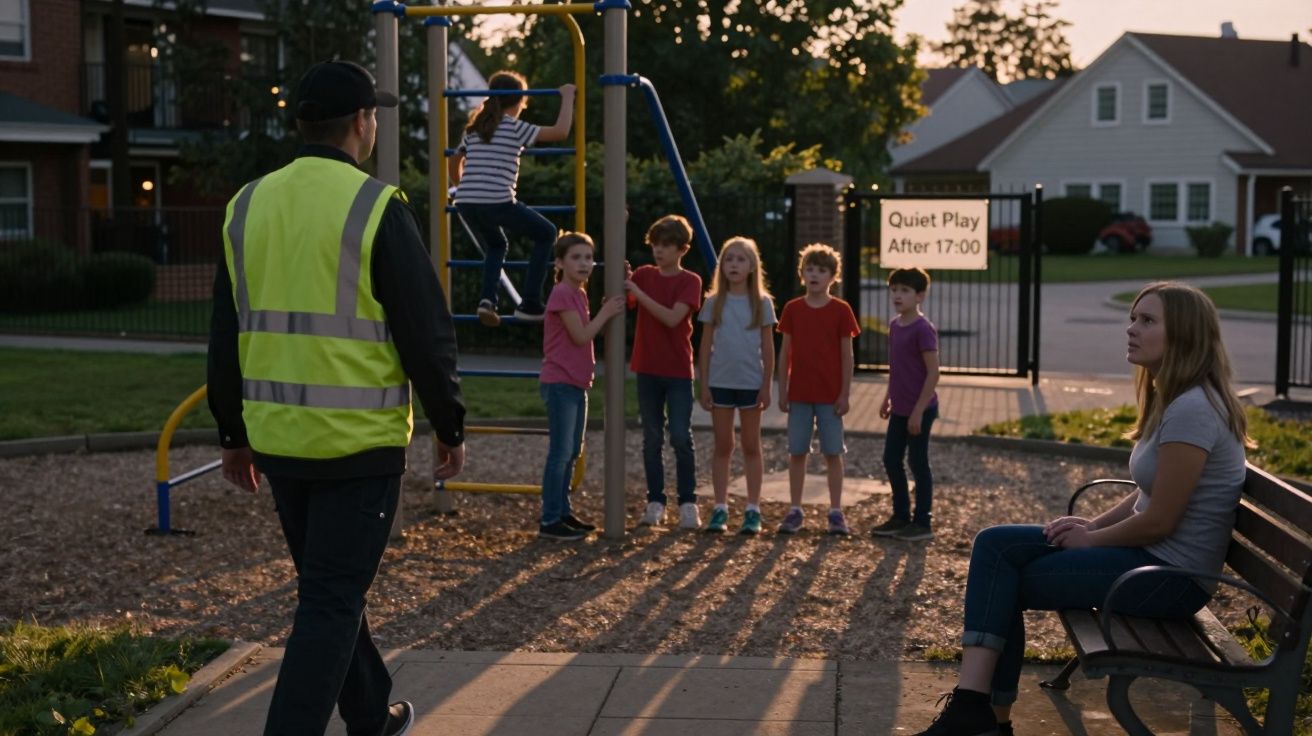
It started with a whistle that sounded wrong.
At 5.03pm in a small park between two semi-detached streets, a group of seven‑ and eight‑year‑olds were mid‑game, all elbows and shrieks around the climbing frame. A parent scrolled half‑heartedly on a bench, another fielded a work call with one eye on the slide. Then the council warden walked over, high‑vis vest catching the low sun, and asked the children to “keep the noise down, please – new guidance, nothing too loud after five”.
The laughter thinned into a self‑conscious murmur. One boy’s football was tucked under his arm like contraband. A mum looked up, confused, then angry. “They’re children in a playground,” she said later. “If they can’t be noisy here, where can they be noisy?” By the end of the week, photos of laminated “Quiet Play After 17:00” signs were bouncing through WhatsApp groups and local Facebook pages. The phrase “noisy games” had become a new flashpoint in the long, messy relationship between families and councils.
Why ‘quiet hours’ have crept into playtime
On paper, the move sounds bureaucratic: updated guidance on managing noise in small neighbourhood parks, especially the ones boxed in by flats and terraces. In reality, it collides with how people believe childhood should sound – muddled, exuberant, occasionally too loud.
Councils say the shift responds to a steady rise in noise complaints from residents working from home or on irregular shifts. A decade ago, the main friction came from late‑night ball games under floodlights; now, afternoon shrieks cut across Zoom calls and early evenings are no longer the clear divide between office and home. The pandemic blurred boundaries and the soundscape of local parks didn’t get the memo.
Officials insist they are not waging war on joy. They talk about “predictable quiet periods” and “reasonable enjoyment for everyone”. Parents hear something else entirely: a new rule that seems to rank their children’s games below the comfort of adults indoors.
What the new guidance actually says
Despite the headlines, there is no single national ban on noisy play after 5pm. Instead, several councils have quietly updated their park management policies with near‑identical language, nudged along by legal advice on nuisance claims and planning obligations.
The common pattern looks something like this:
- Quiet hours: requests to “avoid loud, organised games” in certain parks between 5pm and 8am on weekdays, sometimes extended at weekends.
- Targeted spaces: small playgrounds close to homes, especially where previous noise complaints exist.
- Examples given: group ball games, whistle‑led activities, amplified music for parties or fitness classes.
Crucially, these documents use soft verbs: “should avoid”, “are asked not to”, “will be discouraged”. They are framed as guidance rather than new law, sitting somewhere between politeness and a policy line someone can point at when tempers flare.
To help parents decode the notices pinned to gates, here is the rough split officials describe privately:
| Area | What’s changing | What’s (supposed to be) unchanged |
|---|---|---|
| Small local playgrounds | Staff and wardens may intervene in very loud, repeated games after 5pm | Ordinary play, chatting, running about |
| Larger parks & rec grounds | Team sports steered towards pitches away from homes | Informal kickabouts, picnics, mixed‑use space |
| Bookable facilities | Clearer time limits for evening bookings, noise conditions in hire forms | Daytime birthday parties, school use |
In practice, the human element decides how this feels. A friendly “could we move the loud game to the field?” lands differently to “stop shouting, it’s after five”.
Parents hear a ban; councils say it’s a balance
Parents describe the experience less in decibels, more in mood. One father in a Midlands town says his six‑year‑old now asks, “Is it quiet time yet?” before starting a game of tag. “We’ve turned play into something they might get told off for,” he says. “That’s not the lesson I want him to learn about public space.”
Others worry about who gets policed. Families with autistic children or those who express excitement loudly fear extra scrutiny. A foster carer tells me she already picks parks based on how tolerant they feel: “You can sense when your kids are being seen as a problem. The sign just confirms it.”
Councils, for their part, point to residents on the other side of the railings. Elderly neighbours who say their sitting rooms vibrate with the thud of balls against metal fencing. People on night shifts who find their only block of sleep shattered by post‑school noise. Housing built closer and higher to meet demand; balconies almost close enough to touch the swings.
“It’s not about banning children,” says one parks manager. “It’s about giving everyone a fair slice of peace in very tight spaces. We’re trying to prevent full‑blown legal disputes that could see facilities restricted more harshly.”
Both realities exist: the parent desperate for an hour outdoors before tea, and the neighbour counting every shout as another lost minute of rest. The quiet‑hours guidance clumsily tries to sit between them, and in doing so often pleases no one.
How noise rules really work in law
Part of the frustration comes from a mismatch between the weight people think these signs carry and what the law actually says. Playground notices are not in the same league as a statutory noise abatement order served on a nightclub.
In broad terms:
- Noise nuisance law focuses on repeated, unreasonable disturbance that materially affects someone’s enjoyment of their home.
- Everyday sounds, including children playing, are explicitly recognised in planning guidance as part of normal residential life.
- Councils gain leverage when they can show they took “reasonable steps” to prevent predictable problems – such as limited hours for organised, noisy activities.
The new guidance mainly serves that last point. If a dispute escalates, officials can show they tried softer measures first. It also arms customer service staff and wardens with a line to quote when fielding complaints.
Let’s be honest: nobody wants their kid’s name in a case file about “persistent shouting on swings”. Families fear a slippery slope where normal play is redefined as nuisance; councils fear court rulings that force them to close or relocate facilities entirely. Both sides stare down the barrel of consequences they don’t really want.
Where the rules bite hardest – and why evenings matter
The time window after 5pm carries particular weight because it compresses so many competing needs. It is when:
- children are finally free from school, wraparound care and homework;
- many parents can supervise outdoor play without juggling meetings;
- neighbours are more likely to be home, tired and sensitive to noise.
In dense urban areas with limited green space, a single pocket park may be serving:
- families in flats without gardens,
- dog walkers,
- people exercising,
- residents who simply want to sit in relative quiet.
The updated guidance tends to land hardest where alternatives are scarce. If you can walk ten minutes to a large recreation ground, a “keep it down” note on the small corner playground feels annoying but manageable. If that fenced‑in patch of swings is the only safe outdoor space for four blocks, it feels like something being taken away.
What families can do right now
While national bodies and councils argue over wording in guidance documents, parents still need to decide what to do at 5.01pm on a Tuesday when their children want to play.
A few pragmatic moves can help reclaim some ease:
- Know which parks are affected. Check local council websites or noticeboards; not every playground has the same expectations.
- Shift the loudest games. If there’s a nearby field or multi‑use games area, steer ball games and group chases there after quiet hours kick in.
- Talk to neighbours before conflict erupts. A friendly note in the residents’ WhatsApp or lobby explaining that “this is the main play window, we’ll try to keep things reasonable” can soften future complaints.
- Name the rule, not the child. If a warden intervenes, try to frame it to your kids as “this is a funny rule the grown‑ups made” rather than “you were naughty for shouting”.
Some parents are also choosing to push back – politely but firmly. Logging their own experiences of being approached in parks. Writing to councillors with specific examples of when the rule feels unworkable. The more concrete the stories (“four kids, 20 minutes on swings before dinner”) the harder they are to dismiss as abstract outrage.
What councils could change – without ripping up the rulebook
If councils want this guidance to feel less like an attack on childhood, a few adjustments stand out.
- Language that reassures. Signs that clearly say “Children are welcome to play – we simply ask that very loud, organised games move to the field after 5pm” land differently to stark “Quiet Play Only” icons.
- Better zoning. Soft‑surface playground near homes; ball courts, skate ramps and group exercise spaced further away where possible.
- Visible investment. Residents are more likely to accept limits if they can see new or improved facilities elsewhere for older children and teenagers.
Some authorities are already experimenting with neighbourhood “sound maps”, asking residents and families to mark where and when noise feels like a problem or a joy. The result is often more nuanced than anyone expected: people who complain about whistles at 6pm are fine with Saturday morning football; parents who crave quiet on their street also want somewhere nearby that rings with the sound of play.
FAQ:
- Is it actually illegal for my child to shout in a playground after 5pm? No. The current guidance in most areas is not a new law; it’s a request about organised or very loud games in specific parks. Basic, joyful play is still considered part of normal neighbourhood noise.
- Can a warden or officer fine us for noisy play? In typical cases, no. Serious, repeated noise problems could, in theory, lead to formal action against organisers, but casual family play is highly unlikely to reach that threshold.
- What if I think the sign in my local park goes too far? You can contact your ward councillor, respond to any open consultations on parks, and raise the issue at residents’ meetings. Concrete examples of how the rule affects your family carry more weight than general frustration.
- Do neighbours have the right to complain about children’s noise? Anyone can log a complaint, but officers assess whether the noise is excessive, persistent and unreasonable. One short burst of after‑school shouting will usually not meet that test.
- How can we share parks more fairly without formal ‘quiet hours’? Some areas have piloted community agreements instead of rules: clear times for coached sessions, shared expectations about evening noise, and simple zoning so the loudest activities happen further from homes. Even small conversations between park users and nearby residents can ease tensions before policies harden.



Comments
No comments yet. Be the first to comment!
Leave a Comment