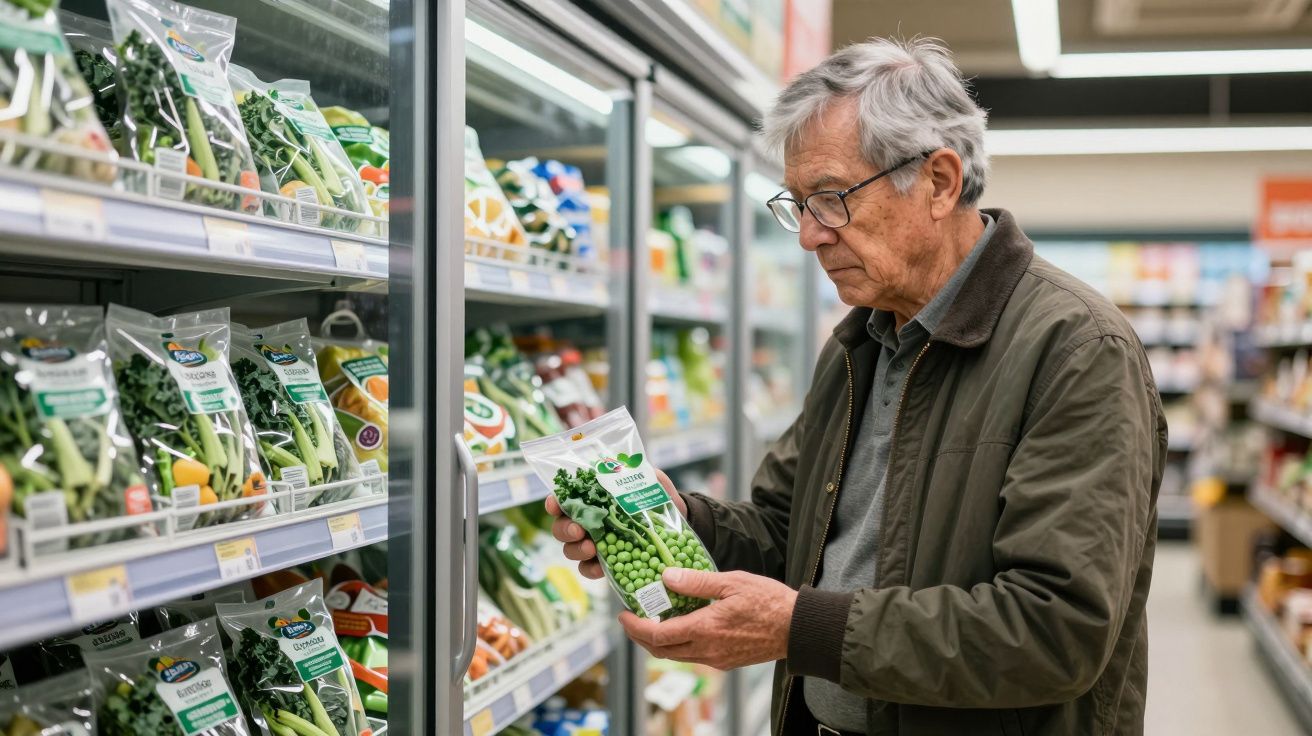
Standing in the supermarket aisle at 6.17pm, glasses fogging slightly from the chill of the freezers, Alan, 62, stared at the bags of vegetables as if they were exam questions. His GP letter was still folded in his pocket: “Try to increase your fibre for heart and bowel health.” The internet had given him smoothies, chia puddings, and salad jars in colours he didn’t own in T‑shirt form.
He reached for a bunch of kale, hesitated, remembered the last bag that wilted into slime at the back of the fridge. Next to it, a solid wall of frozen veg sat in sturdy, unromantic bags. Garden peas, £1.10 for a kilo. No halo, no “superfood” label. Just peas.
A dietitian friend had said something the week before that stuck: “If everyone over 50 just ate a decent serving of peas most days, I’d have a quieter clinic.” Alan put the kale back, picked up the peas, and wondered if it could really be that simple.
It won’t fix everything, but this is the quiet truth: the humble frozen pea is a fibre goldmine, especially for over‑50s whose guts, hearts and blood sugar need a bit more looking after. Not spinach. Not kale. The bag you’ve been walking past for years.
The freezer‑aisle veg quietly out‑performing your salad bowl
Spinach and kale have the branding locked down: green smoothies, yoga mats, endless recipes. Peas are more likely to be associated with school dinners and runaway escapees under the table. Nutritionally, though, they punch far above their reputation.
A typical 80 g serving of cooked peas gives around 5–6 g of fibre. That is more than you’ll find in the same amount of many leafy greens, and far more than in a token handful of lettuce on the side of your plate. Add in 5–6 g of plant protein, vitamin C, B vitamins, and a decent dose of potassium, and they start to look less like an afterthought and more like a core ingredient.
Dietitians care because most people over 50 in the UK fall well short of the recommended 30 g of fibre per day. One heaped serving of peas gets you a sixth of the way there in a couple of mouthfuls. Small, cheap, green spheres; surprisingly large impact.
Frozen matters here. Peas are usually blanched and frozen within hours of picking, locking in their nutrients. Fresh peas, unless you shell them in a garden, often sit around long enough to lose some of that goodness. The freezer version is predictable: always ready, always roughly the same, and very hard to ruin.
Why fibre quietly matters more after 50
Fibre is the part of plant foods your body can’t fully break down. That might sound useless, but it’s the opposite. Think of it as scaffolding and food for the helpful bacteria in your gut.
After 50, several things tend to change at once:
- Gut movement slows a little.
- Many people take medications that can bung things up.
- Muscle mass dips, including in the bowel wall.
- Blood pressure, cholesterol and blood sugar become bigger concerns.
Fibre helps on all of those fronts. It adds bulk and softness to stools, making them easier to pass. It feeds “good” gut microbes, which in turn produce compounds that support the gut lining and may even nudge down inflammation. Certain types of fibre bind some cholesterol in the gut and slow down how quickly sugars from a meal hit your bloodstream.
Peas bring both soluble and insoluble fibre in one scoop. That mix is useful: one part helps form a soft gel in the gut, the other keeps everything moving. If you’ve ever been told to “eat more bran” and found it too aggressive, peas are often kinder.
“I call frozen peas ‘stealth fibre’,” says registered dietitian Clare Morris. “They slip into whatever you’re already eating instead of demanding a whole new meal plan.”
How to start if your gut is out of practice
If your current fibre intake is on the low side (irregular bowels, not many plants on the plate), jumping straight to huge portions can backfire. Gas, bloating, and the sense that you’ve swallowed a brick are common complaints when people go from zero to saintly overnight.
Better to climb a “pea ladder” over a fortnight:
- Days 1–3: Add 2 tablespoons of peas once a day (for example into eggs, soup or on toast).
- Days 4–7: Increase to a heaped ⅓ mug once a day.
- Week 2: Aim for that ⅓–½ mug twice a day, in different meals.
Each step, drink a little more water or herbal tea than usual. Fibre works best when it has fluid to soak up; otherwise it’s like trying to run a sponge over a dry floor.
Common sense checks help:
- If your tummy feels uncomfortably tight, hold at your current portion for a few days.
- Gas that passes is normal; sharp, persisting pain is not – in that case, check with your GP.
- Keep moving gently. A short walk after meals can nudge the gut along.
Let’s be honest: nobody weighs out their vegetables every night. The aim is simply “see green more often”, not “hit perfection”.
A simple “pea rule” to remember
If you like rules of thumb, try this:
Every time you turn on the hob, ask: could a handful of peas go in this?
If the answer is yes half the time, your fibre intake will climb without a single new recipe.
Quick ways to turn a bag of peas into real meals
You don’t need a blender the size of a small car or ten new cookbooks. Most meals you already make will happily welcome peas if you give them the chance.
Some five‑minute ideas:
- Pea smash on toast: Warm peas with a drizzle of olive oil, mash roughly with a fork, stir in lemon, black pepper and a crumble of feta or grated cheddar. Pile onto wholegrain toast. Breakfast or light lunch, sorted.
- Eggs with hidden fibre: Sprinkle a handful of peas into scrambled eggs, omelettes or frittatas. They cook in the time it takes the eggs to set.
- Soup shortcut: Keep a mug of peas by the hob. Toss into any pan soup or instant noodle pot for the last few minutes. Instant upgrade.
- Pea & mint “cheat” dip: Blitz thawed peas with a spoon of yoghurt, a few torn mint leaves and a pinch of salt. Use as a spread in sandwiches or with carrot sticks.
- Bulk‑out pasta and curries: Stir peas into jarred sauces in the final simmer. They add sweetness, fibre and colour without extra chopping.
For those cooking for one, peas are especially helpful. You can pour out exactly what you need, pop the rest back, and there’s no half‑aubergine dying slowly in the fridge.
Frozen versus fresh: why the bag often wins
Fresh vegetables are brilliant when you can get them and use them in time. But lives are messy, weeks go sideways, and salad leaves collapse when ignored. Frozen peas wait patiently.
They score on several fronts:
- Nutrient retention: Because they’re snap‑frozen soon after harvest, many vitamins are preserved better than in fresh peas that spend days in transit and on shelves.
- Cost per portion: A big bag often works out cheaper than buying multiple fresh veg, particularly if you live alone or cook infrequently.
- Less waste: You use what you need. No peeling, no pods, no bin full of yellowing leaves.
There’s also the practicality piece. If arthritis, sore thumbs or reduced grip make chopping difficult, a bag you can pour and tip is kinder than a pile of carrots that need trimming. For carers cooking for older relatives, that convenience can be the difference between “veg every day” and “veg when there’s time”.
Plain frozen peas contain no added salt or sugar; any sweetness is natural. If you’re watching your blood pressure, that makes them an easy “yes”.
What might change after a month of “pea habits”
Most people don’t write poems about peas. They talk instead about smaller, solid wins.
After three to four weeks of consistently seeing peas on the plate most days, people often notice:
- Bowels that move more regularly, with less straining.
- A slightly longer stretch between meals before hunger hits.
- Fewer energy dips linked to wild blood‑sugar swings.
- A quiet sense of “doing something” for heart and gut health without a big song and dance.
You won’t feel your cholesterol numbers shifting, but repeated fibre hits, day after day, do add up. For many over‑50s, the biggest psychological gain is control: a simple, repeatable habit they can keep even when life is busy.
Share it. A partner, a neighbour, a lunch club. Show someone how you stir peas into your usual meals and watch them nod as their shoulders drop. The point isn’t chasing purity. It’s discovering how much easier your body feels when fibre stops being an occasional guest and becomes part of the furniture.
| Key point | Detail | Why it helps over‑50s |
|---|---|---|
| Frozen peas are fibre‑dense | ~5–6 g fibre per 80 g serving | Nudges you towards the 30 g/day target with little effort |
| Frozen often beats fresh | Snap‑frozen, long shelf life, low waste | Makes “veg every day” realistic, even on tired evenings |
| Tiny tweaks, big returns | Add peas to existing meals, no overhaul | Supports gut, heart and blood sugar without complex plans |
FAQ:
- Are frozen peas as healthy as fresh? Yes. In many cases they’re more nutritious, because they’re frozen soon after picking, which preserves vitamins that might be lost in transit and storage with fresh produce.
- Will eating more peas give me gas? If your current fibre intake is low, a sudden jump can cause wind and bloating. Increase portions gradually over 1–2 weeks and drink enough fluid. If discomfort is sharp or persistent, speak to your GP.
- I have type 2 diabetes – are peas OK for me? Generally yes. Their fibre and protein help slow the rise in blood sugar from a meal. Just count them within your overall carbohydrate allowance and check how your own readings respond.
- Can I eat peas every day? For most people, daily peas are perfectly safe and beneficial. Vary your vegetables over the week where you can, but there’s no problem with peas being your reliable staple.
- What if I dislike the taste of peas on their own? Use them as an ingredient rather than a side. Blend into soups, mash into spreads, hide them in sauces or curries. Their mild sweetness tends to disappear into the background while the fibre remains.


Comments
No comments yet. Be the first to comment!
Leave a Comment