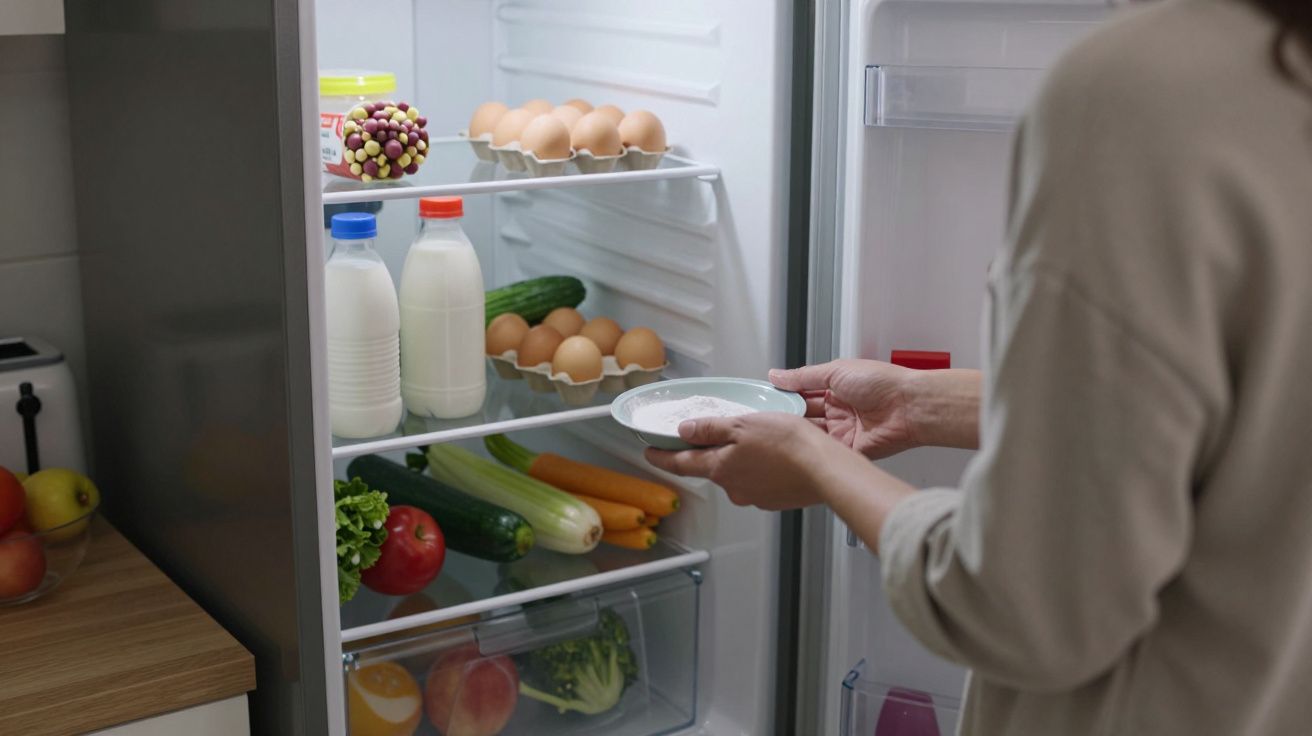
A Sunday-night fridge is a tiny crime scene: last night’s garlic roast, Tuesday’s cut onion, a wedge of Stilton that could wake the neighbours. You shut the door and hope for the best. By Monday morning, the milk tastes “a bit like dinner” and the yoghurt seems to have opinions. Most of us reach for the usual folk fixes - a halved lemon, a bowl of coffee grounds - and wonder why the smell never quite leaves, it just changes costume.
A pastry chef showed me another way in the back of a very calm, very cold restaurant fridge. No scented wipes, no citrus showmanship; just a shallow tray of plain white powder tucked behind a crate of herbs. They swap it every few weeks without fail. The air in there didn’t smell of anything at all - not fish, not cheese, not last night’s garlic - just quietly clean. The powder? Not lemon, not coffee. Bicarbonate of soda.
The quiet workhorse hiding in your baking cupboard
Bicarbonate of soda (baking soda, not baking powder) doesn’t perfume your fridge; it scrubs the air. Chemically, it’s sodium bicarbonate, a mild alkaline salt that reacts with many of the acidic volatile compounds that make your fridge smell like last week. Instead of covering odours, it changes them into something more neutral before your nose ever gets involved.
The trick is in its structure as much as its chemistry. Those innocent-looking grains are crystals with a surprising amount of surface area and a light porosity. Smelly molecules bump into that surface, some react, some are simply held there, and the fug slowly fades. You’re not disinfecting the fridge with it, you’re quietly catching the breath of everything inside.
Professional kitchens like it because it’s food-safe, cheap, and entirely unscented. A halved lemon makes the whole fridge smell like lemonade. Coffee grounds stamp everything with a faintly bitter café note. Bicarb does the opposite: it absorbs and neutralises without adding its own personality. Done properly, the “smell” of a good fridge is no smell at all.
How chefs actually use bicarb in their fridges
In busy restaurant kitchens, nobody has time for elaborate fridge rituals. The chefs who swear by bicarb keep the method brutally simple: they give the powder as much contact with the air as possible, then leave it to work.
One London hotel chef keeps a low, wide takeaway tub of bicarb on the bottom shelf of every upright fridge. Another baker I spoke to spreads it in a shallow ramekin and tucks it on the door shelf near the eggs. A third pierces the lid of a deli pot and fills it halfway, so it can’t spill when the pastry section gets frantic. They all said the same thing: change it regularly, and don’t bury it under jars.
Here’s the version that works at home, even on a Tuesday:
- Choose the right container. Go for something low and open - a ramekin, a shallow plastic tub, a clean jam jar with the lid removed. More surface area means more odours caught.
- Pour in plain bicarbonate of soda. Two to four tablespoons is plenty for an average fridge. You don’t need a mountain; you need a thin, exposed layer.
- Place it where air actually moves. The back of the middle shelf or the top of the door works better than a hidden corner behind the veg drawer.
- Shut the door and forget about it for 2–4 weeks. The powder will quietly dull strong smells over a day or two, then keep them in check.
- Replace it before it’s overwhelmed. Chefs set a recurring calendar reminder. At home, tie it to bin day or your big shop.
Let’s be honest: nobody actually scrubs out their fridge every week. That’s where bicarb earns its keep - it stretches the time between deep cleans, stops odours from migrating into everything else, and makes that eventual wash-out less of a horror show.
“We treat bicarbonate like a mini air filter,” says Leeds-based chef-owner Ali Hussain. “Every cold store gets a tray, and we swap it with the inventory check. It’s boring, which is exactly why it works.”
- Use plain bicarbonate of soda, not baking powder or scented cleaning mixes.
- Keep the layer thin and exposed, not heaped in a deep jar.
- Mark the container with the date you opened it so you know when to refresh.
- Combine it with a quick wipe-up of spills, not instead of one.
- When you change the powder, don’t throw it straight away - use the old batch for cleaning drains, scrubbing oven trays, or freshening your bin.
Why lemon and coffee don’t quite cut it
Lemons and coffee grounds feel satisfying because they smell strong. You open the fridge, get a hit of citrus or espresso, and assume the garlic’s gone. Often it hasn’t; you’ve just layered a new scent on top of the old one.
Acidic fruit like lemon or orange may “compete” with some odours, but they mostly perfume the air rather than trapping anything. Coffee is porous and does absorb smells, which is why perfumers use it to “reset” their nose - but it also off-gasses its own aroma as it goes. In a small, closed space, that means your cheese ends up faintly caffeinated, your milk picks up café notes, and any fishy hints are only half-masked.
Bicarb plays a different game. It’s largely odourless and mildly alkaline, ideal for tackling many sulphur and acid-based smells from meats, certain cheeses, and spilt sauces. Instead of shouting louder than the smell you hate, it dismantles chunks of it and holds onto the pieces.
If you love a fresh scent when you open the door, you can still have it - just separate the jobs. Let bicarb be the quiet workhorse in the back, then add a closed jar of vanilla pod or a tiny sachet of dried citrus peel on a higher shelf for your own nose, not the food’s. The chefs I spoke to treat fragrance as personal, not part of the odour control system.
| Key point | Detail | Why it matters |
|---|---|---|
| Odour neutralising, not masking | Bicarb reacts with and traps volatile compounds | Fridge smells fade instead of changing flavour |
| Large exposed surface | Thin layer in a wide tub beats a deep jar | More contact with air, faster deodorising |
| Regular refresh | Swap every 2–4 weeks, or after major spills | Keeps the powder effective for months on end |
Small rituals, kinder fridges
A fridge that doesn’t whiff when you open it changes how you cook. Herbs last a touch longer because they’re not marinating in last week’s curry cloud. Butter stays neutral, ready for toast rather than tasting faintly of onion. You stop apologising when someone else goes to fetch the milk.
Bicarbonate of soda won’t fix mouldy leftovers or a mystery puddle in the salad drawer. What it does is take the edge off everyday smells so your deep cleans can be less frequent, and your food tastes more like itself in the meantime. It’s five seconds of pouring and placing that your future self notices every time they open the door.
Next time you catch a waft of “something” when you grab the milk, skip the heroic lemon halves and coffee bowls. Reach for that quiet white powder in the baking cupboard, give it a saucer of space, and let chemistry do the heavy lifting behind the closed door.
FAQ:
- How long does bicarbonate of soda last in the fridge? For an average family fridge, 2–4 weeks is a good window. Very packed or very smelly fridges may need a refresh closer to the two-week mark. If you notice odours creeping back, it’s time to change it.
- Can I use baking powder instead of bicarbonate of soda? No. Baking powder contains bicarb plus acids and starches that make it less effective at neutralising fridge odours and can introduce off smells of their own. You want plain bicarbonate of soda.
- Is it safe to keep an open dish of bicarb near food? Yes, as long as the container is stable and the powder doesn’t spill directly into uncovered dishes. It’s food-safe, but you don’t want gritty yoghurt or powder on salad leaves.
- Do I still need to clean the fridge if I use bicarb? Absolutely. Bicarb tackles airborne odours, not hygiene. Wipe up spills promptly and give shelves a proper wash every so often; the powder then keeps things fresher between cleans.
- Can I reuse the old bicarbonate after it’s been in the fridge? Yes, just not for cooking. Use spent bicarb to scour pans, freshen the bin, or help clear mild drain smells. Once it’s done those jobs, it can go in the rubbish or down the drain with plenty of water.





Comments
No comments yet. Be the first to comment!
Leave a Comment