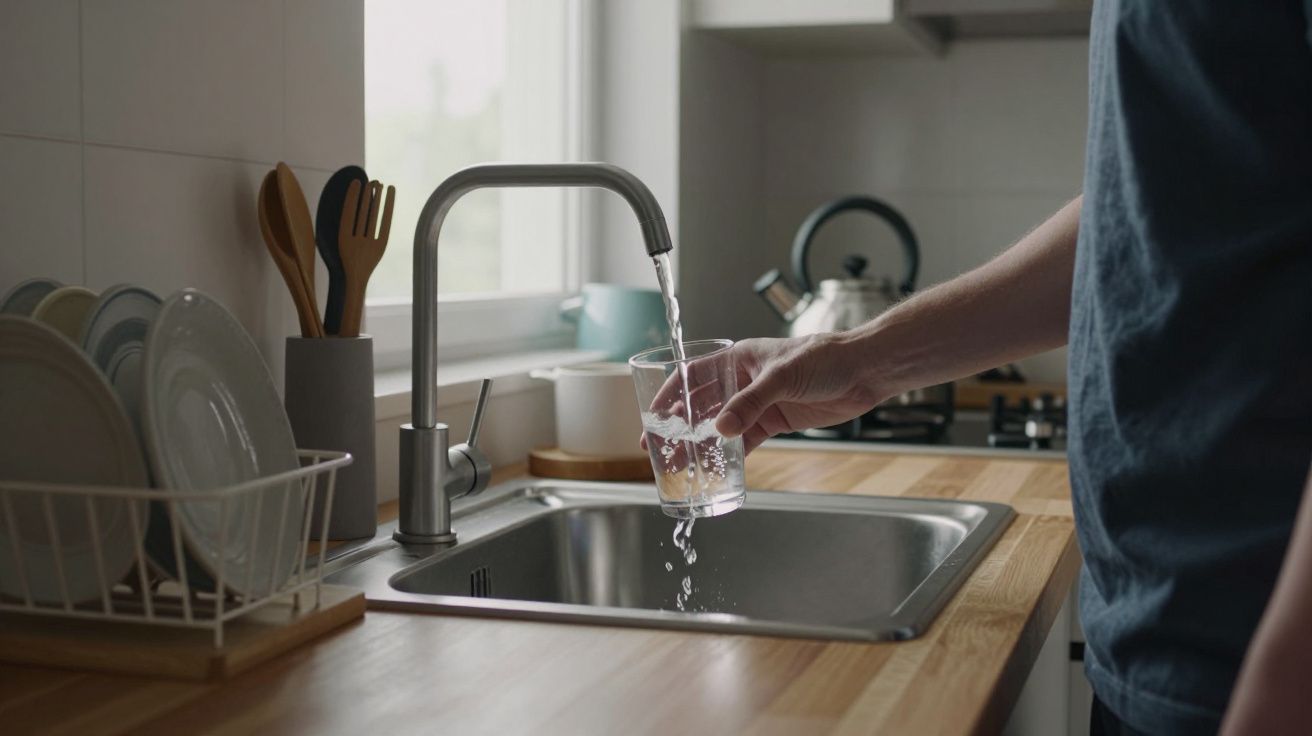
At some point, usually at 3am, we’ve all done it: padded to the bathroom, cupped our hands under the tap, and taken a sip that tasted faintly… bathroom-ish. A hint of metal. A whisper of old pipe. The same water company, the same house, and yet the kitchen glass always seems crisper. It feels like a fussy thought until someone else says, “Yes, the bathroom water is weird,” and you realise your tongue has been doing quiet science for years.
The surprise is that taste doesn’t just come from the water company. A lot of it is made inside your walls. The route the pipes take, whether the water has been sitting in a loft tank, the age of your fittings, even how long it’s been since anyone used that tap – all of it changes the flavour in a way your mouth can detect long before a lab report does.
Ask a water engineer which tap they drink from at home and they don’t hesitate. They know where the freshest flow lives.
In most UK homes, the best‑tasting, safest tap for drinking is the cold tap at the kitchen sink that is connected directly to the mains. Not the bathroom basin. Not the hot tap. Not the shiny filtered gadget you forget to clean. The unassuming kitchen cold tap usually wins, for reasons that are more about plumbing than palate.
The tap that usually tastes best
UK building rules quietly enshrine this. Homes are required to have at least one tap supplied directly from the incoming mains for drinking water, and in almost every house that’s the cold tap at the kitchen sink. It’s the point the plumber gives priority to: shortest route, strongest pressure, no loft tanks in between.
“The kitchen cold is generally where you’ll find the freshest, least‑tampered‑with water in the house,” says Dr Aisha Patel, a water quality consultant in Manchester. “It’s drawn straight from the main, it turns over frequently, and it hasn’t been warming up gently in a roof space.”
That matters because water that moves often is water that keeps its original taste. Chlorine – the tiny dose added by water companies to keep things safe – stays at a level designed to control microbes without making your tea smell like a swimming pool. Minerals sit where they should. There’s less time to pick up flavours from pipes, seals or tanks.
Most people discover this by accident. They top up a bottle in the kitchen and it tastes fine; they refill in the bathroom and pull a face. Once you know why, you can start choosing your tap on purpose.
Why the same water tastes different around the house
The water coming into your home is one thing. What your house does to it is another. Several quiet factors change the flavour long before it reaches your glass.
1. Storage vs straight‑through
- Kitchen cold tap: almost always straight from the mains.
- Bathroom cold taps in older homes: often fed from a storage cistern in the loft.
- Hot taps: supplied from a cylinder or combi boiler.
Stored water sits around. It warms and cools with the weather, loses some of its crispness, and can pick up a slight tang from the tank and connecting pipes. The water company has no control over what happens once it’s in your loft.
Straight‑through mains water, by contrast, behaves like a stream. It moves often, keeps cooler, and arrives with less opportunity to go stale.
2. Temperature and “flatness”
Your taste buds like cold water. Cooler water feels sharper, masks minor off‑notes, and holds dissolved gases better, so it literally tastes more “alive”. Bathroom and loft‑fed pipes, especially those running through warm spaces, often deliver water that starts off tepid. That slight warmth makes chlorine more noticeable and can exaggerate metallic or plastic flavours.
Hot tap water is another step again. It has sat in a tank or run through a boiler, perhaps passing rubber seals and flexible hoses designed for heating, not sipping. “Hot water is for washing, not drinking,” says plumbing inspector Leo Morgan. “The system is built around that assumption.”
3. Pipes, fittings and tiny flavours
As water travels, it spends time pressed against copper, plastic, brass, rubber washers and sealants. In modern homes these are all approved for contact with drinking water, but they can still nudge the taste.
- Long, rarely used runs (for example to a spare en‑suite or garage sink) let water stagnate, building that “old glass” taste.
- Older metal pipework can add a slight metallic tang, especially if water sits overnight.
- Dead‑end sections of pipe that go nowhere act like cul‑de‑sacs where water lingers.
The kitchen cold tap usually has the shortest, most direct route. The bathroom cold often has the longest and most meandering.
4. Aerators, limescale and biofilm
That little mesh or plastic insert at the end of many taps – the aerator – is there to soften the flow and save water. It also catches limescale, grit and the odd speck of debris. Over time, a thin film of harmless bacteria can grow there, adding a faint musty or earthy hint.
Kitchen taps tend to be used and cleaned more. Bathroom tap ends are easy to forget, quietly building a flavour all of their own. A quarterly soak in vinegar and a scrub with an old toothbrush can transform the taste.
How to spot your best drinking tap
You don’t need x‑ray vision to work out which tap is on the mains and which ones are living a double life with your loft tank. A few simple checks tell you a lot.
The stop tap test
Turn off your internal stop tap (usually under the kitchen sink or near the front of the house). Open taps around the house:- The tap that stops quickly is on the mains.
- If a tap keeps dribbling, it’s likely fed from a storage cistern.
The temperature test
First thing in the morning:- Kitchen cold should run cool fairly quickly after a second or two.
- Bathroom cold that starts off lukewarm or varies wildly in temperature is more likely to be tank‑fed.
The loft clue
If you have a big plastic or galvanised tank in the loft with pipes dropping down towards the bathroom, you can assume at least some of your upstairs cold taps are tank‑supplied. (Never climb into lofts you’re not confident about; a glance from the hatch is enough.)Ask your water company or plumber
For tricky layouts or flats, a quick call or visit can clarify which outlets are mains‑fed and suitable for direct drinking.
Once you’ve identified your mains kitchen cold, treat it as your default drinking tap. Use others for hand‑washing, tooth‑brushing and cleaning. Your taste buds – and your kettle – will thank you.
Taps to think twice about for drinking
No need for panic – UK tap water is heavily regulated at the point of supply – but some outlets are better as “sometimes” taps than daily sources for your water bottle.
Bathroom basins in older homes
Fine for brushing teeth and rinsing, but often fed from a loft cistern. Taste is typically duller or slightly metallic. For most people, occasional sips aren’t a concern; for regular drinking, the kitchen wins.Hot taps anywhere
Heated, stored and piped through materials chosen for plumbing convenience, not flavour. Use for washing up and showers, not tea or baby bottles.Garden taps
These may be teed off the kitchen cold before the stop tap, or they may have their own run, sometimes with older external pipework. Add hose connectors and you have a recipe for odd tastes. Good for paddling pools and plants, not your main hydration source.Utility and garage sinks
Commonly supplied via longer, rarely‑used runs. If you must drink from them occasionally, run the water until it’s properly cold and clear first.
Here’s a quick overview:
| Tap location | Usually supplied from | Best use most days |
|---|---|---|
| Kitchen cold | Direct mains | Drinking, cooking, ice |
| Bathroom basin | Often loft storage cistern | Hand‑washing, tooth‑brushing |
| Garden / utility | Varies, often long runs | Cleaning, outdoor use |
Simple tweaks to make any tap taste better
If your kitchen cold still tastes a bit “off”, there are small, low‑effort changes that often bring it back to its best.
1. Flush the first glass
Water that has been sitting in the pipes overnight tastes different to water that’s been moving. In the morning, or if you’ve been away all day:
- Run the cold kitchen tap for 10–20 seconds until the flow feels consistently cool.
- Use that fresher flow for drinking, cooking and the kettle.
You’re not wasting litres; you’re swapping one kettle‑full of flat water for one that tastes like itself again.
2. Chill, don’t over‑filter
A lot of what people call “taste improvement” is really just cooling.
- Keep a jug of tap water in the fridge, topped up from the kitchen cold.
- Use a clean, regularly changed filter jug if you like, especially in hard‑water areas, but remember the hygiene:
- Change cartridges as recommended.
- Wash the jug with hot soapy water at least weekly.
- Store it cold, not on the worktop.
An old filter with a tired cartridge will often taste worse than the tap.
3. Clean the business end of the tap
Every few months:
- Unscrew the aerator or end piece of the tap spout (a tea towel helps grip).
- Soak the parts in warm water with a splash of vinegar to dissolve limescale.
- Scrub gently with a soft brush, rinse and reassemble.
This small ritual removes grit and biofilm and can make the flow smoother and the flavour cleaner.
4. Skip the “overnight glass”
It’s convenient to keep a glass of water by the bed. It also gives water eight hours to sit open to the air, dust and room smells. If taste matters, drink it before you sleep and top up fresh in the morning. Your mouth will notice the difference.
If you live in a hard‑water area
In much of the UK, especially the South and East, water carries more calcium and magnesium. That’s what leaves chalky circles in your kettle and a film in your tea. Hard water is safe – many people like the slightly fuller taste – but it does shape your experience.
- Taste: can be perceived as “minerally” or “chalky”. Some describe it as a little heavier on the tongue.
- Tea and coffee: tannins in tea react with minerals, creating scum and muting delicate flavours.
- Kettles and coffee machines: limescale builds, trapping off‑tastes and slowing the boil.
If hard water makes you dislike your tap, three options help:
- A simple jug filter – strips some hardness and chlorine, usually enough to perk up tea and coffee.
- Boiling and cooling – lets some temporary hardness fall out as scale, though it won’t change everything.
- Dedicated drinking‑water filter at the kitchen sink – best installed and maintained properly; great for serious tea drinkers and coffee nerds.
You don’t need to soften the whole house supply unless limescale is a practical nuisance for appliances. For taste alone, tweak just the drinking line.
A 7‑day mini‑reset for better‑tasting tap water
You don’t need a full plumbing overhaul. A week of small moves can reset how your home water tastes and feels.
Day 1:
Find and label your mains stop tap. Turn it off and test which outlets stop – confirm your main drinking tap.Day 2:
Clean the aerator or outlet of your kitchen cold tap. Note the difference in flow and taste.Day 3:
Start the 10–20 second morning flush habit on the kitchen cold before you fill the kettle or bottle.Day 4:
Put a covered jug of kitchen‑tap water in the fridge. Try a glass after a few hours and compare the taste to straight from the tap.Day 5:
If you have a filter jug, change the cartridge and give the jug a thorough wash. If you don’t, decide if you actually need one or if chilling is enough.Day 6:
Take a calm look in the loft from the hatch (if safe) and note any storage cisterns. Mentally map which taps they likely supply so you can choose taps deliberately.Day 7:
Pay attention: make tea, coffee or squash with kitchen cold only, freshly flushed. Notice how it tastes by mid‑morning compared with your usual routine.
By the end of the week, you haven’t moved house or changed supplier. You’ve just aligned your habits with the tap your water was really meant for.
FAQ:
- Is bathroom tap water safe to drink in the UK?
In many homes it is legally classed as potable at the point of supply, but the taste and quality can be affected by loft storage tanks and older pipework. Occasional sips are unlikely to be an issue for most healthy adults, but for regular drinking – especially for babies, children or making formula – the kitchen cold tap on the mains is the safer, better‑tasting choice.- How long should I run the tap before drinking?
After periods of non‑use (overnight or when you’ve been away), running the cold kitchen tap for 10–20 seconds, until the water runs consistently cool, is usually enough to clear stale water from the immediate pipework. You don’t need to do this every single time you pour a glass during a normal day.- Do I really need a filter jug?
Not for safety in most of the UK; mains water already meets strict standards. A filter jug can, however, improve taste and reduce limescale, particularly in hard‑water areas. If you use one, treat it like kitchen equipment: change cartridges on time and keep it clean and in the fridge.- Is it true you shouldn’t drink hot tap water?
Yes. Hot tap water has been heated and stored in systems designed for washing, not drinking, and may dissolve more material from pipes and tanks. For tea, coffee, cooking and baby formula, always start with cold water from the mains‑fed kitchen tap, then heat it.- What if my house has old lead pipes?
Some older properties still have sections of lead pipework. If you’re concerned, contact your water company; they can often arrange testing and advise on replacement. In the meantime, always use the cold kitchen tap for drinking and cooking, and flush it briefly before use, especially if water has been standing in the pipes.


Comments
No comments yet. Be the first to comment!
Leave a Comment