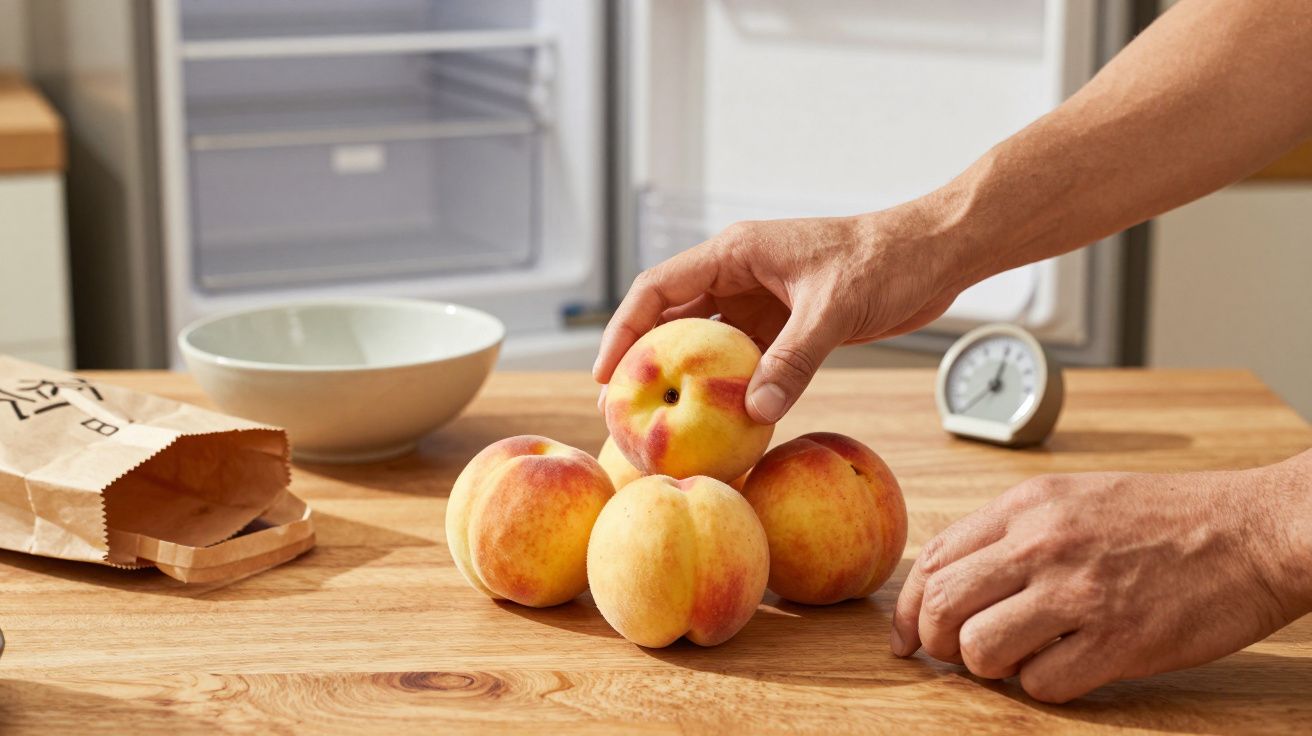
A bowl of nectarines on the counter looks like peak summer, and it asks almost nothing of you - no secondary ingredient, no special kit, no plan. Slice them into yoghurt, grill them with pork, or eat them over the sink and feel like you’ve made a good decision. The catch is that nectarines work brilliantly right up until the conditions change.
A few degrees warmer, a day too long on the windowsill, a rough trip home in a shopping bag - and the fruit that was “nearly ready” turns into something mealy, bruised, or weirdly bland. Most of the disappointment isn’t about the nectarine itself. It’s about timing and handling.
Why nectarines feel reliable (and why they suddenly aren’t)
Nectarines sit in a sweet spot: fragrant like peaches, neater to eat, and often cheaper than berries when summer hits. They also look ready before they truly are, which is where the trouble starts.
The fruit’s texture depends on water, temperature, and how the flesh breaks down as it ripens. When those variables shift - heat on the worktop, cold in the fridge, pressure in a bag - you can end up with a nectarine that’s soft but not juicy, sweet but strangely flat, or firm and sour for days.
A nectarine can be “soft” from damage or dehydration, not ripeness. That’s the trick.
The conditions that change everything
You don’t need a fruit lecture to buy better nectarines. You need a short checklist that matches real life: how you shop, how you store, and when you plan to eat them.
Heat and sunlight: the fast-forward button
A warm kitchen speeds ripening, but it also speeds overripening. Direct sun on a windowsill can turn a just-right nectarine into a leaky mess in a day, especially if it already has a bruise starting under the skin.
If you want them to ripen, keep them at room temperature out of sun, ideally in a single layer. Piling them up is basically asking the bottom ones to lose.
Cold: the pause that can ruin texture
The fridge buys you time, but it can also create that dreaded mealiness - a dry, cottony bite even when the fruit smells good. Nectarines are particularly prone to this if they’re chilled before they’re properly ripe.
A simple rule holds up well in practice:
- Unripe nectarines: keep out of the fridge.
- Ripe nectarines you can’t eat today: fridge, but briefly.
- Cold nectarines: let them come back to room temperature before eating.
That last step matters more than people think. Cold suppresses aroma and sweetness, so even a good nectarine can taste muted straight from the fridge.
Pressure and bruising: the invisible damage
Nectarines bruise easily, and bruises don’t always show immediately. A fruit can look perfect in the shop, then develop a soft, brown patch by evening. Once the cells are damaged, the flesh breaks down faster around the bruise, and flavours go dull.
Treat them like tomatoes, not apples. If you wouldn’t throw it into a rucksack loose, don’t do it to nectarines.
How to choose nectarines that won’t disappoint tomorrow
The goal isn’t perfection. It’s avoiding the common traps: rock-hard fruit that never sweetens, or soft fruit that collapses before you can use it.
A quick shop-floor test that actually works
Pick them up one by one. You’re looking for gentle give at the stem end, not squishiness in the middle.
- Too hard everywhere: likely under-ripe and may stay sharp.
- Soft at the sides: could be bruised rather than ripe.
- Smells of something: usually a good sign; aroma often beats colour.
Colour is less helpful than people think. Nectarines can be deep red and still under-ripe because the blush is more about sun exposure than sugar.
Buy across a “ripeness range”
If you’re buying for the week, don’t buy six identical nectarines and hope. Mix it up:
- 2 that are ready today (more fragrant, slight give)
- 2 that need 1–2 days (firm but not rock hard)
- 2 that are firmest (for later, or for cooking)
This is the simplest way to stop the all-at-once overripening problem.
The simplest storage plan (no hacks, just fewer regrets)
You can keep this almost boringly straightforward.
If they’re unripe
- Leave at room temperature, out of sunlight.
- Keep in a single layer if possible.
- Check daily; nectarines can move quickly once they start.
If you want to speed things up, place them in a paper bag for a day, but don’t forget about them. The bag works - and it works fast.
If they’re ripe
- Eat within 24–48 hours for best texture.
- If you must, refrigerate to slow them down.
- Bring back to room temperature before serving.
A ripe nectarine that’s been chilled can still be lovely, but it needs that time on the counter to smell and taste like itself again.
If one goes too far
Don’t force it into a fruit bowl situation. Use it deliberately:
- Blend into a quick smoothie with yoghurt and ice.
- Chop and cook down into a compote for porridge.
- Roast with a spoon of sugar and a squeeze of lemon to rescue flavour.
Overripe nectarines are often better cooked than eaten raw, because heat concentrates sweetness and smooths out the texture.
When conditions change mid-plan: what to do with what you’ve got
Sometimes the issue isn’t the fruit. It’s the day. A heatwave hits, guests arrive, plans shift, and suddenly you need the nectarines to behave.
Here’s a compact “pivot” guide.
| What changed | What happens to nectarines | The easiest response |
|---|---|---|
| Kitchen is hot | They ripen and collapse quickly | Move ripe ones to the fridge, eat sooner |
| They’re still hard tomorrow | Flavour stays sharp | Slice and grill/roast to sweeten |
| They feel soft but taste flat | Likely bruising or chill dullness | Let warm up; use in compote if still bland |
The sweet spot: using nectarines at the right moment
Nectarines have a narrow window where they’re both juicy and structured. Hit it and they’re perfect in salads and tarts. Miss it and they either drip everywhere or taste like slightly scented water.
Best uses by ripeness
- Firm (not ripe): grilling, roasting, chutney, slicing into a salad if you want crunch
- Ripe: eating fresh, topping yoghurt, pairing with soft cheese, making salsa
- Overripe: smoothies, baking, jammy sauces, freezing in slices for later blending
If you’re serving them fresh, slice at the last moment. Cut fruit dries out and browns, and nectarines lose their “just picked” smell fast once opened up.
A low-effort way to make them taste better, even when they’re average
Not every nectarine is a great nectarine. Sometimes you get a tray that looks right and tastes… fine. You can still win.
- Salt, lightly: a tiny pinch on slices pulls flavour forward.
- Add acidity: lemon or lime wakes up sweetness.
- Use heat: a hot pan or grill gives caramel notes that cover blandness.
- Pair with something creamy: yoghurt, ricotta, or custard does a lot of lifting.
The point isn’t to hide the fruit. It’s to stop a mediocre nectarine from wasting your time.
The quiet lesson: nectarines aren’t inconsistent - the environment is
Nectarines feel like they should be easy because they’re common and pretty and everywhere in summer. But they’re sensitive, and small changes in temperature and handling show up immediately in taste and texture.
Once you treat them like a fruit with a short, specific prime - and you store them like you actually want to eat them - they go back to being what they promised in the first place: simple, fragrant, and worth buying again.
FAQ:
- Are nectarines better kept in the fridge or on the counter? Keep them on the counter until ripe. Once ripe, the fridge can hold them for a day or two, but let them return to room temperature before eating for better flavour.
- Why do my nectarines go mealy even when they’re sweet? Chilling fruit before it’s fully ripe can cause a dry, cottony texture. Ripen at room temperature first, then chill briefly only if needed.
- How can I rescue nectarines that are hard and sour? Use heat: grill or roast slices. Cooking softens the flesh and concentrates sweetness, making under-ripe fruit far more pleasant.
- What’s the best sign a nectarine is ready to eat? A fragrant smell and slight give near the stem end are usually more reliable than colour. Avoid fruit that’s soft in the middle, which can indicate bruising.





Comments
No comments yet. Be the first to comment!
Leave a Comment